Steal a Brainrot vs Escape Tsunami for Brainrots (2026) -- Which Game Is Better?

Brainrot games have taken over Roblox in 2026, and two titles sit at the top of the pile: Steal a Brainrot and Escape Tsunami for Brainrots. One lets you build a base packed with brainrot characters, raid other players, and defend your collection. The other throws you into a survival obby where massive waves crash down and only the fastest runners make it out alive.
Both games pull six-figure concurrent player counts. Both lean hard into the brainrot meme aesthetic that has dominated Roblox this year. And both are completely free to play. But they offer wildly different experiences, and picking the wrong one for your play style means wasted hours. This comparison breaks down every category that matters so you can make an informed choice — or figure out which one to play first if you plan on trying both.
Whether you are already deep into one of these games or brand new to the brainrot genre, this guide covers gameplay mechanics, progression speed, community health, monetization fairness, and how each game pairs with Earnaldo for earning free Robux on the side. If you want game-specific deep dives, check out our Steal a Brainrot free Robux guide and Escape Tsunami for Brainrots free Robux guide after reading this comparison.
Quick Stats — Steal a Brainrot vs Escape Tsunami for Brainrots (2026)
| Category | Steal a Brainrot | Escape Tsunami for Brainrots |
|---|---|---|
| Genre | Tycoon / PvP | Survival / Obby |
| Place ID | 109983668079237 | 131623223084840 |
| Concurrent Players | ~184K | ~138K |
| Core Loop | Build, earn, steal, defend | Run, jump, dodge, survive |
| Session Length | 30–90 min | 15–40 min |
| PvP Element | Central (stealing) | Minimal (leaderboards) |
| Brainrot Role | Income generators with stats | Collectible cosmetics |
| Skill Ceiling | Medium-high (strategy + timing) | High (precision platforming) |
| Mobile-Friendly | Yes (menus can be tight) | Yes (strong touch controls) |
| Free-to-Play | Yes | Yes |
Gameplay — What Do You Actually Do?
Steal a Brainrot
You start with an empty plot and a few basic brainrot characters. Place them on your base, and they start generating in-game currency automatically. Use that currency to buy stronger brainrots, upgrade your existing ones, and expand your base layout. The tycoon loop is straightforward — earn money, spend money, earn more money — but the PvP layer transforms it into something much more interesting.
Other players can raid your base and steal your brainrots. You can do the same to them. Successful raids require timing, route planning, and knowing which brainrots are worth snatching versus which ones are bait. Defending your base means placing brainrots strategically, setting up barriers, and sometimes just being online at the right time to catch a thief in the act. The tension between building your income and protecting it from raids creates a risk-reward dynamic that keeps sessions feeling unpredictable.
Higher-tier brainrots have unique abilities — some generate currency faster, others act as guards that slow down raiders, and the rarest ones provide area-of-effect bonuses to surrounding brainrots. Building the optimal base layout becomes a puzzle of maximizing income while minimizing vulnerability. Experienced players can spot a poorly defended base from across the server and strip it clean in under a minute.
Escape Tsunami for Brainrots
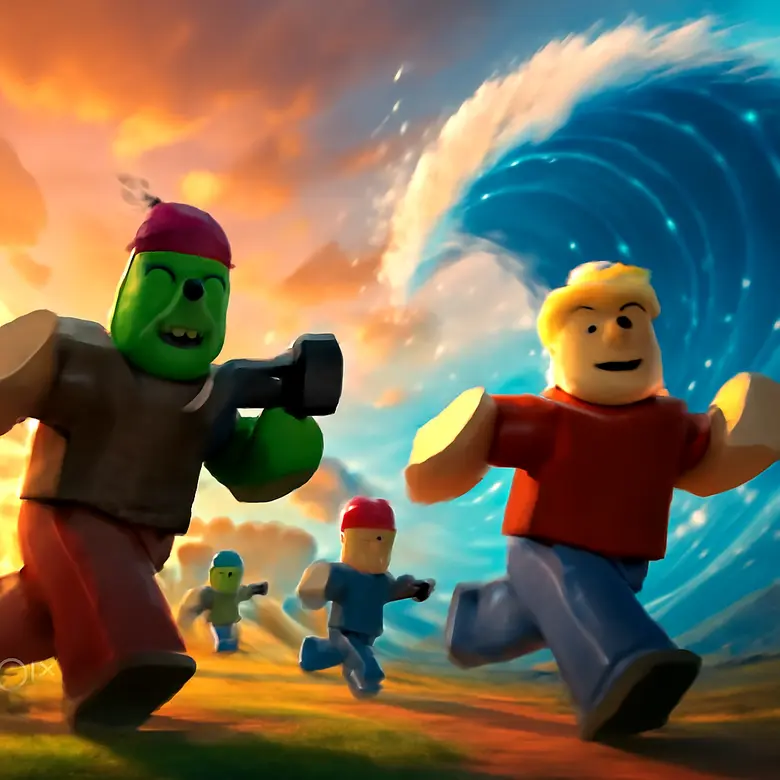
A wave is coming. You have seconds to react. The game drops you into a brainrot-themed environment and sends a wall of water at you, and your only job is to not get hit. Run forward, jump over obstacles, climb platforms, dodge debris, and reach the safe zone before the tsunami swallows everything behind you.
Each round plays out differently. Wave height, speed, and direction change between rounds. The obby sections ahead of you rearrange, mixing up the platforming challenges so muscle memory alone will not carry you. Some waves come from behind, some from the side, and the later rounds introduce multiple waves that converge from different directions. It is a survival game first and an obby second, and the combination works because the time pressure turns ordinary platforming into a heart-rate-raising sprint.
Between rounds you collect brainrot characters scattered across the map. These brainrots serve as cosmetics and mild gameplay perks — speed boosts, double jumps, and shield effects that let you survive one hit from the water. The collection aspect adds a reason to explore each map rather than just beelining for the exit. Rarer brainrots spawn in harder-to-reach locations, rewarding players who take calculated risks mid-wave.
Graphics and Visual Style
Steal a Brainrot goes for a colorful, slightly chaotic aesthetic. Bases fill up with brainrot characters of varying sizes and designs, each with their own idle animations and particle effects. When a raid happens, the screen fills with action — characters getting snatched, alert notifications popping up, and defensive abilities triggering. It looks busy in a way that matches the game's frantic energy. The UI is functional but dense, with multiple menus for inventory, upgrades, base layout, and the raid system.
Escape Tsunami for Brainrots takes a more environmental approach. The water rendering stands out — waves build on the horizon, crash through structures, and flood the terrain with convincing physics. The brainrot characters pop against the destruction happening around them, creating a visual contrast between the silly meme aesthetic and the genuine tension of a wall of water bearing down on you. Map variety is strong, with urban, tropical, mountain, and industrial zones each bringing different obstacle types and visual identities.
Edge: Escape Tsunami for Brainrots. The wave effects and environmental destruction are technically impressive, and the visual design serves the gameplay better. Steal a Brainrot looks good but can get visually cluttered during raids.

Progression — How Fast Does It Hook You?
Steal a Brainrot has a classic tycoon curve. Your first few brainrots generate income slowly, and early upgrades feel incremental. The game opens up once you hit the mid-tier brainrots — usually 20 to 30 minutes into your first session — when income starts compounding and the upgrade tree branches out. The first time someone raids your base and steals a brainrot you spent 15 minutes saving for is when the game truly clicks. Suddenly you care about defense, you start planning raids of your own, and the passive tycoon becomes an active strategy game.
Long-term progression in Steal a Brainrot is deep. Brainrot rarity tiers go from Common up through Legendary and Mythic, with each tier requiring significantly more investment. Base layouts can be redesigned endlessly as you unlock new defensive structures and higher-tier brainrot slots. The prestige system lets you reset your progress for permanent multipliers, adding a layer of meta-progression that keeps veterans engaged after they have seen everything the base game offers.
Escape Tsunami for Brainrots hooks you faster. Your first round starts within 10 seconds of joining a server. The wave hits, you run, and either you survive or you do not. The immediate feedback loop — round starts, wave comes, survive or fail, new round — creates a cadence that is almost impossible to put down during your first session. You tell yourself "one more round" five times before you realize 45 minutes have passed.
However, long-term progression in Escape Tsunami is thinner. You unlock new maps as you survive more waves, and your brainrot collection grows, but the core gameplay stays consistent from round one to round one hundred. The skill progression is internal — you get better at reading wave patterns and executing obby sections — rather than driven by unlockable content. Players who need external goals may plateau faster than they would in Steal a Brainrot.
Edge: Steal a Brainrot for long-term depth. Escape Tsunami for Brainrots for immediate engagement.
PvP and Competition
Steal a Brainrot is built around player-versus-player interaction. The stealing mechanic means every other player on the server is simultaneously a potential threat and a potential target. You constantly evaluate: Is that base across the map worth raiding? Does that player have defenders set up? Can I grab their Legendary Skibidi and make it back to my base before they notice? The social dynamics create emergent gameplay that the developers did not have to script — alliances form, rivalries develop, and server-wide feuds can erupt over a single stolen brainrot.
Escape Tsunami for Brainrots is primarily a solo experience played alongside others. Everyone runs from the same wave, but you are not directly competing. Leaderboards track survival streaks and brainrot collections, adding indirect competition, but nobody can sabotage your run or steal your progress. The community interaction is more cooperative — players share tips on wave patterns in chat, and surviving a particularly brutal round together creates a shared accomplishment.
Edge: Steal a Brainrot if you thrive on PvP tension. Escape Tsunami for Brainrots if you prefer a less adversarial environment.
Player Count and Community (July 2026)
Steal a Brainrot leads with approximately 184K concurrent players at peak times. The game has built a vocal community around its PvP mechanics, with players sharing raid strategies, base layouts, and "steal highlight" clips across social media platforms. The competitive nature of the game drives content creation — watching someone pull off a clutch raid on a heavily defended base is genuinely entertaining, which fuels organic growth.
Escape Tsunami for Brainrots sits at around 138K concurrent players, which is still a massive number by any standard. Its community is more casual and meme-focused. Players share clips of near-miss wave dodges, showcase their brainrot collections, and create tier lists ranking the hardest maps. The tone is lighter than Steal a Brainrot's community because there is less at stake — nobody loses progress when they get hit by a wave, so there is less salt in the chat.
Both games receive regular updates from their development teams. Steal a Brainrot tends toward balance patches and new brainrot characters, while Escape Tsunami for Brainrots focuses on new maps and wave types. Both communicate through Discord servers and in-game announcements. Neither community has a significant toxicity problem, though Steal a Brainrot's raid mechanics can spark heated moments when a player loses a rare brainrot.
Edge: Steal a Brainrot on raw numbers. Escape Tsunami for Brainrots for community atmosphere.
Game Passes and Monetization
Steal a Brainrot offers game passes for expanded base slots, auto-collect income, a raid cooldown reduction, and VIP brainrot access. Prices range from 99 to 799 Robux. The auto-collect pass is the most popular because it lets your income accumulate while you focus on raiding or defending. None of the passes lock content — free players can access every brainrot and every feature — but the quality-of-life improvements from the auto-collect pass are significant enough that dedicated players gravitate toward it.
Escape Tsunami for Brainrots sells passes for a 2x survival points multiplier, exclusive brainrot skins, and a "second chance" ability that saves you from one wave hit per round. The second chance pass costs 499 Robux and is controversial — some players feel it undermines the survival challenge. Prices cap at 599 Robux. Free players have full access to all maps and brainrots, and the leaderboards separate pass holders from free players on some metrics to maintain competitive fairness.
Edge: Steal a Brainrot. Its passes enhance convenience without affecting competitive integrity. Escape Tsunami's second chance pass walks a fine line between pay-to-win and quality-of-life, depending on who you ask.
Replay Value — Will You Still Play Next Month?
Steal a Brainrot has the stronger long-term pull. The PvP dynamics mean no two sessions feel identical. Your base evolves, the meta shifts as new brainrots get added and balance patches land, and the prestige system gives you a concrete reason to keep grinding after you hit the initial endgame. The social element — forming raid groups, defending allies, targeting rivals — adds a layer of engagement that pure gameplay mechanics cannot replicate. Players who started at launch are still logging in daily because the player-driven dynamics keep the experience fresh.
Escape Tsunami for Brainrots relies more on developer updates to stay interesting. A new map breathes life into the game for a week, but the core loop does not change. Collecting brainrots provides a long-term goal, but once you have the ones you want, the incentive to keep surviving wave after wave diminishes. The game works better as a rotation title — something you play for an intense session a few times a week rather than a daily habit. That said, the skill ceiling is genuinely high, and players who enjoy mastering difficult obby content will find hundreds of hours of challenge in perfecting their wave survival runs.
If you enjoy other obby-style brainrot games, you might also want to check out Swing Obby for Brainrots or Shrink for Brainrots for similar vibes with different twists on the formula.
Edge: Steal a Brainrot. The PvP element and prestige system create self-sustaining engagement that does not depend entirely on update cycles.
Brainrot Characters — Collection and Impact
Both games feature brainrot characters, but they treat them very differently.
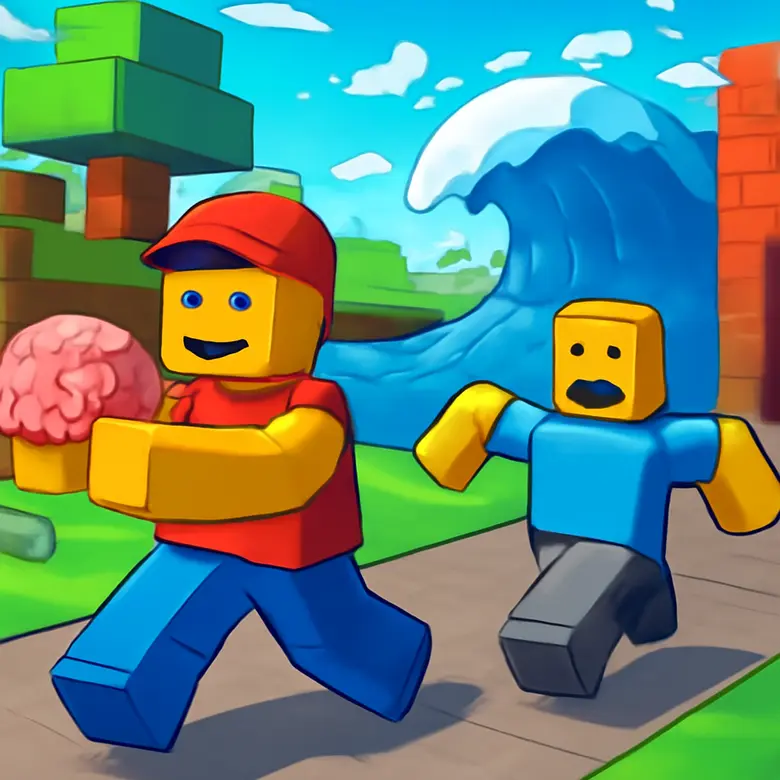
In Steal a Brainrot, brainrots are the core of the game. Each one has stats — income generation rate, defensive ability, special skills — that directly affect how your base performs. Rarity matters because higher-tier brainrots generate exponentially more income and provide stronger defensive capabilities. Building the right combination of brainrots for your base is a genuine strategic decision, and losing a key brainrot to a raid can set you back significantly. The brainrot tier list changes with every balance update, keeping the meta dynamic.
In Escape Tsunami for Brainrots, brainrots are collectibles first and gameplay tools second. You find them scattered across maps, often in dangerous locations that require risking your survival run. Equipping certain brainrots gives you minor perks — a speed boost here, a double jump there — but the differences are marginal enough that you can survive any wave with any brainrot equipped. The collection is driven by completionism and cosmetic appeal rather than mechanical necessity. That said, the hunt for rare brainrots hidden in hard-to-reach spots during a tsunami adds a welcome layer of risk-reward to each round.
Earning Potential — Free Robux While You Play
If you are using Earnaldo to earn free Robux while gaming, both titles have their strengths.
Steal a Brainrot's tycoon mechanics create natural idle periods. While your brainrots generate income, you can tab over to Earnaldo's earn page and work through offers, surveys, or tasks. The game does not punish short absences unless a raid happens while you are away, and even then, defensive brainrots can buy you time. Sessions run 30 to 90 minutes, giving you plenty of windows to multitask between base management and Robux earning.
Escape Tsunami for Brainrots has shorter, more intense sessions. Rounds last 2 to 5 minutes each, with brief breaks between waves. Those breaks are tight windows for checking your Earnaldo progress, but the game demands your full attention when a wave is active. The shorter overall session length (15 to 40 minutes) means you can complete a satisfying play session and then shift fully to earning tasks without feeling like you left something unfinished.
For game-specific strategies on maximizing your Robux earnings, see our detailed guides: Steal a Brainrot free Robux guide and Escape Tsunami for Brainrots free Robux guide.
Earn Free Robux for Steal a Brainrot or Escape Tsunami for Brainrots
Complete simple tasks on Earnaldo and withdraw real Robux — no downloads, no generators, no scams.
Head-to-Head Verdict — Steal a Brainrot vs Escape Tsunami for Brainrots in 2026
The Verdict
Choose Steal a Brainrot if you want a game with strategic depth, PvP intensity, and long-term progression that rewards planning and persistence. The base-building and raiding loop creates tension that few other Roblox games match, and the brainrot collection system has real mechanical weight. Its 184K concurrent players reflect a game that keeps people coming back day after day.
Choose Escape Tsunami for Brainrots if you want fast-paced survival action that you can pick up and enjoy in minutes. The wave mechanics are thrilling, the obby sections test your reflexes and precision, and the lower-stakes environment makes it a less stressful experience. It is the better game for short sessions and casual play.
Overall winner: Steal a Brainrot — by a clear margin. The depth of its systems, the engagement of its PvP loop, and its stronger player retention give it the edge for most players looking for a brainrot game to invest their time in. But Escape Tsunami for Brainrots is the better pick if you want something lighter, faster, and more immediately fun. Both games are worth playing in 2026, and both pair well with Earnaldo for earning free Robux.

Who Should Play What?
- You love strategy and planning: Steal a Brainrot — base layout optimization and raid tactics scratch that itch.
- You want adrenaline-pumping action: Escape Tsunami for Brainrots — nothing gets your pulse up like a wall of water chasing you through an obby.
- You enjoy PvP competition: Steal a Brainrot, no contest. The stealing mechanic is the entire point.
- You prefer solo, low-stress gameplay: Escape Tsunami for Brainrots — fail a wave, try again, no lasting consequences.
- You are a completionist: Both games reward collecting, but Steal a Brainrot's brainrot roster has more mechanical depth to chase.
- You want to earn Robux while playing: Both work well with Earnaldo, but Steal a Brainrot's idle income phases give you more natural multitasking windows.
- You play on mobile: Escape Tsunami for Brainrots has the better mobile experience thanks to simpler controls.
- You only have 15 minutes: Escape Tsunami for Brainrots — you can get a full, satisfying session in a quarter hour.
Frequently Asked Questions
Is Steal a Brainrot or Escape Tsunami for Brainrots more popular on Roblox in 2026?
Steal a Brainrot currently has more concurrent players at around 184K compared to Escape Tsunami for Brainrots at around 138K. Both games have been growing rapidly throughout early 2026, but Steal a Brainrot's PvP stealing mechanic has driven stronger word-of-mouth growth and content creator interest, which translates to higher peak numbers.
Which brainrot game is better for earning free Robux?
Both games work well with Earnaldo for earning free Robux. Steal a Brainrot's longer sessions and idle base-building phases give you natural downtime to complete earning tasks between raids. Escape Tsunami for Brainrots has shorter, more intense rounds that pair well with quick offers between waves. Pick whichever game you enjoy more — longer play sessions mean more earning opportunities.
Can you play Steal a Brainrot and Escape Tsunami for Brainrots on mobile?
Yes. Both games are fully playable on mobile through the Roblox app on iOS and Android. Escape Tsunami for Brainrots has a slight edge on mobile thanks to its simpler run-and-jump controls. Steal a Brainrot works fine but involves more menu navigation for base management and brainrot placement, which can feel cramped on smaller screens.
Are there active codes for Steal a Brainrot and Escape Tsunami for Brainrots in March 2026?
Yes. Both games release codes regularly for free in-game currency, boosts, and exclusive brainrot characters. We maintain updated lists: Steal a Brainrot codes (July 2026) and Escape Tsunami for Brainrots codes (July 2026). Codes expire quickly in both games, so check back often.
Which game has better brainrot characters?
Steal a Brainrot has a larger roster of brainrot characters with different stats, abilities, and rarity tiers that directly affect gameplay. Brainrots in Steal a Brainrot are your primary income source and defense system — they matter mechanically. Escape Tsunami for Brainrots features brainrots primarily as collectible cosmetics with minor gameplay perks like speed boosts. If you want brainrots that impact how you play, Steal a Brainrot wins.
Is Steal a Brainrot or Escape Tsunami for Brainrots better for beginners?
Escape Tsunami for Brainrots is the more beginner-friendly option. You run, jump, and dodge waves — the controls are intuitive from the first round, and failing just means trying again with no lost progress. Steal a Brainrot requires understanding base layouts, brainrot placement strategy, income optimization, and PvP stealing mechanics, which takes longer to learn but ultimately provides a deeper experience.