Stick Drop vs Fling Things and People: Precision Reflexes or Physics Mayhem in 2026?
Roblox is full of games that promise quick, accessible fun, but two titles stand apart for how differently they deliver on that promise. Stick Drop distills competition down to its purest form: two players, one reaction test, no excuses. Fling Things and People throws physics, ragdolls, and every object imaginable into a sandbox and dares you not to laugh. Both games can fill a twenty-minute break or a three-hour session, but they target completely different parts of your brain. Here is the full breakdown.
Quick Stats Comparison
| Feature | Stick Drop | Fling Things and People |
|---|---|---|
| Genre | 1v1 Reaction Game | Physics Ragdoll Sandbox |
| Core Loop | Competitive 1v1 | Sandbox / Party |
| Peak CCU | 15K+ | 50K+ |
| Place ID | 111542623898793 | 290628964 |
| Match Length | 1-3 minutes | Open-ended |
| Max Players per Server | 12 | 18 |
| Mobile Support | Yes | Yes |
| Free-to-Play | Yes | Yes |
The stats reveal two fundamentally different designs. Stick Drop is structured and competitive, built around short bursts of intense focus. Fling Things and People is unstructured and social, built around emergent chaos and shared laughter. The player count disparity reflects this difference: sandbox games with broad appeal tend to draw larger crowds, while niche competitive titles attract smaller but more dedicated audiences.
Gameplay and Core Mechanics
Stick Drop
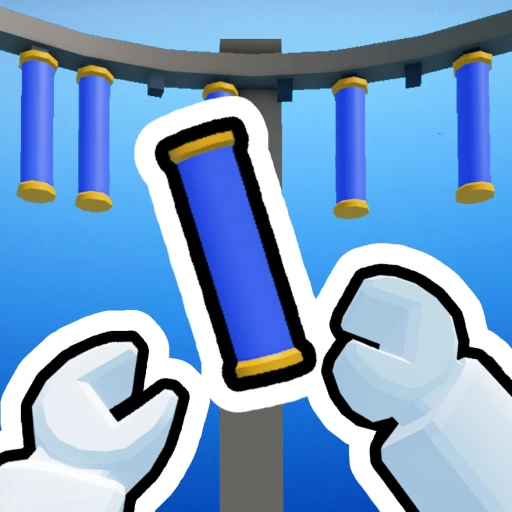
Stick Drop takes a concept you might recognize from gym class and elevates it into a surprisingly deep competitive experience. Two players face off. A stick (or other object, depending on your equipped cosmetic) is held vertically. At a random moment, the stick drops. The first player to react and grab it wins the round. Best of a set number of rounds wins the match. That is the entire premise, and it works brilliantly.
What gives Stick Drop its depth is the psychological layer. The drop timing is randomized within a window, but experienced players learn to read the timing patterns and identify the probable drop zones. Flinching early costs you the round, which creates a tension between reacting quickly and reacting accurately. The best Stick Drop players operate on the edge of human reaction time, consistently grabbing within 150 to 200 milliseconds of the drop.
The game tracks detailed statistics: average reaction time, win percentage, longest win streak, fastest single reaction, and more. These metrics create a secondary game where you compete against your own performance history. Watching your average reaction time improve over days and weeks is genuinely satisfying in a way that more complex games often fail to replicate.
Variations keep the core loop fresh. Some modes introduce distractions, visual noise, or altered drop physics that test different aspects of reaction speed. A "reverse" mode where you must avoid grabbing the stick flips the psychological dynamic entirely. These modes demonstrate that simple mechanics can generate substantial variety when designed thoughtfully.
Fling Things and People
Fling Things and People is controlled chaos packaged as a party game. You spawn into an arena filled with objects, from furniture to vehicles to explosive barrels, and your primary tool is a physics-based grab mechanic. Grab an object, swing it, and release to fling it at other players. The ragdoll physics on player characters mean that every impact sends bodies tumbling, bouncing, and cartwheeling in unpredictable and frequently hilarious ways.
The grab mechanic has hidden depth. Object weight affects swing speed and launch distance. Heavier objects hit harder but require more wind-up time, creating risk-reward calculations in the middle of chaotic combat. Learning to aim your flings accurately, accounting for arc and momentum, separates skilled players from button mashers even if the results often look equally absurd.
Environmental interaction is a major component. Maps are designed with destructible elements, elevated platforms, and hazard zones. A skilled player uses the environment to create chain reactions: fling a heavy object into a stack of explosive barrels near a group of players, and the resulting physics cascade can eliminate multiple opponents simultaneously. These moments are what generate the viral clips and shared stories that keep the community engaged.
The sandbox nature means there is no set win condition in many modes. Some lobbies play king-of-the-hill variants, others run last-player-standing rounds, and some simply exist as open arenas where the goal is to create the most entertaining chaos possible. This flexibility means the game adapts to whatever the lobby wants it to be.
Progression and Unlocks
Stick Drop
Stick Drop's progression is lean and focused. Match currency lets you purchase cosmetic sticks, backgrounds, and trail effects for your grab animation. A ranking system places you in tiers based on your win-loss record and average reaction time. Climbing ranks feels meaningful because the competition genuinely gets harder as you ascend. The top ranks are populated by players with sub-170ms average reaction times, which is no small feat.
A daily challenge system provides small objectives like "win 5 matches" or "achieve a reaction time under 200ms three times in a row." These challenges award bonus currency and keep regular players engaged without demanding excessive time investment. The whole system is designed around short, frequent play sessions rather than marathon grinding.
Statistical tracking is itself a form of progression. The game records your complete history, and watching your percentile ranking climb as you improve is a compelling feedback loop. A personal-best notification system celebrates when you set new records for fastest reaction, longest streak, or best daily average.
Fling Things and People
Fling Things and People has a more traditional unlock system. Points earned from matches purchase cosmetic items, special grab effects, and access to premium objects that can be spawned in the arena. Some objects are purely cosmetic, while others have unique physics properties that create new gameplay possibilities. A rubber chicken that bounces unpredictably, for example, plays very differently from a standard heavy object.
The object unlock system is the primary progression driver. New objects are added regularly, and each one introduces a new variable into the physics sandbox. Collecting and experimenting with different objects provides long-term engagement even after you have mastered the core grab-and-fling mechanic.
Achievement badges mark milestones like total flings, players eliminated, and distance records. These badges display on your profile and serve as bragging rights within the community. The "Maximum Distance" achievement, awarded for the longest single fling recorded on your account, is a particularly fun goal that encourages creative physics exploitation.
Seasonal events introduce limited-time objects, themed maps, and special game modes. Holiday events are particularly popular, with festive objects and decorated arenas that bring lapsed players back into the fold. The content cadence keeps the game feeling fresh without requiring constant attention from players.
Graphics and Visual Design
Stick Drop
Stick Drop embraces minimalism. The visual design is clean, uncluttered, and focused entirely on the gameplay moment. Two characters, a stick, a clear background. The lack of visual noise is a deliberate design choice: when reaction times matter at the millisecond level, any visual distraction is a liability. The cosmetic sticks and backgrounds add personalization without compromising readability.
The animation work is subtle but effective. The stick drop animation is smooth and clearly readable, with visual cues that communicate the drop state precisely. Character grab animations are snappy and satisfying, with a small screen flash on successful grabs that provides instant positive feedback. The visual language is minimal but every element earns its place.
Performance is essentially flawless on all devices. The low visual complexity means frame rate issues are virtually nonexistent, which is critical for a game where input lag can cost you a match.
Fling Things and People
Fling Things and People leans into visual comedy. The ragdoll physics are deliberately exaggerated, with bodies bending, spinning, and contorting in ways that maximize entertainment value. Object models are detailed enough to be recognizable while maintaining the lightweight aesthetic that keeps performance stable. Explosive effects, impact particles, and destruction animations add spectacle to every interaction.
Map design showcases impressive environmental art. Each arena has a distinct theme with interactive elements that serve both aesthetic and gameplay purposes. The construction site map features swinging wrecking balls and unstable scaffolding. The kitchen map has hot surfaces, slippery floors, and a working blender that does exactly what you think it does to ragdolls. The visual storytelling in each map creates context for the chaos.
Performance holds up well considering the physics simulation complexity. Server-side physics processing means that all players see the same ragdoll outcomes, which is important for the shared comedy experience. Frame rates can dip during extreme chaos with many objects and players in motion simultaneously, but the developers have optimized the physics engine to handle typical gameplay smoothly.
Player Count and Community
Fling Things and People maintains a consistently large player base, with peak CCU around 50,000. The game has been on the platform since 2019 and has sustained its popularity through regular updates and a loyal community. Matchmaking is never an issue, and full lobbies are the norm at all hours. The community skews younger and more casual, which matches the game's accessible design.
Stick Drop has a smaller but dedicated following, with peak CCU around 15,000. The community is more competitive and engaged with performance metrics. Discord and Reddit communities share reaction time strategies, input optimization tips, and competitive leaderboard challenges. The smaller community means you often encounter the same players at higher ranks, which creates rivalries and recognition that larger games lack.
Content creation tells different stories for each game. Fling Things and People is a content creator favorite because the physics engine generates shareable moments constantly. Compilations of ragdoll fails and spectacular flings perform well on YouTube and TikTok. Stick Drop content focuses on reaction time challenges, world record attempts, and competitive commentary, which appeals to a narrower but dedicated audience.
Both games benefit from their simplicity when it comes to community accessibility. Neither requires extensive onboarding or tutorial viewing. New players can understand both games within seconds of joining, which keeps player acquisition healthy.
Game Passes and Monetization
Stick Drop
Stick Drop offers a small selection of Game Passes. A cosmetic bundle unlocks premium stick designs and animated backgrounds for 149 Robux. A statistics enhancement pass adds detailed analytics and historical graphs of your performance for 99 Robux. A VIP pass provides a badge, custom lobby, and bonus currency earnings for 249 Robux. The total cost to own everything is modest, and nothing affects competitive gameplay.
The pricing reflects the game's scope. Stick Drop is not trying to be a major revenue generator; it is a focused experience with proportionally focused monetization. The developer has maintained that competitive integrity will never be compromised by paid features, and the community trusts this commitment.
Fling Things and People
Fling Things and People has a broader Game Pass selection that reflects its sandbox nature. Object packs unlock themed collections of flingable items, ranging from 49 to 199 Robux per pack. A gravity modifier pass lets you adjust physics properties in private servers for 299 Robux. A VIP pass grants bonus points, exclusive objects, and a custom name color for 399 Robux. Private server access costs 149 Robux.
The object packs represent genuine gameplay additions rather than pure cosmetics. A player with the "Explosive Pack" has access to objects with unique physics properties that create new strategic and comedic possibilities. This blurs the line between cosmetic and gameplay monetization, though since the game is primarily a casual sandbox, the competitive implications are minimal.
The private server with gravity modifier combination is popular for content creation. Being able to adjust physics properties creates scenarios that are impossible in public servers, and many of the game's most viral clips come from modified private server sessions.
Social Features
Fling Things and People is inherently social. The entire experience is built around shared interactions with other players. Every fling affects someone else. Every ragdoll tumble is witnessed by the lobby. The game generates shared stories organically through its physics engine, and these shared experiences are the foundation of its community. In-game chat is active, with players narrating the chaos and celebrating spectacular moments. Emotes and taunts add another layer of social expression.
Stick Drop's social features are more focused. The 1v1 format creates direct social connections through competition. A rematch system encourages extended sessions between matched opponents. Global and friends leaderboards foster competitive social dynamics. The reaction time comparison feature, where you can directly compare your stats with any player on the platform, creates social touchpoints outside of matches. A spectator mode lets lobby members watch ongoing matches, which creates a communal viewing experience during close contests.
Both games work well as party games with friends on voice chat. Fling Things and People provides more moments of spontaneous humor. Stick Drop provides more moments of tense competition and trash-talking opportunities. The social dynamics are different but equally valid.
Replay Value
Stick Drop's replay value comes from the pursuit of perfection. Human reaction time has a hard floor, and approaching that floor provides a clear, measurable goal that keeps competitive players coming back. The ranked ladder resets seasonally, giving you a fresh climb. The variation modes add mechanical diversity without abandoning the core appeal. For players motivated by self-improvement and competitive ranking, Stick Drop offers potentially endless replay value within its narrow scope.
Fling Things and People generates replay value through emergent gameplay and social dynamics. No two sessions play out the same way because physics simulations produce unique outcomes every time. New objects and maps expand the possibility space regularly. The social nature means that the experience changes based on who is in your lobby, which provides variety that no amount of designed content can replicate. For players who find joy in shared chaos and unexpected moments, FTAP never gets stale.
The replay value question here is really a question about what motivates you as a player. Do you want to see a number go down (reaction time) or a ragdoll go up (into the stratosphere)? Both are valid sources of lasting engagement, but they appeal to very different player psychologies.
Session length expectations differ too. Stick Drop is ideal for quick bursts: five to ten minutes of focused competition, then move on. Fling Things and People tends to consume longer sessions because the sandbox nature encourages "just one more round" thinking. Neither approach is superior, but they fit different gaming schedules.
Earn Free Robux for Game Passes
Want premium sticks in Stick Drop or explosive object packs in FTAP? Earnaldo helps you earn Robux for free through simple tasks.
Who Should Play Stick Drop?
Stick Drop is for the competitive minimalist. If you appreciate games that strip away everything except pure skill expression, this is your title. It rewards practice, punishes inconsistency, and provides crystal-clear feedback on your performance. The ranking system gives competitive context, and the statistical tracking turns self-improvement into a visible, trackable journey.
It is also a surprisingly good game for short breaks. The quick match format means you can squeeze in meaningful gameplay during any free moment. Five minutes of Stick Drop between other activities is a viable and satisfying way to play, which cannot be said for most competitive games on the platform.
Choose Stick Drop if you want a pure competitive test of reaction speed with detailed performance tracking and ranked play.
Who Should Play Fling Things and People?
Fling Things and People is for anyone who wants to laugh while gaming. It is the ultimate Roblox party game: accessible, social, and consistently entertaining. The physics sandbox generates comedy without effort, and the community is welcoming to players of all ages and skill levels. You do not need to be good at Fling Things and People to have a great time playing it.
It is the stronger choice for group play. If you regularly play Roblox with friends, FTAP provides a shared experience that generates inside jokes and memorable moments. The sandbox freedom means your group can create its own games within the game, which extends the content well beyond what the developers designed.
Choose Fling Things and People if you want a social, physics-driven party game that prioritizes fun and shared laughter above all else.
Final Verdict
These two games occupy entirely different spaces on the Roblox platform, and honestly, most players should try both. Fling Things and People is the broader recommendation because its accessibility, humor, and social appeal serve a wider audience. It is the game you show to someone who has never played Roblox, and it is the game that keeps groups entertained for hours. Stick Drop is the niche recommendation for competitive players who want a pure skill test. It does one thing and does it with laser focus. The best approach is to keep both in your library: FTAP for social sessions and group play, Stick Drop for solo competitive practice and ranked climbing. For more tips on both games, check our Stick Drop guide and Fling Things and People guide.
Frequently Asked Questions
Fling Things and People is the better group game. It supports larger lobbies, the sandbox nature encourages spontaneous fun, and the humor translates well to mixed skill levels. Stick Drop is more intense and better suited for competitive 1v1 sessions with a friend of similar skill.
Stick Drop is significantly more skill-based. It tests pure reaction speed and pattern recognition in a direct 1v1 format. Fling Things and People involves skill in its physics manipulation, but randomness and chaos play a much larger role in outcomes.
Yes, both games work on mobile. Stick Drop's simple tap-based controls translate perfectly to touchscreen. Fling Things and People works on mobile but the physics interactions are easier to control with a mouse.
Fling Things and People is more accessible for younger players. The physics-based humor is universally entertaining, and there is no pressure to perform. Stick Drop can be frustrating for younger players due to its strict timing requirements and competitive nature.
Both games offer Game Passes focused on cosmetics and fun extras. Fling Things and People's passes tend to offer more value since they unlock new objects and tools that create additional gameplay possibilities. Stick Drop's passes are purely cosmetic.
Stick Drop matches are very short, usually one to three minutes each. A full session of competitive play might last 15 to 30 minutes. Fling Things and People sessions tend to run longer because the sandbox nature encourages extended play, with typical sessions lasting 30 to 60 minutes.