Survive Overnight in a Mega Store vs Doors (2026) -- Which Roblox Game Is Better?
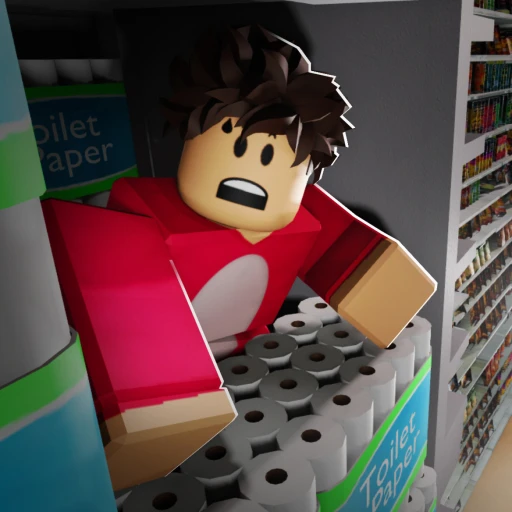
Two of Roblox's most compelling horror games sit at opposite ends of the genre spectrum. Survive Overnight in a Mega Store by Velstorm and 42 Bit Studios puts you inside a massive retail complex where you gather resources, build a fortified base, and pray your walls hold when the hostile employees go active after dark. Doors by LSPLASH drops you into a procedurally generated hotel and dares you to make it past 100 rooms without getting caught by one of its iconic entities.
Both games carry the horror label, both support multiplayer co-op, and both have pulled in hundreds of millions of players. But they are built around fundamentally different ideas of what makes a horror game satisfying. Survive Overnight is a survival sandbox where emergent gameplay rules every session. Doors is a structured roguelite where mastering patterns and surviving the gauntlet is the entire point.
If you are trying to choose between them -- or trying to understand why one clicks for you and the other does not -- this comparison breaks down everything that matters. Start with the quick-stats table below, then read on for the full breakdown.
Quick Stats: Survive Overnight in a Mega Store vs Doors
| Category | Survive Overnight in a Mega Store | Doors |
|---|---|---|
| Developer | Velstorm / 42 Bit Studios | LSPLASH |
| Roblox Place ID | 127380660530951 | 6516141723 |
| Genre | Horror Survival / Base-Building | Horror Roguelite |
| Concurrent Players | ~6,400 | ~20,000--40,000 |
| Total Visits | ~428M | 5B+ |
| Core Loop | Gather, build, survive nights | Navigate rooms, evade entities |
| Progression | Open sandbox (no end goal) | Linear (100+ rooms per run) |
| Multiplayer | Server co-op | Up to 4 players per run |
| Game Passes | Deluxe Pack, Token Boosts | Revive (150R), x2 Knobs (199R) |
| Room Generation | Persistent store layout | Procedurally generated every run |
| Average Session Length | 30--90 minutes | 15--40 minutes per run |
| Age Suitability | 9+ | 10+ |
Those numbers tell a clear story about scale -- Doors is the bigger game by a wide margin. But raw visit counts do not determine which experience is right for you. The sections below explain what those differences actually feel like when you are playing.
Gameplay and Core Loop
Survive Overnight in a Mega Store
The premise is immediately legible: you are inside a giant retail store, and something has gone wrong with the employees. During daylight hours the store feels almost normal. Staff wander the aisles on their routines, items are scattered across shelves and back rooms, and you have relative freedom to move through the space. This is your window. You need to find food and resources, scout base locations, and start constructing shelter before the store's lighting shifts and those employees turn hostile.
The base-building system is the core of Survive Overnight's identity. You can drag furniture, walls, and structural pieces from the store's stock to build anything from a quick barricade in a corner office to a multi-room fortified compound spanning an entire department. The crafting system lets you create basic tools and defensive structures, and the resource economy -- scrounging materials vs. using them for construction -- creates genuine decision-making throughout each session.
Night shifts the tone completely. Employees that were passive become aggressive, moving faster and attacking on sight. If your base has gaps, they find them. If you are caught outside, you are in trouble. The night survival loop creates a natural rhythm: tense preparation during the day, anxious defence after dark. There is no finish line. Sessions end when you log off, get overwhelmed, or decide to start fresh -- whichever comes first.
That open-ended structure defines everything about the experience. Survive Overnight is a game you shape yourself. Two players in the same server can have wildly different sessions depending on where they set up, how aggressively they gather, and whether they co-operate with strangers.
Doors
Doors runs on a completely different philosophy. You and up to three teammates enter a hotel lobby and the objective is clear: find each numbered door, make it through the room, and keep moving forward. The hotel has over 100 rooms per run and the layout changes procedurally every time you play. That means every run starts fresh -- same core mechanics, new spatial puzzles to navigate.
The entity system is the game's centrepiece. Rush announces itself with a distant rumble and barrels down the corridor, forcing you into the nearest closet. Ambush does the same but doubles back to catch players who emerge too soon. Seek triggers extended chase sequences where you sprint through obstacle-laden corridors while a mass of eyes pursues you. Figure is a blind giant that tracks sound, requiring players to crouch, move slowly, and hold their breath in real life as it patrols the library. Screech whispers before striking -- if you hear it, you have a narrow window to face it directly or take damage. Each entity has distinct audio cues and visual tells, and learning to read them is the skill curve that makes Doors compelling across hundreds of runs.
Between entity encounters, Doors layers in light environmental puzzles -- finding keys, flipping switches, restoring power -- that break up the pace and reward players who explore rooms thoroughly rather than sprinting for the next door. The Knobs currency you collect through runs unlocks cosmetics and items, giving you concrete goals even after you have cleared the hotel multiple times.
Edge: Tie for different audiences. Survive Overnight wins for players who want creative freedom, emergent storytelling, and sessions they can shape themselves. Doors wins for players who want structured, high-intensity runs with clear skill progression. These are fundamentally different games wearing the same horror label -- picking one over the other depends entirely on what you want from a gaming session.
Progression Systems
Survive Overnight in a Mega Store
Progression in Survive Overnight is largely self-directed. The game does not have a level system or an unlockable roster of items waiting behind a grind wall. What you gain between sessions is knowledge: better understanding of the store's layout, smarter base positioning, more efficient resource routes, and refined instincts for what to prioritise before night falls.
The token economy -- which Token Boost passes can accelerate -- does provide some structured progression if you want it. Tokens can be used to unlock additional building pieces and items that give your bases more flexibility. The Deluxe Pack pass bundles several quality-of-life improvements and additional crafting options for players who want to invest. But none of this is required. A player who has been playing for a week with zero Robux spent can build a base just as defensible as someone running every available pass.
The absence of a formal progression ladder cuts both ways. Veterans get nothing handed to them -- every session starts at zero resources, which keeps the playing field level. But players who need visible progress to stay motivated may find the loop starts to feel repetitive once they have mastered the survival rhythm.
Doors
Doors has a more defined progression arc. Early runs are all about survival: learning what each entity looks like, what sounds precede its arrival, and where the safe hiding spots are in each room configuration. That learning phase is where the game feels most intense, and it can last a surprisingly long time given how many entities the game contains.
Once you develop entity literacy, progression shifts toward optimisation. You learn which room shapes mean Rush is more likely to appear, how to handle Ambush's return loops, and the precise timing for Seek escape sequences. The Knobs system gives you an earnable currency to work toward even in runs you do not complete, making failed attempts feel less punishing. Floor 2 adds a whole new set of rooms, entities, and mechanics that effectively resets the learning curve for experienced players -- a well-timed content injection that extends the game's lifespan significantly.
The Revive pass (150 Robux) provides an in-run second chance. It is genuinely useful and does provide a small gameplay advantage over free players in solo runs, though skilled players rarely need it. The x2 Knobs pass (199 Robux) accelerates cosmetic unlock pacing without affecting gameplay at all.
Edge: Doors for players who want structured milestones and visible progress. The Knobs system, entity mastery curve, and content updates create a progression framework that rewards long-term play. Survive Overnight's progression is real but implicit -- if you need the game to show you how far you have come, Doors does that better.

Graphics and Audio
Survive Overnight in a Mega Store
Survive Overnight leans into functional retail aesthetics. The store is bright and sterile during the day -- rows of shelving, product displays, warehouse ceilings with industrial lighting. It looks exactly like what it is meant to be, and that mundane familiarity is part of the horror concept. When the lights shift at night and the fluorescents flicker to something colder and dimmer, the change in atmosphere is genuinely effective without requiring heavy graphical horsepower.
The employee character models carry the game's visual horror weight. Their movement patterns, expressions, and the way they track you in the dark are unsettling in the best way. Sound design supports the atmosphere well: ambient store audio during the day, building dread as night approaches, and the crunch of a door being broken down when your base is compromised. Performance is solid across devices because the visual approach is deliberately restrained.
Doors
Doors is a showcase of what Roblox horror can look like when a developer invests seriously in art direction. Hotel rooms are lit with carefully considered shadow work, environmental details reward players who look around rather than sprint through, and the overall visual language feels cohesive and intentional throughout. Each entity has a distinctive design that is immediately recognisable -- Rush's luminous form, Seek's wall of eyes, Figure's looming silhouette are iconic within Roblox horror at this point.
The sound design is where Doors separates itself from almost every other game on the platform. Entity audio cues are distinct, clearly mixed, and essential to survival. The game teaches you to listen as much as look, and the audio feedback loop -- hearing a distant rumble, processing what it means, reacting in time -- is satisfying even after dozens of runs. Dynamic music shifts based on what is happening in the current room, and the silence between encounters is often more effective than any sound effect the game could play.
Edge: Doors. The audio and visual design in Doors operates at a level above most Roblox titles. Survive Overnight's aesthetic is effective and appropriate for its concept, but Doors delivers a more polished, more immersive sensory experience across the board.
Player Count and Community
Survive Overnight in a Mega Store
Survive Overnight pulls around 6,400 concurrent players and has accumulated approximately 428 million total visits. Those numbers represent a healthy, engaged community for a horror survival sandbox -- not quite top-tier by Roblox standards, but large enough that servers are consistently populated and you will never struggle to find other players to build with or encounter during a night cycle.
The community skews toward players who appreciate emergent, player-driven gameplay. YouTube and TikTok have a solid library of base showcase videos, survival challenge runs, and co-op sessions. The game does not generate the viral content moment-to-moment that a jump-scare game like Doors does, but its community is dedicated and the base-building culture produces genuinely impressive content.
Doors
With over 5 billion total visits and 20,000 to 40,000 concurrent players at any given moment, Doors is operating at a scale that very few Roblox games have ever reached. It sits among a small group of titles that have genuinely crossed into mainstream cultural awareness for the Roblox generation. Entity fan art, lore theory threads, speedrun competitions, and reaction video compilations from Rush encounters fill YouTube, TikTok, and Discord daily.
LSPLASH keeps the community engaged through content updates, community events, and active communication about upcoming features. The Floor 2 expansion was a significant cultural moment for the Roblox horror space, bringing a wave of returning players and content creators back to the game simultaneously. The community around Doors is one of the most active and creative in the Roblox ecosystem.
Edge: Doors by a large margin. The scale of the Doors community and the frequency of developer-driven content moments make it one of the most culturally alive games on Roblox. Survive Overnight has a genuine community, but the difference in raw engagement is significant.
Game Passes and Monetization
Survive Overnight in a Mega Store
Survive Overnight offers two primary game passes: the Deluxe Pack and Token Boost passes. The Deluxe Pack bundles a collection of gameplay enhancements -- additional building options, cosmetic items, and quality-of-life features that experienced players will appreciate. Token Boosts accelerate the rate at which you earn in-game tokens, letting you unlock building pieces and items faster than the base grind allows.
Neither pass is mandatory. The core loop of scavenging, building, and surviving the night is fully available to every player from their first session. The passes are most valuable for players who have already spent significant time in the game and want to expand what they can build or do. New players should spend several sessions with the free version before deciding whether any pass is worth the cost.
Doors
Doors keeps its monetisation light. The Revive pass (150 Robux) grants one automatic revive per run when you die, which is particularly useful for solo players in later rooms. The x2 Knobs pass (199 Robux) doubles the currency you earn each run, accelerating cosmetic unlocks. Neither pass provides anything that makes the core experience inaccessible to free players -- you can complete full Hotel and Floor 2 runs, collect Knobs, and unlock cosmetics without spending a single Robux.
The Revive pass does provide a tangible gameplay advantage in solo runs, which is worth noting. But the game's design accommodates free players completely, and skilled players routinely complete full runs without needing a safety net. For players who want free Robux to pick up either pass, our Doors free Robux guide covers how to earn toward those costs.
Edge: Tie. Both games handle monetisation responsibly. Survive Overnight's passes are optional expansions for engaged players. Doors' passes are low-cost quality-of-life improvements. Neither game locks meaningful content behind a paywall, which is the most important thing in a platform where pay-to-win dynamics can ruin the experience entirely.
Social Features
Survive Overnight in a Mega Store
The social layer in Survive Overnight is one of its genuine strengths. Shared servers create emergent community dynamics that structured games cannot replicate. You might join a server where a group of players has been building a fortified compound for hours and needs help defending it through the next night. You might encounter a solo player holed up in a stockroom who wants to trade resources. You might find a griefed base and decide to rebuild it. The game does not script these moments -- they happen because the sandbox gives players the space to create them.
Co-operative play with friends is particularly satisfying. Assigning roles -- one player focuses on building, another on resource gathering, a third on scouting routes -- creates a team dynamic that fills long sessions with purpose. The shared stakes of defending a base you have spent real time constructing raises the tension of every night cycle.
Doors
Doors' co-op mode, capped at four players, delivers something different: tight, high-stakes coordination under real pressure. Players can split up to search rooms faster, but doing so means entity encounters affect only part of the group at a time. Calling out what you see, warning teammates of incoming Rush, and deciding who holds position versus who runs creates a communication loop that makes the shared experience more intense than solo play.
The revive mechanic in co-op adds another layer of teamwork. Reaching a downed teammate before they bleed out is a recurring moment of tension that produces some of the most memorable multiplayer experiences on the platform. There are few things in Roblox as satisfying as a full team making it through a Seek chase with everyone alive.
Edge: Survive Overnight in a Mega Store for open-world emergent social play and larger group co-op. Doors for structured, high-pressure small-group co-operation. If you regularly play with a group of two to four close friends, Doors' co-op experience is hard to match. If you enjoy the unpredictability of playing with strangers in a shared world, Survive Overnight creates more organic social moments.
Replay Value
Survive Overnight in a Mega Store
Because there is no end state and no escalating difficulty curve, Survive Overnight's replay value lives entirely in player-generated variety. Different server populations produce different dynamics. New base locations offer new defensive challenges. Experimenting with different building strategies keeps the construction loop fresh. For creative players or those who find genuine pleasure in the survival rhythm, sessions can stretch indefinitely without the game feeling repetitive.
The challenge is that the game does not create its own novelty. If you need the game to surprise you or reward you with new content to stay engaged, Survive Overnight will eventually feel familiar. The night cycle is the same every time. The employee threat level does not escalate in ways that force you to fundamentally change your approach over dozens of sessions. Players who burned through the game quickly often cite this sameness as the reason they moved on.
Doors
Doors' procedural generation means no two runs share the same room layout, entity spawn timing, or loot distribution. This structural variety keeps the fear factor alive far longer than a fixed map would -- even experienced players cannot fully predict what is behind the next door. The Knobs grind gives you reasons to keep running even after you have cleared the hotel multiple times, and Floor 2 effectively doubled the game's content at launch, bringing new entities and room types that reset the learning curve for veterans.
Content updates from LSPLASH are a reliable source of new replay motivation. New entities, seasonal events, and balance adjustments mean the game you return to after a few months away is meaningfully different from the one you left. That pipeline of developer-generated novelty is something Survive Overnight does not match at the same frequency.
Earning Free Robux
Neither Survive Overnight nor Doors requires Robux to enjoy, but both offer passes that experienced players may want to pick up. If you want to earn free Robux to spend in either game without paying out of pocket, our dedicated guides walk through the best strategies for each title.
Our Survive Overnight in a Mega Store free Robux guide covers the Deluxe Pack and Token Boost passes in detail, explaining which offers the better value for different playstyles. Our Doors free Robux guide breaks down the Revive and x2 Knobs passes and which one matters more depending on how you play. If you play other horror games on Roblox, our Forsaken free Robux guide is worth checking out as well.
Earnaldo lets you complete simple tasks to earn Robux you can withdraw and spend in any Roblox game. It takes minutes to get started and your earnings carry over to anything you want to buy on the platform -- game passes, avatar items, or anything else.
Earn Free Robux for Survive Overnight or Doors
Whether you want the Deluxe Pack for Survive Overnight or the Revive pass for Doors, Earnaldo helps you earn the Robux to cover it -- no surveys, no scams, just straightforward tasks and real rewards.
The Verdict
Our Pick: Doors for Most Players, Survive Overnight for Builders and Sandbox Fans
For the majority of Roblox players in 2026, Doors is the stronger recommendation. Its procedurally generated runs, masterful audio design, iconic entity roster, consistent content updates, and 5 billion visit community put it in a category very few Roblox games occupy. The structured gauntlet format delivers memorable frights and a clear skill progression curve that keeps the game rewarding across hundreds of runs. If you want the most polished, most discussed, most content-rich horror experience on Roblox right now, Doors is that game. Survive Overnight in a Mega Store is the better pick if what you actually want is a survival sandbox -- a game where you shape your own objectives, build something with friends over a long session, and experience horror as atmosphere rather than jump scare. Its base-building depth is genuinely impressive for a Roblox title, and the emergent social dynamics of shared server survival create moments Doors simply cannot replicate. It is a niche recommendation in the sense that it demands more from you as a player -- you need to bring your own motivation -- but for players who respond to that kind of open-ended freedom, it is more compelling than its visit count suggests. If you can only pick one tonight, pick Doors. If you have time for both, give Survive Overnight a serious session and you may find it earns a permanent spot in your rotation.
Who Should Play What?
Play Survive Overnight in a Mega Store if you:
- Enjoy base-building, crafting, and resource management in survival games
- Prefer atmospheric, slow-burn horror over sudden jump scares
- Like creating your own objectives rather than following a structured path
- Want long sessions with friends where co-operation builds something tangible
- Enjoy emergent multiplayer dynamics in shared open-world servers
- Appreciate sandbox games like Minecraft or Rust translated into a horror setting
- Want a game where creativity and strategic planning determine your success
Play Doors if you:
- Want immediate, intense horror with some of the best jump-scare design on Roblox
- Enjoy roguelite or procedurally generated experiences where every run is different
- Like learning enemy patterns, mastering mechanics, and improving run by run
- Want structured progression with collectibles, cosmetics, and clear milestones
- Prefer tight co-op runs with up to three friends under genuine time pressure
- Want a game that receives frequent, substantial content updates
- Like shorter sessions with high replayability that fit into a busy schedule
Frequently Asked Questions
They deliver fear in very different ways. Survive Overnight in a Mega Store builds slow, atmospheric dread through its night survival cycle -- hostile employees breaking into your base create genuine tension over time. Doors is far more intense in the short term, throwing sudden jump scares and frantic entity encounters at you from the very first room. If you want sustained unease, Survive Overnight wins. If you want immediate, visceral frights, Doors is in a league of its own.
Both support multiplayer co-op, but the experience differs. Survive Overnight in a Mega Store lets you build a shared base with friends over long sessions, dividing roles between builders and resource gatherers. Doors caps runs at four players but delivers tight, high-stakes co-op where one teammate's mistake can wipe the whole group. For large friend groups, Survive Overnight is the better fit. For an intense small-group experience, Doors is hard to beat.
Doors edges ahead for most players thanks to its procedurally generated rooms and the Knobs progression system that gives you concrete goals each run. Survive Overnight offers open-ended sandbox sessions where replayability depends on your own creativity and what you choose to build or achieve. If you need external goals to stay motivated, Doors is the stronger pick. If you prefer creating your own objectives, Survive Overnight can keep you busy indefinitely.
Neither game requires Robux to enjoy. Survive Overnight in a Mega Store offers optional Deluxe Pack and Token Boost passes that enhance your progression, but the full base-building survival experience is free. Doors offers a Revive pass (150 Robux) and x2 Knobs pass (199 Robux), both of which are conveniences rather than necessities. Core gameplay in both titles is completely accessible without spending anything.
Survive Overnight in a Mega Store is generally suitable for players aged 9 and up. The horror is atmospheric and the base-building element keeps sessions from feeling relentlessly scary. Doors is better suited for players aged 10 and above due to its intense jump scares and dark environments. Parental guidance is always recommended for horror games on Roblox.
Earnaldo lets you complete simple tasks to earn Robux you can spend on passes in Survive Overnight in a Mega Store or Doors. You can also check our dedicated free Robux guides for each game: the Survive Overnight free Robux guide and the Doors free Robux guide. Both cover which passes offer the best value and how to maximise your time in each game.
Survive Overnight in a Mega Store and Doors represent two distinct visions of what Roblox horror can be. One gives you a world to shape and survive in. The other gives you a gauntlet to master. Both are worth your time -- the question is only which kind of experience you want when you sit down to play.