Survive Zombie Arena vs Dead Rails (2026) -- Which Roblox Zombie Game Is Better?
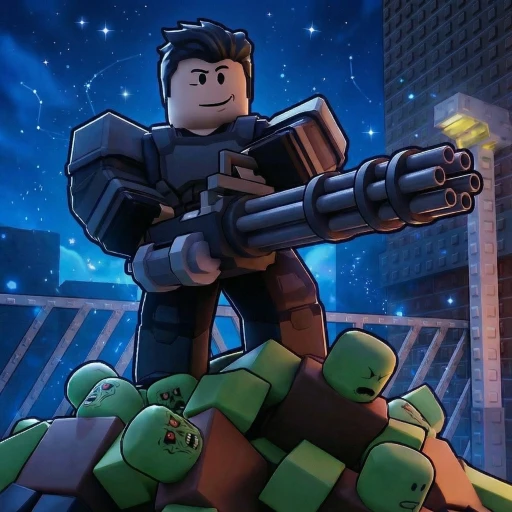
Roblox has no shortage of zombie survival games, but two titles stand out in 2026 for taking the genre in completely different directions. Survive Zombie Arena plants you in a locked-down combat arena where waves of undead pour in from every entrance and your job is to hold the line with increasingly powerful modern weaponry. Dead Rails straps you to a locomotive thundering through a zombie-infested Wild West wasteland where survival depends on your squad working together to keep the train -- and each other -- alive.
One is a focused, upgrade-driven solo shooter built around personal mastery and permanent progression. The other is a team-based survival experience wrapped in atmospheric Western horror that demands communication and coordination. Both games put zombies in your crosshairs, but the way they ask you to deal with those zombies could not be more different.
Survive Zombie Arena, developed by Nectarforge Studios, has pulled in roughly 57 million visits and maintains around 33,200 concurrent players with an 81% player rating. Dead Rails, developed by The Boneyard, has crossed 250 million visits with approximately 41,800 concurrent players and an 89% approval rating. The numbers tell part of the story, but the real question is which game delivers the zombie survival experience you are actually looking for.
This comparison breaks down every meaningful difference -- gameplay structure, weapon systems, progression, atmosphere, community, monetization, and replay value -- so you can decide which zombie game deserves your time in 2026.
Survive Zombie Arena vs Dead Rails -- Quick Stats (2026)
| Category | Survive Zombie Arena | Dead Rails |
|---|---|---|
| Genre | Wave-based zombie survival shooter | Co-op zombie survival / Western |
| Place ID | 114204398207377 | 102584889338741 |
| Developer | Nectarforge Studios | The Boneyard |
| Current Players | ~33,200 | ~41,800 |
| Total Visits | ~57M | ~250M+ |
| Player Rating | 81% | 89% |
| Setting | Modern combat arena | Wild West steam locomotive |
| Core Loop | Arena wave defense, upgrade, repeat | Defend train, survive zombie waves as a team |
| Weapon Style | Modern (assault rifles, SMGs, shotguns) | Western (revolvers, rifles, shotguns) |
| Team Structure | Solo-focused with optional co-op | Team-based cooperative |
| Progression | Permanent upgrades between sessions | Skill-based mastery, session-based |
| Key Feature | Wave skipping, 4 weapon slots | Crafting, boss zombies, train defense |
| Free-to-Play | Yes | Yes |
Gameplay -- Arena Defense vs Train Journey Survival
Survive Zombie Arena
Survive Zombie Arena strips the zombie survival genre down to its core loop and executes it with focused precision. You spawn into a contained arena -- walls on every side, entry points where zombies funnel in, and a weapon loadout system that gives you four slots to fill. The first few waves are manageable. You learn the spawn patterns, figure out which lanes get the heaviest traffic, and start building a rhythm of movement and gunfire that keeps the arena clear.
Then the difficulty escalates. Wave five hits different than wave two. Wave ten makes wave five feel like target practice. The zombie count increases, new enemy types enter the rotation, and the pace accelerates until you are constantly rotating between spawn points, managing ammunition, and making split-second decisions about which threat to prioritize. Survive Zombie Arena does not hide what it is: a score-chasing, wave-clearing shooter that rewards mechanical skill and strategic resource management.
The four weapon slots are the tactical backbone. You might run an assault rifle for medium range, a shotgun for close encounters, an SMG for crowd control, and an explosive for emergencies. Or you stack long-range options and play a kiting game, keeping distance from the horde while picking off priority targets. The loadout you bring into a run determines your playstyle, and experimenting with different combinations is where a lot of the replayability lives.
Wave skipping is a feature that separates Survive Zombie Arena from straightforward wave shooters. Once you have mastered early waves and upgraded your gear, you can skip ahead to higher difficulty tiers where the challenge actually matches your power level. This eliminates the tedium of grinding through trivial early rounds every session and respects experienced players' time. It is a quality-of-life decision that signals Nectarforge Studios understands what keeps veteran players engaged.
Dead Rails
Dead Rails approaches zombie survival from a fundamentally different angle. Instead of a static arena, you are on a moving train. The environment changes around you -- desert landscapes blur past, dust storms roll in, night falls and lifts. Your defensive perimeter is the train itself, and protecting it means covering multiple cars, maintaining barricades, managing shared resources, and communicating with your squad about where the pressure is building.
The team-based structure is not optional flavor. Dead Rails is built around the assumption that players will coordinate. One person covering the front car while another handles the rear. Someone focusing on barricade repairs while the rest hold firing lanes. A player calling out a boss zombie approaching from the left while the squad repositions. When coordination works, Dead Rails produces moments of cooperative triumph that solo games fundamentally cannot generate.
Boss zombies add punctuation marks to the wave structure. Standard zombie waves build steady pressure, but boss encounters demand specific responses -- focusing fire on a heavily armored target while lesser zombies swarm around it, kiting a fast-moving special away from the group, or burning resources on a threat that will overwhelm the barricades if it reaches the train. These encounters force the team to adapt in real time rather than falling into repetitive patterns.
The crafting system adds resource management depth between waves. Collecting materials during lulls, deciding whether to invest in barricade reinforcement or personal weapon upgrades, and allocating shared resources across the team all create decisions that carry consequences into the next wave. Dead Rails ensures that the spaces between combat are filled with meaningful choices rather than idle waiting.
Edge: Dead Rails for depth and cooperative intensity. Survive Zombie Arena for focused mechanical satisfaction and accessibility. Dead Rails creates richer moment-to-moment gameplay through teamwork and environmental variety. Survive Zombie Arena delivers tighter, more immediately satisfying gunplay in a format that does not depend on your teammates' competence.
Weapons -- Modern Arsenal vs Western Armory
Survive Zombie Arena
Survive Zombie Arena builds its weapon system around modern military hardware. Assault rifles, submachine guns, shotguns, sniper rifles, and explosive ordnance fill the roster. Each weapon category serves a distinct purpose within the four-slot loadout system, and the variety within each category gives you room to find specific guns that match your playstyle.
The assault rifles are the workhorses -- reliable damage output at medium range with manageable recoil. SMGs sacrifice per-shot damage for fire rate and are devastating against clustered groups at close range. Shotguns deliver the highest burst damage but demand precise positioning and leave you vulnerable during reloads. Sniper rifles let you thin the horde before it reaches the arena walls but become liabilities when zombies breach your perimeter.
What sets Survive Zombie Arena apart is that weapons can be permanently upgraded between sessions. You are not just finding better guns; you are investing in the guns you already own. Increasing damage, reducing reload time, expanding magazine capacity, improving accuracy -- these upgrades compound over time and create a sense of ownership over your loadout. The assault rifle you have been upgrading for weeks feels meaningfully different from a fresh one, and that investment creates attachment to your gear that session-reset systems cannot replicate.
Dead Rails
Dead Rails commits fully to its Western setting with a weapon roster that feels period-appropriate. Revolvers are your sidearms -- six shots that demand accuracy because every round counts. Lever-action rifles provide your primary ranged option with satisfying mechanical cycling between shots. Shotguns offer devastating close-range stopping power that can save you when a zombie breaches the barricades. Each weapon operates within limitations that force tactical decision-making rather than spray-and-pray approaches.
The premium weapons add variety without breaking the setting. The Mauser C96 provides semi-automatic fire that bridges the gap between revolver precision and sustained output. The Sawed-Off shotgun trades range for raw close-quarters lethality. The Thompson submachine gun introduces automatic fire to a mostly manual-action roster, making it the closest thing Dead Rails has to a crowd-control option. These weapons are distinct enough that each one changes how you approach your role on the team.
Dead Rails weapons do not upgrade permanently. Your proficiency is measured in how well you use them, not how much currency you have invested. A veteran player with a base revolver outperforms a newcomer with every premium weapon because the skill ceiling on each weapon is high enough that mechanical mastery matters more than loadout composition. This design philosophy rewards practice over grinding and keeps the playing field level between paying and free players.
Edge: Survive Zombie Arena for weapon variety and the satisfaction of permanent upgrades. Dead Rails for tactical weapon design and the weight behind every shot. Survive Zombie Arena lets you build a growing arsenal that gets stronger over time. Dead Rails makes each individual weapon feel consequential and rewards the time you invest in mastering it.
Progression -- Permanent Power vs Skill Mastery
Survive Zombie Arena
Progression in Survive Zombie Arena follows a clear upward trajectory. You earn currency from completing waves, with higher waves paying out more generously. That currency feeds into permanent weapon upgrades, new weapon unlocks, and character improvements that carry between sessions. Every time you play, you come back slightly stronger than before.
The upgrade system is layered enough to sustain engagement over weeks and months. Individual weapons have multiple upgrade paths -- damage, fire rate, reload speed, magazine size, accuracy -- and maxing out a single weapon takes sustained investment. With dozens of weapons in the roster, the full progression path stretches across hundreds of hours for completionists. Casual players still experience satisfying progression loops because even small upgrades produce noticeable differences in combat performance.
Wave skipping ties directly into the progression system. As your weapons get stronger, skipping to higher waves lets you face appropriate challenges and earn currency faster. This creates a positive feedback loop: upgrade weapons, skip higher, earn more currency, upgrade further. The cycle maintains forward momentum and prevents the stagnation that plagues wave-survival games where you repeat trivial early content every session.
The structure gives players tangible milestones at every stage. First time reaching wave 20. First weapon fully upgraded. First successful run starting from wave 30. These benchmarks provide the kind of concrete goal-setting that keeps players returning day after day, week after week.
Dead Rails
Dead Rails deliberately avoids traditional power progression. There are no permanent stat upgrades. No weapon levels. No skill trees that make your character stronger between sessions. Every match starts on equal footing, and the only advantage returning players carry is knowledge and skill. This is an intentional design choice that prioritizes session-to-session stakes over long-term power accumulation.
What Dead Rails offers instead is mastery progression -- the kind measured in your own capability rather than your character sheet. Learning optimal barricade placement. Understanding which zombie types require which responses. Developing the muscle memory to land consistent headshots with the revolver under pressure. Recognizing audio cues that signal incoming boss waves. This knowledge accumulates over time and makes experienced players dramatically more effective without any mechanical advantage over newcomers.
Between sessions, you can earn currency for cosmetics and consumables, but these do not change your combat effectiveness in meaningful ways. The cosmetic unlocks provide personalization without power creep, keeping the competitive landscape flat. Some players find this deeply satisfying because every accomplishment reflects genuine skill rather than time invested in grinding currency. Other players find it frustrating because there are no tangible rewards to chase beyond the survival itself.
Edge: Survive Zombie Arena. The permanent upgrade system provides more concrete motivation for most players. Logging in, upgrading a weapon, and immediately feeling the difference in combat performance is a powerful retention loop. Dead Rails' mastery-based progression appeals to a specific audience that values pure skill development, but Survive Zombie Arena's tangible reward structure casts a wider net and gives more players a reason to come back tomorrow.
Atmosphere and Presentation
Survive Zombie Arena
Survive Zombie Arena opts for functional presentation over atmospheric ambition. The arena environments are clean and readable -- you can always see where zombies are spawning, where your teammates are positioned, and where the threats are concentrated. Lighting is bright enough that visibility is never an issue, and the visual language communicates gameplay information effectively.
Weapon effects are satisfying. Muzzle flash, impact particles, and zombie death animations provide clear feedback that your shots are connecting. The escalation of later waves is communicated visually through sheer volume -- the screen fills with zombies, projectiles, and effects in a way that conveys the increasing difficulty without requiring atmospheric tricks. The presentation serves the gameplay rather than trying to create a mood.
Audio follows the same functional philosophy. Gunfire sounds distinct across weapon categories, zombie growls signal proximity, and wave-start audio cues prepare you for incoming threats. The soundtrack maintains energy without demanding attention. Everything works, and nothing gets in the way. For a game built around mechanical precision and score-chasing, this approach makes sense -- you want clear information, not atmospheric distraction.
Dead Rails
Dead Rails is one of the most atmospheric games on Roblox, full stop. The Western zombie setting is not just a visual theme -- it permeates every element of the presentation. The train itself creaks and groans as it barrels through the wasteland. Dust storms reduce visibility and force players to rely on audio cues. Night cycles plunge the environment into darkness where lantern light and muzzle flash become your primary light sources. The world outside the train shifts between arid desert, rocky canyons, and abandoned settlements that tell stories without dialogue.
The sound design is where Dead Rails genuinely separates itself from the broader Roblox catalog. The soundtrack weaves spaghetti Western guitar riffs with ambient horror tones that shift dynamically based on combat intensity. Each weapon has a unique audio signature -- the sharp crack of a revolver, the heavy blast of a shotgun, the mechanical rattle of the Thompson. Zombie audio is deliberately varied: distant groans announce approaching waves, armored zombies clank and scrape, boss zombies produce unique sounds that experienced players learn to identify before the threat is visible.
Playing Dead Rails with headphones transforms the experience. Directional audio tells you where threats are coming from. The mix of environmental sound, combat audio, and music creates tension that most Roblox games never attempt. The atmospheric commitment turns every session into something that feels closer to a cinematic experience than a typical Roblox game.
Edge: Dead Rails -- decisively. The atmospheric gap between these two games is substantial. Dead Rails delivers visual and audio presentation that competes with dedicated horror games outside of Roblox. Survive Zombie Arena's functional presentation serves its gameplay well, but it does not attempt -- or achieve -- the immersive quality that Dead Rails delivers consistently.
Player Count and Community (July 2026)
Dead Rails holds clear advantages in raw numbers. With over 250 million total visits and approximately 41,800 concurrent players, it has established itself as one of the most successful zombie survival games on Roblox. Its 89% player rating reflects broad satisfaction across its player base. Survive Zombie Arena sits at roughly 57 million visits and 33,200 concurrent players with an 81% rating -- smaller numbers, but still representing a healthy and growing community.
The community cultures differ in ways that reflect each game's design. Survive Zombie Arena's community centers on score comparison, weapon tier lists, upgrade optimization guides, and wave record discussions. Players share loadout builds, debate the most efficient upgrade paths, and post personal-best wave counts. The tone is competitive and analytical, resembling communities around roguelikes and score-attack games. Content creators focus on high-wave gameplay footage and build showcases.
Dead Rails' community revolves around cooperative strategy. Discussions cover optimal team compositions, barricade placement guides, boss zombie counter-strategies, and weapon role breakdowns. The team-based format generates story-sharing -- players recount dramatic last stands, clutch revives, and sessions where everything clicked perfectly. Content creators produce highlight reels and guide content that emphasizes teamwork and tactical execution. Dead Rails generates strong Twitch viewership because the cooperative format creates natural narrative arcs that translate well to streaming.
Both developers maintain active communication channels. Nectarforge Studios engages through their Discord server with update previews and community feedback collection. The Boneyard has built a reputation for responsive community management and consistent content updates that address player feedback directly.
Edge: Dead Rails for overall community size and engagement. Survive Zombie Arena for community focus and analytical depth. Dead Rails' larger player base and content creator ecosystem provide more external content to engage with. Survive Zombie Arena's tighter community offers more targeted discussion and optimization-focused interaction.
Game Passes and Monetization
Survive Zombie Arena
Survive Zombie Arena monetizes primarily through weapon unlocks and upgrade boosters. Premium weapons offer unique capabilities that are not available through standard progression, and currency boosters accelerate the upgrade grind for players who want to reach endgame content faster. The pricing sits in the standard Roblox range, with individual passes typically falling between 50 and 250 Robux depending on the item.
The permanent upgrade system means that free players eventually reach the same power level as paying players -- purchases accelerate the journey rather than gating destinations. A free player who invests enough time will max out the same weapons as someone who bought currency boosters on day one. The paying player gets there faster, but the free player gets there eventually. This distinction matters because it means spending money never feels mandatory, even if it saves time.
The breadth of available purchases can feel overwhelming to new players. Without clear guidance on which weapons or boosters provide the most value per Robux, the shop requires some research or community input to navigate efficiently. Experienced players learn to prioritize quickly, but the initial experience could benefit from better curation.
Dead Rails
Dead Rails maintains a minimalist monetization approach. The core premium weapon passes -- each priced at 148 Robux -- unlock specific weapons with distinct tactical identities. The More Storage pass at 79 Robux expands inventory capacity. At roughly $1.85 USD per weapon pass, the pricing is among the most accessible for a game of Dead Rails' popularity and quality level.
The focused lineup means every purchase is a clear decision. You know exactly what you are buying, what it does, and how it fits into your gameplay. There are no loot boxes, no randomized rewards, and no confusing tiers of premium currency. You spend Robux, you get a weapon. The simplicity builds trust and makes spending feel deliberate rather than manipulative.
Neither game is pay-to-win. Dead Rails' premium weapons are sidegrades rather than upgrades -- the Thompson is not strictly better than the base revolver, just different. A skilled free player consistently outperforms a paying player who lacks game sense. Survive Zombie Arena's purchases accelerate progression but do not raise the ceiling above what free players can achieve.
Edge: Dead Rails. The focused, transparently priced pass lineup with clear tactical value beats Survive Zombie Arena's broader but less curated approach. Dead Rails makes spending money feel good because every purchase is intentional and immediately useful. Survive Zombie Arena's shop works but requires more player research to navigate efficiently.
Replayability -- What Keeps You Coming Back?
Survive Zombie Arena
Survive Zombie Arena's replayability is built on two pillars: the upgrade treadmill and the challenge curve. The permanent progression system ensures that every session moves you forward. Even a short run that ends on wave 15 generates currency that contributes to your next weapon upgrade. The feeling of incremental improvement sustains daily engagement because you always have something specific to work toward.
The wave skipping system extends the game's lifespan significantly. Once you have outgrown the early game, jumping straight to challenging content keeps sessions focused on the gameplay that actually tests your abilities. Combined with the four-slot weapon system that encourages loadout experimentation, Survive Zombie Arena provides enough variables to keep runs feeling distinct even after dozens of hours. Trying new weapon combinations against higher wave counts creates its own metagame within the broader progression loop.
The limitation is content variety within the arena itself. The environments and zombie types, while functional, do not dramatically change the fundamental experience. After extensive play, the core loop of clearing waves in an arena remains consistent regardless of which weapons you bring. Players who need environmental variety or narrative progression may find the repetition setting in sooner than those who are motivated by score optimization and build crafting.
Dead Rails
Dead Rails generates replayability through intensity and cooperation. Each session follows a complete narrative arc -- calm preparation, rising tension, desperate survival, triumph or defeat. Because progression resets between sessions, the stakes remain constant. Wave 10 in your hundredth session feels as dangerous as wave 10 in your first. The absence of permanent power creep means the game never becomes trivially easy regardless of how many hours you invest.
The team dynamic adds a layer of unpredictability that keeps sessions fresh. Different squadmates bring different strengths, and the way your team responds to pressure creates emergent situations that scripted content cannot replicate. One session your team holds a perfect defensive line. The next, a critical barricade breaks and you scramble to reorganize under fire. These unscripted moments are what cooperative games do best, and Dead Rails generates them consistently.
Boss zombie encounters and environmental variety -- weather changes, time-of-day shifts, different terrain outside the train -- add visual and tactical variation between sessions. Updates from The Boneyard introduce new zombie types, weapons, and seasonal events that refresh the content pipeline. The game depends more heavily on these updates than Survive Zombie Arena does, because PvE content without permanent progression relies on fresh challenges to prevent staleness.
Edge: Survive Zombie Arena for sustained daily engagement through its upgrade system. Dead Rails for session-to-session intensity and cooperative variety. Survive Zombie Arena gives you concrete reasons to log in every day. Dead Rails gives you a more gripping experience each time you do. The better choice depends on whether you are motivated by tangible progression milestones or by the inherent satisfaction of surviving against the odds with a capable team.
Solo vs Team -- The Core Design Difference
This is the most fundamental distinction between these two games and the one most likely to determine which you prefer. Survive Zombie Arena is designed around individual performance. Your success depends on your loadout choices, your aiming skill, your wave management, and your upgrade investments. Other players can be present, but your survival is ultimately in your own hands. If you go down, it is because of decisions you made -- not because a teammate abandoned their post.
Dead Rails is designed around collective performance. Your success depends on how well your team communicates, coordinates defensive coverage, shares resources, and responds to emergent threats. The best individual player in the world cannot consistently carry a disorganized squad through late-game waves because the game is balanced around the assumption that multiple players are covering multiple angles simultaneously. Your survival depends on everyone doing their part.
Neither approach is objectively better. Solo-focused design respects your individual investment and eliminates the frustration of depending on strangers. Team-focused design creates bonding experiences and emergent stories that solo games cannot generate. If you primarily play Roblox alone or with inconsistent groups, Survive Zombie Arena removes the teammate variable entirely. If you have a regular squad or enjoy the social dynamics of cooperative play, Dead Rails delivers moments that solo games simply cannot match.
Earning Potential -- Free Robux While You Play
If you use Earnaldo to earn free Robux alongside your gaming sessions, both games create natural opportunities to complete earning tasks without disrupting your gameplay. Survive Zombie Arena offers natural downtime between waves and during the upgrade menu that appears after each run. These breaks are predictable and player-controlled, meaning you can tab over to Earnaldo, complete a task, and return before the next wave starts. The solo-focused design means stepping away briefly does not impact anyone else.
Dead Rails provides wave-gap downtime between zombie attacks where teams regroup, repair barricades, and redistribute resources. These lulls create windows for quick task completion, though the team-based nature means extended breaks can leave your squad undermanned. The 10-20 minute match length means fewer total transition points per hour compared to Survive Zombie Arena's shorter runs, but each break is built naturally into the gameplay flow.
For solo Earnaldo users, Survive Zombie Arena is the cleaner pairing because your earning breaks never impact other players. For group sessions where earning is secondary to gameplay, Dead Rails works perfectly well during its natural downtime phases.
For game-specific strategies on maximizing your Robux earnings, check our dedicated guides: Survive Zombie Arena free Robux guide and Dead Rails free Robux guide. Stay updated with the latest working codes: Survive Zombie Arena codes | Dead Rails codes. And if you enjoy horror-adjacent experiences on Roblox, our Doors free Robux guide covers another popular title in the genre.
Earn Free Robux for Survive Zombie Arena or Dead Rails
Complete simple tasks on Earnaldo and withdraw real Robux -- no downloads, no generators, no scams.
Head-to-Head Verdict -- Survive Zombie Arena vs Dead Rails in 2026
The Verdict
Choose Survive Zombie Arena if you want a zombie survival game that respects your individual skill and rewards you with permanent, tangible progression. The wave-based arena format is clean and focused, the four-slot weapon system encourages build experimentation, the upgrade path gives every session a sense of forward movement, and the wave skipping feature eliminates tedious repetition for experienced players. With 33,200 concurrent players and a growing community, Survive Zombie Arena offers a refined solo zombie-slaying experience where your performance and your progression are entirely in your hands. Best for players who value personal improvement, concrete upgrade goals, and the ability to play on their own terms without depending on teammates.
Choose Dead Rails if you want a zombie survival game with genuine atmosphere and the kind of cooperative intensity that creates stories worth telling. The Western train setting is one of the most distinctive environments on Roblox, the team-based gameplay produces moments of collective triumph that solo games cannot replicate, and the presentation -- visual and audio -- operates at a level that few Roblox experiences match. With 41,800 concurrent players, 250 million visits, and an 89% player rating, Dead Rails has proven that its formula resonates with a massive audience. Best for players who value atmosphere, teamwork, and the satisfaction of surviving genuine challenges with a coordinated squad.
Overall winner: Dead Rails -- by a clear margin. The deeper cooperative mechanics, superior atmospheric design, more transparent monetization, higher community approval rating, and significantly larger player base give Dead Rails the advantage across most categories. But this verdict carries an important asterisk: Survive Zombie Arena is the better game for solo players. If you primarily play alone and want progression that rewards every session with measurable improvement, Survive Zombie Arena delivers that experience more effectively than Dead Rails can. Both games are worth playing, and zombie fans who keep both in their rotation will find that each scratches a different itch.
Who Should Play What?
- You play mostly solo: Survive Zombie Arena. The entire experience is designed around your individual performance and progression without any reliance on teammates.
- You have a regular squad on voice chat: Dead Rails. Coordinated teamwork transforms Dead Rails from a good game into one of the best cooperative experiences on Roblox.
- You want to feel yourself getting stronger over time: Survive Zombie Arena. Permanent weapon upgrades make every session contribute to measurable power growth.
- You want the best atmosphere on Roblox: Dead Rails. The Western zombie-train setting with dynamic weather and sound design creates genuine immersion that most games on the platform never approach.
- You have limited play sessions: Survive Zombie Arena. Wave skipping means you can jump straight to challenging content without repeating easy waves, and the solo format means you never wait for a group to form.
- You enjoy crafting and resource management: Dead Rails. The between-wave crafting system and shared resource allocation add strategic depth beyond pure shooting.
- You want modern military weapons: Survive Zombie Arena. Assault rifles, SMGs, and explosives fill out a contemporary arsenal with extensive upgrade paths.
- You prefer deliberate, weighty gunplay: Dead Rails. Every round from a revolver counts, and the Western weapons reward precision over volume.
- You want to earn Robux while playing: Both pair well with Earnaldo. Survive Zombie Arena is slightly better for solo earners due to its player-controlled pacing and no impact on teammates during breaks.
Frequently Asked Questions
Is Survive Zombie Arena or Dead Rails more popular on Roblox in 2026?
Dead Rails is significantly more popular by the numbers. It has over 250 million total visits compared to Survive Zombie Arena's 57 million, and maintains a higher concurrent player count at roughly 41,800 versus 33,200. Dead Rails also carries a higher player rating at 89% compared to 81%. However, Survive Zombie Arena is growing steadily and has built a dedicated community of players who appreciate its focused, upgrade-driven approach to zombie survival.
Which game is better for solo players, Survive Zombie Arena or Dead Rails?
Survive Zombie Arena is the clear choice for solo players. Its wave-based arena format is designed around individual performance, with personal upgrade paths, solo-friendly pacing, and the ability to progress without relying on teammates. Dead Rails is built around team coordination on the train, and while you can play with random squads, the experience is noticeably weaker without communication. Solo players will find more consistent and rewarding gameplay in Survive Zombie Arena.
Can you play Survive Zombie Arena and Dead Rails on mobile?
Yes, both games are fully playable on mobile through the Roblox app on iOS and Android. Survive Zombie Arena translates reasonably well to touchscreens since its arena-based combat allows for wider aiming angles and the wave structure provides breathing room between intense encounters. Dead Rails is more challenging on mobile because fast-moving zombie swarms require quick and precise aiming that touchscreen controls make harder to execute consistently. Both are playable, but Survive Zombie Arena provides the smoother mobile experience overall.
Are there active codes for Survive Zombie Arena and Dead Rails in April 2026?
Yes, both games release codes periodically for free in-game rewards including currency, cosmetics, and boosts. We maintain regularly updated code lists for both titles: Survive Zombie Arena codes (July 2026) and Dead Rails codes (July 2026). Bookmark those pages and check back frequently as new codes are added throughout the month.
Which zombie game has better weapons, Survive Zombie Arena or Dead Rails?
It depends on what you value in a weapon system. Survive Zombie Arena features modern weapons across four loadout slots with extensive permanent upgrade paths -- assault rifles, shotguns, SMGs, and explosives that grow stronger the more you invest in them. Dead Rails uses Western-era weapons like revolvers, lever-action rifles, and shotguns where each weapon has a distinct tactical identity and high skill ceiling. Survive Zombie Arena offers more raw variety and customization depth. Dead Rails makes each individual weapon feel more grounded and tactically significant within its cohesive setting.
Which game is better for earning free Robux while playing?
Both games work well with Earnaldo. Survive Zombie Arena has natural downtime between waves and during upgrade menus where you can tab over to complete earning tasks without impacting anyone else. Dead Rails offers similar wave-gap downtime but its team-based structure means stepping away can leave your squad undermanned during critical moments. For solo Earnaldo users who want to maximize earning efficiency without affecting other players, Survive Zombie Arena is the slightly better pairing. For group sessions where earning is secondary, Dead Rails works perfectly well during its built-in lulls.