Tower Heroes vs Anime Defenders (2026) -- Which Is Better?
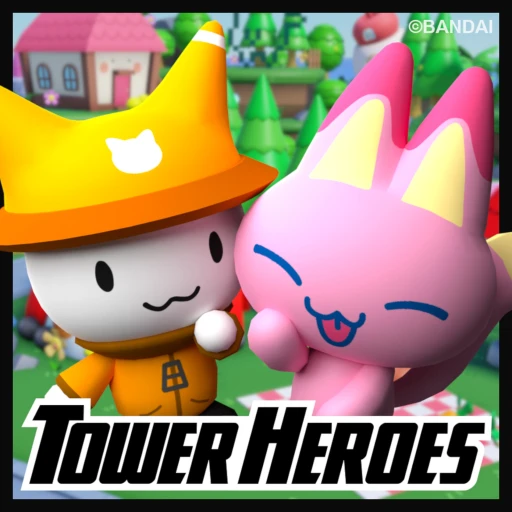
Roblox has no shortage of tower defense games, but two names keep coming up in every conversation about the genre: Tower Heroes and Anime Defenders. They share the same DNA — place units, upgrade them, survive waves, beat the boss — yet they feel like completely different experiences once you get past the surface. Tower Heroes delivers a polished, charming TD experience with original characters and tight map design. Anime Defenders goes all-in on anime-inspired units, deep customization, and a progression system that could swallow weeks of your time.
One has been around since early 2020 and built a loyal community through consistent seasonal events and collaborations. The other launched in mid-2024 and exploded to over 3.4 billion visits within its first year, becoming one of the fastest-growing tower defense games Roblox has ever seen. If you only have time for one, this breakdown will help you decide which tower defense game deserves your hours.
Tower Heroes vs Anime Defenders -- Quick Stats (2026)
| Category | Tower Heroes | Anime Defenders |
|---|---|---|
| Genre | Tower defense | Anime tower defense |
| Place ID | 4646477729 | 16399957689 |
| Developer | Pixel-bit Studio | Small World Games |
| Launch Year | 2020 | 2024 |
| Total Visits | 512M+ | 3.4B+ |
| Concurrent Players | 2K-8K | 50K-200K |
| Unit Count | 40+ heroes | 200+ units |
| Core Loop | Place heroes, earn mana, upgrade, beat boss | Summon units, deploy, upgrade, customize via skill tree |
| Co-op Support | Up to 4 players | Co-op story & challenge modes |
| Unit Acquisition | Coins from matches | Gems via gacha summoning |
| Mobile-Friendly | Yes | Yes |
| Free-to-Play | Yes | Yes |
Gameplay -- What Sets Them Apart?
Tower Heroes
Tower Heroes keeps things clean. You enter the lobby, pick a map from the elevator system, vote on a difficulty (Easy, Medium, or Hard), and drop into a match. The battlefield is compact and readable — you can see every path, every spawn point, and every tower placement spot without scrolling around. You start each round with a base pool of mana, spend it to place heroes along the enemy path, and earn more mana as enemies fall. Upgrading a hero costs additional mana, with each upgrade boosting stats and sometimes unlocking new abilities.
The global tower limit keeps matches strategic. Playing solo, you can place up to 26 towers. With two players, that cap drops to 20, and it decreases by one for every additional player beyond that. This means co-op is not just about having more firepower — it forces real coordination. You cannot both spam the same hero type and expect to win on harder difficulties. Someone needs to handle crowd control while someone else focuses on single-target burst damage for the boss wave.
Maps are designed with personality. Seasonal events bring themed maps for Halloween, Easter, and Christmas, each with unique enemy types and limited-time rewards. The Tamagotchi Party collaboration, added in early 2026, introduced a Tama Park map with exclusive Tamagotchi skins, followers, and stickers. Previous collaborations have included crossovers with DOORS and other popular Roblox properties. These events keep the map rotation fresh and give veteran players a reason to come back.
The hero roster sits at around 40+ characters, each with a distinct visual identity and playstyle. Some heroes deal area-of-effect damage, others slow enemies, and a few serve as pure support units that buff nearby towers. You unlock new heroes by spending coins earned from completing matches, which means every win (and even some losses) pushes you closer to expanding your roster. The unlock pace is fair — you will not be grinding the same map fifty times to afford a single hero.
Anime Defenders
Anime Defenders operates on a fundamentally different scale. Where Tower Heroes gives you 40 heroes and says "master these," Anime Defenders hands you a summoning portal with over 200 units drawn from anime franchises spanning One Piece, Naruto, Bleach, Dragon Ball, and more. The sheer volume of collectible characters is the first thing that grabs you, and the gacha-style summoning system — spend gems, pull units, hope for rare drops — creates a loop that anime fans will recognize immediately.
Each unit belongs to a rarity tier, from common to legendary, and higher-rarity units bring stronger base stats and more impactful abilities. But rarity alone does not determine a unit's ceiling. The Skill Tree system, introduced in Update 8 (Red One), transformed how players think about unit builds. Every unit has a branching skill tree with five possible final paths, meaning two players running the same legendary unit can end up with completely different builds. One might prioritize raw damage, while another invests in crowd control or support buffs. Skill Points are earned by defeating enemies with matching elemental types in Story Mode, which ties progression directly to gameplay rather than just time spent.
On top of the Skill Tree, units have Traits — passive bonuses that increase damage, range, critical hit chance, and other stats. Traits can be rerolled using Trait Crystals, adding another layer of customization and another resource to farm. The depth here is real. Theory-crafting optimal builds for endgame content requires understanding how Skill Tree paths, Traits, and unit synergies interact.
The map and mode variety is substantial. Story Mode provides a structured campaign with increasing difficulty. Challenge modes test specific strategies and reward high-value loot. Events rotate regularly, introducing limited-time maps and exclusive units that drive urgency in the community. The production quality is high across the board — animations are smooth, unit designs are detailed, and the UI is polished in ways that many Roblox TD games are not.
Progression -- The Grind Compared
Tower Heroes has a progression curve that respects your time. You play matches, earn coins, buy heroes, and gradually learn which combinations work on which maps. The skill ceiling comes from mastering placement timing, upgrade priority, and co-op coordination rather than from grinding hundreds of hours for a specific drop. A new player can build a competitive hero roster within a few weeks of regular play. The game rewards knowledge and execution over raw time investment.
Anime Defenders demands significantly more from you. The gacha summoning system means your progression is partially governed by luck. You might pull a top-tier legendary unit in your first ten summons, or you might grind gems for days before seeing one. Once you have units, leveling them through the Skill Tree requires farming specific elemental enemies in Story Mode. Rerolling Traits for optimal stats adds yet another layer of grinding. The endgame — clearing the hardest challenge modes and building perfectly optimized unit rosters — is a commitment measured in months, not weeks.
This is not necessarily a negative. For players who love long-term progression systems with deep optimization, Anime Defenders delivers exactly that. The feeling of finally completing a perfect Skill Tree build or pulling a unit you have been chasing for weeks is genuinely rewarding. But for players who want to jump in, have fun, and feel competitive without a massive time commitment, Tower Heroes is the friendlier option by a wide margin.
Edge: Tower Heroes for accessibility and time respect. Anime Defenders for depth and long-term engagement.
Graphics and Visual Style
Tower Heroes leans into a colorful, cartoonish art direction that sets it apart from every other TD game on Roblox. Heroes and enemies are designed to be charming rather than intimidating — rounded shapes, expressive faces, and vibrant color palettes make the game feel welcoming. The maps are compact and visually distinct, with seasonal themes that completely transform the look and feel. Halloween maps go dark and spooky. Christmas maps pile on snow and lights. The art style is consistent, readable, and performs well on low-end devices.
Anime Defenders takes a different approach. Its unit designs draw directly from anime aesthetics — detailed character models with dynamic poses, flashy ability animations, and particle effects that fill the screen during intense late-wave moments. The visual spectacle is impressive, especially when multiple high-rarity units are firing off ultimate abilities simultaneously. The UI is clean and modern, with clearly organized menus for the Skill Tree, Trait system, and summoning portal.
The trade-off is performance. Anime Defenders can stutter on older devices when the screen fills with units and enemies in late-game scenarios. Tower Heroes maintains a smooth frame rate almost universally because its lighter art style demands less from the hardware.
Edge: Anime Defenders for visual spectacle and production polish. Tower Heroes for consistent performance and art direction that runs on anything.
Player Count and Community (July 2026)
The numbers tell a clear story. Anime Defenders regularly pulls between 50,000 and 200,000 concurrent players and has accumulated over 3.4 billion total visits since launching in April 2024. It has been one of the top-performing Roblox games for nearly two years, with a community that spans Discord servers, YouTube channels, Reddit discussions, and dedicated value-tracking websites. The trading economy — yes, Anime Defenders has unit trading — has spawned its own ecosystem of tier lists, value charts, and marketplace activity.
Tower Heroes operates at a smaller scale. Concurrent players typically range between 2,000 and 8,000, with spikes during major events and collaborations. Total visits exceed 512 million, which is respectable for a game that has maintained a steady audience for over six years. The community is tight-knit and passionate, centered around the Tower Heroes Wiki and active Discord channels where players discuss strategies, share tier lists, and coordinate co-op runs.
Smaller does not mean worse. Tower Heroes lobbies are rarely empty, matchmaking works, and the community is welcoming to new players. Anime Defenders' massive population means you will never wait for a co-op partner, but it also means the community is louder, more fragmented, and harder to navigate as a newcomer.
Game Passes and Monetization
Tower Heroes sells game passes that lean cosmetic and collaborative. Bundles like the DOORS x Tower Heroes Bundle unlock themed skins and crossover content. Individual hero skins, stickers, and modifiers are available through the in-game coin shop, with most cosmetic items purchasable through gameplay earnings alone. Event-exclusive game passes, like the 399-Robux Halloween 2025 pass, offer limited-time towers and skins tied to seasonal content. Nothing sold through game passes provides a meaningful combat advantage — the game stays competitive for free players.
Anime Defenders monetizes through gem bundles, auto-farm passes, storage expansion, and convenience features. The In-Game Store offers game passes that speed up progression — auto-farming lets your units grind while you are away, and storage upgrades let you hold more units without sacrificing existing ones. Gem bundles provide more summoning pulls, which translates to more chances at rare units. Since Update 4 Part 1, all game passes are tradable and can be sold through the player trading system, which adds a secondary market layer.
Neither game crosses into pay-to-win territory. Every unit in Anime Defenders can be obtained through free gem farming, and every hero in Tower Heroes can be unlocked with coins. But Anime Defenders' gacha system means free players face a longer and more luck-dependent road to a complete roster. Tower Heroes' deterministic unlock system — earn coins, buy what you want — is more transparent.
Edge: Tower Heroes for fair and straightforward monetization. Anime Defenders' gem-and-gacha model is standard for the genre but inherently less player-friendly.
Social Features and Multiplayer
Tower Heroes was designed around cooperative play from day one. The matchmaking system pairs you with up to three other players, and the shared tower limit mechanic forces genuine collaboration. You cannot ignore your teammates' placements — the cap ensures everyone has to contribute meaningfully without cluttering the map. The recent addition of a Ping System (middle mouse button) lets players communicate tower placement suggestions and enemy threats without relying on chat, which is a smart quality-of-life feature for a game where seconds matter.
Anime Defenders supports co-op in Story Mode and Challenge modes, but the multiplayer structure is different. Each player brings their own unit roster and deploys independently. There is less mechanical interdependence — you are fighting alongside other players rather than building a shared defense. The social layer is stronger in the trading system, where players negotiate unit swaps, buy and sell game passes, and participate in an active marketplace. Discord is essential for serious Anime Defenders trading, and the community has built extensive infrastructure around it.
For players who want multiplayer to mean genuine teamwork, Tower Heroes delivers. For players who want a social economy built around collecting and trading, Anime Defenders has the edge.
Replay Value -- Which One Lasts Longer?
Tower Heroes gets its replay value from map variety, seasonal events, and the satisfaction of mastering harder difficulties. The collaboration events — Tamagotchi, DOORS, and others — drop limited-time content that creates urgency and gives veteran players new targets. The difficulty scaling means even experienced players face real challenges on Hard mode, and the co-op tower limit system makes every match feel different depending on your team composition. Six years after launch, the game still pulls consistent numbers because the core loop is solid.
Anime Defenders has the deeper endgame by a significant margin. The Skill Tree system alone adds dozens of hours of build optimization per unit. The trait rerolling system provides a secondary progression track. New units arrive through regular updates and events, reshuffling tier lists and creating new meta strategies. The trading economy gives high-level players something to do even after they have cleared all available content — building a valuable collection becomes a game within the game. For dedicated players, Anime Defenders can remain the primary Roblox experience for months or longer.
The flip side is burnout risk. Anime Defenders' gacha and grinding systems can feel punishing during dry streaks, and the time investment required for endgame optimization is substantial. Tower Heroes is less likely to burn you out because individual sessions are shorter and progress is more predictable.
Earning Free Robux While You Play
Both tower defense games pair well with Earnaldo for earning free Robux on the side. Tower Heroes has natural downtime between matches — waiting in lobbies, voting on maps, and watching results screens — that gives you windows to complete earning tasks. The matches themselves require active attention, but the breaks between them are frequent and long enough to multitask.
Anime Defenders offers even more downtime if you have the auto-farm game pass, since your units can grind without direct input. Even without it, the gacha summoning process, Skill Tree management, and inventory organization all happen in menus where you can easily switch tabs to Earnaldo. For game-specific earning strategies, check out our Tower Heroes free Robux guide and Anime Defenders free Robux guide.
Earn Free Robux for Tower Heroes or Anime Defenders
Complete simple tasks on Earnaldo and withdraw real Robux — no downloads, no generators, no scams.
Head-to-Head Verdict -- Tower Heroes vs Anime Defenders in 2026
The Verdict
Choose Tower Heroes if you want a polished, accessible tower defense game that values your time. Its original character designs, tight co-op mechanics, and fair progression system make it one of the best-designed TD experiences on Roblox. You will not need to grind for weeks to feel competitive, and the seasonal events keep the content fresh without demanding a massive commitment. Tower Heroes is the game you can pick up for an hour and walk away satisfied.
Choose Anime Defenders if you want depth, scale, and a tower defense experience you can sink hundreds of hours into. The 200+ unit roster, Skill Tree customization, trait system, and active trading economy create a game with more systems than most standalone titles. If you love anime, enjoy theory-crafting optimal builds, and want a TD game that doubles as a long-term collecting hobby, Anime Defenders is the clear pick.
Overall: Anime Defenders wins on content volume, player count, and endgame depth. Tower Heroes wins on accessibility, co-op design, and visual charm. They serve different appetites within the same genre. The right choice depends on whether you want a focused, well-crafted experience or a sprawling, systems-heavy one. Both are strong entries in the Roblox TD space, and playing both is not a bad idea — Tower Heroes for quick sessions, Anime Defenders for longer grinding sessions.
Who Should Play What?
- You are new to tower defense: Start with Tower Heroes. Its learning curve is gentle, and the co-op matchmaking means experienced players can carry you through early maps while you learn.
- You love anime and collecting characters: Anime Defenders was built for you. The 200+ unit roster spanning major anime franchises is the biggest draw, and the gacha system feeds the collector impulse.
- You play in short sessions: Tower Heroes matches are compact and satisfying. You can finish a full run in 10-15 minutes and feel like you accomplished something.
- You want a game with serious endgame depth: Anime Defenders delivers. The Skill Tree, trait rerolling, and challenge modes provide hundreds of hours of optimization content.
- You value co-op teamwork: Tower Heroes' shared tower limit and ping system create genuine cooperative gameplay that requires communication and strategy.
- You want to earn Robux while playing: Both work well with Earnaldo, but Anime Defenders' auto-farm feature gives you the most natural downtime for earning tasks.
Frequently Asked Questions
Is Tower Heroes or Anime Defenders more popular on Roblox in 2026?
Anime Defenders is significantly more popular by the numbers. It has over 3.4 billion total visits and regularly pulls 50K-200K concurrent players, while Tower Heroes sits at around 512 million visits with lower concurrent numbers. Anime Defenders launched in 2024 and grew rapidly thanks to its anime IP appeal and deep unit customization systems.
Which game is better for beginners — Tower Heroes or Anime Defenders?
Tower Heroes is the better starting point for newcomers to tower defense. Its maps are smaller, the hero roster is manageable, and the mana system is straightforward. Anime Defenders throws a lot at new players — hundreds of units, a gacha summoning system, trait rerolls, and a full skill tree — which can feel overwhelming without prior TD experience.
Can you play Tower Heroes and Anime Defenders on mobile?
Yes, both games are fully playable on mobile through the Roblox app on iOS and Android. Tower Heroes runs smoothly on most devices due to its lighter visual style. Anime Defenders can be more demanding on older phones during late-wave scenarios with many units deployed, but it remains playable on modern devices.
Does Tower Heroes or Anime Defenders have better co-op multiplayer?
Both games support co-op, but they handle it differently. Tower Heroes has a matchmaking system where up to four players share a global tower limit that scales down per player, encouraging coordination. Anime Defenders supports co-op in its story and challenge modes where players each deploy their own units independently. Tower Heroes feels more collaborative, while Anime Defenders co-op is more about individual contribution to a shared goal.
Are game passes pay-to-win in Tower Heroes or Anime Defenders?
Neither game locks essential content behind paywalls. Tower Heroes game passes unlock cosmetic skins, collaboration bundles, and convenience items — none give a direct combat advantage. Anime Defenders game passes offer gem bundles, auto-farm features, and storage upgrades that speed up progression but do not gate any units or maps. Both games are fully playable without spending Robux.
Which tower defense game on Roblox gets more frequent updates?
Anime Defenders by Small World Games has maintained a strong update cadence since launch, releasing major content updates roughly every 4-6 weeks with new units, maps, events, and system overhauls like the Skill Tree in Update 8. Tower Heroes by Pixel-bit Studio also updates regularly with seasonal events, collaboration maps, and new heroes, though its update pace is slightly more relaxed given the game's maturity.