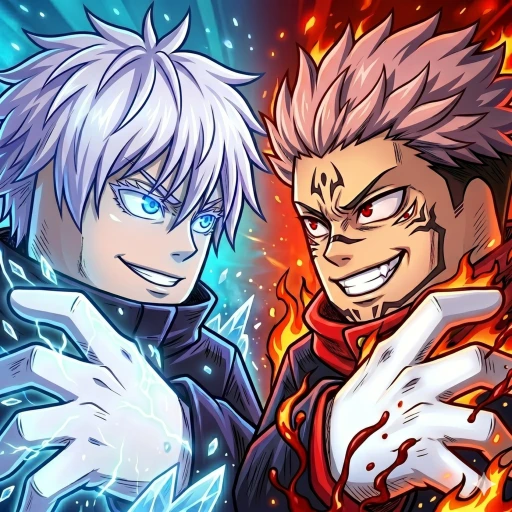
Anime Knockout vs Jujutsu Shenanigans: Which Roblox Anime Fighter Is Right for You in 2026?
Roblox is home to dozens of anime fighting games, but two titles keep dominating the conversation in 2026: Anime Knockout and Jujutsu Shenanigans. One offers a massive roster of 70+ characters from every popular franchise you can name. The other has built a dedicated community around one anime universe with incredibly deep combat mechanics. Which one deserves your time and, more importantly, which one will keep you coming back? This comparison breaks down every detail so you can decide for yourself.
Quick Stats Comparison
| Feature | Anime Knockout | Jujutsu Shenanigans |
|---|---|---|
| Genre | PvP Anime Fighter | Anime Fighting |
| Playable Characters | 70+ | 30+ (JJK focused) |
| Peak CCU | 40K+ | 150K+ |
| Place ID | 104843911500837 | 9391468976 |
| Mobile Support | Yes | Yes |
| Release Year | 2025 | 2022 |
| Free-to-Play | Yes | Yes |
| Team Modes | Yes (2v2, 3v3) | Yes (crew battles) |
At first glance the numbers tell part of the story. Jujutsu Shenanigans commands a significantly larger player base, which makes sense given its longer presence on the platform. But Anime Knockout has been climbing steadily since its launch, and the character count alone is enough to turn heads. The real question is what happens once you get past the surface-level numbers and start playing.
Gameplay and Combat Mechanics
Anime Knockout
Anime Knockout takes the crossover fighting game approach. You pick a character from a roster that spans Dragon Ball, Naruto, One Piece, Bleach, My Hero Academia, Demon Slayer, and more. Each fighter has a light combo string, a heavy attack, a grab, a block, and four special abilities tied to their anime source material. The pace is fast, matches are short, and the emphasis is on reads and punishes rather than long combo chains.
What makes Anime Knockout stand out mechanically is the "Knockout Meter" system. As you take damage, your meter fills, and at certain thresholds you gain access to a powered-up version of your ultimate ability. This creates natural comeback moments without making them feel cheap, since the opponent knows the threshold and can play around it.
Movement is generous. Dashes, air dashes, and wall jumps give every character mobility options. The result is a fast, readable fighting game where positioning matters as much as combo knowledge. Characters that might seem overpowered in a vacuum often have clear counterplay once you learn the spacing game.
Jujutsu Shenanigans
Jujutsu Shenanigans takes the opposite approach: fewer characters, but each one is a deep well of mechanical possibility. Every character has a unique cursed technique with multiple applications, and the combo system rewards creativity. You are not just memorizing strings here; you are discovering interactions between abilities that the developers clearly designed to be found.
The combat engine uses a stagger and recovery system. Landing certain hits puts your opponent in stagger states with different durations, and your follow-up options depend on which stagger you caused. This creates a layered decision tree during combat that rewards players who genuinely understand their character rather than those who memorize one optimal combo.
Domain Expansions are the headline feature. When conditions are met, certain characters can activate their Domain, which transforms the arena and grants powerful buffs. Countering a Domain requires specific knowledge, and the interplay between Domain attacks and Domain counters is some of the most satisfying PvP content on Roblox.
Progression and Unlocks
Anime Knockout
Anime Knockout uses a straightforward unlock system. You start with a base roster of around 20 characters and unlock the rest through gameplay. Each match awards XP and currency, and new characters are purchased from the in-game shop. The grind is reasonable. Playing actively for a week typically unlocks five to eight new characters depending on how much you play.
Beyond characters, there is a cosmetic progression layer. Skins, victory animations, and trail effects give long-term players something to chase. A battle pass system refreshes monthly with exclusive cosmetics, though it never locks gameplay-relevant content behind a paywall.
Character mastery is tracked individually. Playing a specific character levels them up, unlocking alternate color palettes and a mastery badge that displays in the lobby. It is a small touch, but it gives you a reason to invest deeply in your main rather than constantly hopping between fighters.
Jujutsu Shenanigans
Jujutsu Shenanigans handles progression differently. All characters are available from the start, which is a major strength. The progression system instead focuses on skill-based ranking. A competitive ladder places you in tiers based on performance, and climbing the ladder unlocks cosmetic rewards, titles, and exclusive arena skins.
The ranking system uses an ELO-like formula. Winning against higher-ranked opponents awards more points, and losing to lower-ranked opponents costs more. This creates a genuinely competitive ecosystem where your rank reflects your actual skill level rather than time invested.
Seasonal events tied to anime arcs bring new characters and limited-time game modes. These events typically last two to three weeks and offer exclusive cosmetics that do not return, creating a healthy sense of urgency without crossing into predatory territory.
Graphics and Visual Design
Anime Knockout
Anime Knockout leans into a stylized cel-shaded aesthetic that tries to honor each anime franchise it pulls from. Dragon Ball characters have thicker outlines and brighter energy effects. Naruto characters feature more muted tones with sharp jutsu visuals. The result is a colorful, busy screen that feels like a celebration of anime culture even when it sometimes clashes stylistically.
Stages are well-designed with destructible elements and franchise-specific details. Fighting on the Marineford stage feels different from fighting on the UA training ground, and the environmental storytelling adds personality. Performance is solid on mid-range devices, though lower-end mobile hardware may see frame drops during ultimate animations.
Jujutsu Shenanigans
Jujutsu Shenanigans benefits from having a singular art direction. The entire game is built around the JJK aesthetic: dark, atmospheric, with cursed energy effects that pulse and crackle convincingly. Character models are detailed and well-animated, with smooth transitions between combo strings that make the combat feel tactile.
Domain Expansion visuals are genuinely impressive for a Roblox title. The screen distortion, color shifts, and unique arena transformations sell the power fantasy effectively. The developers have clearly invested significant effort into making each Domain feel distinct and impactful.
Performance optimization is strong. The game runs well on most devices, and the developers have implemented quality settings that scale gracefully. Even on low settings, the core visual identity remains intact.
Player Count and Community
Jujutsu Shenanigans is one of the largest fighting games on Roblox with peak concurrent users regularly exceeding 150,000. The game has maintained this popularity for years, which speaks to the staying power of its core gameplay loop. Server matchmaking is fast at all hours, and the competitive community is active on Discord and YouTube.
Anime Knockout is the newer title and still building its player base. Peak numbers sit around 40,000 CCU, which is strong for a fighting game but significantly behind Jujutsu Shenanigans. The crossover appeal of its roster draws in fans from multiple anime communities, and growth has been steady month over month.
Both games have active content creator ecosystems. Jujutsu Shenanigans has more established competitive players and tournament organizers, while Anime Knockout benefits from variety content creators who enjoy showcasing different character matchups.
For matchmaking quality, Jujutsu Shenanigans' larger population means shorter queue times and better skill-based matching at higher ranks. Anime Knockout occasionally struggles with matchmaking at off-peak hours, particularly in team modes.
Game Passes and Monetization
Anime Knockout
Anime Knockout's Game Pass offerings include a VIP pass that grants bonus XP and currency, a character unlock accelerator, and various cosmetic bundles. The most notable pass unlocks early access to new characters before they hit the free roster, typically a one-week exclusivity window. Pricing ranges from 99 to 799 Robux for individual passes.
The monetization model is fair overall. Nothing gameplay-breaking sits behind a paywall permanently. The early access window for new characters is the most controversial element, but since those characters enter the free pool quickly, the impact on competitive integrity is minimal.
Jujutsu Shenanigans
Jujutsu Shenanigans keeps monetization strictly cosmetic. Game Passes offer custom cursed energy colors, exclusive skins, private server access, and a supporter badge. No gameplay advantage is sold, period. Pricing ranges from 49 to 499 Robux.
The private server pass is particularly popular among competitive players who use private servers for practice and scrimmages. At 199 Robux, it represents solid value for dedicated players.
Social Features
Anime Knockout includes a friends list, clan system, and in-game chat. Clans can participate in weekly tournaments with leaderboard rewards. The lobby area functions as a social hub where players can show off cosmetics, challenge each other to duels, and spectate matches. A recent update added a replay system that lets you save and share match highlights.
Jujutsu Shenanigans focuses social features on the competitive ladder. Crew battles allow groups of three to five players to compete as a unit with shared ranking. The spectator mode is robust, with camera controls that make it useful for content creation and tournament broadcasting. Discord integration provides match notifications and rank updates.
Both games lack voice chat integration, relying on text chat and emotes for in-game communication. For coordinated team play, both communities default to external Discord servers.
Replay Value
The replay value proposition for these two games comes from very different places. Anime Knockout generates replayability through roster breadth. With 70+ characters, the number of possible matchups is enormous, and the relatively shallow learning curve per character encourages experimentation. You might main three or four fighters and still have dozens you have never touched.
Jujutsu Shenanigans creates replay value through depth. Mastering a single character can take weeks or months, and the competitive ladder provides an endless climb. The skill ceiling is exceptionally high, and even experienced players regularly discover new techniques and interactions.
Seasonal content keeps both games fresh. Anime Knockout adds new characters quarterly, while Jujutsu Shenanigans drops balance patches and new characters tied to the anime's story progression. Both approaches work, but they attract different player mentalities.
If you are the type of player who gets bored playing the same character repeatedly, Anime Knockout offers more surface-level variety. If you find satisfaction in incremental improvement and climbing ranks, Jujutsu Shenanigans provides a deeper well to draw from.
Earn Free Robux for Game Passes
Want to grab Game Passes in either game without spending your own money? Earnaldo lets you earn free Robux through simple tasks.
Who Should Play Anime Knockout?
Anime Knockout is the right choice if you value variety above all else. The massive roster means you will never run out of new characters to try, and the crossover appeal is undeniable for fans of multiple anime series. It is a great party game for playing with friends who have different anime preferences, since everyone can find a character from their favorite show.
The faster match pace also makes it better for short gaming sessions. You can jump in, play three or four matches in fifteen minutes, and feel like you accomplished something. The learning curve is gentle enough that casual players can have fun immediately while still offering enough depth to keep dedicated fighters engaged.
Choose Anime Knockout if you want a broad, accessible anime fighting experience that prioritizes fun and variety over hardcore competition.
Who Should Play Jujutsu Shenanigans?
Jujutsu Shenanigans is built for players who want to go deep. If you are the type to spend hours in training mode perfecting combos, studying frame data, and analyzing matchups, this game was made for you. The competitive ladder gives your improvement tangible meaning, and the community around high-level play is active and supportive.
It is also the clear choice for Jujutsu Kaisen fans specifically. The attention to detail in character design, ability implementation, and lore accuracy is remarkable. Playing as Gojo or Sukuna feels authentic to the source material in ways that crossover games simply cannot match.
Choose Jujutsu Shenanigans if you want a focused, competitively viable anime fighting game that rewards dedication and mastery over everything else.
Final Verdict
Both games are excellent, but they serve fundamentally different appetites. Jujutsu Shenanigans wins on combat depth, competitive infrastructure, visual polish, and monetization fairness. Anime Knockout wins on character variety, accessibility, and crossover appeal. If forced to pick one, Jujutsu Shenanigans gets the nod for its higher skill ceiling and larger community, but the best answer might be to play both. They scratch very different itches, and switching between them keeps both feeling fresh. For more on each game, check out our Anime Knockout guide, Jujutsu Shenanigans guide, and latest JS codes.
Frequently Asked Questions
Jujutsu Shenanigans is more beginner-friendly thanks to its structured tutorial and simpler initial moveset. Anime Knockout throws you into matches quickly with a large roster, which can feel overwhelming at first but rewards experimentation.
Anime Knockout leads with over 70 playable characters drawn from multiple anime franchises. Jujutsu Shenanigans focuses on Jujutsu Kaisen characters but offers deeper movesets per character.
Yes, both Anime Knockout and Jujutsu Shenanigans are fully playable on mobile devices through the Roblox app. However, Jujutsu Shenanigans' combo system may feel more natural on PC or console.
Jujutsu Shenanigans has maintained a very consistent update schedule with new characters and balance patches roughly every two to three weeks. Anime Knockout updates regularly as well but tends to drop larger content batches less frequently.
Neither game requires Robux to compete at a high level. Both offer cosmetic Game Passes and optional items, but core gameplay and all characters can be accessed through regular play.
Jujutsu Shenanigans generally has tighter PvP balance due to its smaller, more curated roster. Anime Knockout's 70+ character roster means some matchups can feel lopsided, though the developers release balance patches regularly to address outliers.