Anime Tactical Simulator vs Anime Defenders (2026) — Which Is Better?
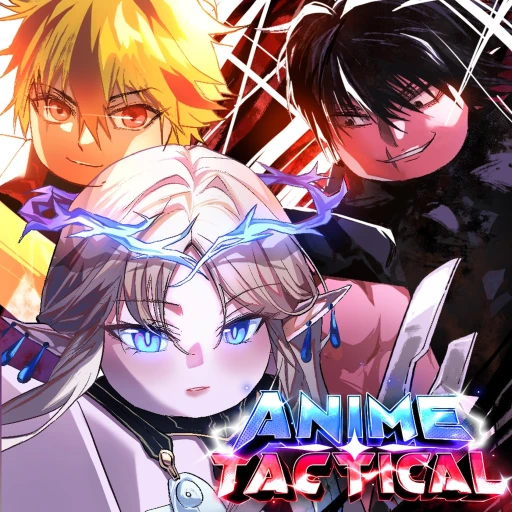
Roblox's anime tower defense scene is stacked in 2026, and two games keep pulling players into heated debates: Anime Tactical Simulator (ATS) by Tsukikage and Anime Defenders by Small World Games. Both let you summon iconic anime-inspired units, place them on battle maps, and defend against waves of enemies. But the similarities end there. ATS is the rising tactical challenger with deep squad-building mechanics and a loyal community hovering around 14,000 concurrent players. Anime Defenders is the established heavyweight, boasting over 3.4 billion visits and concurrent player counts that regularly push past 40,000.
So which one deserves your time in 2026? This comparison breaks down every angle, from gameplay loops and unit systems to monetization and community health, so you can make an informed decision before committing dozens of hours to either title.
Anime Tactical Simulator vs Anime Defenders — Quick Comparison (2026)
| Category | Anime Tactical Simulator | Anime Defenders |
|---|---|---|
| Genre | Tactical Anime Tower Defense | Anime Gacha Tower Defense |
| Developer | Tsukikage | Small World Games |
| Concurrent Players | ~14,000 | 30,000 - 60,000 |
| Total Visits | 1M+ | 3.4B+ |
| Latest Update | Update 2.5 (March 23, 2026) | Wish Event (July 2026) |
| Core Loop | Summon units, build tactical squads, clear worlds and dungeons | Gacha summon units, deploy teams, clear stages and infinite mode |
| Unit Sources | Dragon Ball, Bleach, Demon Slayer, One Piece, Solo Leveling | One Piece, Dragon Ball, Bleach, Naruto, and more |
| Trading | No | Yes (unit trading) |
| Code Requirements | Join Tsukikage Roblox group | Level 8 + 90-day account age |
| Platforms | Desktop, Mobile, Tablet | Desktop, Mobile, Tablet |
| Free-to-Play | Yes | Yes |
Gameplay — Two Different Takes on Anime Tower Defense
Anime Tactical Simulator
Anime Tactical Simulator blends traditional tower defense with incremental simulator progression in a way that feels distinct from other anime TD games on Roblox. You summon anime-inspired units, assemble them into tactical squads, and deploy them across adventure worlds, dungeons, and team challenges. The game draws characters from franchises like Dragon Ball, Bleach, Demon Slayer, One Piece, and Solo Leveling, giving players a roster that spans multiple anime universes.
What sets ATS apart is its emphasis on tactical squad composition over raw unit rarity. While pulling a top-tier unit like Luffy Gear 5 or Ichigo Bankai certainly helps, the game rewards players who understand how to build synergistic teams. Pairing the right support units with your damage dealers, positioning tanks to absorb boss mechanics, and timing ability activations during critical waves creates a layer of strategy that goes beyond just placing your strongest characters and watching them auto-attack.
The dungeon system adds another dimension entirely. Dungeons serve as endgame content that demands specific team compositions and strategies. Rewards from dungeons include Dungeon Keys, Cursed Fingers, and other resources that feed back into your progression. The game also features a talent and trait system that lets you customize individual units, adding build variety that keeps experienced players theorycrafting long after they've cleared the main worlds. For help maximizing your resources in ATS, check out our Anime Tactical Simulator free Robux guide.
Anime Defenders
Anime Defenders takes the anime tower defense formula and scales it to a massive production. You summon heroes through a gacha system, deploy them on battle maps, activate their unique abilities, and defend against increasingly punishing enemy waves. The game supports standard stage clearing as well as an infinite mode that tests how far your team can survive against endlessly scaling threats.
The gacha system drives the core loop. Multi-summons cost gems, and each banner rotation introduces new units that can shift the meta overnight. Limited-time characters create urgency, and the pity system guarantees a high-rarity pull after a set number of attempts. Where ATS focuses on tactical positioning and squad synergy, Anime Defenders leans harder into the collection and optimization side of things. Building the strongest possible team from your available roster, then upgrading those units through multiple enhancement systems, is where the satisfaction lives.
Anime Defenders also features a robust trading system that lets players exchange units with each other. This creates an active secondary economy where rare characters have fluctuating values based on the current meta and upcoming banner announcements. Players negotiate trades through Discord servers and in-game lobbies, and the trading metagame adds a social dimension that most tower defense games lack entirely. Our Anime Defenders free Robux guide covers how to maximize your gem income without spending real money.
Edge: Anime Tactical Simulator wins on tactical depth and squad-building creativity. Anime Defenders wins on production scale, collection breadth, and the addictive nature of its gacha-plus-trading ecosystem.
Progression — How Each Game Keeps You Playing
ATS hooks players through a multi-layered progression system. You move through adventure worlds that increase in difficulty, unlock dungeons that gate endgame resources, and continuously refine your units through talent rerolls, trait tokens, and avatar customization. The game is generous with codes: Tsukikage regularly drops redemption codes through their Roblox group that reward free Gems, Dungeon Keys, Potions, Cursed Fingers, Spin Wheels, Avatar Tokens, Premium Rerolls, and more. The March 15, 2026 code drop alone handed out four new codes packed with progression-boosting items. The catch is that you must join the Tsukikage Roblox community group before codes will register, which keeps the community tight-knit.
Anime Defenders takes a different approach to early progression. New players work through tutorial stages that teach the basics of unit deployment and ability timing. The first few hours are smooth, with enough free gems flowing in to fund several multi-summons that fill out your initial roster. But there is a notable gating mechanism: code redemption requires your account to be at least 90 days old and your character to reach Level 8. This prevents alt-account farming but also means brand-new players cannot immediately benefit from the 31+ active codes currently available.
Mid-game progression in both titles revolves around resource optimization. ATS players focus on farming dungeons for upgrade materials and rerolling unit traits to hit optimal stat distributions. Anime Defenders players grind stages for gems, participate in limited events for exclusive rewards, and use the trading system to fill roster gaps without relying solely on gacha luck. Both games offer daily login rewards that compound over time, but Anime Defenders runs limited banners on a faster rotation, roughly every two to three weeks, which means there is always a new carrot dangling in front of dedicated players.
Unit Roster and Tier Lists
The unit roster is where both games flex their anime credentials, but the approach to character acquisition and balancing differs significantly.
Anime Tactical Simulator currently features units spanning Dragon Ball, Bleach, Demon Slayer, One Piece, and Solo Leveling. The Update 2.5 release on March 23, 2026, introduced three new units alongside balance adjustments. Community tier lists consistently place Crimson Knight at the top of endgame rankings, with competitive players treating it as the benchmark for late-game value. Strong mid-tier units like Luffy Gear 5, Tangiro, and Ichigo Bankai remain viable for clearing most content without needing the absolute top pulls. The tier list shifts with each update, but ATS balances its roster conservatively, avoiding the power creep that plagues many gacha-style games.
Anime Defenders has a substantially larger unit pool thanks to its longer lifespan and faster content cadence. Units range from Common to Mythic rarity, and the gap between tiers is more pronounced. Mythic units from limited banners often define the meta for weeks until the next banner shifts the power hierarchy. This creates a faster-moving tier list that rewards players who stay current with each rotation. The trading system partially offsets this by letting players acquire meta units without pulling them directly, but top-tier Mythic characters command steep trade values.
If you enjoy the related anime tower defense genre, our Anime Vanguards free Robux guide covers another strong option in this space.
Edge: Anime Defenders has the larger roster and more frequent additions. Anime Tactical Simulator has tighter balance and less punishing power creep between updates.
Graphics, Audio, and Presentation
Anime Tactical Simulator uses a clean anime-inspired art style with detailed unit models and smooth attack animations. The world environments are varied, moving from vibrant open fields to darker dungeon interiors as you progress. Unit abilities have visible effects that are satisfying without overwhelming the screen during hectic waves. The Soul Society preview material teased for an upcoming update suggests Tsukikage is investing further in visual quality as the game grows.
Anime Defenders benefits from a larger development budget and more time in production. Unit animations are elaborate, with Mythic characters featuring multi-stage ultimate abilities that fill the screen with particle effects. Enemy designs scale impressively from standard mobs to screen-filling bosses, and the stage environments span a wider variety of biomes and settings. Audio design in Anime Defenders is more polished as well, with dynamic music that shifts based on wave intensity and premium units that come with voiced lines.
Edge: Anime Defenders. Its larger production budget translates to flashier animations, more detailed environments, and stronger audio presentation across the board.
Player Count and Community Health (July 2026)
The player count gap between these two games is significant, but the numbers tell an incomplete story. Anime Defenders sits at over 3.4 billion total visits and regularly maintains between 30,000 and 60,000 concurrent players. It benefits from being part of the broader anime tower defense ecosystem on Roblox, where players frequently move between Anime Defenders, Anime Vanguards, and similar titles based on which game has the freshest content drop.
Anime Tactical Simulator has crossed the 1 million visit mark and averages around 14,000 concurrent players. For a game developed by Tsukikage, a smaller studio, these numbers represent strong and steady growth. The community is highly engaged, with active Discord channels, dedicated wikis at multiple domains, and a Roblox group that serves as the hub for code distribution and update announcements. The Trello board is regularly updated with sneak peeks and development progress, giving players transparency into what is coming next.
Community culture differs between the two. ATS has the tighter, more communicative community that smaller games tend to foster. Players interact directly with the developer through the Roblox group, and feedback loops between the community and Tsukikage feel genuine. Anime Defenders has the scale and infrastructure of a major Roblox title, complete with dedicated subreddits, YouTube content creators covering every banner and event, and an active trading scene that generates constant social interaction.
Edge: Anime Defenders dominates on raw numbers. Anime Tactical Simulator has the more personal, developer-connected community that many players prefer.
Game Passes and Monetization
Anime Tactical Simulator monetizes through game passes and in-game purchases that complement the free progression path. Premium Rerolls, Talent Rerolls, and Premium Trait Tokens are available as purchases, and game passes offer permanent boosts like increased resource earnings and additional loadout slots. The monetization feels restrained compared to full gacha implementations, and the generous code system regularly injects free resources into the player base. Free-to-play players can clear all current content without hitting a paywall, though premium purchases accelerate the grind meaningfully.
Anime Defenders monetizes primarily through gem packs that fuel the gacha summoning system. Multi-summons cost 500 gems per pull, and gem packs range from small bundles for casual spenders to bulk purchases for players chasing specific Mythic units. A Premium Pass doubles gem income from all sources and unlocks an exclusive banner with improved rates. The VIP Server and Auto-Farm passes add convenience for dedicated grinders. The pity system prevents worst-case spending scenarios, but the recurring nature of limited banners means the spending ceiling is effectively unlimited for players who want every meta unit.
Edge: Anime Tactical Simulator. Its monetization model is more predictable and player-friendly. You know what you are getting with each purchase, and the code system consistently supplements the free experience. Anime Defenders' gacha model is fair by genre standards but inherently encourages recurring spending.
Earning Free Robux While You Play
Both games benefit from optional purchases that enhance the experience, whether that is game passes in ATS or gem packs in Anime Defenders. If you want to offset those costs, Earnaldo lets you earn free Robux by completing straightforward tasks and withdraw them directly to your Roblox account. Tower defense games have natural downtime between waves, which makes it practical to complete tasks on a second device during longer sessions.
Earn Free Robux for Anime Tactical Simulator or Anime Defenders
Want more Robux for game passes, gem packs, and premium upgrades? Earnaldo lets you earn free Robux by completing simple tasks -- no generators, no scams, just real rewards.
Head-to-Head Verdict — Anime Tactical Simulator vs Anime Defenders in 2026
The Verdict
Choose Anime Tactical Simulator if you want a tactical tower defense experience where squad composition, unit synergy, and strategic positioning matter more than pulling the rarest character. ATS rewards players who think critically about their builds, experiment with team setups, and engage with dungeon content that demands preparation. Its smaller community means tighter developer communication, less noise, and a game that evolves based on direct player feedback.
Choose Anime Defenders if you want the full-scale anime gacha tower defense experience with a massive roster, regular banner rotations, a trading economy, and the production polish that comes with a well-funded development studio. Anime Defenders offers more content volume, a larger active player base to interact with, and the satisfying loop of collecting, upgrading, and trading units across hundreds of hours.
Overall: These games occupy different ends of the anime tower defense spectrum. Anime Tactical Simulator is the focused, tactical pick that prioritizes depth over breadth. Anime Defenders is the expansive, content-rich pick that prioritizes scale and collection. Neither is objectively better. The right choice depends on whether you value strategic mastery or collection-driven progression. Many players actively maintain accounts in both.
Who Should Play What?
- You love tactical squad-building: Anime Tactical Simulator, because its talent system, trait customization, and dungeon challenges reward players who invest in team synergy over raw rarity.
- You want to collect and trade characters: Anime Defenders, because its gacha summoning and unit trading system give you hundreds of characters to chase, upgrade, and exchange with other players.
- You prefer a smaller, tighter community: Anime Tactical Simulator, because Tsukikage actively communicates through their Roblox group and Trello board, and the community is small enough that your feedback can directly influence development.
- You enjoy content variety and frequent updates: Anime Defenders, because its banner rotation cycle and event schedule deliver new content every few weeks with minimal downtime between drops.
- You are new to anime tower defense: Anime Tactical Simulator, because its early-game code rewards and straightforward progression make the first hours feel rewarding without requiring prior genre experience.
- You play on mobile: Both games support mobile well, but Anime Defenders has a slight edge with its refined touch controls and UI scaling.
- You want to earn Robux while playing: Both work with Earnaldo.
Frequently Asked Questions
Anime Defenders has a significantly larger player base. It regularly pulls 30,000 to 60,000 concurrent players and has over 3.4 billion total visits. Anime Tactical Simulator averages around 14,000 concurrent players with over 1 million visits, but its community is growing steadily thanks to frequent updates from Tsukikage.
Anime Tactical Simulator is slightly more beginner-friendly due to its straightforward tactical squad-building approach and generous early-game rewards like free Gems and Dungeon Keys from codes. Anime Defenders has a steeper initial curve because code redemption requires Level 8 and a 90-day-old account, but its tutorial stages ease new players into the gacha system smoothly.
Yes, both games are completely free to play on Roblox. Each game offers optional purchases for cosmetics, boosts, and convenience items, but all core content is accessible without spending Robux. Redeeming active codes in both games provides free in-game currency to help with progression.
Anime Tactical Simulator does not currently have a player-to-player trading system. Anime Defenders features unit trading, allowing players to exchange duplicate characters and rare pulls with others. This gives Anime Defenders a stronger player-driven economy and adds a social layer beyond standard gameplay.
Both games receive regular updates, but Anime Defenders has a faster content cadence with new banners and units every two to three weeks. Anime Tactical Simulator released Update 2.5 on March 23, 2026, with new units and a Soul Society-themed content preview. Tsukikage tends to release slightly less frequent but more feature-rich updates.
Anime Tactical Simulator features units inspired by popular anime franchises including Dragon Ball, Bleach, Demon Slayer, One Piece, and Solo Leveling. Top-tier units include Luffy Gear 5, Ichigo Bankai, Tangiro, and Crimson Knight. New characters are added with each major update, and the roster continues to expand as Tsukikage develops additional world content.