Last updated: June 10, 2026
Bake or Die vs Dead Rails (2026) -- Which Roblox Game Is Better?
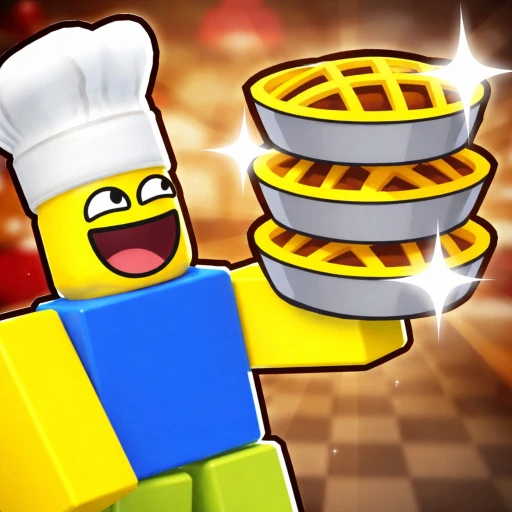
Two survival games. Completely different answers to the same question: what does it feel like to fight for your life on Roblox? Bake or Die puts you behind a diner counter in the middle of a zombie apocalypse, where baking pies and serving customers is just as critical as swinging a weapon. Dead Rails straps you to a steam train tearing across a zombie-infested Wild West desert, asking you to survive 80 kilometers of escalating chaos before you can call yourself done.
Bake or Die comes from Big Bakers and has pulled in over 117 million visits with its unusual genre mashup of cooking sim and zombie survival. Dead Rails launched in early 2025 from RCM Games, exploded to nearly 500K–1M concurrent players at its peak, and now sits at over 232 million total visits. One blends domestic mundanity with apocalyptic horror. The other wraps Western atmosphere around a relentless point-A-to-B survival challenge.
This breakdown covers every meaningful angle — gameplay, progression, graphics, community, monetization, social experience, and long-term replay value — so you know exactly which one fits what you are actually looking for.
Bake or Die vs Dead Rails -- Quick Stats (2026)
| Category | Bake or Die | Dead Rails |
|---|---|---|
| Genre | Survival / Cooking | Western Horror / Survival |
| Place ID | 86479448397834 | 116495829188952 |
| Developer | Big Bakers | RCM Games |
| Total Visits | 117M+ | 232M+ |
| Current CCU | ~900–2K | ~10–20K |
| Peak CCU | N/A (est.) | ~500K–1M (2025) |
| Core Loop | Kill zombies, bake pies, serve customers, upgrade | Travel 80km by train, fight enemies, survive |
| Setting | Post-apocalyptic diner | Zombie-infested Wild West desert |
| Game Passes | Not specified | Bonds revives (45 R), class unlocks |
| Mobile-Friendly | Yes | Yes (aiming harder) |
| Free-to-Play | Yes | Yes (revive purchases optional) |
Gameplay -- What Do You Actually Do?
Bake or Die
Bake or Die runs two systems simultaneously and forces you to juggle both. During the day, you are a diner operator: customers arrive with orders, you prepare pies by combining the right ingredients, pull them from the oven at the correct moment, and collect payment. The ingredient mixing adds genuine complexity — different pie types require different combinations, and rushing through an order produces a failed dish that costs you resources rather than earning them.
When night falls, the game shifts gears entirely. Zombies swarm the diner and the surrounding area, and suddenly your cooking tools matter less than whatever weapon you have equipped. You are harvesting meat from the zombies you kill, which feeds back into the cooking loop — certain pie recipes require zombie meat, making the combat phase directly fuel the business phase. It is a circular system that rewards players who engage with both halves rather than focusing on one.
The upgrade loop ties everything together. Revenue from pie sales funds better weapons and equipment, which makes zombie clearing faster and safer, which produces more ingredients, which generates more revenue. The day/night cycle creates a rhythm that most survival games on Roblox do not attempt. You are always working toward something — a better oven, a more powerful weapon, a new recipe unlock — and the dual-loop structure keeps both halves feeling relevant rather than letting one overshadow the other.
Dead Rails
Dead Rails is a linear survival run with a single objective: get the train from its starting point to the end of an 80km map. You do not build a base or manage a business — you move forward, fight what comes at you, and try not to die before you reach the finish line. The simplicity of that premise is deceptive, because the execution layers in enough complexity to demand serious attention.
The class system gives each run a different character. Different classes carry different starting weapons, passive abilities, and playstyles. Some classes are better at sustained defense, others excel at picking off threats at range, and others provide support functions for the team. Choosing the right class for your squad composition matters, and experimenting with combinations gives Dead Rails more mechanical variety than its single-objective structure might initially suggest.
Exploration off the main track rewards risk-takers. Desert towns, abandoned outposts, and scattered structures appear along the route, and stopping to clear them yields resources that make the final stretch more survivable. The tension of leaving the relative safety of the train to loot a location — knowing zombie spawns don't pause while you do — is where Dead Rails generates some of its most memorable moments. You can check the Dead Rails April 2026 update for what RCM Games has added to that exploration layer recently.
Edge: Dead Rails for sustained tension and mechanical depth. Bake or Die for originality and structural creativity. Dead Rails' 80km run is a more focused survival experience with higher stakes. Bake or Die's dual-loop design is genuinely inventive — you will not find the same cooking-meets-zombie-combat combination anywhere else on Roblox — but Dead Rails hits harder as a pure survival game.
Progression -- How Does Each Game Keep You Playing?
Bake or Die
Progression in Bake or Die runs through the diner upgrade tree. As you generate revenue from successful pie sales, you unlock better cooking equipment, expanded recipe options, and weapon upgrades that carry into the next session. The feedback loop is tight and satisfying — every day cycle you complete leaves you slightly better prepared than you were when it started.
The ingredient complexity grows alongside your upgrades. Early-game pies require simple combinations and short baking windows. Later recipes involve more steps, tighter timing, and ingredient combinations that force you to manage multiple oven slots at once. That mechanical escalation keeps experienced players engaged rather than coasting on the same routines they learned in the first hour.
Weapon upgrades follow a similar pattern. Starting weapons are functional but limited, and the upgrade path toward more powerful zombie-clearing tools gives the combat half of the game its own progression lane. Players who neglect combat upgrades find late-night zombie waves overwhelming. Players who neglect cooking upgrades find they cannot generate enough income to fund further weapons. The balance between the two systems is where Bake or Die's long-term engagement lives.
Dead Rails
Dead Rails approaches progression differently. Within a single run, your power curve rises as you find better weapons, gather more resources, and survive deeper into the journey. Between runs, there is no persistent leveling system — you start fresh each time, with only class knowledge and game sense carrying over. The stakes of permanent failure are real: dying and losing your run progress creates genuine tension that lighter progression systems do not produce.
The class system provides the closest thing to meta-progression. Unlocking and experimenting with different classes gives you new frameworks to apply on each run, and developing proficiency with multiple classes adds strategic depth over time. But players who want a visible unlock ladder with rewards accumulating across sessions will find Dead Rails' between-run loop sparse. The game's retention hook is intensity, not accumulation.
Edge: Bake or Die. The persistent upgrade tree with clear milestones gives players tangible cross-session goals that Dead Rails' intensity-focused design does not. If you need to see visible progress after every play session, Bake or Die delivers that more consistently. Dead Rails' freshness-per-run is compelling on its own terms, but Bake or Die's diner upgrade loop casts a wider net across different player types.
Graphics and Audio
Bake or Die
Bake or Die leans into contrast as its primary visual trick. The diner interior is warm, domestic, almost cozy — soft lighting, checkered floors, the kind of space that would feel comfortable in a normal game. Against that backdrop, zombie attacks feel deliberately jarring. The visual whiplash between the comfortable diner aesthetic and the apocalyptic violence outside the windows is not accidental; it reinforces the game's core tone of mundane survival against impossible circumstances.
The day/night cycle does real visual work. Daytime fills the diner with natural light and customer activity that creates a sense of normalcy. When the cycle shifts to night, lighting drops, shadows lengthen, and the tone pivots entirely. Sound design follows the same pattern — oven timers and customer chatter during the day give way to zombie groans and weapon impacts at night. The audio contrast sells the dual-loop gameplay structure in a way that purely visual cues could not achieve on their own.
Dead Rails
Dead Rails commits to its Western horror atmosphere at every level. The train cars show real wear — wood grain, metal fatigue, lantern flicker — and the landscape rushing past communicates both speed and desolation simultaneously. Dust storms reduce visibility to near zero and shift the mood from tense to desperate. The lighting during night sequences is some of the most atmospheric work you will find on Roblox: muzzle flash illuminating zombie faces mid-sprint, lantern light casting moving shadows across the train car interior.
The audio is where Dead Rails separates from the field. A spaghetti Western guitar score bleeds into ambient horror drones that shift based on threat intensity. Each weapon produces a distinct acoustic signature — revolvers crack differently from rifles, shotgun blasts ring differently from rapid-fire options — and experienced players start identifying zombie threat types by the sounds they make before they see them on screen. That level of functional audio design is rare on the platform.
Edge: Dead Rails. Both games use their aesthetics purposefully, but Dead Rails achieves a level of atmospheric cohesion that Bake or Die does not match. The sound design alone is among the best on Roblox, and it actively supports gameplay rather than just setting a mood. Play Dead Rails with headphones and you will understand immediately.
Player Count and Community (July 2026)
The player count gap between these two games is real and worth acknowledging plainly. Dead Rails sits at 10,000–20,000 concurrent players on a typical day in April 2026, a significant drop from its 2025 peak but still a healthy population that ensures full servers and active matchmaking. Bake or Die's 900–2K CCU range means you will find games, but the community is notably smaller. A smaller player count does not make a game worse, but it does affect how quickly you find lobbies and how active the community discussion is outside the game.
In total visits, Dead Rails has roughly doubled Bake or Die's 117 million with 232 million of its own — despite both games having launched in the same general era. That gap reflects Dead Rails' viral 2025 moment when it briefly became one of the most-played games on the entire platform.
The community cultures reflect each game's design. Dead Rails' community centers on run strategy, class tier lists, weapon comparisons, and cooperative team-building guides. It generates active content on YouTube and Twitch because long-form runs with natural tension arcs make compelling video. Bake or Die's community is smaller but tightly focused around the cooking mechanics, upgrade path optimization, and the particular satisfaction of running a successful diner through a zombie apocalypse. Both developer teams maintain Discord servers where active players share tips and receive update news.
Edge: Dead Rails for scale, content volume, and developer visibility. Bake or Die's community is warm and dedicated, but Dead Rails' population advantage means more resources, more guides, and faster server fills.
Game Passes and Monetization
Bake or Die
Big Bakers has not published a detailed game pass catalog that breaks down every available purchase, so specific pricing is not confirmed here. What is clear from the game's structure is that the free experience is fully functional — the upgrade loop works on diner revenue, not Robux spending, and combat progression operates independently of paid items. If you want to maximize your in-game currency without spending Robux, the Bake or Die free Robux guide covers Earnaldo strategies tailored to the game's session structure.
Dead Rails
Dead Rails keeps its monetization focused and reasonably priced. The Bonds pass at 45 Robux is the most impactful purchase: it lets you revive after dying during a run rather than having to restart from the beginning. Given that Dead Rails' permanent death mechanic is its single most punishing feature, the Bonds pass directly addresses the game's biggest friction point for casual players. Class unlocks add variety to how you approach each run without providing unfair advantages against other players — this is a PvE game, so class power differences affect your survival odds rather than your edge over opponents.
At 45 Robux, the Bonds pass is priced at a level that most players can justify. The class unlock pricing varies, but the overall philosophy is that free players have a complete experience and paid purchases solve specific friction points rather than creating power gaps. For more on earning the Robux to spend on passes, the Dead Rails free Robux guide outlines the most efficient Earnaldo approach for the game's session format.
Edge: Dead Rails. The focused, transparent pass lineup with clear value propositions beats an unknown catalog. You know exactly what Bonds does and whether it solves a problem you actually have. That clarity makes the purchase decision easy, and 45 Robux sits at a price point that respects the player's budget.
Social Features -- Playing with Friends
Bake or Die
The diner setting creates social dynamics that most survival games simply do not have. When you are playing with friends, the division of labor question becomes immediate: who handles the oven, who manages customer service, who runs zombie defense? Different players can specialize in different parts of the loop, and a well-coordinated group runs the diner significantly more efficiently than four players all trying to do everything at once.
That coordination layer also generates friction in the comedic sense. When one player burns a batch of pies they were supposed to watch, or when someone spends the defense budget on an upgrade the group did not agree on, you get the kind of chaotic shared experience that makes Roblox social gaming worth showing up for. The domestic setting amplifies these moments — arguments about oven management during a zombie attack hit differently than arguments about combat tactics do.
Dead Rails
Dead Rails' co-op is built around genuine teamwork under pressure. The class system creates natural role differentiation — some players focus on crowd control, others handle precision targeting, others manage resources and support — and the consequences of poor coordination are visible immediately when defensive coverage breaks down. When the train is surrounded and one squad member goes down, the remaining players feel the reduction in firepower as a concrete tactical problem, not an abstract penalty.
The game scales difficulty with player count in a way that keeps every person relevant rather than letting one strong player carry a team. Finding and using voice chat or text coordination during a particularly brutal wave creates the kind of shared pressure-situation bonding that cooperative games do best. The Dead Rails hub page has class combination recommendations specifically for friend groups looking to build effective squads.
Edge: Dead Rails for tactical cooperative depth and genuine teamwork stakes. Bake or Die for comedic domestic chaos and casual co-op entertainment. If you want the satisfaction of pulling off a coordinated defense with your crew, Dead Rails delivers that more consistently. If you want a lower-stakes shared experience where the disasters are funny rather than frustrating, Bake or Die is the better choice.
Replay Value -- Will You Still Play Next Month?
Bake or Die
Bake or Die's replay value is built into its upgrade system. The persistent progression loop means each session leaves you in a slightly different state than the last, and the escalating recipe complexity gives players who have mastered the basics something new to optimize. The day/night rhythm prevents sessions from feeling repetitive in the short term — you are always transitioning between modes, never sitting in one phase long enough to get bored of it.
The ceiling is worth considering honestly. Once you have unlocked the major upgrade tiers and developed consistent routines for both cooking and combat, the game's ability to surprise you diminishes. The dual-loop keeps both systems fresher longer than either would be on its own, but players who log hundreds of hours may eventually find they are executing the same optimized routine rather than discovering new layers. Updates and new content from Big Bakers are the clearest path to extending that ceiling.
Dead Rails
Dead Rails' permanent-death structure is its most powerful replay tool. Because every run carries real consequences and can end unexpectedly, the game never fully loses its edge even after dozens of attempts. The class system means each run starts with a different loadout and playstyle, and map variation through the exploration zones keeps individual runs from feeling identical. Players who chase mastery — optimizing class choices, resource routes, and defensive positioning — have a deep enough skill ceiling to stay engaged for a long time.
The constraint is content variety in the fixed setting. After enough runs, the train environment becomes familiar, and PvE experiences depend more heavily on developer-added content to maintain freshness than PvP games that generate variety through human unpredictability. The April 2026 update added new content to address exactly this concern, and RCM Games has been consistent about regular additions throughout the game's first year.
Edge: Dead Rails for intensity and mastery-driven long-term engagement. The permanent-death stakes keep runs meaningful in a way that Bake or Die's persistent upgrade loop — while satisfying — does not fully replicate. Both games have real replay value, but Dead Rails generates more per-session urgency that keeps players coming back to prove themselves on the next run.
Earning Robux While You Play
Both games pair naturally with Earnaldo, though the session structures create different rhythms for completing tasks. Bake or Die's day/night cycle means you have predictable transition windows — the brief moment between a day phase ending and the night rush beginning is a consistent natural pause where you can check Earnaldo offers without abandoning your diner mid-service. The cycle length is regular enough that you can plan around it.
Dead Rails' longer 80km runs require different timing. Wave clear moments, when the immediate zombie threat is down and you have a few seconds before the next spawn, are the natural windows. These are shorter and less predictable than Bake or Die's structured transitions, but they occur often enough across a full run to provide usable earning time without compromising your team's defense. The Bake or Die free Robux guide and Dead Rails free Robux guide both have session-specific timing advice.
For the latest working codes in both games, check the Bake or Die codes page and the Dead Rails codes page — both are updated throughout each month as developers release new codes on social channels and during events.
Earn Free Robux for Bake or Die or Dead Rails
Earnaldo lets you complete simple tasks and withdraw real Robux — no downloads, no generators, no scams. Whether you are upgrading your diner or unlocking Dead Rails class passes, Earnaldo gets you there faster.
Head-to-Head Verdict -- Bake or Die vs Dead Rails in 2026
The Verdict
Choose Bake or Die if you want a survival game that does something genuinely different. The cooking-meets-zombie-combat dual loop is inventive, the day/night rhythm gives sessions a satisfying structure, and the persistent upgrade progression means every play session moves you forward. It is the more relaxed of the two games — lower concurrent player pressure, more domestic chaos than existential dread — and it works especially well for players who enjoy management sim mechanics alongside their zombie combat. Best for players who want creative genre blending and tangible upgrade milestones.
Choose Dead Rails if you want a survival game that hits hard and means it. The 80km Western horror run is one of the more distinctive experiences on Roblox right now, the permanent-death stakes keep every run tense, the class system rewards strategic thinking, and the atmospheric presentation is genuinely among the platform's best. Its player count advantage ensures full servers, active community resources, and consistent developer support. Best for players who want intensity, cooperative depth, and a game with real consequences for failure.
Overall winner: Dead Rails -- by a clear margin. The larger player base, superior atmospheric design, greater mechanical depth, more transparent monetization, and stronger replay foundation through permanent-death stakes all point the same direction. Bake or Die deserves genuine credit for its creative premise and its ability to make a cooking sim feel dangerous, but Dead Rails is the better-rounded survival game. That said, if the genre mashup concept in Bake or Die appeals to you specifically, it offers something Dead Rails simply does not — and worth trying on those terms alone.
Who Should Play What?
- You want something genuinely unique on Roblox: Bake or Die. Cooking-sim-zombie-survival is a mashup you will not find anywhere else.
- You want the most intense survival experience: Dead Rails. The 80km permanent-death run is about as high-stakes as Roblox survival gets.
- You prefer management and progression systems: Bake or Die. The diner upgrade loop and recipe unlocks give you constant tangible goals.
- You want deep co-op teamwork with real stakes: Dead Rails. The class system and wave defense create meaningful coordination requirements.
- You play on mobile: Bake or Die has a slight edge since menu-driven cooking interactions work better on touchscreens than Dead Rails' weapon aiming.
- You want the best atmosphere on Roblox: Dead Rails. The Western horror aesthetic and functional audio design are hard to beat.
- You are playing casually with friends who are new to Roblox: Bake or Die. The concept is intuitive and the consequences of mistakes are less punishing.
- You want the most value for your Robux: Dead Rails' Bonds pass at 45 Robux directly solves the game's biggest friction point at a fair price.
Frequently Asked Questions
Dead Rails leads by a significant margin in both total visits and concurrent players. Dead Rails has surpassed 232 million visits and peaked near 500K–1M concurrent players in 2025, while Bake or Die sits around 117 million total visits with a current concurrent player count in the 900–2K range. Both are popular, but Dead Rails operates at a different scale in terms of daily active players.
Bake or Die is more approachable for complete beginners. The cooking and diner loop is intuitive — kill zombies, harvest meat, bake pies, serve customers — and the game explains itself through its structure. Dead Rails has a class system, an 80km map to traverse, and weapon mechanics that take a few runs to understand properly. Both are free to play, but Bake or Die gets you productive faster on your first session.
Yes, both games support mobile play through the Roblox app on iOS and Android. Bake or Die's diner management and crafting interactions work reasonably well on touchscreens since the core loop involves menus and tapping. Dead Rails is functional on mobile but aiming weapons at fast-moving enemies across an 80km map is noticeably harder without a mouse or controller.
Yes, both games release codes for free in-game rewards. Check our regularly updated pages for the latest working codes: Bake or Die codes (July 2026) and Dead Rails codes (July 2026) are updated throughout each month as developers drop new codes on social media and during events.
Dead Rails is free to play, but it sells Bonds for 45 Robux that let you revive after dying instead of restarting your run. Class unlocks are also available as purchases. None of these are required — skilled free players finish runs without spending anything — but the Bonds pass removes one of the game's harshest penalties and is the most impactful quality-of-life purchase available.
It depends on what keeps you engaged. Dead Rails has stronger replay value through sheer intensity — each 80km run is high-stakes with permanent consequences for dying, and the class system gives you different playstyles to try. Bake or Die rewards longer sessions through its diner upgrade loop and the growing complexity of managing both zombie combat and customer service simultaneously. Players who prefer progression systems will lean toward Bake or Die, while those who want tension and stakes will stick with Dead Rails.