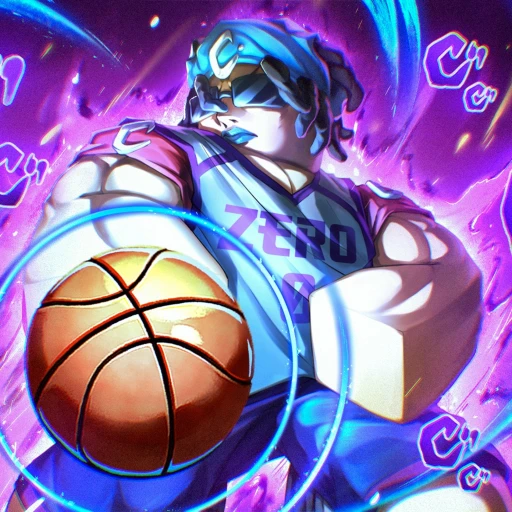
Basketball Zero vs Blue Lock Rivals (2026) -- Which Roblox Anime Sports Game Wins?
Two anime sports games. Two different sports. One developer. Basketball Zero brings Kuroko no Basket-inspired basketball to Roblox with flashy court moves and impossible passes, while Blue Lock Rivals channels the cutthroat striker mentality of the Blue Lock manga into intense 5v5 soccer matches. Both titles come from the same studio -- Chrollo -- which makes this comparison especially interesting. When the same team builds two games using the same design philosophy but applies it to different sports, you get a rare opportunity to see which formula works better. Here is our full breakdown of how these sibling titles stack up against each other in 2026.
Quick Stats: Basketball Zero vs Blue Lock Rivals
| Feature | Basketball Zero | Blue Lock Rivals |
|---|---|---|
| Genre | Anime Basketball | Anime Soccer |
| Roblox Place ID | 130739873848552 | 18668065416 |
| Concurrent Players | ~30,000 | ~14,000 |
| Total Visits | 995 Million | 4.5 Billion |
| Player Rating | 98.4% | 96.6% |
| Anime Source | Kuroko no Basket | Blue Lock |
| Match Format | 5v5 Basketball | 5v5 Soccer |
| Developer | Chrollo | Chrollo |
The Chrollo Connection: Why the Shared Developer Matters
Before digging into specific categories, it is worth understanding why these two games being built by the same studio is the defining angle of this comparison. Chrollo launched Blue Lock Rivals first, and the game quickly became one of the biggest anime sports titles on Roblox, accumulating 4.5 billion visits over its lifetime. That success gave the team both the resources and the confidence to tackle a second sport. Basketball Zero arrived later but has exploded in popularity, currently pulling roughly double Blue Lock Rivals' concurrent player count at around 30,000 active players.
The shared developer means both games benefit from the same underlying engine technology, UI design principles, and community management approach. If you have played one, the other will feel immediately familiar in terms of menu navigation, settings layout, and overall visual polish. Movement systems share a similar weight and responsiveness. Even the way abilities activate -- with dramatic camera cuts and particle effects ripped straight from their respective anime sources -- follows the same production playbook.
But the shared DNA also makes the differences more revealing. Where the two games diverge tells you a lot about what Chrollo learned between projects and how each sport demands its own design solutions. Basketball Zero feels like the more refined product in certain areas, benefiting from hindsight. Blue Lock Rivals has the advantage of years of iteration and a deeper content library built up over time.
Gameplay Mechanics: Court vs Pitch
The core question for any sports game comparison is how the sport itself translates into moment-to-moment gameplay. Basketball and soccer are fundamentally different sports, and Chrollo's approach to adapting each one reveals distinct design priorities.
Basketball Zero plays on a tighter court with faster possessions. A typical game flows through quick passes, screens, drives to the basket, and mid-range or three-point shots. The shooting mechanic uses a timing-based system where releasing the ball at the peak of your jump shot determines accuracy. Green releases (perfect timing) are nearly automatic makes, while mistimed shots brick hard. Defense revolves around positioning, contesting shots by jumping at the right moment, stealing the ball during dribble moves, and blocking shots at the rim. The pace is relentless -- possessions are short, turnovers happen fast, and momentum can swing on a single steal-to-fast-break sequence.
Blue Lock Rivals operates on a larger pitch with more breathing room. Matches unfold through build-up play, through balls, dribble moves to beat defenders, and shots on goal. The shooting system rewards both positioning and timing -- shots taken from better angles with proper wind-up are more likely to beat the goalkeeper. Defending requires reading passing lanes, timing tackles to strip the ball without fouling, and positioning your keeper for saves. The pacing is more deliberate, and goals feel like earned payoffs after sustained pressure rather than the rapid-fire scoring of basketball.
Both games layer anime abilities on top of their sport's fundamentals. Basketball Zero draws from Kuroko no Basket with abilities like Misdirection (passes become invisible to opponents), Emperor Eye (time slows and defensive gaps highlight on screen), Zone (a temporary stat boost with cinematic dunks), and Perfect Copy (clone an opponent's ability loadout). These abilities charge through normal gameplay and activate as clutch momentum shifters.
Blue Lock Rivals pulls from the Blue Lock manga's ego-driven striker evolution. Abilities include Flow State (reveals passing lanes and opponent movement predictions), Meta Vision (a field-wide view for orchestrating plays), Chemical Reaction (synergy boosts when specific teammates are nearby), and signature shot techniques that warp the ball's trajectory in physics-defying ways. The ability system ties directly into the manga's theme of individual brilliance within a team framework.
Edge: Basketball Zero for raw gameplay intensity and faster action loops. The tighter court, quicker possessions, and shot-timing system create more moment-to-moment engagement. Edge: Blue Lock Rivals for tactical depth and team coordination. The larger pitch and build-up play reward patience and game reading.
Skill Ceiling and Competitive Play
Both games are easy to pick up but demand serious investment to master at the highest levels. The nature of the skill ceiling differs based on what each sport emphasizes.
Basketball Zero's skill ceiling is anchored in shot timing and court spacing. At low levels, players spam dribble moves and chuck contested three-pointers. At the top level, it becomes a chess match disguised as a basketball game. Elite players read defensive formations instantly, call screens to exploit mismatches, greenlight contested shots through muscle memory, and chain abilities into devastating sequences. A top-level point guard can dismantle an entire team through court vision alone, setting up teammates with Misdirection-enhanced assists that defenders cannot see coming. On defense, shot-blocking requires predicting the exact shooting frame, steal attempts that miss leave you exposed, and help defense rotations separate good teams from great ones.
Blue Lock Rivals' skill ceiling centers on spatial awareness and off-ball movement. The best players understand how to create and exploit gaps that casual players do not notice. Dribbling past defenders uses a skill move system with directional inputs, and passing requires leading your target since the ball travels at realistic speed. Shooting from distance demands understanding angle, power, and the goalkeeper's positioning. The goalkeeping role adds an entire sub-game -- top keepers read shot trajectories, cut angles, and time diving saves with frame-perfect precision. It is one of the most demanding positions in any Roblox game.
Edge: Basketball Zero -- the shot-timing system adds a pure mechanical skill layer that soccer does not have. Every possession includes multiple opportunities for precision inputs (shooting, blocking, stealing), which creates a faster feedback loop for skill improvement.
Progression, Builds, and Character Systems
Chrollo's approach to player progression follows a similar structure in both games but adapts to each sport's needs. For tips on earning Robux to invest in game passes for either title, check our Basketball Zero free Robux guide and Blue Lock Rivals free Robux guide.
Basketball Zero lets you create a custom player and build them around specific archetypes. You allocate stat points across shooting, passing, defense, athleticism, and dribbling, and the distribution determines your play style. A maxed-shooting build creates a deadly sniper who greenlights from half court but gets bullied in the paint. A defensive anchor build locks down the rim with blocks and rebounds but cannot create their own shot. The build system encourages specialization, which in turn encourages teamwork -- a well-rounded team needs multiple build types working in concert. Abilities are unlocked through gameplay milestones and can be mixed and matched to create unique loadouts. The progression feels rewarding because every stat point makes a noticeable difference in how your player performs.
Blue Lock Rivals uses a similar stat allocation system but layers on a position-based progression tree. Strikers, midfielders, defenders, and goalkeepers each have unique skill trees with position-specific upgrades. A striker might invest in shot power and dribbling finesse, while a midfielder focuses on passing range and stamina. The position system creates clearer role definition than Basketball Zero, where builds can overlap more freely. Blue Lock Rivals also features a player evolution system inspired by the manga's concept of ego -- your character can undergo "awakenings" at certain progression thresholds that unlock new ability slots and visual transformations. These awakenings are tied to in-game achievements (score a certain number of goals, complete specific challenges) rather than pure grinding, which keeps the progression feeling purposeful.
Both games offer cosmetic customization through jerseys, shoes, accessories, and celebration animations. Basketball Zero has a slight edge in cosmetic variety due to basketball's natural connection to sneaker culture and fashion -- the shoe collection system alone has hundreds of options. Blue Lock Rivals counters with dramatic goal celebrations and kit designs pulled from the manga's distinctive style.
Edge: Blue Lock Rivals -- the awakening system and position-specific skill trees create more meaningful progression milestones. Basketball Zero's build system is flexible and deep, but Blue Lock Rivals makes each step in your character's development feel like a narrative beat.
Game Passes and Monetization
Since both games share a developer, comparing their monetization strategies reveals how Chrollo has refined their approach over time.
Blue Lock Rivals, as the older title, went through several monetization iterations. The current system includes a VIP pass (permanent stat point boost and cosmetic perks), seasonal battle passes with exclusive kits and abilities, and direct-purchase cosmetic bundles. The VIP pass has drawn some criticism because the stat point boost -- while small -- gives paying players a measurable advantage. Chrollo has gradually reduced the magnitude of this boost through patches, but it remains a point of contention in competitive circles. The battle pass is well-received, offering a mix of cosmetics and gameplay-relevant rewards at a fair Robux price point.
Basketball Zero launched with a more restrained monetization model, clearly informed by the Blue Lock Rivals feedback. The VIP pass in Basketball Zero is purely cosmetic -- it unlocks exclusive shoes, jerseys, and court effects but provides zero stat advantages. Game passes focus on convenience (faster matchmaking, extra loadout slots) and cosmetics (signature dunk animations, custom ball trails). The seasonal pass follows the same structure as Blue Lock Rivals but keeps gameplay rewards limited to ability variants rather than direct stat boosts. The result is a cleaner competitive landscape where spending Robux makes you look cooler but does not make you play better.
Both games include a gacha-style spin system for rare cosmetics. Basketball Zero's spins are limited to shoes and accessories. Blue Lock Rivals' spins include some ability variants, which again creates a slight pay-advantage perception even though the gameplay impact is minimal.
Edge: Basketball Zero -- Chrollo clearly learned from the Blue Lock Rivals monetization feedback and built a fairer system from the ground up. The strict separation between cosmetic and competitive purchases is a meaningful improvement.
Community Size, Content, and Longevity
The raw numbers tell an interesting story about where each game sits in its lifecycle.
Blue Lock Rivals has 4.5 billion total visits -- a staggering number that reflects years of sustained popularity. The Blue Lock manga and anime provide a steady stream of new fans who discover the game through the source material. Content creators on YouTube and TikTok regularly produce Blue Lock Rivals content, and the game maintains a healthy competitive scene with community-organized tournaments and developer-sponsored events. The Discord server is massive and well-moderated, with dedicated channels for strategy discussion, team recruitment, and clip sharing. Blue Lock Rivals has the kind of established community infrastructure that only comes with time.
Basketball Zero's numbers paint a different picture. With 995 million visits, it is approaching the billion-visit milestone at remarkable speed. More importantly, its current concurrent player count of around 30,000 -- roughly double Blue Lock Rivals' 14,000 -- suggests the game is in a growth phase while Blue Lock Rivals may be in a stabilization phase. Basketball Zero benefits from the broader appeal of basketball as a sport and from Kuroko no Basket's enduring popularity in anime communities. The content creator scene is booming, with highlight reels of impossible dunks and perfect-timing trick shots generating millions of views. The competitive community is newer but intensely engaged, with high-level players already pushing the meta in creative directions.
The 98.4% approval rating on Basketball Zero versus 96.6% on Blue Lock Rivals is notable. Both are excellent ratings, but the gap suggests Basketball Zero is delivering a tighter, more consistently satisfying experience -- possibly because it launched with the benefit of lessons learned from Blue Lock Rivals' growing pains.
Edge: Blue Lock Rivals for established community depth and content volume. Edge: Basketball Zero for current momentum, growth trajectory, and player satisfaction scores.
Visual Presentation and Anime Faithfulness
Both games look outstanding by Roblox standards, and the anime source material gives each title a distinctive visual identity that separates them from generic sports games on the platform.
Basketball Zero captures Kuroko no Basket's dramatic flair through cinematic ability animations, dynamic camera angles during dunks, and a color palette that shifts with intensity. When a player enters the Zone, the court darkens and colored lightning crackles around them -- a direct callback fans will instantly recognize. Courts feature proper line markings, scoreboards, and crowd reactions that respond to the game state. A buzzer-beater three triggers a full arena eruption.
Blue Lock Rivals nails the manga's stark, high-contrast aesthetic. Goal-scoring sequences trigger dramatic slow-motion cutscenes that echo the manga's panel layouts. The character awakening transformations are visually stunning, and the goalkeeper perspective uses a tighter camera angle that makes every incoming shot feel like a life-or-death moment. Weather effects (rain matches, night games) add atmosphere that Basketball Zero's indoor courts cannot match.
Neither game feels like a generic anime skin stretched over a basic sports template -- the anime DNA runs deep into the mechanics themselves.
Edge: Blue Lock Rivals -- the outdoor settings allow for more visual variety, and the awakening transformations are some of the best character evolution visuals on Roblox. Basketball Zero's indoor court setting is polished but inherently more limited in environmental storytelling.
Mobile Experience and Performance
Roblox's massive mobile player base makes cross-platform performance a critical factor. Both games run on the same engine, but the sport-specific demands create different mobile experiences.
Basketball Zero's tighter court keeps frame rates stable on lower-end devices, but the faster pace and shot-timing precision can be harder to execute on touchscreens. Chrollo implemented mobile-specific aim assist and simplified dribble inputs for touch controls, though top-level mobile players still report a disadvantage against keyboard users.
Blue Lock Rivals' larger pitch spreads the action out, which helps performance but can feel cramped on smaller phones. The slower pace gives mobile players more reaction time, partially offsetting input limitations. Goalkeeping on mobile is notably challenging -- most top-ranked keepers play on PC for the precision advantage.
Edge: Draw -- both games make compromises on mobile. Basketball Zero runs smoother but demands more precision. Blue Lock Rivals gives more reaction time but feels cramped on small screens. Chrollo has invested in mobile optimization for both titles, and neither feels like an afterthought on touch devices.
Who Should Play What?
The shared developer and similar production quality means the sport preference and anime preference will be the primary deciding factors for most players. Here is where each game makes its strongest case:
Choose Basketball Zero if you:
- Prefer fast-paced action with constant scoring opportunities
- Enjoy precision-based mechanics like shot timing
- Love Kuroko no Basket or basketball anime in general
- Want a game where individual skill can take over games
- Value fair free-to-play monetization with no stat advantages
- Prefer building unique player archetypes with flexible stat allocation
- Want to join a game in its explosive growth phase
Choose Blue Lock Rivals if you:
- Prefer tactical, build-up play with team coordination
- Enjoy the goalkeeping sub-game and defensive positioning
- Love Blue Lock or soccer anime in general
- Want a mature competitive scene with established tournaments
- Prefer structured position roles with clear team dynamics
- Value a deep content library built over years of updates
- Want the character awakening progression system
Our Verdict
Basketball Zero takes the edge in this head-to-head matchup. Its faster gameplay loop, fairer monetization, higher player approval rating (98.4% vs 96.6%), and surging player count (30K vs 14K concurrent) all point to a game that refined the formula Chrollo established with Blue Lock Rivals. Basketball Zero feels like the second album from a studio that already knew what worked -- tighter, more polished, and built with the confidence of proven experience. That said, Blue Lock Rivals remains an outstanding game with a deeper content library, a more established competitive community, and 4.5 billion visits worth of proven staying power. The best part about both games sharing a developer is that improvements to one frequently inspire improvements to the other. If you enjoy competitive anime sports on Roblox, play both -- but if you are starting with one, Basketball Zero is the stronger entry point in April 2026.
Want Free Robux for Game Passes and Cosmetics?
Earn Robux through Earnaldo and unlock signature dunks, exclusive kits, seasonal battle passes, and more in both Basketball Zero and Blue Lock Rivals.
The Bigger Picture: Chrollo's Anime Sports Empire
What Chrollo has built is remarkable in the Roblox landscape. Running two top-tier competitive sports games simultaneously -- each with its own active player base, competitive scene, and content pipeline -- is something very few Roblox studios pull off. The combined player count across both titles regularly exceeds 40,000 concurrent users, and the combined visit count approaches 5.5 billion.
The cross-pollination between projects benefits players of both games. When Chrollo implemented an improved anti-cheat system in Blue Lock Rivals, Basketball Zero received the same upgrade within weeks. When Basketball Zero's cosmetic-only VIP pass was well-received, Blue Lock Rivals began reducing the stat advantages in its own VIP offering. Players who engage with both titles get a richer overall experience, and the community regularly speculates about whether Chrollo will tackle a third sport next.
Frequently Asked Questions
Yes, both games are developed by Chrollo. They share the same studio, which explains the similarities in UI polish, movement systems, and overall production quality. Chrollo applied their anime sports formula to two different sports -- basketball and soccer -- and both titles benefit from shared technology and design insights.
Basketball Zero currently has around 30,000 concurrent players, roughly double Blue Lock Rivals' 14,000. However, Blue Lock Rivals has accumulated far more total visits at 4.5 billion compared to Basketball Zero's 995 million, meaning Blue Lock Rivals has maintained its popularity over a longer period.
Blue Lock Rivals is generally easier for beginners. Soccer mechanics translate more intuitively into a game format with straightforward passing, shooting, and dribbling. Basketball Zero's court spacing, shot-timing precision, and defensive rotations can feel overwhelming at first, though both games include solid tutorials that walk new players through the basics.
Yes, both games are fully playable on mobile devices. Blue Lock Rivals has a slight edge on mobile because the larger pitch gives you more reaction time for decisions. Basketball Zero's tighter court and shot-timing system can be harder to execute consistently on touchscreens, though mobile-specific aim assist helps bridge the gap.
Basketball Zero draws from Kuroko no Basket with abilities like Misdirection, Perfect Copy, and Zone entries. Blue Lock Rivals pulls from the Blue Lock manga with Flow State, Meta Vision, and ego-driven shot techniques. Both faithfully represent their source material, so the better ability set depends on which anime resonates with you more.
Both games feature ranked competitive modes with ELO-based matchmaking. Blue Lock Rivals has a more established seasonal ranking system with granular tier divisions and exclusive end-of-season rewards. Basketball Zero's ranked mode is newer but follows a similar structure with monthly season resets and exclusive cosmetic rewards for top-ranked players.