Blue Lock: Rivals vs The Strongest Battlegrounds (2026) — Which Roblox Game Is Better?
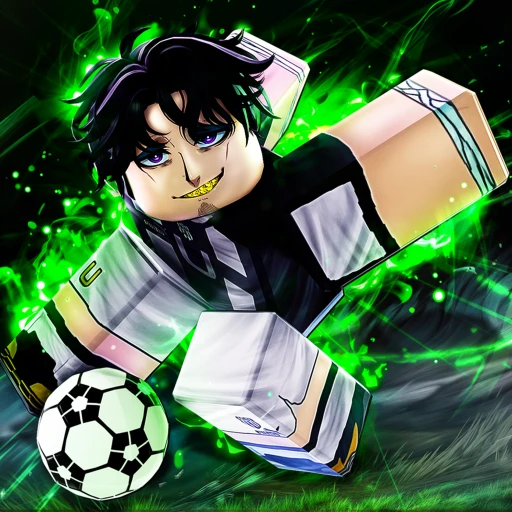
Two of Roblox's biggest anime-powered games are competing for your time in 2026, and they could not be more different in how they play. Blue Lock: Rivals turns anime soccer into a team-based competitive experience where Ego abilities and build customization drive every 5v5 match. The Strongest Battlegrounds drops you into a multi-anime fighting arena where mastering combo strings and character movesets determines who walks away standing. Combined, these two titles have accumulated over 9.6 billion visits.
One is a team sport. The other is a fighting game. But both are anime-themed, competitive, skill-rewarding, and free-to-play on Roblox. If you only have time for one, this complete breakdown covers gameplay, progression, monetization, community, and everything else you need to make the right call. For game-specific strategies, check our Blue Lock: Rivals guide and our The Strongest Battlegrounds guide.
Blue Lock: Rivals vs The Strongest Battlegrounds — Quick Stats (2026)
| Category | Blue Lock: Rivals | The Strongest Battlegrounds |
|---|---|---|
| Genre | Anime Soccer (5v5) | Anime Fighting (1v1 / Team) |
| Place ID | 18668065416 | 10449761463 |
| Developer | Chrollo_Blox | Nuclear |
| Concurrent Players | ~19,500 | ~60,000 |
| Total Visits | 4.6 billion+ | 5 billion+ |
| Peak Concurrent | 1 million+ | 500,000+ |
| Core Loop | 5v5 soccer, Ego abilities, style gacha | Combo-based fighting, character unlocks |
| Key Features | Ego system, flows, styles, Battle Pass | Multi-anime roster, 1v1 arena, team battles |
| Key Game Pass | VIP (499 Robux) | Various character/cosmetic passes |
| Mobile-Friendly | Yes | Yes (PC recommended) |
| Free-to-Play | Yes | Yes |
Gameplay — What Do You Actually Do?
Blue Lock: Rivals
You control a single player in fast-paced 5v5 soccer matches that last 6-8 minutes each. Movement, passing, shooting, tackling, and dribbling are handled through keyboard, controller, or touch inputs. The ball moves quickly and matches rarely stall, so positioning and awareness matter from the first whistle to the last.
The defining mechanic is the Ego system. Your Ego meter builds as you make tackles, complete passes, and score goals. Once filled, you trigger your character's signature Ego ability, which provides a temporary power spike. Isagi gains enhanced spatial awareness for deadly accurate shots. Bachira becomes nearly impossible to dispossess during dribbles. These abilities create clutch moments that swing matches in seconds.
Character building revolves around styles and flows. Styles are obtained through a gacha spin system (2,500 Yen per spin, with a pity system at 50 spins), and each style fundamentally changes how your character plays. Flows are passive buffs you equip in slots to fine-tune stats like speed, shot power, and defense. The combination of style plus flows means two players running the same character can play completely differently. For deeper strategy breakdowns, see our Blue Lock: Rivals guide.
The Strongest Battlegrounds
The Strongest Battlegrounds is a pure fighting game. You pick a character drawn from various popular anime series and enter arenas where combat is the only objective. The game supports both 1v1 duels and larger team-based battles, giving you options depending on whether you want focused competition or chaotic brawls.
Combat is combo-based. Each character has a unique moveset with light attacks, heavy attacks, special abilities, and ultimate moves. Stringing these together into combos is how you deal real damage. Defense is equally important: parrying, dodging, and spacing are the difference between a skilled player and someone mashing buttons. The fighting system has genuine depth, drawing inspiration from traditional fighting games while staying accessible within Roblox's framework.
Character unlocks form the progression backbone. New fighters join the roster through updates, each bringing distinct playstyles and abilities tied to their anime origins. Learning a character's full combo tree, understanding their range and recovery frames, and knowing when to commit versus disengage takes hours of practice. This is a game that rewards dedicated lab time, and the skill ceiling is high enough that top players make beginners look like they are playing a different game entirely.
Edge: Depends on your preference. Blue Lock: Rivals for team-based strategy; The Strongest Battlegrounds for individual mechanical skill.
Progression — How Quickly Does It Hook You?
Blue Lock: Rivals hooks you through the gacha loop. Your first few matches generate enough Yen for several style spins, and landing a rare style early feels fantastic. Flows add another collection layer, and the Battle Pass provides daily and weekly objectives that reward Ego Tokens, cosmetics, and currency. The pity system at 50 spins guarantees you will eventually get the style you are chasing, which prevents the worst-case gacha frustration.
The Strongest Battlegrounds takes a more straightforward approach. You earn currency through matches and use it to unlock new characters. There is no gacha randomness involved in getting the fighters you want. You see a character, you grind for it, you unlock it. This appeals to players who dislike luck-based progression. New characters are added with major updates, so there is always a next unlock to work toward.
In terms of early game satisfaction, TSB gets you into meaningful fights faster. You start with access to solid characters and can compete immediately. Blue Lock: Rivals can feel slow if your initial spins do not land a strong style, though free codes help bridge that gap. Over the long term, Blue Lock: Rivals' build depth keeps you optimizing for hundreds of hours, while TSB's depth comes from mechanical mastery rather than inventory collection.
Edge: The Strongest Battlegrounds for transparent progression; Blue Lock: Rivals for long-term build depth.
Graphics and Audio in 2026
Both games push Roblox's anime aesthetic in different directions. Blue Lock: Rivals uses cel-shaded character models that closely mirror the Blue Lock anime's visual language. Ego activations trigger screen-wide effects with character-specific animations that feel cinematic. The soccer pitch is clean and readable, which is essential when you need to track 10 players, the ball, and ability cooldowns simultaneously.
The Strongest Battlegrounds invests heavily in combat feedback. Hit effects, combo trails, and ultimate ability animations are flashy and satisfying. Each character's moves have distinct visual tells, which matters for competitive play because you need to read your opponent's startup frames. Arenas are designed with clear boundaries and minimal visual clutter so combat stays the focus.
Audio tells a similar story. Blue Lock: Rivals emphasizes crowd noise, goal celebrations, and Ego activation stings that spike the energy during clutch moments. TSB prioritizes impact sounds: every punch, kick, and special ability lands with weight. Both games maintain solid frame rates on mobile, though TSB's particle-heavy ultimate moves can cause brief dips on older devices.
Edge: Tie. Blue Lock: Rivals wins on cinematic moments; TSB wins on combat feedback and readability.
Player Count and Community (July 2026)
The Strongest Battlegrounds dominates in raw player numbers. With approximately 60,000 concurrent players as of July 2026, finding matches is instant at any hour. Blue Lock: Rivals sits around 19,500 concurrent, which is still healthy and means queue times stay short, but TSB's player pool is roughly three times larger.
Total visits are closer. TSB has crossed the 5 billion mark, while Blue Lock: Rivals sits at 4.6 billion+. Both numbers reflect sustained popularity rather than one-time viral spikes. Blue Lock: Rivals hit a peak of over 1 million concurrent players during a major update event, demonstrating the kind of explosive interest it can generate.
Community culture differs meaningfully. Blue Lock: Rivals' community centers around build theory, style tier lists, and team coordination strategies. TSB's community is more focused on combo guides, character matchup knowledge, and competitive rankings. Both have active Discord servers and YouTube content ecosystems. TSB's competitive scene is more developed, with community-organized tournaments and a clearer skill hierarchy. Blue Lock: Rivals' community leans more toward cooperative play and meta analysis.
Edge: The Strongest Battlegrounds for active player base and competitive scene.
Game Passes and Monetization
Blue Lock: Rivals keeps monetization focused. The VIP pass at 499 Robux is the headline purchase, providing 2x Currency and 2x EXP gain. Anime Emotes cost 399 Robux and add expressive animations. Additional passes cover cosmetic items like goal sounds and character skins. Total spend to own everything meaningful sits around 1,000-1,300 Robux, and none of it provides a direct competitive advantage beyond faster progression.
The Strongest Battlegrounds distributes its monetization across character-related passes and cosmetic bundles. Individual character unlock passes, skin packs, and emote bundles are available at various price points. The game avoids pay-to-win territory entirely: every character can be earned through gameplay, and paid options are purely about convenience or cosmetics.
Neither game feels predatory. Blue Lock: Rivals' gacha system is the more aggressive monetization vector since it introduces randomness into style acquisition, but the pity system and free codes soften the impact. TSB's straightforward unlock-what-you-want model is more consumer-friendly, though individual pass prices can add up if you want multiple characters immediately.
Edge: The Strongest Battlegrounds for transparent monetization with no gacha element.
Combat vs Sport — The Core Divide
This is where the comparison gets honest about fundamental differences. Blue Lock: Rivals is a sports game with anime flair. Every match follows soccer rules, and the objective is always to outscore the other team. Strategy revolves around positioning, passing lanes, Ego timing, and build optimization. You can lose because your team did not coordinate, even if your personal play was excellent.
The Strongest Battlegrounds is a fighting game at its core. Matches are decided by who has better mechanics, matchup knowledge, and adaptability. In 1v1 mode, there is zero external excuse for a loss. Every fight is a direct test of your skill against another player's. Team modes add coordination elements, but individual mechanical skill is always the primary factor.
If you thrive in team environments where smart plays and assists matter as much as scoring, Blue Lock: Rivals will feel more rewarding. If you want the pure competitive clarity of a fighting game where your results are entirely earned, TSB delivers that experience. Neither approach is better objectively; they serve different competitive appetites.
Replay Value and Content Updates
Blue Lock: Rivals maintains replay value through its build system depth. With dozens of styles, multiple flows per slot, and the Ego system creating different match dynamics every game, the experience stays varied. Seasonal Battle Passes add new objectives and rewards on a regular cadence. The NEL update introduced a competitive league system that gives ranking-focused players a long-term goal.
The Strongest Battlegrounds keeps you playing through roster expansion and mechanical mastery. Each new character added to the game represents hours of learning time. Once you feel confident with one fighter, switching to another resets the learning curve in a good way. Community tournaments and ranked ladders provide structured competition for players who need external goals beyond personal improvement.
After extensive time in both games, Blue Lock: Rivals offers more variety per session because the team dynamic introduces unpredictability. TSB offers deeper mastery per character, and the satisfaction of executing a perfect combo string you have been practicing for weeks is hard to match. Both games receive consistent updates and show no signs of slowing down in 2026.
Earning Free Robux for Game Passes
Blue Lock: Rivals' VIP pass (499 Robux) accelerates your progression meaningfully, and TSB's character passes save you grind time. If you would rather not spend real money, Earnaldo offers a way to earn Robux through tasks and offers that you can withdraw directly to your Roblox account. It works with any Roblox game, so whether you pick Blue Lock: Rivals, The Strongest Battlegrounds, or both, the Robux spend the same.
Earn Free Robux for Blue Lock: Rivals or TSB
Complete tasks on Earnaldo and withdraw real Robux for game passes in either game. No surveys, no scams.
Head-to-Head Verdict — Blue Lock: Rivals vs The Strongest Battlegrounds in 2026
The Verdict
Choose Blue Lock: Rivals if you want a team-based competitive experience where build customization, Ego abilities, and soccer IQ combine into something genuinely unique on Roblox. The 5v5 format rewards both individual skill and team coordination, and the style/flow system offers hundreds of hours of optimization.
Choose The Strongest Battlegrounds if you want a fighting game that respects your time and mechanical investment. The combo-based combat has real depth, the roster spans multiple anime universes, and 1v1 mode provides the purest test of individual skill on the platform. With 60,000 concurrent players, you will never wait for a fight.
Overall: These games serve fundamentally different competitive drives. TSB has the larger player base and clearer competitive structure. Blue Lock: Rivals offers more build variety and team-based strategy. The best answer is to play both, since the skills transfer poorly between them. You will quickly know which one clicks.
Who Should Play What?
- You love anime and soccer: Blue Lock: Rivals, because its Ego system translates the Blue Lock manga's philosophy into competitive Roblox soccer better than any alternative.
- You love anime and fighting games: The Strongest Battlegrounds, because its combo system draws from multiple anime universes and rewards mechanical precision.
- You prefer team play: Blue Lock: Rivals, because its 5v5 format makes teamwork essential. Good passing and positioning carry games.
- You prefer solo accountability: The Strongest Battlegrounds, because its 1v1 arena means your wins and losses are entirely yours.
- You dislike gacha mechanics: The Strongest Battlegrounds, because character unlocks are deterministic, not random.
- You want to earn Robux for either game: Earnaldo works with both.
Related Anime Game Comparisons
If you are still exploring anime-themed Roblox games, these guides cover other popular titles in the same competitive space:
- Jujutsu Shenanigans Guide — Another anime fighting game with unique cursed technique mechanics.
- Anime Vanguards Guide — Tower defense meets anime with a deep character collection system.
- Blue Lock: Rivals Full Guide — Deep dive into styles, flows, and Ego abilities.
- The Strongest Battlegrounds Full Guide — Character tier lists, combo guides, and progression tips.
Frequently Asked Questions
The Strongest Battlegrounds leads with approximately 60,000 concurrent players compared to Blue Lock: Rivals' 19,500. TSB also has more total visits at 5 billion+ versus 4.6 billion+. Both games are among the most-played anime titles on Roblox.
The Strongest Battlegrounds is better for pure solo play thanks to its dedicated 1v1 arena where results depend entirely on your skill. Blue Lock: Rivals is a team game where individual performance matters but team coordination can override personal skill.
Both games have reasonably priced passes. Blue Lock: Rivals' VIP costs 499 Robux and Anime Emotes cost 399 Robux. TSB offers character and cosmetic passes at similar price points. Neither game locks competitive advantage behind paywalls.
Yes. Both games release codes with major updates. Blue Lock: Rivals codes give style spins, flow spins, and in-game Yen. TSB codes reward currency and cosmetic items. Check our dedicated code pages for the latest active codes in each game.
Yes. Both run through the Roblox app. Blue Lock: Rivals' soccer controls translate well to touchscreen. TSB's combo-heavy combat is playable on mobile but significantly easier with a keyboard or controller due to precise input timing requirements.
The Strongest Battlegrounds has a steeper learning curve. Mastering combo strings, parry timing, and character matchups takes dedicated practice. Blue Lock: Rivals is easier to pick up since soccer fundamentals are intuitive, though optimizing Ego abilities and flow builds adds long-term depth.