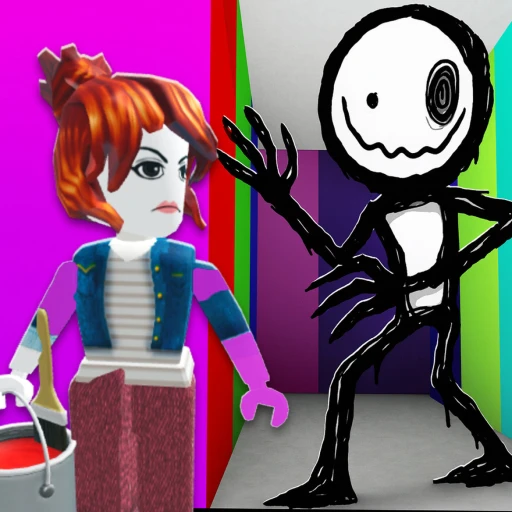
Color or Die vs DOORS (2026) -- Which Roblox Horror Game Is Better?
Roblox horror games keep getting better, and two titles that consistently show up in "what should I play next" conversations are Color or Die and DOORS. One throws you into a colorful maze where matching paint to walls is the only thing standing between you and a relentless stickman. The other locks you inside a procedurally generated hotel where every door you open could introduce you to a creature that ends your run in seconds. Both games have pulled in billions of visits, but they approach horror from completely different angles.
If you have been trying to figure out which one deserves your time this weekend -- or whether they are different enough to warrant playing both -- this comparison breaks it all down. We will walk through gameplay mechanics, horror design, replayability, multiplayer, monetization, and community support. By the end, you will have a clear picture of what each game offers and which one fits the way you like to play.
Let us start with a side-by-side snapshot before getting into the deeper analysis.
Quick Stats: Color or Die vs DOORS at a Glance
| Category | Color or Die | DOORS |
|---|---|---|
| Developer | BIGworks Games | LSPLASH |
| Roblox Place ID | 12931609417 | 6516141723 |
| Total Visits | 1.24B+ | 5B+ |
| Rating | ~90% | ~95% |
| Genre | Horror / Puzzle | Horror / Roguelite |
| Core Loop | Find paintbrushes, match colors, survive the maze | Open doors, solve rooms, avoid entities |
| Progression | Chapter-based (linear) | Procedural rooms (100+ per run) |
| Multiplayer | Co-op with friends | Up to 4 players per run |
| Main Antagonist | The Stickman | Multiple entities (Rush, Seek, Figure, etc.) |
| Game Passes | Optional cosmetic/speed boosts | Retro VFX (75R$), Custom Death Sound |
| Average Session Length | 15-25 minutes per chapter | 15-30 minutes per run |
| Age Suitability | 7+ | 10+ |
The numbers paint a broad picture. DOORS has a significantly larger player base and more total visits, but Color or Die has carved out its own massive audience with over a billion visits and a strong approval rating. Now let us dig into what actually happens when you load into each game.
Gameplay and Core Loop
Color or Die: Paint Your Way to Survival
Color or Die drops you into a maze-like environment with one clear objective: collect all 13 paintbrushes scattered across the map and escape. That sounds simple on paper, but the execution is what makes the game compelling. Each paintbrush corresponds to a specific color, and when you pick one up, you are carrying that color with you. Paint buckets placed throughout the maze let you apply colors to unlock doors that block your path forward.
The survival mechanic is where Color or Die gets interesting. A stickman creature roams the maze, and if it catches you, your run is over. Your only defense is the color you are holding. When the stickman gets close, you need to press yourself against a wall that matches your current color to become camouflaged and invisible. Holding the wrong color or standing near the wrong wall means you are completely exposed. This creates constant micro-decisions: do you grab the blue paintbrush you need for a door deeper in the maze, or do you keep the red one because there are more red walls in this section?
The maze layout is designed to funnel you through tight corridors and open rooms, with the stickman patrolling on semi-predictable routes. Experienced players learn the map and optimize their paintbrush collection order, turning each chapter into a speed-running puzzle. BIGworks Games has released multiple chapters over time, each introducing new map designs and additional challenges that build on the core color-matching concept.
Premium Roblox members receive an automatic +1 speed boost, which provides a slight advantage when outrunning the stickman but does not fundamentally change the gameplay. The game remains entirely skill-based at its core.
DOORS: Run the Gauntlet
DOORS takes the opposite structural approach. Instead of a fixed maze, you enter a procedurally generated hotel and move through 100 or more rooms in sequence. Each room is randomized -- the layout, the loot, the lighting, and the entity encounters change every single run. You push forward by finding the next numbered door, searching for items like lockpicks and vitamins, and reacting to whatever threat appears.
The entity system is the backbone of DOORS. Rush barrels down hallways at high speed, forcing you to dive into the nearest closet or wardrobe. Ambush mimics Rush but bounces back and forth multiple times to punish players who leave their hiding spots too early. Seek triggers full sprint chase sequences through obstacle-filled corridors. Figure is a blind monster that hunts by sound, requiring you to crouch and move silently while it stalks the same room you are in. Halt forces you to navigate a dark corridor with visual trickery. Screech whispers from the darkness and damages you if you do not look at it quickly enough.
In 2026, LSPLASH has expanded the game with several major additions. Chaos Mode allows random events to occur during runs, with a livestream integration feature that lets Twitch and YouTube chat vote on which events happen. Daily Runs provide randomized challenge configurations that change every 24 hours, creating a competitive leaderboard element. The April Fools Rush Mode event introduced Endless Mode alongside a modified hotel layout. Floor 3, set in a giant castle surrounded by woods, is expected to launch later this year.
Edge: DOORS. Both games offer strong core loops, but DOORS wins on depth and variety. Its procedural generation ensures no two runs feel identical, and the entity roster provides far more mechanical diversity than Color or Die's single stickman antagonist. Color or Die's color-matching mechanic is clever and well-executed, but DOORS gives you more systems to master and more situations to adapt to.
Horror and Atmosphere
Color or Die: Colorful Tension
Color or Die plays an interesting trick with its visual design. The maze is bright and colorful -- walls are painted in vivid reds, blues, greens, and yellows. It looks almost cheerful at first glance. But that brightness serves a dual purpose. It makes the color-matching mechanic readable at a glance, and it creates a stark contrast when the stickman appears. The creature is a dark, featureless figure that looks fundamentally wrong against the saturated backdrop.
The horror in Color or Die is rooted in pursuit and vulnerability. The stickman does not jump-scare you with a sudden audio sting. Instead, it rounds a corner and starts walking toward you, and the panic comes from realizing you are holding the wrong color or that there is no matching wall nearby. The fear is mechanical rather than atmospheric -- you are scared because you know you made a mistake and the consequence is heading your way.
Younger players tend to handle Color or Die well because the bright environment softens the horror. The stickman is creepy but not grotesque. The game lands in a sweet spot between "scary enough to be exciting" and "not so scary that it traumatizes an 8-year-old." This accessibility is a significant strength for the game's broad appeal across age groups.
DOORS: Darkness and Dread
DOORS takes a completely different approach to horror. The hotel is dark. Corridors are narrow. Lighting flickers. The audio design is layered and oppressive, with ambient sounds that keep you perpetually on edge even when nothing is actively threatening you. And then Rush comes screaming down the hallway at full speed, the screen shakes, and you have roughly two seconds to find a hiding spot or your run is done.
The variety of entity encounters keeps the horror from becoming predictable, even for experienced players. Figure's library encounters are particularly effective -- you are trapped in a room with a blind monster that reacts to every footstep, and you have to solve a puzzle on a bookshelf while it patrols inches away from you. The tension during those sequences is as intense as anything on the Roblox platform. Seek's chase sequences get your heart rate up in a different way, demanding fast reflexes and split-second directional decisions as you sprint through collapsing corridors.
DOORS does lose some of its scare power over time. Players who have completed dozens or hundreds of runs learn the audio cues and timing windows for every entity, and what was once terrifying becomes routine. But the game compensates for this with modes like Chaos Mode, where unpredictable events can disrupt even the most experienced player's muscle memory.
Edge: DOORS. In terms of raw scare factor, DOORS is the more frightening game by a wide margin. Its entity encounters are some of the most memorable horror moments on Roblox, and the atmospheric design is outstanding. Color or Die offers a lighter, more accessible brand of horror that works well for its target audience, but players looking for genuine frights will find more of them behind those numbered doors.
Replayability and Longevity
Color or Die: Chapter Progression
Color or Die structures its content around chapters, with each chapter presenting a new maze layout, new paintbrush arrangements, and refined challenges. Once you complete a chapter, you can replay it to improve your time or try different strategies for collecting paintbrushes in a more efficient order. The fixed map design means that experienced players can eventually memorize optimal routes, which appeals to the speed-running community but reduces the surprise factor on repeated plays.
The game has continued to add new chapters over its lifespan, and each addition brings players back to experience fresh content. The color-matching mechanic remains engaging because the new layouts force you to rethink your approach to color management and wall positioning. There is real satisfaction in mastering a chapter to the point where you can complete it without a single close call from the stickman.
That said, Color or Die's replay value has a ceiling that depends heavily on how quickly BIGworks Games releases new chapters. Between updates, some players find that the existing content does not offer enough variation to keep them coming back daily. The fixed maps, while well-designed, lack the session-to-session unpredictability that keeps many modern Roblox games sticky.
DOORS: Procedural Endlessness
DOORS was built from the ground up for replayability. Procedural room generation means that every run through the hotel produces a different sequence of rooms, entity encounters, and loot distributions. You might face Rush three times in your first twenty rooms during one run and not see it until room forty in the next. This randomization prevents players from relying purely on memorization and forces constant adaptation.
The Knobs currency system adds a progression layer that gives each run tangible value. Even a failed run earns you Knobs that go toward cosmetic unlocks and items. Daily Runs, introduced in 2026, add a competitive angle by giving every player the same randomized configuration and ranking their performance on a leaderboard. Chaos Mode layers additional unpredictability with its random event system and viewer interaction for streamers.
LSPLASH has also maintained a strong content update cadence. The addition of new floors effectively doubles or triples the game's content, and each floor introduces its own entity roster and environmental design. With Floor 3 on the horizon and The Archives rework expected to revamp The Rooms subfloor, DOORS shows no signs of running out of content to offer.
Edge: DOORS. The procedural generation, Knobs system, multiple game modes, and consistent content pipeline give DOORS a significant advantage in replayability. Color or Die is well-crafted and fun to replay, but its fixed chapter structure cannot match the session-to-session variety that DOORS delivers.
Multiplayer and Social Experience
Color or Die: Co-Op Maze Running
Color or Die supports cooperative play, and having teammates changes the dynamic of the maze in meaningful ways. With friends, you can split up to cover more ground and collect paintbrushes faster. One player can act as a scout, tracking the stickman's patrol route while another dashes to grab a hard-to-reach paintbrush in a distant section of the maze. Communication becomes a real advantage -- calling out the stickman's location or warning a friend that they are holding the wrong color adds a layer of coordination that solo play lacks.
The social experience in Color or Die tends to be lighthearted. The bright visuals and puzzle-focused gameplay lend themselves to laughter and banter rather than screaming. Watching a friend panic because they are holding green while standing next to a red wall is genuinely entertaining, and the game creates plenty of those moments organically. For younger players or friend groups that want something scary but not overwhelming, the co-op in Color or Die hits a comfortable sweet spot.
The main limitation is that the fixed maze design means experienced groups can breeze through chapters quickly once they have memorized the layouts. The challenge comes from speed rather than survival, which shifts the multiplayer dynamic from cooperative horror to competitive time-trial territory over time.
DOORS: Coordinated Survival
DOORS supports up to four players per run, and the co-op experience is where the game truly shines for many players. Having teammates means you can call out entity audio cues, share items, and revive each other after certain encounters. The coordination required during a Figure encounter -- where everyone needs to stay silent and avoid bumping into each other in a dark room -- creates uniquely tense multiplayer moments.
The shared panic of a Rush encounter is a different kind of social experience. All four players scrambling for hiding spots at the same time, shouting at each other to move, and then erupting in relief or devastation depending on who made it and who did not. DOORS generates the kind of chaotic, memorable multiplayer moments that players clip and share on social media constantly.
The four-player cap does mean that larger friend groups have to split up, which is a minor inconvenience. But the tight group size keeps the co-op focused and ensures that every player's actions matter. There is no carrying in DOORS -- everyone needs to know the entity patterns to survive.
Edge: DOORS. While Color or Die's co-op is fun and accessible, DOORS delivers more intense and memorable multiplayer experiences. The entity encounters create moments of shared terror and triumph that few Roblox games can match. Color or Die wins on accessibility for younger or more casual groups, but DOORS takes this category for the quality of its co-op moments.
Monetization and Value
Color or Die: Minimal Spending
Color or Die takes a light approach to monetization. The core game is completely free, and all chapters and content are accessible without spending a single Robux. Premium Roblox members receive a passive +1 speed boost, which is a nice perk but not a game-changer. The game offers optional game passes for cosmetic items and minor convenience features, but nothing that alters the fundamental balance of the experience.
This approach works well for the game's younger-skewing audience. Parents do not have to worry about their kids encountering aggressive purchase prompts, and players can enjoy the full experience on equal footing regardless of their Robux balance. If you are looking for ways to earn Robux for optional purchases here or in other games, check out our Color or Die free Robux guide for practical tips.
DOORS: Fair Cosmetics
DOORS has a slightly broader monetization structure, but it remains remarkably fair by Roblox standards. The Retro VFX game pass (75 Robux) adds a visual filter to your gameplay. The Custom Death Sound pass lets you personalize your death audio. Neither pass provides any mechanical advantage -- they are pure cosmetic expression.
The Knobs currency is earned exclusively through gameplay. There is no option to buy Knobs with real money, which keeps the progression system honest. Every cosmetic unlock represents actual time spent playing the game, not credit card usage. LSPLASH has earned significant community goodwill by keeping monetization minimal and non-predatory. For tips on earning Robux for those optional passes, our DOORS free Robux guide covers the best methods.
Edge: Tie. Both games handle monetization responsibly. Color or Die is slightly more stripped-back, but DOORS' cosmetic-only passes and earn-only currency system are equally fair. Neither game will pressure you to open your wallet, and the full experience is available for free in both cases.
Graphics, Sound, and Polish
Color or Die: Bright and Readable
Color or Die's visual design prioritizes function. The bright, saturated color palette is not just an aesthetic choice -- it is a gameplay mechanic. You need to instantly identify wall colors from a distance so you can plan your escape routes and color matching. The art style is clean and slightly cartoonish, with smooth textures and clear visual boundaries between different colored zones.
The stickman's design is effective in its simplicity. A dark, featureless humanoid figure against bright walls is immediately recognizable and naturally unsettling. The audio design is competent, with ambient maze sounds and the stickman's proximity indicators giving you adequate information to play effectively. It is not a game that will win awards for its sound design, but everything functions as intended and nothing feels missing.
Performance is excellent across devices. The simple visual style means Color or Die runs smoothly on mobile phones, tablets, and lower-end PCs without any noticeable frame drops. For a game where reaction time matters, this consistency is important.
DOORS: Atmospheric Mastery
DOORS is one of the most visually and aurally polished games on the Roblox platform. The hotel environments feature detailed room designs with convincing lighting, dynamic shadows, and environmental storytelling. Each entity has a distinct, memorable visual design -- Rush's glowing charge, Seek's eye-covered form, Figure's towering blind silhouette. These designs have become iconic within the Roblox community and are instantly recognizable even outside the game.
The sound design in DOORS is on another level entirely. Every entity has specific audio cues that experienced players learn to identify instantly. Rush's approaching rumble, Ambush's distinctive whoosh, Screech's whispered "psst," Halt's distorted audio -- these sounds are burned into the memory of anyone who has played the game seriously. The ambient soundscape between encounters is equally impressive, with creaking floorboards, distant thuds, and subtle musical shifts that keep tension high even in empty rooms.
DOORS runs well on most devices, though mobile players occasionally experience minor performance hitches during intensive entity sequences. The visual fidelity is high for a Roblox game, which means it is slightly more demanding than simpler titles, but the optimization is strong overall.
Edge: DOORS. The gap in production quality is significant. DOORS delivers visual and audio design that competes with dedicated indie horror games, while Color or Die opts for functional simplicity. Both approaches serve their respective games well, but DOORS provides a more immersive and polished sensory experience by a considerable margin.
Community and Content Updates
Color or Die: Growing Steadily
Color or Die has built a solid community of over a billion visits, which places it firmly among the successful Roblox horror games. BIGworks Games releases new chapters and seasonal updates at a steady pace, and each release generates excitement among the player base. YouTube and TikTok content creators regularly feature Color or Die in their Roblox horror compilations and challenge videos, which helps drive new players to the game.
The community tends to skew younger than DOORS, which shapes the type of content and discussion around the game. You will find more walkthrough guides, chapter completion videos, and family-friendly Let's Play content. The game's approachable design makes it a popular choice for content creators who target younger audiences.
BIGworks Games communicates with its community through standard Roblox channels. Updates are anticipated but not always on a fixed schedule, which means there can be quieter periods between content drops. The game's chapter structure helps here -- each new chapter feels like a meaningful expansion rather than a minor patch.
DOORS: A Cultural Force
DOORS has transcended the typical Roblox game community to become a genuine cultural phenomenon within the platform's ecosystem. With over 5 billion visits and one of the most recognizable entity rosters in Roblox history, the game generates massive engagement across every social platform. Fan art of Rush, Seek, and Figure floods art communities. Lore theories and analysis videos accumulate millions of views. Content creators build entire channels around DOORS content.
LSPLASH's update cadence in 2026 has been aggressive and consistent. Chaos Mode added an entirely new way to play. Daily Runs introduced competitive elements. The April Fools Rush Mode event and Endless Mode gave players fresh reasons to return. Floor 3 and The Archives rework are both expected within the year, and a Monsters and Mortals collaboration is slated for July 2026. This roadmap signals that DOORS will continue receiving substantial content for the foreseeable future.
The developer's communication with the community is strong, with regular updates, teasers, and engagement that keeps player interest high between major releases. The DOORS Wiki maintained by fans is one of the most detailed game wikis on the Roblox platform, documenting every entity behavior, room type, and strategy in exhaustive detail.
Edge: DOORS. The scale of the DOORS community and the pace of content updates are in a different league. Color or Die has a healthy and growing player base, but DOORS commands the kind of cultural presence and developer support that only a handful of Roblox games achieve.
Performance and Accessibility
Both games run well across the range of devices that Roblox supports, but they differ in their demands and their accessibility to new players.
Color or Die's simpler visual style means it performs smoothly on essentially any hardware that can run Roblox. The game's controls are straightforward -- move, pick up paintbrushes, interact with paint buckets, and press against walls. A new player can understand the core mechanics within their first minute of playing. The tutorial is implicit: you see colors, you see the stickman, and you figure out the relationship quickly. This makes Color or Die particularly accessible for younger players or those who are new to Roblox horror games.
DOORS has slightly higher hardware requirements due to its more detailed environments and lighting, but it still runs well on most devices. The controls are simple -- move, interact with doors and objects, hide in closets -- but the skill curve is steeper because you need to learn entity-specific responses. A new player encountering Rush for the first time has no way to know they need to hide in a closet unless they have read a guide or been told by a teammate. The game does provide some in-game guidance through items like the Crucifix and Guiding Light, but the learning curve is notably steeper than Color or Die's.
Edge: Color or Die for ease of entry and raw performance on low-end hardware. DOORS rewards the steeper learning curve with deeper gameplay, but the barrier to entry is higher.
The Verdict
Our Pick: DOORS for Most Players, Color or Die for Accessibility
DOORS wins this comparison across more categories and offers the deeper, more replayable, and more polished experience. Its procedural generation, diverse entity roster, multiple game modes (Chaos Mode, Daily Runs, Endless Mode), and consistent 2026 content updates make it the stronger game for players who want a horror experience they can return to for weeks or months. The co-op gameplay is outstanding, the sound design is best-in-class for Roblox, and the community surrounding the game is massive and active. However, Color or Die deserves serious credit for what it accomplishes. Its color-matching survival mechanic is genuinely creative and unlike anything else on the platform. The lighter horror tone and simpler controls make it the better entry point for younger players or anyone who finds DOORS too intense. If you are looking for a horror game you can play with your younger sibling without worrying about nightmares, Color or Die is the smarter pick. For everyone else, DOORS is the game that sets the standard for what Roblox horror can be in 2026.
Who Should Play What?
Play Color or Die if you:
- Enjoy puzzle-based horror more than pure jump scares
- Are looking for a game suitable for younger players (ages 7+)
- Like the idea of color-matching mechanics as a survival tool
- Prefer shorter, chapter-based sessions with clear objectives
- Want a game with minimal monetization pressure
- Enjoy speed-running and optimizing fixed map layouts
- Prefer a lighter, more accessible horror atmosphere
Play DOORS if you:
- Want intense, jump-scare-driven horror with real tension
- Enjoy roguelite games with procedural generation and high replay value
- Like learning enemy patterns and mastering mechanical responses
- Want multiple game modes including Chaos Mode and Daily Runs
- Prefer tight four-player co-op with high-stakes coordination
- Appreciate detailed sound design and atmospheric environments
- Want a game with a strong content roadmap for the rest of 2026
Earn Free Robux While You Play
Whether you choose Color or Die, DOORS, or both, Earnaldo helps you earn free Robux through simple tasks. No surveys, no scams -- just real Robux rewards.
Frequently Asked Questions
Color or Die and DOORS deliver horror in different ways. Color or Die builds tension through its color-matching survival mechanic and the ever-present stickman stalking you through a maze. DOORS relies on jump scares from entities like Rush and Ambush that strike without warning. DOORS is generally considered scarier due to its darker atmosphere and more aggressive entity encounters, but Color or Die's puzzle-under-pressure gameplay creates its own brand of panic.
Yes, both games support multiplayer. Color or Die lets you team up with friends to navigate the maze together, splitting up to find paintbrushes faster while watching each other's backs against the stickman. DOORS supports up to four players per run, allowing you to cooperate on room puzzles and call out entity warnings. Both games are significantly more fun with friends than solo.
Color or Die is generally more suitable for younger players, roughly ages 7 and up. Its colorful art style, puzzle-oriented gameplay, and less intense horror make it approachable for a wider audience. DOORS targets players aged 10 and above due to its darker environments, frequent jump scares, and higher difficulty. Parental discretion is recommended for both games since they fall under the horror genre.
DOORS has stronger replayability thanks to its procedural room generation, the Knobs currency system, multiple floors, and regular content updates including Chaos Mode and Daily Runs. Color or Die offers replay value through its multiple chapters and the challenge of perfecting speed runs, but its content library is smaller. DOORS gives you more reasons to keep coming back over the long term.
Both games are free to play on Roblox. Color or Die offers a premium speed boost for premium Roblox members and optional game passes. DOORS offers cosmetic game passes like Retro VFX and Custom Death Sound. Neither game locks core gameplay behind a paywall, so you can enjoy the full experience without spending any Robux.
DOORS receives more frequent and larger updates. In 2026 alone, LSPLASH has released Chaos Mode with livestream integration, Daily Runs, and the April Fools Rush Mode event. Floor 3, set in a giant castle, is also expected later this year. Color or Die receives updates from BIGworks Games at a steadier pace, typically adding new chapters and seasonal content, but the scope and frequency of DOORS updates is significantly higher.
Both Color or Die and DOORS represent strong entries in the Roblox horror genre in 2026, but they serve different audiences and different moods. Color or Die is the game you recommend to someone who wants to dip their toes into horror without getting overwhelmed. DOORS is the game you point to when someone asks what the best horror game on Roblox looks like. Whichever you choose, you are getting a well-made experience from developers who care about their craft -- and that is worth your time regardless of the category.