Cook and Sell vs Restaurant Tycoon 2 (2026) -- Which Roblox Game Is Better?
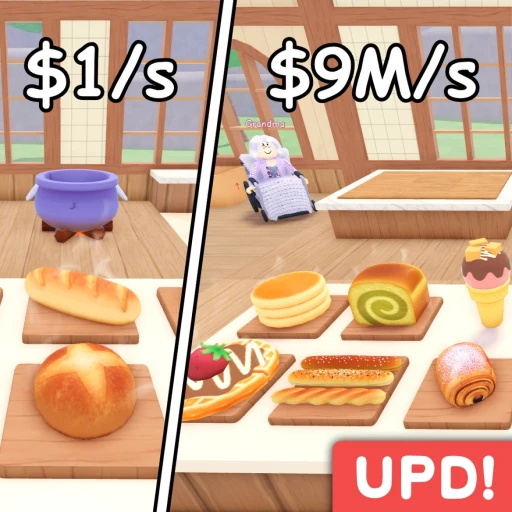
Roblox has no shortage of food and restaurant games, but two titles stand out for very different reasons: Cook and Sell by Alpaca Games and Restaurant Tycoon 2 by Ultraw. Both let you build a food business from the ground up, but they couldn't be more different in how they get you there. Cook and Sell puts you in the kitchen with hands-on cooking mechanics -- buying ingredients, preparing dishes step by step, stocking your counter, and serving customers directly. Restaurant Tycoon 2 takes the management approach, letting you design beautiful restaurants, hire staff, craft menus, and oversee the operation from above.
If you've been wondering which restaurant game deserves your time in 2026, this comparison covers everything that matters. We'll break down gameplay loops, progression depth, customization options, mobile performance, community size, and how each game pairs with your Robux-earning routine through Earnaldo.
Cook and Sell is currently in alpha with 14 million visits and a 96% approval rating, while Restaurant Tycoon 2 is an established sim that's been refined over years of updates. One's a scrappy newcomer punching above its weight; the other's a polished veteran that's seen it all. Let's see how they stack up.
Quick Comparison Table
| Feature | Cook and Sell | Restaurant Tycoon 2 |
|---|---|---|
| Developer | Alpaca Games | Ultraw |
| Genre | Cooking Tycoon (Alpha) | Restaurant Management Sim |
| Total Visits | 14M+ | 1B+ |
| Approval Rating | 96% | 90%+ |
| Core Loop | Buy ingredients, cook, stock, serve | Design restaurant, hire staff, manage menu |
| Cooking Style | Hands-on, step-by-step | Abstracted, menu-based |
| Customization Focus | Kitchen equipment upgrades | Full restaurant interior design |
| Staff System | Limited (solo-focused) | Hire cooks, waiters, delivery drivers |
| Mobile Support | Yes | Yes |
| Free-to-Play | Yes | Yes |
| Development Stage | Alpha | Fully released, regular updates |
Gameplay and Core Loop
These two games share a restaurant theme, but the moment-to-moment gameplay feels completely different. One's a cooking game with tycoon elements; the other's a management sim with a food wrapper. Understanding this fundamental difference is key to figuring out which one you'll enjoy more.
Cook and Sell -- Edge: Hands-On Cooking Experience
Cook and Sell puts you directly behind the counter and in the kitchen. The core loop starts at the ingredient shop where you purchase raw materials -- meats, vegetables, bread, sauces, and specialty items. You bring those ingredients back to your cooking stations and prepare dishes through interactive cooking steps. This isn't a "click once and wait" situation; you're actively chopping, grilling, frying, and plating food.
Once your dishes are ready, you stock them on your serving counter. Customers walk up, place orders, and you fill them from your prepared stock. The satisfaction comes from running a tight operation -- keeping enough dishes prepped to meet demand without wasting ingredients on items nobody wants. As you earn money from sales, you unlock new recipes that require more complex preparation steps and sell for higher prices.
The cooking mechanics feel tactile and engaging. There's a rhythm to it once you get going: buy a batch of ingredients, cook several dishes in sequence, stock the counter, serve until you run low, and repeat. It's the kind of loop that gets into your head, and the 96% approval rating suggests that Alpaca Games nailed the feel even in alpha. The game doesn't try to do everything -- it focuses on making the cooking process itself satisfying, and it succeeds at that.
Equipment upgrades let you cook faster, prepare more dishes at once, and unlock premium ingredients. Each upgrade feels meaningful because it directly impacts how efficient your cooking loop becomes. You're not just watching numbers go up; you can feel the difference when a new oven cuts your bake time in half.
Restaurant Tycoon 2 -- Edge: Management Depth
Restaurant Tycoon 2 operates at a higher level of abstraction. You're the restaurant owner and designer, not the line cook. The core loop revolves around building and decorating your restaurant space, designing a menu from a massive selection of cuisines, hiring staff to handle the day-to-day operations, and watching the money roll in while you make strategic decisions about pricing, expansion, and service quality.
The menu system is impressively deep. You choose from dozens of cuisines and hundreds of individual recipes, each with different preparation times, ingredient costs, and customer appeal ratings. Balancing your menu to maximize profit while keeping wait times reasonable is a genuine strategic challenge. You'll want a mix of quick appetizers that keep customers happy during rushes and high-value entrees that boost your revenue per table.
Staff management adds another layer. Your cooks, waiters, and delivery drivers each have skill levels and specializations. Training staff improves their efficiency, and placing the right employees in the right roles can dramatically increase your restaurant's throughput. A skilled waiter serving tables faster means more customers served per hour, which means more money earned.
The restaurant design tools are where many players spend most of their time. With hundreds of furniture items, wall textures, floor materials, lighting options, and decorative elements, you can create genuinely impressive restaurant interiors. Multi-story buildings, outdoor patios, themed dining rooms -- the customization possibilities are enormous. Some players treat the game primarily as a building game that happens to have a restaurant management layer on top.
Progression and Long-Term Goals
Cook and Sell
Progression in Cook and Sell follows a satisfying escalation curve. You start with basic recipes and a simple setup, then gradually unlock more complex dishes that require multiple cooking steps and premium ingredients. Each new recipe tier feels like a genuine level-up because the cooking process itself changes -- you're not just doing the same thing with bigger numbers.
Equipment upgrades provide the backbone of your progression. Better stoves cook faster, larger prep stations let you handle more ingredients at once, and upgraded serving counters attract higher-paying customers. The alpha state means new content is being added regularly, with Alpaca Games introducing new recipe categories, kitchen tools, and gameplay systems as development continues.
The game's alpha status is worth addressing directly. Some features feel incomplete, and you'll occasionally encounter rough edges. But the core loop is polished enough that the 14 million visits and 96% rating aren't accidents -- the foundation is rock solid, and the game is only going to get better from here as more systems come online.
Restaurant Tycoon 2 -- Edge: Endless Expansion
Restaurant Tycoon 2 has years of content updates baked into it, and the progression reflects that. You start with a tiny restaurant and a handful of basic recipes, then expand into a sprawling food empire. Multiple restaurant locations, franchise systems, specialty cuisines, seasonal menus, and holiday events give you an almost endless supply of goals to pursue.
The game's progression works on multiple fronts simultaneously. Your restaurant level increases as you serve more customers, unlocking new menu items and design options. Your staff gains experience and becomes more efficient. Your bank account grows, letting you expand your physical space and open new locations. And your design skills improve as you learn the building tools, which means your restaurants look better even without new items being added.
Long-term players often shift their focus from earning money (which becomes easy) to creating showcase restaurants that push the building system to its limits. The community shares restaurant tours and design challenges that keep experienced players engaged long after they've maxed out the management side. This creative endgame gives Restaurant Tycoon 2 staying power that pure progression systems can't match.
Customization and Creativity
Restaurant Tycoon 2 -- Edge: Unmatched Design Freedom
This category isn't even close. Restaurant Tycoon 2's building system is one of the most comprehensive on Roblox. You can design every aspect of your restaurant's interior and exterior -- walls, floors, ceilings, furniture placement, lighting, outdoor spaces, signage, and decorative details. The color picker lets you customize materials to match your vision, and the precision placement tools give you control over exactly where every item sits.
Multi-story restaurants add vertical design possibilities. You can create rooftop dining areas, basement kitchens, balconies, and mezzanines. The building community around Restaurant Tycoon 2 produces genuinely impressive creations that rival dedicated building games on Roblox. Themed restaurants -- Japanese izakayas, French bistros, American diners, futuristic cafes -- showcase the system's versatility.
Cook and Sell
Cook and Sell's customization focuses on your kitchen setup rather than restaurant aesthetics. You can upgrade and rearrange your cooking stations, choose equipment layouts that optimize your workflow, and unlock premium kitchen tools that change how your workspace looks and functions. It's practical customization rather than creative expression.
The alpha roadmap suggests more customization features are coming, but right now, if creative building is important to you, Restaurant Tycoon 2 is the clear winner in this category. Cook and Sell compensates by making the cooking process itself the creative outlet -- figuring out the most efficient kitchen layout and mastering complex recipes provides its own form of creative satisfaction.
Mobile Experience
Cook and Sell -- Edge: Smooth Touch Controls
Cook and Sell's tap-based cooking mechanics translate naturally to touchscreens. Buying ingredients, interacting with cooking stations, and serving customers all work intuitively with touch input. The game's relatively simple visual style means it runs smoothly on most mobile devices without significant frame drops or loading issues. Since the core loop involves quick, focused interactions rather than precision placement, mobile players don't feel disadvantaged compared to desktop users.
Restaurant Tycoon 2
Restaurant Tycoon 2 is playable on mobile, but the building experience is noticeably better with a mouse and keyboard. Placing furniture precisely, rotating items, and navigating multi-story buildings can feel clunky on a touchscreen. The management and menu design aspects work fine on mobile, and actually playing the game -- serving customers, managing staff, checking finances -- is perfectly comfortable on a phone or tablet.
If you primarily build and design, you'll want to play Restaurant Tycoon 2 on desktop. If you're focused on the management and progression side, mobile works well. Cook and Sell provides a more consistently good experience across both platforms.
Earn Free Robux While You Cook
Both Cook and Sell and Restaurant Tycoon 2 have natural pauses -- waiting for food to cook or customers to finish eating. Use that downtime to earn free Robux on Earnaldo and spend it on game passes in your favorite restaurant game.
Monetization and Game Passes
Cook and Sell
Cook and Sell follows the standard free-to-play model with optional game passes for quality-of-life upgrades. Expect auto-cook passes, ingredient discounts, extra serving counter slots, and VIP bonuses that increase your earnings. Since the game is in alpha, the monetization is still being developed, but the early approach seems fair -- nothing feels locked behind a paywall. Everything is earnable through gameplay, with Robux purchases serving as time-savers rather than requirements.
Restaurant Tycoon 2 -- Edge: Mature Premium Options
Restaurant Tycoon 2 has a well-developed game pass ecosystem. VIP passes, building expansion packs, exclusive furniture sets, and premium design tools are available for Robux. The free experience is complete and enjoyable -- you can build an impressive restaurant without spending anything. Premium purchases primarily give you more customization options and faster progression.
If you use Earnaldo to earn free Robux, you can pick up game passes in either title without spending real money. Check our Cook and Sell free Robux guide and Restaurant Tycoon 2 free Robux guide for specific tips on maximizing your Robux earnings for each game.
Community and Player Base
Restaurant Tycoon 2 -- Edge: Massive Established Community
Restaurant Tycoon 2 has over a billion total visits and one of the most established communities among Roblox management games. Its Discord server, YouTube presence, and social media following are substantial. Content creators regularly produce building tutorials, restaurant tours, and optimization guides. The community shares design inspiration, and visiting other players' restaurants is a popular social activity.
The game's longevity means there's a wealth of community knowledge available -- guides, tier lists for menu items, optimal staff configurations, and building techniques that new players can learn from. This mature ecosystem makes it easier to get into the game and progress efficiently.
Cook and Sell
Cook and Sell's community is smaller but enthusiastic. With 14 million visits and a 96% approval rating, the player base is clearly passionate about the game. The alpha stage creates a sense of community investment -- early players feel like they're part of something that's growing, and their feedback directly shapes development. Alpaca Games appears responsive to community input, which builds loyalty.
As the game grows out of alpha, its community will likely expand significantly. The cooking genre has broad appeal on Roblox, and Cook and Sell's hands-on approach fills a niche that few other games occupy. If you enjoy getting in on the ground floor, this is a good time to start.
Updates and Developer Support
Cook and Sell -- Edge: Active Alpha Development
Being in alpha means Cook and Sell receives frequent updates as Alpaca Games builds out the game's feature set. New recipes, cooking equipment, gameplay systems, and quality-of-life improvements arrive regularly. The development pace is exciting for players who like watching a game evolve, and the 96% rating during alpha suggests the team is making smart decisions about what to prioritize.
Alpha games carry inherent risk -- features might change dramatically, progress could be affected by major updates, and some systems won't be fully developed yet. But for many players, the upside of being part of a game's growth outweighs those risks.
Restaurant Tycoon 2
Ultraw has maintained Restaurant Tycoon 2 for years with consistent content updates, seasonal events, new furniture collections, cuisine additions, and system improvements. The developer's track record proves sustained commitment. Updates are less frequent than Cook and Sell's alpha pace, but they're polished and substantial when they arrive. The game is stable, feature-complete, and unlikely to undergo dramatic changes that disrupt your progress.
Cooking Mechanics Deep Dive
Cook and Sell -- Edge: Interactive Cooking
Since cooking is the central experience in both games (even if Restaurant Tycoon 2 abstracts it), it's worth comparing directly. Cook and Sell makes cooking the star of the show. Each recipe involves multiple preparation steps that you perform manually -- chopping vegetables, seasoning meat, timing your grill, assembling plates. The process feels hands-on in a way that's satisfying and keeps you actively engaged rather than passively watching.
Recipe complexity scales with your progression. Early dishes might involve two or three steps, while advanced recipes require careful timing across multiple cooking stations simultaneously. Mastering a complex recipe feels like a genuine accomplishment, and the efficiency of your cooking directly impacts your income. A skilled player cooking the same recipe as a beginner will earn significantly more per hour just through better execution and timing.
Restaurant Tycoon 2
Restaurant Tycoon 2 treats cooking as a background system. You design your menu by selecting recipes from various cuisines, and your hired chefs handle the actual preparation. Your role is choosing which recipes to offer based on ingredient costs, preparation times, and customer preferences. It's a strategic decision rather than a mechanical skill, which appeals to players who prefer thinking over doing.
The menu design system has genuine depth. Different cuisines attract different customer types, preparation times affect table turnover rates, and ingredient costs eat into your margins. Optimizing your menu for maximum profit requires analyzing multiple variables simultaneously, and the best configurations aren't obvious without experimentation.
Who Should Play What
Choose Cook and Sell If You...
- Want to actually cook food, not just manage a restaurant from above
- Enjoy hands-on, active gameplay loops that keep you engaged moment to moment
- Like getting in early on alpha games and watching them develop
- Prefer simple, focused gameplay over complex management systems
- Want a game that works great on mobile with natural touchscreen controls
- Care more about satisfying core mechanics than visual customization
Choose Restaurant Tycoon 2 If You...
- Love building and designing custom spaces
- Prefer strategic management over hands-on action
- Want a massive amount of content that's already built and polished
- Enjoy hiring and managing staff as part of your gameplay
- Value a large, established community with abundant guides and resources
- Want to build a restaurant empire across multiple locations
Play Both If You...
- Love restaurant and cooking games in general
- Want to scratch different itches -- hands-on cooking in one, strategic management in the other
- Like using natural downtime between games to earn Robux with Earnaldo
- Enjoy seeing how different developers approach the same genre
Final Verdict
Cook and Sell and Restaurant Tycoon 2 are fundamentally different games wearing similar restaurant uniforms. Restaurant Tycoon 2 wins on content volume, customization depth, community size, and long-term polish. It's the safer choice if you want a complete restaurant experience that you know will keep you busy for months. Cook and Sell wins on cooking feel, active engagement, and moment-to-moment satisfaction. Its 96% approval rating in alpha is remarkable and signals something special in the making. If you want to feel like a cook, play Cook and Sell. If you want to feel like a restaurant mogul, play Restaurant Tycoon 2. Both are worth your time, and they complement each other well if you have room for two food games in your rotation.
For more Robux tips, check out our Cook Burgers free Robux guide for another great cooking game that pairs well with both of these titles.
Frequently Asked Questions
Restaurant Tycoon 2 has a much larger total visit count and has been on the platform for years with an established player base. Cook and Sell is newer with around 14 million visits and growing quickly, currently in alpha. Both have active communities, but Restaurant Tycoon 2 has broader name recognition and a longer track record.
Both games work well with Earnaldo. Cook and Sell has natural wait times while ingredients cook and customers arrive. Restaurant Tycoon 2 offers downtime between rushes when your staff handles orders automatically. Either game gives you moments to switch to Earnaldo's earn page without losing progress.
Yes. Both games are fully playable on mobile through the Roblox app. Cook and Sell's tap-to-cook mechanics translate well to touchscreens. Restaurant Tycoon 2's drag-and-drop decoration system works on mobile too, though placing furniture is slightly easier with a mouse. Both run well on modern mobile devices.
Cook and Sell focuses more heavily on the actual cooking process. You buy raw ingredients, follow cooking steps, and prepare dishes hands-on. Restaurant Tycoon 2 treats cooking as more of a management abstraction where you design menus and hire chefs who handle the cooking. If you want to feel like you're actually cooking, Cook and Sell is the better choice.
Cook and Sell has a simpler starting experience with a straightforward buy-cook-sell loop that's easy to grasp. Restaurant Tycoon 2 has more systems to learn upfront including staff management, restaurant layout, and menu design. Both are accessible, but Cook and Sell gets you into the action faster.
Restaurant Tycoon 2 wins on customization by a wide margin. It offers hundreds of furniture items, wall and floor options, outdoor seating, multi-story buildings, and detailed interior design tools. Cook and Sell focuses more on upgrading kitchen equipment and expanding your cooking stations rather than aesthetic restaurant design.