Dead Rails vs Forsaken (2026) -- Which Roblox Horror Game Is Better?
Last checked: September 5, 2026
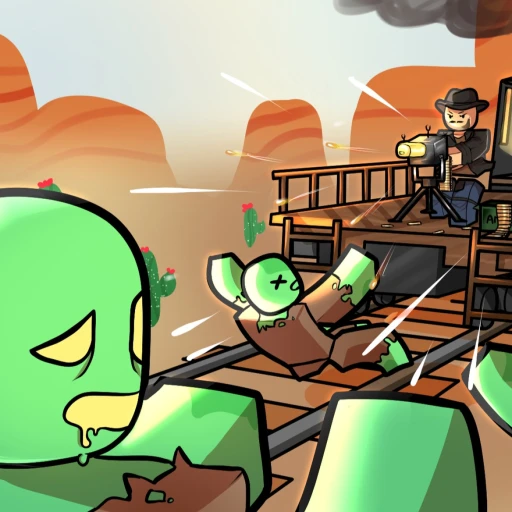
Roblox horror has split into two dominant camps in 2026, and Dead Rails and Forsaken represent the sharpest version of each. Dead Rails drops up to 16 players into a zombie-infested 1899 Western and asks them to survive a brutal train ride to Mexico. Forsaken pits eight survivors against one player-controlled killer in tight, high-stakes rounds where every footstep could be your last.
One is PvE co-op survival with deep class systems and checkpoint-based progression. The other is PvP asymmetric horror inspired by Dead by Daylight, where the scariest thing in the lobby is always another human being. Both games are free, both pull tens of thousands of concurrent players, and both deliver genuine tension that most Roblox experiences never reach.
This comparison breaks down every category that matters -- gameplay, classes, progression, atmosphere, monetization, community, and replay value -- so you can figure out which one deserves your time. Or whether you should just install both.
Dead Rails vs Forsaken -- Quick Stats (September 2026)
| Category | Dead Rails | Forsaken |
|---|---|---|
| Genre | Western zombie co-op survival | Asymmetric 8v1 horror |
| Place ID | 116495829188952 | 18687417158 |
| Developer | RCM Games | Forsaken Dev Team |
| Total Visits | 6.55B (6,547,189,533) | 5.63B (5,627,320,550) |
| Concurrent players (7-day median) | 20,970 | 85,440 |
| Rating | 92.6% (3,335,012 / 266,900) | 84.6% (2,360,174 / 430,575) |
| Setting | 1899 American West, train to Mexico | Dark enclosed environments |
| Core Loop | Survive the train journey, fight zombie hordes | Repair generators, escape the killer |
| Team Size | Up to 16 players (PvE co-op) | 8 survivors vs 1 killer (PvP) |
| Classes/Roles | 24 classes | Multiple killers + survivor perks |
| Key Game Passes | Sawed-Off Shotgun (148R), Mauser C96 (148R), Tommy Gun (175R), +5 Storage (95R) — 4 on sale | V.I.P (599R), Skin Pack #3 (399R), 2x Emotes (199R), Emote Pack #2 (175R) — 4 of 11 on sale |
| Progression | Checkpoints every 10km, class unlocks | Player Points, character unlocks |
| Codes System | Yes (active codes list) | No code system |
| Mobile-Friendly | Yes | Yes |
| Free-to-Play | Yes | Yes |
Gameplay -- What Do You Actually Do?
Dead Rails
Dead Rails puts you on a train heading south through the American frontier in 1899, and everything between you and Mexico wants you dead. Zombies swarm the tracks. Bandits ambush from the hills. The terrain itself fights you with collapsing bridges, sandstorms, and stretches of track that force your crew to disembark and fight through infested territory on foot.
The structure revolves around the train itself. Your group of up to 16 players boards up, picks their classes, and begins the journey. Checkpoints land every 10 kilometers, giving the run a rhythm -- push forward, survive the stretch, hit the checkpoint, restock, repeat. Losing players between checkpoints is painful because every class serves a purpose, and a squad running without its medic or engineer feels the gap immediately.
What sets Dead Rails apart from standard wave-survival games is the movement. You are not holding a static position. The train advances, the threats change, and the environment shifts as you push deeper into hostile territory. One stretch might be open desert where zombie hordes charge across flat ground and you can see them coming for half a mile. The next might tunnel through a canyon where threats drop from above and flanking is a constant danger.
Combat is weighty for a Roblox game. Weapons have recoil patterns, ammunition is limited, and melee carries real risk because getting close to a zombie horde means getting surrounded. Resource management ties into the Western setting naturally -- you are rationing bullets and bandages like a real frontier crew, not pulling infinite ammo from a magic backpack.
The co-op design makes communication essential. A well-coordinated 16-player squad that assigns roles, calls out threats, and manages resources can push deep into the journey. A group of randoms who each try to solo their way through will watch the train grind to a halt somewhere around the 30km mark. Dead Rails rewards teamwork more directly than almost any other co-op game on Roblox.
Forsaken
Forsaken strips horror down to its most primal dynamic: you are being hunted. Eight survivors spawn into a dark environment. One player becomes the killer. Survivors need to locate and repair generators scattered across the map to power their escape. The killer needs to eliminate them before that happens. Every round runs between 5 and 15 minutes, and every second of that time is tense.
Playing survivor is an exercise in controlled fear. You can see objective markers on your HUD, but reaching them means crossing open areas, crawling through corridors, and constantly listening for the killer's approach. Repairing a generator takes time -- time during which you are stationary, vulnerable, and making noise. The decision to commit to a repair or abandon it when you hear footsteps approaching is the core tension of the entire experience.
The killer role flips the script entirely. You are outnumbered eight to one, but you are stronger, faster, and equipped with unique abilities. Each killer character draws from Roblox myths and urban legends, giving them powers that change how they hunt. Some detect survivors through walls. Others set traps at generator locations. Some are fast but loud, others silent but slow. Learning to leverage your killer's strengths against eight coordinated survivors is a skill that takes dozens of hours to develop.
Round length is a major selling point. Because matches are short, a bad game costs you ten minutes at most. You can fit six or seven rounds into an hour-long session, and the role variety between survivor and killer keeps each round feeling different from the last. There is zero downtime -- you finish one match, queue the next, and you are back in the dark within seconds.
Edge: Dead Rails for depth, teamwork, and session length. Forsaken for intensity, quick turnaround, and the unmatched thrill of human-versus-human horror. The divide comes down to whether you want sustained co-op survival or rapid-fire competitive tension.

Class Systems and Roles
Dead Rails
Dead Rails features 24 playable classes, and this is where the game reveals its strategic depth. Each class fills a specific function on the train, and a balanced squad composition matters as much as individual skill. Medics keep wounded players alive. Engineers repair the train and maintain critical systems. Gunslingers handle crowd control against zombie waves. Scouts range ahead to identify threats before the group rolls into an ambush.
The class variety means repeat runs feel meaningfully different depending on what you play. Running the same stretch of track as a front-line gunslinger and then replaying it as a support medic are fundamentally different experiences. You notice different things, face different pressures, and contribute to the squad in different ways. Twenty-four classes is a lot for a Roblox game, and RCM Games has done the work to make each one feel distinct rather than just reskinning the same kit.
Class selection also creates natural social dynamics. Players develop mains, build expertise in specific roles, and earn reputations within the community for their class mastery. The Discord is full of class-specific guides, tier lists, and debate about optimal squad compositions for different stretches of the journey. That depth of community engagement around a role system speaks to how much players care about the distinction between classes.
Forsaken
Forsaken handles roles differently. On the survivor side, all eight players share the same base toolkit -- run, hide, repair generators, help teammates. Differentiation comes through perks earned via Player Points progression. Faster repairs, quieter movement, extended hearing range, reduced detection aura -- each perk modifies how you approach situations without fundamentally changing what you do. Two survivors running different perk loadouts will handle the same scenario in noticeably different ways.
The killer side is where role variety truly lives. Each killer character plays differently enough that unlocking a new one feels like accessing a new game mode. A killer who sets traps and plays defensively around generators requires a completely different strategy from one who sprints across the map hunting survivors aggressively. The killer roster keeps expanding, and each addition reshuffles the meta because survivors have to adapt their approach to counter new abilities.
The asymmetry itself creates the most important role distinction: are you hunter or hunted? That binary shapes every decision you make in a match. Survivors play cautiously, cooperatively, defensively. The killer plays aggressively, predicting, controlling space. Switching between roles between rounds keeps the experience from ever feeling one-note.
Edge: Dead Rails. Twenty-four classes with distinct mechanics and meaningful squad composition give Dead Rails the deeper role system. Forsaken's killer variety is strong, but the survivor side lacks the same degree of differentiation. If role-playing a specific function within a team matters to you, Dead Rails delivers more.
Atmosphere and Horror Design
Dead Rails
Dead Rails builds its horror through setting and pressure rather than jump scares. The 1899 Western aesthetic is not just a skin -- it informs the entire experience. Weapon technology is period-appropriate, which means no automatic rifles or energy weapons to mow through threats effortlessly. You are working with revolvers, lever-action rifles, and shotguns that require deliberate aiming and reload management. The limited firepower makes every encounter feel dangerous.
The train itself functions as both sanctuary and prison. Inside the cars you have relative safety, supplies, and your squad. But the train keeps moving, and eventually you have to step outside to clear the tracks, repair damage, or push through a section on foot. Those moments when you leave the train's protection and step into open territory are where Dead Rails builds its best tension.
Environmental storytelling fills the spaces between combat. Abandoned settlements along the tracks tell stories of the people who did not make it. Graffiti on canyon walls warns of what lies ahead. The further south you push, the more hostile and strange the landscape becomes, shifting from recognizable frontier territory into something that feels wrong in ways that go beyond just more zombies. RCM Games understands that good horror is about atmosphere, and the slow escalation of wrongness across the journey is more effective than any cheap scare could be.
Sound design reinforces the pressure. Distant gunshots from unseen encounters. The groan of metal as the train crosses a damaged bridge. Zombie growls that start faint and grow louder as hordes converge. Audio in Dead Rails serves a functional purpose -- it tells you where threats are and how close they are getting -- but it also maintains a constant baseline of unease that never lets you fully relax.
Forsaken
Forsaken's horror is immediate and personal. Darkness is a mechanic, not just a visual choice. Environments are deliberately underlit, forcing survivors to choose between using light sources to navigate and staying dark to avoid the killer's attention. That constant risk-reward calculation around visibility defines the survivor experience at a fundamental level.
The fear of a human-controlled killer hits different from any AI threat. You know that the thing hunting you is thinking, adapting, learning your patterns, and predicting where you will run. AI enemies follow scripts. A human killer might wait silently around the corner because they watched you run that direction in the last round. That unpredictability generates authentic tension that scripted horror simply cannot match.
Spatial audio is arguably Forsaken's most important system. Footsteps have directional sound. Generator hums carry through walls. Each killer has distinct ambient audio -- breathing, mechanical sounds, supernatural hums -- that experienced survivors learn to identify and track. Playing Forsaken without headphones is like playing a fighting game without seeing the screen. You lose access to half the information the game provides.
Killer character designs pull from Roblox myth iconography, grounding Forsaken in the platform's own horror culture. The visual language is distinct -- you will not mistake a Forsaken killer for a character from any other game. Each killer's animations, effects, and environmental tells reward pattern recognition, creating a layer of knowledge-based gameplay on top of the mechanical skill of running and hiding.
Edge: Forsaken. The human element elevates Forsaken's horror above what any PvE game can deliver. Dead Rails has superb atmosphere and environmental storytelling, but the unpredictable nature of being hunted by a real person produces a kind of tension that AI hordes cannot replicate. If pure horror is the priority, Forsaken wins.
Player Count and Community (September 2026)
The numbers tell an interesting story. Forsaken leads in concurrent players with a seven-day median of 85,440, meaning more people are playing it at any given moment. Dead Rails sits at a median of 20,970 but has accumulated 6.55 billion total visits against Forsaken's 5.63 billion. That gap suggests Dead Rails has been pulling players consistently for longer, even if Forsaken currently has the larger active population. Both figures are seven-day medians rather than snapshots, because either game can read two to three times higher at an afternoon peak than it does overnight.
Dead Rails carries a 92.6% approval rating (3,335,012 likes against 266,900 dislikes), which is notably high for any Roblox game. Note that the game is no longer flagged as a test build: as of September 5, 2026 its Roblox listing carries no beta or alpha tag and its description does not mention one, so treat any page still calling Dead Rails a beta as out of date. Forsaken's approval sits at 84.6% (2,360,174 against 430,575), which is solid but lower, likely reflecting the inherent frustration that comes with asymmetric PvP where losing to a skilled killer can feel helpless.
Community culture differs between the two games in predictable ways. Dead Rails fosters collaboration. The 16-player squad format means you need other people, and the community reflects that with active Discord servers full of class guides, squad recruitment posts, and code sharing. Players discuss optimal compositions, share route strategies, and help newcomers learn the role system.
Forsaken's community has a competitive edge. Tier lists rank killers and survivor perks. Highlight clips showcase clutch escapes and devastating killer plays. The shorter match format means content creators can pack multiple games into a single video, and the dramatic moments that PvP produces are naturally more shareable than steady co-op runs. Both communities are engaged and active, but they attract different temperaments.
Content creators have found strong niches in both games. Dead Rails generates long-form content -- full run recordings, class tier lists, weapon breakdowns, and earning guides. Forsaken produces viral short-form clips that perform well on TikTok and YouTube Shorts. The 99 Nights vs Forsaken comparison remains one of our most-read articles, showing how much interest there is in measuring Forsaken against other top horror titles.
Edge: Split. Forsaken wins on current CCU. Dead Rails wins on total visits and approval rating. Both are massive by any standard, and neither is going anywhere.
Game Passes and Monetization
Dead Rails
Dead Rails takes a practical approach to monetization with game passes that provide direct utility. The Sawed-Off Shotgun and Mauser pistol are both available for 148 Robux each, giving players access to additional weapon options that expand their combat toolkit. These are not overpowered pay-to-win weapons -- they are sidegrade options that suit specific playstyles and class builds.
The storage pass is the most broadly useful option. It is listed as +5 Storage and costs 95 Robux — we previously called it “More Storage” at 79 Robux, and both the name and the price were wrong. Extra inventory space means carrying more ammunition, medical supplies, and materials, which translates to longer runs between restocking stops. For players who push deep into the journey, that additional capacity reduces the number of dangerous supply runs they need to make.
Dead Rails has also added a fourth pass since this comparison was first written: the Tommy Gun at 175 Robux, created January 3, 2026. That makes four passes on sale in total, and the Tommy Gun is now the most expensive thing the game sells.
At 95 to 175 Robux, Dead Rails has some of the most affordable game passes in the Roblox horror category. The pricing feels fair -- you are paying for convenience and variety, not for power that free players cannot access. The core game, all 24 classes, and the full train journey are available without spending anything.
Forsaken
Forsaken's monetization centers on the V.I.P pass at 599 Robux — not 799, as we previously printed — which is still significantly more expensive than anything Dead Rails offers. Rather than paraphrase, here is what its own store listing states it grants: 25% more EXP permanently for all characters (stacking with other boosts), a togglable [VIP] title, developer-exclusive content in private servers, and exclusive V.I.P. skins for Noob, Elliot and Shedletsky. The 2x Emotes pass at 199 Robux is purely cosmetic.
One thing a bare pass list hides: Forsaken has eleven game passes attached to it, but only four are actually on sale — V.I.P (599), Skin Pack #3 (399), 2x Emotes (199) and Emote Pack #2 (175). The other seven, including Emote Pack #1, Emote Pack #3, the Spec Ops and Azure packs, the Earth Day Pass and Cameraman Killer Access, are switched off and cannot be bought at any price. Forsaken retires cosmetic packs rather than leaving them up, so a tracker listing all eleven as purchasable is selling you seven things that do not exist.
Forsaken uses a Player Points progression system instead of codes, meaning all advancement comes through playing matches. This works well for the game's competitive structure -- everyone earns progress at roughly the same rate adjusted for performance, and there are no shortcut codes that let players skip the grind. The tradeoff is that progression can feel slow without V.I.P, whose permanent 25% EXP boost is exactly what nudges players toward that 599 Robux purchase.
Neither game crosses the pay-to-win line. You will never lose a Dead Rails run because someone on your team did not buy the Mauser, and you will never lose a Forsaken match because the other side has VIP. Both games monetize around convenience and cosmetics, which is the standard players expect in 2026.
Edge: Dead Rails. Lower prices, more targeted purchases, and a codes system that gives free players additional rewards. Forsaken's VIP pass is expensive, and the lack of codes means the only way to accelerate progression is through that premium purchase.
Replay Value
Dead Rails
Twenty-four classes are the backbone of Dead Rails' replay value. Even after completing the full journey to Mexico, replaying it with a different class feels like a different game. The medic run where you spent the entire time keeping wounded teammates alive is nothing like the gunslinger run where you stood on top of the train car and held the line against a zombie wave. Multiply that by 24 classes and the math on replay value speaks for itself.
The beta status means new content arrives regularly. RCM Games is actively adding classes, balancing weapons, introducing new enemy types, and expanding the journey with additional environmental challenges. Players who invest now are building expertise in a game that will keep growing, and early mastery of the class system will pay dividends as the game evolves toward full release.
Run variance adds organic replay value. The same stretch of track can play differently depending on your squad composition, available resources, and how well the group communicates. A run that went smoothly last time might fall apart this time because you lost your engineer early and nobody could repair the train when it took damage at a critical moment. That dynamic keeps each run from feeling like a scripted repeat.
Forsaken
PvP is inherently replayable because the opposing side is human and therefore unpredictable. No two matches of Forsaken play the same way because no two killers play the same way. A killer who camps generators forces a completely different approach than one who patrols aggressively. Adapting to different opponents in real time is a skill that never stops developing.
The killer roster expansion provides structured replay value on top of the organic variety. Each new killer resets the meta, forcing both sides to adapt. Survivors who figured out the optimal strategy against one killer suddenly face a new threat that invalidates their old approach. That constant evolution keeps the game fresh without requiring massive content drops.
Role switching between survivor and killer doubles the effective replay value. A player who has only played survivor has experienced half of the game. Switching to killer reveals an entirely different set of skills, strategies, and satisfactions. The perspective shift is so dramatic that many players describe it as feeling like two games packaged together.
Edge: Forsaken. PvP replay value is effectively infinite because human opponents never run out of new approaches. Dead Rails' 24 classes provide excellent variety, but once you have mastered the journey with each one, the runs start converging. Forsaken matches keep producing new situations hundreds of hours in.
Who Should Play What?
Play Dead Rails if you want:
- Deep co-op teamwork with 16-player squads and meaningful class roles
- A Western horror setting with atmospheric tension and period-appropriate weapons
- Long-session gameplay with checkpoint-based progression and a clear destination
- A role system that gives you 24 different ways to experience the same journey
- Affordable game passes and free Robux earning opportunities
- A PvE experience where your enemies are zombies, not other players
Play Forsaken if you want:
- The raw tension of being hunted by a real human player
- Short, intense matches that fit into any schedule
- Competitive PvP horror with a high skill ceiling on both sides
- Constant variety from human opponents who never repeat the same strategy
- A strong community with active content creation and tier-list culture
- The unique thrill of playing as the killer and hunting eight people at once
Play both if you want:
- The full spectrum of Roblox horror in 2026
- A game for long co-op sessions (Dead Rails) and a game for quick competitive rounds (Forsaken)
- To understand why these two games dominate horror conversations on the platform
Final Verdict
Dead Rails is the better game for players who value teamwork, progression depth, and atmospheric world-building. Its 24-class system, 16-player squads, and checkpoint-based journey structure create an experience that rewards investment and gets better the more you play with a consistent group. The 92.6% approval rating reflects a polished product, and the listing no longer carries a beta tag.
Forsaken is the better game for players who want pure horror intensity and competitive PvP. The 8v1 format produces tension that no PvE game can match, the short match times respect your schedule, and the infinite variety of human opponents means you never run out of new challenges. A seven-day median of 85,440 concurrent players proves the format works at scale.
There is no wrong choice. These games occupy different lanes within the horror category, and the best answer for most players is to keep both installed. Use Dead Rails when you have a squad and an hour to burn. Use Forsaken when you have 15 minutes and want your heart rate to spike. Together, they cover every mood that Roblox horror can deliver.
Frequently Asked Questions
Forsaken holds a higher concurrent player count, with a seven-day median of 85,440 against Dead Rails at 20,970. However, Dead Rails has significantly more total visits at 6.55 billion versus Forsaken's 5.63 billion. Dead Rails also carries a higher approval rating at 92.6% versus 84.6%. Both are among the most-played horror experiences on Roblox in 2026.
Forsaken delivers sharper, more immediate scares because a real human player controls the killer, creating unpredictable tension that AI enemies cannot replicate. Dead Rails builds a different kind of horror through atmospheric dread -- the 1899 Western setting, zombie hordes closing in on your train, and the constant pressure of protecting your crew across hostile territory. Forsaken is scarier in short bursts; Dead Rails sustains tension over longer sessions.
Dead Rails supports up to 16 players per server and is designed for co-op play. You can queue solo and matchmake with random players, but coordinating with friends through voice chat or Discord makes the experience significantly better. The 24-class system means every player has a defined role, so communication matters. Forsaken requires at least 9 players for its 8v1 format, but matchmaking fills lobbies quickly due to the large player base.
Dead Rails offers weapon-focused passes: the Sawed-Off Shotgun and Mauser C96 (both 148 Robux), the Tommy Gun (175 Robux) and a +5 Storage pass (95 Robux). These provide direct gameplay utility without crossing into pay-to-win territory. Forsaken offers V.I.P at 599 Robux, whose listing states a permanent 25% EXP boost plus exclusive skins, alongside cosmetic packs -- though only four of its eleven passes are actually on sale. Dead Rails has cheaper entry points and more targeted purchases, while Forsaken's VIP is pricier but covers a broader set of perks. Neither game locks its core experience behind a paywall.
Both games receive consistent updates. Dead Rails from RCM Games is currently in beta, which means frequent patches, new classes, weapon balancing, and content additions as the game moves toward a full launch. Forsaken regularly introduces new killer characters inspired by Roblox myths, new maps, and balance patches that keep the asymmetric meta shifting. Both development teams are actively engaged with their player communities.
If you enjoy teamwork, survival mechanics, and atmospheric PvE horror, start with Dead Rails. Its co-op format lets you learn alongside other players without the pressure of a human hunter targeting you. If you prefer competitive PvP tension and shorter matches with high replay value, Forsaken is the better starting point. The 8v1 format delivers immediate thrills and the short round times mean you are always just minutes from your next match.
Earn Free Robux for Dead Rails and Forsaken Game Passes
Want the Sawed-Off, Mauser, or Forsaken VIP without spending your own money? Earn free Robux through Earnaldo and unlock every game pass for both titles.