Last checked: August 16, 2026
Dig & Clean Beginner's Guide – Best Gear, Fast Gold & Rare Finds
This guide gives you the real buy order for shovels, detectors and washers with actual Gold prices, explains the three stats that decide what a find is worth, and covers the Levels, XP, offline earnings and collection luck milestones added in Update 2 on August 16, 2026. No invented numbers — where the game has not published something, we say so.
In This Guide
The dig-clean-display loop
Dig & Clean 🧼 is a discovery sim by the group Squeaky Clean!. It launched on July 9, 2026 and has reached 43,607,397 visits, 766,353 favourites and 55,309 players in-game at our check on August 16, 2026. Servers hold six players, so dig spots are shared.
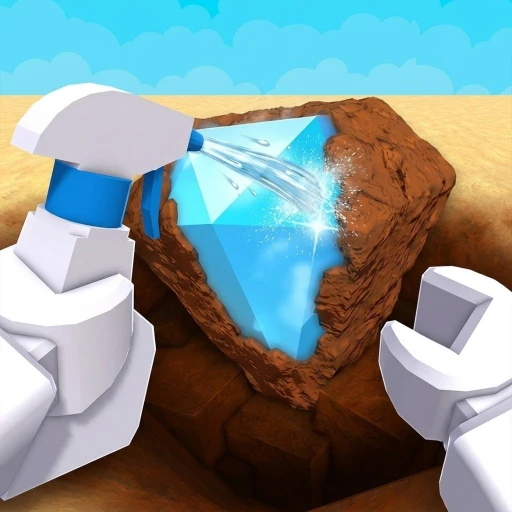
The whole game is one loop: sweep with your detector to find a buried object → dig it out with your shovel → carry it to the cleaning station and spray it clean → read its Rarity, Weight and Quality → display it or sell it → spend the Gold on better gear. Two things new players get wrong: the glow colour tells you the rarity before you dig (so you can skip junk), and nothing is certain until an item is washed — rarity and quality only appear after cleaning.
- Equip the free Rusty Detector and sweep the starter beach until a spot glows.
- Read the colour. White is Common, blue is Rare, violet is Epic, yellow is Legendary — the full colour key is on our Dig & Clean tier list.
- Dig it out with your shovel. If the game says you need a stronger shovel, that item is gated behind more Power.
- Take it to the cleaning station and spray every side, rotating large items.
- Display it in your museum, or sell it at the Sell Shop next to the Gear Shop.
Buy shovels first
Your shovel decides whether you can dig an item at all. Its Power stat is a hard gate: try a high-rarity object with a weak shovel and it simply will not move. That makes it the first thing to upgrade, ahead of Luck. Buy gear from the Gear Shop in the middle of the map — walk up, interact, press Buy. Shovels also carry a walk-speed bonus, which matters on six-player servers where someone else can reach a spawn first.
| Shovel | Cost | Power | Walk speed |
|---|---|---|---|
| Plastic Shovel (starter) | Free | 1 | — |
| Wood Shovel | 500 Gold | 2 | +5% |
| Stone Shovel | 1,600 Gold | 3 | +10% |
| Metal Shovel | 9,000 Gold | 5 | +15% |
| Gold Shovel | 45,000 Gold | 7 | +20% |
| Amethyst Shovel | 190,000 Gold | 9 | +25% |
| Titanium Shovel | 390,000 Gold | 14 | +30% |
| Cobalt Shovel | 650,000 Gold | 17 | +35% |
| Carbon Shovel | 1,300,000 Gold | 21 | +40% |
| Ruby Shovel | 2,900,000 Gold | 26 | +45% |
| Diamond Shovel | 9,200,000 Gold | 40 | +50% |
That is the core progression. Beyond it sit island-gated ranks — Sandstone, Amber, Scarab, Malachite and Aquamarine, then the five new Update 2 tiers (Cryolite, Peridot, Sunstone, Sugilite and Eclipse). The Eclipse Shovel tops the line at 640 Power for 320,000,000 Gold. Published prices for the mid ranks disagree between sources, so check the in-game shop rather than trusting a list — including ours.
Then detectors — your only Luck stat
This is the single most useful fact in the game: Luck comes from detectors only. Shovels and washers give none. Your detector's Luck multiplier is what raises the chance that rare items spawn for you at all, and its Range is how far it sweeps. Upgrade it second, once your shovel can actually extract what you find.
| Detector | Cost | Luck | Range |
|---|---|---|---|
| Rusty Detector (starter) | Free | x1 | 7 |
| Copper Detector | 500 Gold | x3 | 7.5 |
| Silver Detector | 5,000 Gold | x5 | 8 |
| Gold Detector | 28,000 Gold | x8 | 8.5 |
| Platinum Detector | 140,000 Gold | x12 | 9 |
| Onyx Detector | 330,000 Gold | x18 | 9.5 |
| Sapphire Detector | 530,000 Gold | x28 | 10 |
| Jade Detector | 1,000,000 Gold | x44 | 10.75 |
| Topaz Detector | 2,300,000 Gold | x70 | 11.5 |
| Crystal Detector | 6,400,000 Gold | x110 | 12 |
Past Crystal the line continues through Sandstone, Amber, Scarab, Malachite and the Aquamarine Detector at x850 Luck, which was the ceiling until this week. Update 2's new ranks go far beyond it: the Eclipse Detector reaches x10,500 Luck with 17 Range for 320,000,000 Gold, and it is the reason the new Anomaly rarity is reachable at all.
Sprays and washers last
Sprays only control cleaning speed. They play no part in finding or digging, so buy them last — the community rule is shovels, then detectors, then sprays. You start with the free Basic Spray Bottle (Power 34), and the early line runs Rubber at 900 Gold, Plastic at 5,500, Copper at 26,000, Steel at 100,000, Gold at 220,000 and Turquoise at 400,000. After that the line switches to pressure washers: Plastic Pressure Washer (640,000 Gold), Metal (1,000,000), Obsidian (1,600,000) and up, ending at the Eclipse Washer at Power 1,283.
Rarity, Weight, Quality & the Polishers
Once an item is washed, three stats appear above it, and all three feed both its sale price and its museum income.
- Rarity — the 1-in-X band, from Common at 1 in 2 up to the new Anomaly class past 1 in 8,000,000,000. Full ladder on our tier list.
- Weight — the stat everyone forgets. Two identical items are not worth the same: the heavier one sells for more Gold and earns more from visitors.
- Quality — graded Bad → OK → Good → Great → Perfect → MINT. Read that order carefully: MINT is the best grade, above Perfect, and a lot of guides have it backwards.
Quality is the only one of the three you can change. Your base has Polishing stations that raise an item one grade at a time, and using them costs no Gold. You can have two Polishers, and spending Gold to upgrade them shortens the time each grade takes. Because Quality multiplies value, running your best finds up to MINT before you judge them is the highest-return habit in the game — a polished lower-rarity item routinely out-earns an unpolished rarer one. Check your collection index with the book icon on the left of the screen to see what you have and what is still missing.
Making Gold: museum, selling & islands
Gold comes from three places, and beginners usually only use one:
- The museum (the main engine). Displayed items earn Gold continuously from visiting NPCs, based on the item's Rarity, Weight and Quality. Display slots are limited, so the real game is maintaining a running top-N: fill every slot, then replace your weakest display whenever something better comes out of the ground.
- Selling surplus. Sell anything that cannot improve your museum at the Sell Shop beside the Gear Shop. Always clean first — you cannot judge an item, or get collection credit for it, while it is dirty. Sales are permanent.
- New islands. Speak to the boat NPC at the far end of the dig area to unlock further maps, each with its own item pool. Sphinx Sands carries a permanent 4x Luck bonus and costs around 2,500,000 Gold. Update 2 added Frozen Shores and The Pyramid; the developers published no unlock costs for either, so we are not going to guess at them.
Levels, XP and offline earnings
Update 2 (August 16, 2026) added three systems that change how you should play. Levels & XP give you progression that persists independently of your gear. Offline earnings mean your museum keeps producing while you are logged out — so the last thing you should do before closing the game is make sure every display slot is filled with your best-polished finds. And collection luck milestones turn your collection index into a permanent Luck source: filling out the low tiers now pays off forever, which flips the old advice about ignoring junk. Digging Commons is a Luck investment.
The same patch added 15 new gear tiers, 4 new items, 2 new leaderboards and the Anomaly rarity above Omega. Full notes on our Dig & Clean update log.
Game passes and codes
Nothing here is required to progress, but these are the real passes and their live prices as of August 16, 2026: 2x Walkspeed (99 Robux), 2x Luck (199), Instant Clean (349), VIP (349), 2x Dig Power (499) and 2x Gold (599). VIP is the interesting one — it brings richer visitors to your base, so it compounds with a well-stocked museum rather than just saving time.
Free Luck is better value. Three codes are active as of August 16, 2026, two of them Luck boosts, and they run on real-time timers — so redeem immediately before a dig session, never in advance. We keep the verified list, the rewards and the exact redeem path on our Dig & Clean codes page rather than duplicating it here. Ignore any site telling you to type codes into the in-game chat; this game has no chat-command redemption.
Earn Free Robux While You Play
Want more Robux for Dig & Clean and other Roblox games? Earnaldo lets you earn free Robux by completing simple tasks — no surveys, no downloads, just real rewards.
More Dig & Clean
Dig & Clean Codes
All 3 working codes for free Luck boosts, with exact redeem steps.
Tier ListDig & Clean Tier List
All 11 rarities with real 1-in-X odds, up to the new Anomaly class.
Know what to chase before you upgrade with our Dig & Clean tier list, track each weekly patch on the update log, and find everything on the Dig & Clean hub. Love the dig-and-collect loop? Grab codes for 1 Dig Per Step, Dig It and Mine a Planet, or the clean-and-reveal Clean Your Keycaps. For more collection-and-cash strategy try the Cut a Gem beginner's guide.
Frequently Asked Questions
Shovels first, detectors second, sprays last. You start with the free Plastic Shovel, and a weak shovel physically cannot pull a high-rarity item out of the ground — so go Wood (500 Gold), Stone (1,600), then Metal (9,000), which also adds 15% walk speed. Only then upgrade your detector, since the detector is the only gear that grants Luck. Sprays affect cleaning speed alone.
Three stats shown once it is washed: Rarity, Weight and Quality. Rarity sets the ceiling, Weight breaks ties (a heavier version of the same item sells for more), and Quality runs Bad → OK → Good → Great → Perfect → MINT — MINT being the best. Quality is the one you control, at the Polishing stations in your base, which raise an item a grade at a time and cost no Gold to use.
Fill every display slot in your museum — displayed items earn continuously from visiting NPCs, while a sale pays once. Always clean before deciding an item's fate, since rarity and quality only appear after washing. Sell surplus at the Sell Shop, polish your best finds toward MINT, and since Update 2 your museum also produces offline earnings while you are logged out.
About This Guide
Rewritten on August 16, 2026, the day Update 2 shipped. The Update 2 feature list comes from the developers' own Roblox event listing; gear names, prices and stats come from item and gear databases rebuilt for Update 2 and cross-checked against each other, with contested figures flagged rather than picked. Game-pass prices and live player, visit and favourite counts were pulled from the Roblox APIs on August 16, 2026 for the correct game — Dig & Clean 🧼, universe 10475794799, place 83038462357724, by Squeaky Clean! — not a similarly named "dig" title. Spot something out of date? Tell us in our Discord and we'll re-check.