Dungeon Hunters vs Anime Defenders (2026) — Which Roblox Game Is Better?
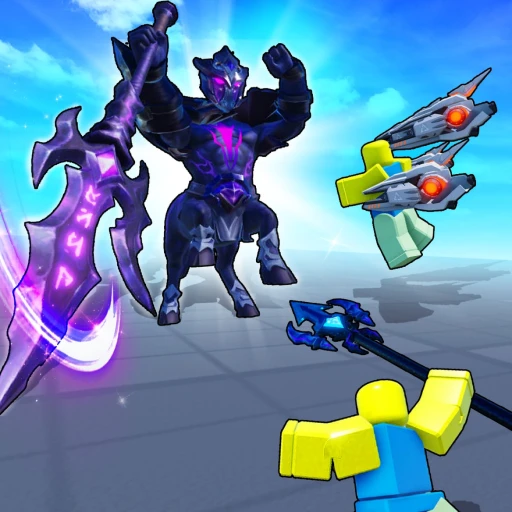
Two of the most addictive Roblox experiences in 2026 sit on opposite sides of the gameplay spectrum. Dungeon Hunters by The Evac Syndicate drops you into randomized dungeons where you swing weapons, dodge monster attacks, and fight your way through 76 enemy types in real-time co-op combat. Anime Defenders by Starter Studios hands you a roster of anime-inspired units and asks you to place them strategically across tower defense maps, surviving wave after wave of enemies while chasing the rarest summons in the game.
One is an action RPG dungeon crawler. The other is a tower defense collection game. They share a platform, a gacha backbone, and millions of active players, but the moment-to-moment experience could not be more different. Dungeon Hunters demands reflexes and real-time decision-making. Anime Defenders rewards planning, positioning, and patience. This comparison breaks down every major system in both games so you can figure out which one deserves your time, or whether both belong in your rotation.
Already playing one of these titles and looking for ways to fund your gem pulls or game passes? Check out our Dungeon Hunters free Robux guide or our Anime Defenders free Robux guide for game-specific earning strategies.
Dungeon Hunters vs Anime Defenders — Quick Stats (2026)
| Category | Dungeon Hunters | Anime Defenders |
|---|---|---|
| Genre | Action RPG / Dungeon Crawler | Anime Tower Defense |
| Developer | The Evac Syndicate | Starter Studios |
| Place ID | 120217704230083 | 17017769292 |
| Release Date | October 2025 | April 2024 |
| Total Visits | 149M+ | 3.4B+ |
| Core Loop | Explore dungeons, fight monsters, collect weapons | Summon units, place defenders, survive waves |
| Gacha System | 19+ gacha weapons | 100+ anime units across rarity tiers |
| Co-op | Yes (dungeon parties) | Yes (up to 4 players) |
| Combat Style | Real-time action (you control the character) | Strategic placement (units fight automatically) |
| Trading | Limited | Full unit trading economy |
| Mobile-Friendly | Yes | Yes |
| Free-to-Play | Yes | Yes |
Gameplay — What Do You Actually Do?
Dungeon Hunters
Dungeon Hunters puts a weapon in your hand and drops you into a dungeon filled with hostile creatures. This is not a game where you place units and watch them fight. You are the fighter. You move through randomized rooms, encounter one of 76 monster types, and use your equipped weapon's attack patterns and powerful skills to clear each room before pushing deeper. The central question the game poses every time you open a new door is simple: treasure or terror? Sometimes you find loot. Sometimes you find a boss that will end your run if you are not prepared.
The action RPG combat is responsive and satisfying in ways that set Dungeon Hunters apart from the wave of idle and placement-based games dominating Roblox. Weapon choice matters because each of the 19 gacha weapons has a unique attack pattern, range, and special effect. A Death Scythe plays completely differently from an Electric Saw or a Floating Canon. Learning the attack timing and optimal positioning for your weapon is a skill that improves with practice, and experienced players can clear content that appears impossible on paper simply through superior play.
Progression follows a chapter-and-world structure where each new zone introduces harder enemies, tougher boss encounters, and better reward pools. The Abyss Gauntlet adds a wave-based survival mode that tests your damage output and survivability across extended fights. Co-op dungeon crawling with other players is where the game truly shines. Harder dungeons are designed with team play in mind, and coordinating weapon skills across a party of players creates moments of cooperation that solo play cannot replicate. Running a dungeon with a well-coordinated group, calling out monster spawns, timing skill activations, and pushing one room deeper than your last best run, is the core appeal of Dungeon Hunters.
Anime Defenders
Anime Defenders takes the opposite approach to engagement. Instead of controlling a single character in real time, you command an army of anime-inspired units placed strategically across tower defense maps. Enemies march along fixed paths, and your job is to position your summoned characters at optimal locations where their attack ranges, abilities, and elemental affinities can deal maximum damage before anything reaches the end point. The gameplay is cerebral rather than reflex-driven. Success depends on your roster composition, your knowledge of each map's geometry, and your ability to upgrade and evolve units during live waves.
The unit roster has grown to well over 100 characters spanning multiple rarity tiers from Common all the way up to Mythic. Each unit draws inspiration from popular anime franchises, and the highest-rarity characters are not just stat upgrades over their lower-tier counterparts. They bring unique abilities, elemental interactions, and passive effects that fundamentally alter your strategic options. Units now carry assigned elements, with some featuring dual elements, and a Skill Tree system adds another layer of customization that lets you tailor each character's strengths to your playstyle and the demands of specific content.
Anime Defenders also offers raid modes where teams of players tackle boss encounters with shared strategies, portal events that introduce limited-time content with exclusive rewards, and an Infinite Mode that serves as the ultimate endgame test of team composition. The evolution system allows Mythic units to undergo a second evolution using Legendary and Epic Portal Units, pushing their power ceiling even further. Between the core tower defense maps, raids, portals, events, and the constant rotation of limited-time banners, there is always something pulling you back into the game.
Edge: This category comes down to genre preference rather than quality. Dungeon Hunters wins for players who want hands-on action combat with direct character control. Anime Defenders wins for players who prefer strategic planning, army management, and the satisfaction of watching a well-built defense dismantle waves of enemies without breaking.
Gacha and Progression — Weapons vs Units
Both games use gacha mechanics as their primary content delivery system, but the scale and feel of each system reflect the fundamental differences between the genres.
Dungeon Hunters keeps its gacha focused and contained. With 19 weapons in the summoning pool, every pull carries meaningful weight. You spend diamonds earned through gameplay, codes, and milestones to summon weapons of varying rarity tiers. Higher-rarity weapons like the Death Scythe sit at the top of community tier lists and offer dramatic power spikes when obtained. The smaller pool means you will encounter duplicates more frequently, which feeds into the upgrade system that strengthens your existing weapons. For free-to-play players, this is actually a benefit. A focused gacha pool means building a competitive loadout through gameplay alone is realistic within weeks rather than months. The progression curve from starter weapons to endgame equipment feels achievable, and each new weapon pull has a noticeable impact on your dungeon performance.
Anime Defenders operates a gacha system on a completely different scale. Over 100 units spread across Common, Rare, Epic, Legendary, and Mythic tiers create a summoning experience where every banner offers potential game-changing pulls alongside mountains of low-rarity fodder. Gems fuel the summoning engine, and gem sources include gameplay completion, daily rewards, codes, milestone events, and community celebrations. Limited-time banners introduce exclusive units that may never return, creating urgency around specific summoning windows. Pity systems, banner schedules, and the evolution mechanic that transforms Mythic units into even stronger forms through double evolution add layers of strategic depth to how you spend your gems.
The trade-off is clear. Dungeon Hunters offers a tighter, more approachable gacha where every player can reasonably assemble a strong weapon collection through dedicated play. Anime Defenders offers a sprawling collection game where chasing the perfect roster is a long-term commitment that rewards both luck and planning. Neither approach is objectively better. The right one depends on whether you want a gacha system you can conquer or one that gives you an endless horizon to chase.
Edge: Dungeon Hunters for accessibility and the satisfaction of completing a focused weapon pool. Anime Defenders for depth, variety, and the thrill of chasing rare and limited units across a massive roster.
Co-op and Multiplayer
Cooperative play is central to both games, but the nature of that cooperation differs in ways that appeal to different types of social gamers.
Dungeon Hunters is built around the shared experience of entering a dungeon with other players and surviving together. The game gets noticeably harder as you progress through chapters, and the difficulty is calibrated to encourage grouping rather than solo grinding. When you run dungeons in a party, each player brings their own weapon loadout and skill set. A team with a mix of area-of-effect damage, single-target burst, and survivability tools can push through content that would be unreachable for any individual member. The communication is organic. You see what your teammates are doing in real time, react to the same threats, and share in the tension of each new room. Dungeon Hunters co-op feels like going on an expedition with friends, where the unknown layout of each run creates fresh experiences even when you revisit the same chapter.
Anime Defenders supports up to four players on tower defense maps, and co-op here is more about resource pooling than real-time coordination. Each player contributes units from their personal roster, and the combined firepower of four upgraded collections can handle content that solo players struggle with. The strategic dimension of co-op Anime Defenders is deciding who covers which lane, which player drops their strongest unit first, and how to distribute support buffs across the map. Raid modes add focused multiplayer encounters against boss enemies that require coordinated damage and specific unit compositions. The social experience is more structured and planning-oriented than Dungeon Hunters, rewarding pre-game discussion and team composition theory.
Both games foster active communities on Discord where players organize co-op sessions, share strategies, and coordinate around events. The difference is that Dungeon Hunters co-op is reactive and emergent, shaped by what happens in real time, while Anime Defenders co-op is proactive and strategic, shaped by decisions made before the first wave even starts.
Edge: Dungeon Hunters for the excitement of real-time co-op dungeon runs with genuine unpredictability. Anime Defenders for the depth of team-based strategic planning and the scale of its raid content.
Content Volume and Replayability
The amount of content available in each game and the strength of its replay hooks determine how long you will stay engaged before the experience starts feeling stale.
Dungeon Hunters leverages its randomized dungeon structure to generate replayability without requiring constant content drops. Because room layouts, monster encounters, and loot drops vary across runs, no two dungeon expeditions play out identically. The chapter and world progression system provides clear milestones to work toward, and the Abyss Gauntlet wave mode offers a separate endgame challenge that tests sustained performance rather than burst clearing. Regular updates from The Evac Syndicate have introduced new monsters, weapons, and quality-of-life improvements since the game launched in October 2025. The pace of updates is reasonable for a game that is still in its first year, and each addition meaningfully expands the gameplay loop. For a six-month-old game, Dungeon Hunters has built a surprisingly robust content foundation.
Anime Defenders has the decisive advantage of time and scale. Nearly two years of continuous development have produced a staggering amount of content. Multiple world maps, dozens of unique stages, raid encounters, portal events, seasonal content, and a rotating calendar of limited-time banners ensure that there is always something new to engage with. The update cadence is aggressive, with new units, banners, and events arriving every few weeks. Seasonal celebrations, movie tie-in events, and community milestone rewards keep the game feeling alive and responsive to the moment. The Infinite Mode serves as a permanent endgame challenge that scales infinitely, giving competitive players a leaderboard to chase long after they have cleared all standard content.
Anime Defenders also benefits from the depth of its collection system as a replayability driver. Even when you have cleared every map and beaten every raid, the drive to complete your unit collection, evolve your Mythics, climb the Skill Tree, and optimize your team composition provides ongoing engagement that tower defense gameplay alone could not sustain. The game is as much a collection RPG as it is a tower defense title, and that dual identity keeps players invested across months and years.
Edge: Anime Defenders for sheer content volume, update frequency, and long-term engagement systems. Dungeon Hunters for procedurally generated variety that keeps individual sessions fresh without relying on constant developer output.
Player Count and Community (July 2026)
The numbers tell a story about where each game sits in the Roblox ecosystem, but raw visit counts do not capture the full picture of community health.
Anime Defenders dominates on every measurable metric. With 3.4 billion total visits and a 98.5% approval rating, the game is one of the most successful anime titles on the entire Roblox platform. Concurrent player counts regularly reach into the tens of thousands during events and banner releases, and the game's YouTube and TikTok presence drives constant new player acquisition. Content creators covering Anime Defenders pull consistent viewership, and the game's trading economy has spawned an entire secondary community of value trackers, market analysts, and deal brokers. The sheer size of the player base means finding co-op partners at any time of day takes seconds, and community resources like tier lists, guides, and wikis are comprehensive and regularly maintained.
Dungeon Hunters has crossed 149 million visits with concurrent player counts averaging several thousand and peaking near 5,000 during updates. For a game that launched in October 2025, these numbers represent strong growth and genuine player interest. The community is smaller but engaged, with active Discord servers, emerging content creator coverage, and community-maintained tier lists for weapons. Being part of a smaller community has real benefits. Feedback reaches the developers faster, individual players can establish reputations more easily, and the meta has not yet calcified into a single dominant strategy. There is room to discover and innovate in ways that are harder to find in a game with millions of daily players and an established competitive hierarchy.
The community overlap between these games is smaller than you might expect, largely because they attract different player profiles. Dungeon Hunters pulls action RPG fans who enjoy games like Deepwoken and Type Soul. Anime Defenders draws the anime tower defense crowd that also plays All Star Tower Defense and Anime Vanguards. Some players live in both worlds, but the genre difference means these are not direct competitors fighting over the same audience.
Map Design and Visual Quality
Visual presentation shapes how a game feels to play, and both titles invest in their art direction despite working within the Roblox engine's constraints.
Dungeon Hunters creates atmosphere through environmental variety and the tension of exploration. Dungeon environments shift as you progress through worlds, introducing new tile sets, lighting conditions, and monster designs that give each chapter a distinct identity. The randomized room layout means you cannot predict what visual surprise waits behind the next door, which keeps the exploration loop engaging even after dozens of runs. Weapon effects are clean and readable during combat, which matters in a real-time action game where losing track of your character's position amid visual noise can get you killed. The game prioritizes functional clarity over spectacle, and that design choice pays off during the most intense encounters.
Anime Defenders leans harder into visual impact. Unit models are detailed and recognizable as references to their anime source material, and ultimate ability effects produce spectacular animations that fill the screen with color and motion. Boss encounters feature multi-phase transformation sequences that create memorable visual moments. Map environments are varied and thematically coherent, with each world featuring distinct terrain, lighting, and atmospheric effects. The trade-off is that heavy visual effects during late-game waves with dozens of active units can push older devices. The developers have addressed this with scalable performance settings, but players on budget hardware may need to dial back effects to maintain smooth frame rates.
Audio design in both games supports their respective genres effectively. Dungeon Hunters uses ambient dungeon sounds, combat hit effects, and skill activation cues to build tension and provide gameplay feedback. Anime Defenders features more dynamic music that shifts with wave intensity and delivers satisfying audio cues when units activate abilities or when rare summon animations trigger during gacha pulls.
Edge: Anime Defenders for visual fidelity and spectacle. Dungeon Hunters for atmospheric environmental design and functional visual clarity during action combat.
Trading and Economy
Trading systems transform games from isolated experiences into living economies, and the two titles handle this dimension very differently.
Anime Defenders has one of the most active player-to-player trading economies on Roblox. With over 100 units spanning multiple rarity tiers and including limited-time exclusives that will never return to banners, the trading meta is deep and constantly evolving. Community-run Discord servers maintain value lists that track every unit's relative worth, and experienced traders monitor banner announcements and event schedules to anticipate value shifts before they happen. Some players treat Anime Defenders trading as a game within the game, spending as much time negotiating exchanges as they do clearing tower defense maps. The depth of this economy adds a social and strategic layer that extends the game's appeal well beyond its core gameplay loop. Units with Emperor or Apex designations are marked untradable, which the developers use to preserve the exclusivity of the highest achievement rewards.
Dungeon Hunters has a more limited trading system that reflects the game's younger age and smaller economy. Weapon trading exists but is not the centerpiece of the community experience in the way that unit trading defines Anime Defenders. As the game matures and more weapons enter the pool, including potential limited-time exclusives in future updates, the trading economy will likely grow. For now, the focus in Dungeon Hunters is on acquiring weapons through gameplay and gacha rather than through market negotiations.
Edge: Anime Defenders by a wide margin. The trading economy is one of the game's defining features and a major reason why players stay engaged for months.
Game Passes and Monetization
Both games generate revenue through optional purchases that enhance the experience without gating core content behind paywalls.
Dungeon Hunters offers diamond packs for gacha pulls, VIP game passes that provide quality-of-life benefits and boosted rewards, and milestone codes released by the developer as the game hits like and visit targets. The monetization feels measured and appropriate for a game still in its growth phase. Free diamond income from gameplay, events, and codes is sufficient to maintain a steady summoning pace, and the focused weapon pool means free players can build competitive loadouts without spending. The 19-weapon gacha is small enough that spending pressure is lower than in games with hundreds of summonable items competing for your attention.
Anime Defenders offers gem packs, VIP passes, auto-farm features, limited bundles tied to events and banners, and premium cosmetic options. The monetization is more extensive because the game has more content to monetize, with a larger unit pool, more frequent banners, and additional systems like evolution materials that can be accelerated through purchases. The 98.5% approval rating indicates that the player base considers the balance between free and paid progression fair. Free gem sources from codes, events, community milestones, and daily gameplay keep non-spending players engaged, though the sheer number of banners and limited units creates natural temptation to supplement free gems with purchased ones.
Edge: Roughly even. Dungeon Hunters is less overwhelming for players on a budget. Anime Defenders offers more free gem sources but also more opportunities to spend.
Update Cadence and Developer Communication
How often a live-service game receives meaningful updates determines whether the player base grows or gradually drifts away.
The Evac Syndicate has maintained a solid update pace for Dungeon Hunters since its October 2025 launch. New weapons, monsters, balance adjustments, and world expansions have arrived at regular intervals. The developer communicates through Discord and releases milestone codes that reward the community for hitting like and visit targets, which creates a shared sense of progress. Being a newer studio with a single flagship title means development attention is concentrated. Updates tend to be substantive rather than frequent, with each patch adding noticeable new content rather than small incremental adjustments. The community can see the game growing in real time, and player feedback has visibly influenced development priorities across the first six months.
Starter Studios runs Anime Defenders on an aggressive update schedule that reflects the competitive demands of the anime tower defense genre. New banners arrive every few weeks, seasonal events run on predictable schedules, and quality-of-life improvements ship between major content drops. The introduction of the Skill Tree system, dual elements, double evolution for Mythics, and the Unit List feature all demonstrate a development team that is willing to add major systems rather than just cycling content. Developer communication flows through Discord, in-game announcements, and social media. The consistency of the update schedule is itself a feature, as players can plan their gem spending and gameplay time around predictable content windows.
Edge: Anime Defenders for update frequency and the scale of new systems introduced. Dungeon Hunters for the quality and substance of individual updates relative to the game's age.
Earning Free Robux While You Play
Both games pair well with Earnaldo for earning free Robux, though the earning windows fit differently into each gameplay loop.
Dungeon Hunters has natural breaks between dungeon runs, during lobby time, and while deciding which chapter to tackle next. These moments are ideal for completing Earnaldo tasks on a second device or between sessions. The active nature of dungeon combat means you will want to focus during actual runs, but the gaps between runs provide consistent earning windows throughout a play session.
Anime Defenders offers even more earning-friendly downtime. Once your units are placed and a wave is running, the gameplay is largely hands-off until you need to reposition or upgrade. Between waves, during auto-farm sessions, and while waiting for co-op partners are all perfect moments to work through Earnaldo offers. The strategic, low-reflex nature of tower defense gameplay means you can manage earning tasks without compromising your in-game performance in most situations.
For game-specific strategies, check out our Dungeon Hunters free Robux guide and Anime Defenders free Robux guide. For more earning opportunities across Roblox, our best Roblox games for 2026 guide covers the full landscape.
Earn Free Robux for Dungeon Hunters or Anime Defenders
Complete simple tasks on Earnaldo and withdraw real Robux to your account. No generators, no downloads, no scams — just real rewards you can spend on diamond packs, gem bundles, game passes, and more.
Head-to-Head Verdict — Dungeon Hunters vs Anime Defenders in 2026
The Verdict
Choose Dungeon Hunters if you want hands-on action combat where you control every swing, dodge, and skill activation. The game delivers the thrill of dungeon exploration with real stakes behind every door, a focused gacha system with 19 weapons that you can realistically collect through free play, and co-op that feels like going on an adventure with friends. Dungeon Hunters is the pick for players who want to test their reflexes and combat instincts rather than their strategic planning. The game is younger and smaller, which means the community is more intimate, the meta is still being discovered, and early adopters can shape the direction of the player culture as it forms.
Choose Anime Defenders if you want the largest, deepest, and most content-rich anime game on Roblox. With 3.4 billion visits, 100+ units, a full Skill Tree system, double evolution mechanics, a thriving trading economy, and a 98.5% approval rating, Anime Defenders is a proven platform that will not run out of things to do for months. The strategic depth of tower defense gameplay, combined with the collection and evolution metagame, creates an experience that rewards long-term investment. If you enjoy building the perfect team, optimizing unit placement, and participating in an active economy of traders and theorycrafters, this is the game that delivers at scale.
Overall: These are genuinely different games that happen to share a platform and a gacha framework. Comparing them is less about which is better and more about what kind of experience you are looking for. If you want action, play Dungeon Hunters. If you want strategy, play Anime Defenders. If you have the time and the appetite for both, they complement each other well. Dungeon Hunters scratches the itch for real-time combat engagement, and Anime Defenders satisfies the desire for long-term strategic collection. Many Roblox players will find room in their rotation for both.
Who Should Play What?
- You want real-time action combat: Dungeon Hunters. You control your character directly and fight in real time against 76 monster types.
- You want strategic tower defense: Anime Defenders. Unit placement, composition planning, and wave management reward strategic thinking.
- You want the biggest unit/weapon roster: Anime Defenders with 100+ units dwarfs Dungeon Hunters' 19 weapons in terms of collection scope.
- You want achievable free-to-play completion: Dungeon Hunters. A smaller gacha pool means building a strong loadout through free play is realistic.
- You want active trading: Anime Defenders has one of the deepest player-driven economies on Roblox. Dungeon Hunters' trading is still developing.
- You want co-op dungeon exploration: Dungeon Hunters. Running randomized dungeons with friends is the core experience.
- You want raid content: Anime Defenders offers structured raid encounters with exclusive rewards and seasonal events.
- You want to earn Robux while playing: Both pair well with Earnaldo. Anime Defenders has more idle-friendly downtime between waves.
Frequently Asked Questions
Anime Defenders is significantly more popular with over 3.4 billion total visits compared to Dungeon Hunters' 149 million. Anime Defenders launched in April 2024 and has had nearly two years to build its audience, while Dungeon Hunters only released in October 2025. Both games maintain active player bases, but Anime Defenders regularly pulls tens of thousands of concurrent players while Dungeon Hunters averages a few thousand.
Dungeon Hunters is generally more accessible for free players because its weapon pool of 19 gacha weapons is smaller and easier to progress through without spending Robux. Anime Defenders has a massive unit roster that takes significantly more time or luck to build optimally through free play alone. Both games offer free currency through gameplay, codes, and events, and neither locks core content behind paywalls.
Yes, both games support cooperative multiplayer. Dungeon Hunters is built around co-op dungeon exploration where teaming up with other players makes harder dungeons more manageable. Anime Defenders supports co-op tower defense where up to four players can combine their unit rosters to tackle challenging maps and raids together. Both games benefit significantly from multiplayer coordination.
Dungeon Hunters is an action RPG dungeon crawler where you actively control your character, fight monsters in real time, and explore randomized rooms. Anime Defenders is a tower defense game where you summon anime-inspired units and place them strategically on maps to stop waves of enemies. They share gacha mechanics but play completely differently. One is hands-on combat, the other is strategic placement.
Both games offer deep progression but in different ways. Dungeon Hunters progresses through chapters and worlds with increasing difficulty, where you upgrade weapons and unlock skills. Anime Defenders progresses through unit collection, evolution chains, skill trees, and clearing increasingly difficult tower defense stages and raids. Dungeon Hunters feels more linear and RPG-driven, while Anime Defenders spreads progression across multiple parallel systems.
If you enjoy hands-on action combat with dungeon exploration and RPG progression, start with Dungeon Hunters. If you prefer strategic tower placement, collecting anime characters, and a massive community with deep trading, start with Anime Defenders. The games belong to different genres despite both being on Roblox, so your preference for action RPG versus tower defense should guide your choice. Many players enjoy both for different moods.