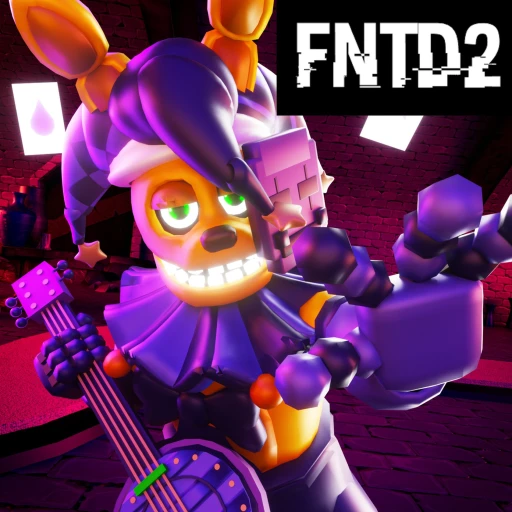
Five Nights TD 2 vs Anime Defenders (2026) -- Which Roblox Game Is Better?
Two of Roblox's most talked-about tower defense games sit on opposite ends of the spectrum. Five Nights TD 2 taps into the massive FNAF fanbase to deliver an animatronic-themed TD experience that feels genuinely unsettling in the best way. Anime Defenders pulls from decades of beloved anime IP to build one of the deepest strategy games on the platform. They share a genre, but the moment-to-moment experience of playing them is completely different. Here's the full comparison for 2026.
Five Nights TD 2 sits at 61 million visits with a 95.7% approval rating -- impressive numbers for a game that only launched recently. Anime Defenders has had years to build its 3.4 billion visit count and 96.7% rating. One is a rising challenger with serious momentum; the other is an established giant. Let's see how they actually hold up against each other.
Quick Stats Comparison
| Metric | Five Nights TD 2 | Anime Defenders |
|---|---|---|
| Genre | FNAF Tower Defense | Anime Tower Defense |
| Developer | Hyper TD | TDSquad |
| Total Visits | 61 Million | 3.4 Billion |
| Approval Rating | 95.7% | 96.7% |
| Core Loop | Summon animatronic units, defend FNAF waves | Summon anime units, build synergies, clear raids |
| Key Features | FNAF lore maps, pity summoning, Nightmare modes | Synergy system, raid bosses, story chapters |
| Trading | Yes | Yes |
| Mobile Support | Yes | Yes |
| F2P Friendly | Good (pity system) | Moderate (gacha depth) |
| Roblox Place ID | 70400654680508 | 17017769292 |
The visit count gap is enormous -- 3.4 billion versus 61 million -- but raw visit counts don't tell the whole story. Five Nights TD 2 is a newer title that has already built a passionate community and maintained an approval rating within one percentage point of Anime Defenders. The trajectory is worth watching.
Core Gameplay: Animatronics vs Anime
Five Nights TD 2 -- FNAF Horror Meets Tower Defense
Five Nights TD 2 takes the Five Nights at Freddy's universe -- the iconic horror franchise built around murderous animatronics -- and redesigns it as a tower defense game. You build a roster of animatronic units drawn from across the FNAF timeline, from the classic Freddy Fazbear and Bonnie variants to characters from later games in the series. These units get placed on maps to intercept incoming enemy waves.
The atmosphere is one of the game's strongest selling points. Developer Hyper TD clearly did the homework on FNAF lore. Maps are based on recognizable locations from the games -- the original Freddy Fazbear's Pizza, the sister location, the Pizzaplex -- and enemy designs feel authentic to the source material. For fans of the franchise, there's a genuine thrill in deploying Golden Freddy against an approaching wave of Security Breach enemies.
Unit acquisition uses a summoning system with a well-designed pity mechanic. Every pull tracks progress toward guaranteed high-rarity units, making long-term progression feel predictable even when individual pulls miss. The game uses a Token currency that you earn through gameplay or purchase, with multi-pulls offering a discount over single summons. Our full breakdown is covered in the Five Nights TD 2 free Robux guide.
The difficulty system deserves mention. Five Nights TD 2 structures its challenges around FNAF's iconic difficulty naming conventions -- Normal, Hard, and Nightmare modes -- with the Nightmare variants providing genuinely punishing content that requires optimized unit builds and careful wave management.
Anime Defenders -- Strategic Depth with Anime Flair
Anime Defenders takes a fundamentally different approach. The game draws from the anime universe -- characters inspired by Dragon Ball, Naruto, Jujutsu Kaisen, One Piece, and other major series (all with Roblox-appropriate naming) -- and builds a sophisticated tower defense system around them. The core loop involves summoning units through a gacha system, assembling a team, and placing units on maps to stop enemy waves.
What separates Anime Defenders from most Roblox TD games is the synergy system. Units carry trait tags -- "Swordsman," "Fire Type," "Speed," "Divine," and others -- and placing compatible units near each other activates synergy bonuses that meaningfully boost performance. This means team composition matters at a level that goes well beyond just deploying your five strongest units. You're thinking about trait overlap, synergy activation radii, and which buffs your specific combination unlocks.
The endgame centers on raids: multi-phase boss encounters with enormous health pools that require coordinated four-player teams, specific unit roles, and precise ability timing. Raid clears are genuinely satisfying achievements that many players spend weeks building toward. For current meta unit rankings, the Anime Defenders tier list covers the top picks and their synergy fits.
Edge: Tie, context-dependent. Five Nights TD 2 wins for atmosphere and theme authenticity. Anime Defenders wins for mechanical depth. Which matters more depends entirely on what draws you to tower defense games.
Progression Systems
Five Nights TD 2 -- Predictable Pity, Steady Gains
Five Nights TD 2's progression is built around its dual pity system. A guaranteed Secret rarity unit arrives at 500 pulls, and a Nightmare rarity unit is locked in at 1,500 pulls. The pity counter doesn't reset after hitting the Secret threshold -- it keeps climbing toward the Nightmare guarantee. This structure means free-to-play players who grind Tokens steadily always have a meaningful milestone to work toward.
Daily missions, map completion rewards, and event challenges generate a consistent flow of Tokens and upgrade materials. The game doesn't demand you spend to progress through its main content. The gap between paying and free players exists in how quickly they can assemble top-tier rosters, not in whether they can access content at all.
Unit upgrading uses a star system where you consume duplicate units to push a unit's star level higher, unlocking stronger ability versions and stat boosts. This is familiar territory for gacha-adjacent games and works well here because the trading system lets you target specific units rather than relying purely on summon RNG.
Anime Defenders -- Gacha Depth, Patient Grind
Anime Defenders' progression is more layered. The summoning system pulls from rotating banners featuring limited-time and standard units. Summoning currency comes from gameplay, battle pass rewards, and event completions. The rates for top-tier units are low, and while pity systems exist, the specific numbers can make high-rarity pulls feel distant for players without premium currency reserves.
The game compensates through a robust upgrade path that makes lower-rarity units viable well into mid-game, and through a trading economy where patient players can acquire the units they need using duplicates as leverage. The story chapter progression provides a guided structure that keeps newer players engaged while they build their rosters.
Endgame progression in Anime Defenders is deeper than in FNTD2. There are more upgrade layers -- evolution paths, unique ability unlocks at specific star levels, and specialized equipment slots that vary by unit. Players who fully min-max an Anime Defenders roster have put in genuinely impressive amounts of planning.
Edge: Five Nights TD 2. The pity system makes F2P progression more predictable and less frustrating. Anime Defenders rewards patience too, but the path can feel more opaque, especially for newer players trying to figure out which banners are worth prioritizing.
Graphics and Audio
Five Nights TD 2 commits hard to its FNAF aesthetic. Unit models are faithful to the source material with the slightly unsettling proportions that define the franchise's visual identity. Map environments recreate FNAF locations with enough detail to be recognizable without turning into full horror experiences. The game uses dim lighting, eerie ambience, and jump-scare-adjacent sound design to maintain the atmosphere throughout.
The audio work stands out. Familiar FNAF sound effects -- the animatronic movement sounds, the phone call snippets, the music box tones -- are woven into the gameplay in ways that fans will immediately recognize. It's a level of IP fidelity that Roblox games often get wrong, but Hyper TD nailed it.
Anime Defenders has had more time to polish its visuals, and it shows. Unit ability animations are detailed and flashy in ways that feel earned -- the screen-clearing ultimate abilities from S-tier units have genuine visual impact. Map designs range from standard TD layouts to elaborate multi-path stages with distinct visual themes. The art style is consistent and clean, even if it leans toward generic anime aesthetics rather than any specific series style.
On audio, Anime Defenders uses a licensed-adjacent soundtrack that hits anime battle music notes without directly copying any specific series. It's energetic and well-produced. Neither game has voiced characters in a meaningful way, which is standard for Roblox.
Edge: Five Nights TD 2 for atmosphere, Anime Defenders for visual polish. If you want an immersive thematic experience, FNTD2's FNAF authenticity is hard to beat. If you want a game that simply looks great in motion, Anime Defenders' ability animations are a step above.
Player Count and Community
The numbers don't lie: Anime Defenders operates at a fundamentally different scale. With 3.4 billion visits and a multi-year community, it has established Discord servers with tens of thousands of members, active trading hubs, community-maintained tier lists updated within hours of new patches, and a deep content creator ecosystem on YouTube and TikTok. Finding a group for any content type -- raids, trading, casual play -- takes seconds.
Five Nights TD 2's community is smaller but notably enthusiastic. The FNAF fanbase brings an existing culture of lore discussion, tier speculation, and character preference debates that maps naturally onto TD gameplay. The game's Discord and Reddit presence is active, and the community has already developed solid guidance around optimal unit builds and Nightmare mode strategies.
FNTD2 also benefits from the broader FNAF content creator scene. YouTubers who cover the franchise have covered the game, bringing in viewers who might not ordinarily seek out Roblox tower defense content. This cross-fandom pipeline gives Five Nights TD 2 a growth advantage that pure TD games don't have.
Edge: Anime Defenders for sheer community infrastructure. More players means faster matchmaking, deeper trading liquidity, and more available guides. Five Nights TD 2 is building toward that level, but isn't there yet.
Game Passes and Monetization
Five Nights TD 2 sells game passes for permanent perks: expanded unit storage, auto-battle features for grind sessions, and bonus Token income multipliers. These are quality-of-life improvements rather than gameplay advantages -- a player with no game passes can complete all content, but a player with the storage and income passes will progress noticeably faster. Premium summoning bundles and exclusive cosmetic unit variants round out the shop. The monetization feels fair; nothing sits behind a wall that blocks progression.
Anime Defenders monetizes through battle passes, summoning currency packs, and exclusive unit bundles. The battle pass is the standout value proposition -- if you play consistently, the pass-exclusive units and upgrade materials more than justify the cost. Summoning currency packs are priced for whales who want to stack pulls on new banners, and these players do accumulate roster advantages that free players will take much longer to match.
Both games maintain the standard that no content is strictly pay-gated. Spending speeds progress rather than unlocking exclusive gameplay modes. That said, the depth of Anime Defenders' gacha economy means spending creates a larger relative advantage there than in FNTD2.
Edge: Five Nights TD 2. The monetization structure is more transparent and the advantage gap between spenders and non-spenders is narrower. Players who want to invest a small amount get clear, predictable value, and players who invest nothing still have a complete experience.
Social Features
Both games are built around co-op, but the social dynamic differs in feel. Five Nights TD 2 co-op is collaborative but relatively low-stakes -- you and your squadmates each place units, share the field, and defend together. Communication helps but isn't required for most content outside Nightmare mode. Public lobbies work fine for casual runs.
Anime Defenders' co-op has more social structure around it, particularly for raids. The community has developed specific role designations -- DPS units, support units, crowd control specialists -- and raid groups often form with explicit role requirements. This creates a more organized social layer where community membership (Discord server participation, knowing current meta) becomes a practical advantage for accessing the best content quickly.
Both games have active trading communities. Anime Defenders has the larger and more sophisticated trading market given its playerbase size and the greater complexity of its unit value system. Five Nights TD 2 trading is growing and benefits from the FNAF community's existing habit of character valuation discussions.
Edge: Anime Defenders for players who want deep social integration. Five Nights TD 2 is better for players who prefer low-pressure co-op without community meta obligations.
Replay Value
Five Nights TD 2 sustains replay value through its Nightmare difficulty modes, which require genuinely different unit compositions than Normal and Hard content. Completing the same map across all three difficulties with optimal units and chasing faster clear times keeps dedicated players engaged. Seasonal events tied to FNAF release dates and anniversaries bring limited-time units that create periodic surges of activity.
Anime Defenders has more raw replay content. Multiple story chapters, a rotating roster of raid bosses, a full Endless mode with leaderboard tracking, and regular new unit banners create a constant drip of new objectives. Players who have been in the game for a year still find new optimization goals -- a new synergy combination to try, a personal best to beat in Endless, a limited-time event unit to chase.
The ceiling for replay in Anime Defenders is higher simply because the game has been running longer and has more total content. Five Nights TD 2 is building toward that content depth but isn't there yet. For players who want a game they can sink hundreds of hours into without running out of things to do, Anime Defenders is currently the stronger choice.
Edge: Anime Defenders. Content volume and update frequency give it a longer tail for dedicated players. Five Nights TD 2's trajectory suggests it will close this gap over time, but that's a future promise rather than a current reality.
Earning Robux for Both Games
Both Five Nights TD 2 and Anime Defenders reward investment -- whether that's time or Robux. Premium summoning currency in Anime Defenders and bonus Token packs in FNTD2 can meaningfully accelerate your progression, particularly when a limited banner is live or a time-gated event unit is available.
Get Free Robux for Summons and Game Passes
Earnaldo lets you earn free Robux by completing simple tasks and offers. Whether you're saving for Anime Defenders summoning currency or Five Nights TD 2 game passes, the Robux you earn here spends the same.
Verdict: Choose the Right Game for You
Choose Five Nights TD 2 if...
You're a FNAF fan who wants your love of the franchise reflected in your tower defense game. The atmospheric maps, authentic unit designs, and FNAF-faithful audio make this a genuinely special experience for anyone invested in Scott Cawthon's universe. It's also the better pick if you value transparent, F2P-friendly progression through a fair pity system, or if you prefer a growing community with high enthusiasm over a massive but more anonymous playerbase.
Choose Anime Defenders if...
You want the deepest tower defense experience currently available on Roblox. The synergy system, raid endgame, and sheer volume of content make this the platform's premier TD game for players who want to think hard about their builds and have hundreds of hours of content to work through. The larger community also means faster matchmaking, better trading liquidity, and more available guides and resources for every aspect of the game.
Overall
Anime Defenders is the more complete tower defense game in 2026. Its mechanical depth, content volume, and established community infrastructure set a standard that FNTD2 is still working toward. But Five Nights TD 2 is not a lesser game -- it's a different game with a different purpose. For FNAF fans, it delivers an experience nothing else on Roblox can match. Both deserve a place in your Roblox library if TD games are your genre. If you can only pick one, let your preference for atmosphere versus strategy depth make the call.
Who Should Play What
Play Five Nights TD 2 if you:
- Are a fan of the Five Nights at Freddy's franchise and its lore
- Want a tower defense game with a distinct, unsettling atmosphere
- Prefer a predictable pity system that makes F2P progress feel reliable
- Want to be part of a passionate, growing community rather than a massive one
- Enjoy casual co-op where you can squad up without meta pressure
- Like thematic challenge modes (Nightmare difficulty) tied to the source material
Play Anime Defenders if you:
- Want the deepest strategic tower defense on Roblox right now
- Love anime and want to field teams built around iconic character archetypes
- Enjoy theory-crafting synergy compositions outside the game
- Want challenging raid content that rewards coordinated team play
- Need a game with hundreds of hours of content to work through
- Want an established trading scene with deep market liquidity
Frequently Asked Questions
Anime Defenders is the larger game by a wide margin, sitting at 3.4 billion total visits against Five Nights TD 2's 61 million. Anime Defenders also carries a slightly higher rating at 96.7% versus FNTD2's 95.7%, though both are well-regarded by their communities. The gap reflects years of development and content updates on Anime Defenders' side more than any quality difference between the two.
Both games scale in difficulty, but in different directions. Five Nights TD 2 ramps up intensity through wave density and enemy health, especially in Nightmare difficulty modes tied to the FNAF lore. Anime Defenders demands more strategic pre-planning through its synergy system and raid encounters, which require carefully assembled team compositions. FNTD2 is harder in execution; Anime Defenders is harder in preparation.
Five Nights TD 2 is the clear pick for FNAF fans. Developed by Hyper TD, it directly adapts the Five Nights at Freddy's universe into a tower defense format, with animatronic units spanning the full FNAF timeline, maps based on locations from the games, and authentic sound design drawn from the franchise. Anime Defenders has no FNAF content whatsoever -- it's built entirely around anime IP.
Yes, both games are fully completable without spending Robux, but the experience differs. Five Nights TD 2's pity system guarantees high-rarity units after a set number of summons, making free progress predictable. Anime Defenders' gacha economy is deeper and can feel slower for free players, though the pity system and trading options help close the gap over time. Neither game gates core gameplay modes behind a paywall.
Both games support unit trading. Anime Defenders has the larger and more established trading scene given its significantly bigger playerbase, with community-maintained value lists across Discord servers. Five Nights TD 2's trading community is smaller but active, with trade values built around rarity tiers and event-exclusive unit availability. Both games' Discord servers are the best starting point for finding trade partners.
Anime Defenders benefits from a larger development team and more frequent content drops, including new story chapters, rotating unit banners, and seasonal events on a regular schedule. Five Nights TD 2 receives steady updates from Hyper TD, often timed around FNAF anniversaries and new game releases in the franchise, but the overall update cadence is slower. Both games are actively maintained -- Anime Defenders simply has more content in the pipeline at any given time.