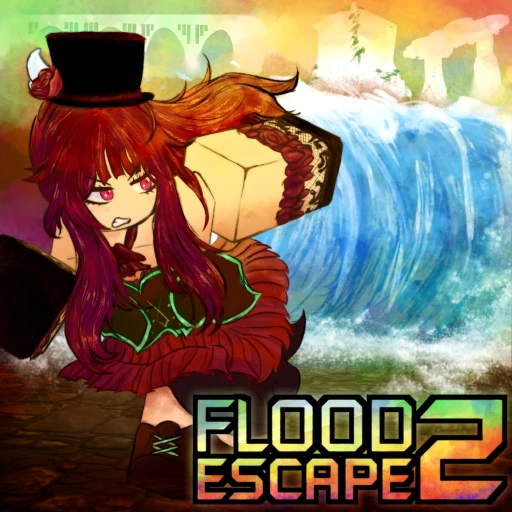
Flood Escape 2 vs Tower of Hell (2026) -- Which Roblox Game Is Better?
Roblox is home to hundreds of parkour and obby games, but two titles have earned massive followings for very different reasons: Flood Escape 2 and Tower of Hell. One drops you into flooded maps where rising water turns every platform into a ticking clock. The other strips away checkpoints entirely and dares you to climb a randomly generated tower without a single mistake. Both demand sharp reflexes and precise jumps, but the experiences they deliver are worlds apart.
Flood Escape 2, developed by Crazyblox Games, blends survival mechanics with team-based parkour across more than 150 community-created maps. Tower of Hell, from YXCeptional Studios, has become one of the most visited games in Roblox history with nearly 30 billion visits and a formula built entirely around no-checkpoint competitive climbing. Choosing between them depends on whether you want cooperative survival or solo competitive pressure.
This comparison breaks down everything that matters: core gameplay, difficulty scaling, map variety, community ecosystems, replayability, and earning potential. Whether you are a seasoned obby veteran or someone looking for your first parkour game, this guide will point you toward the right fit.
Quick Stats: Flood Escape 2 vs Tower of Hell at a Glance
| Category | Flood Escape 2 | Tower of Hell |
|---|---|---|
| Developer | Crazyblox Games | YXCeptional Studios |
| Roblox Place ID | 738339342 | 1962086868 |
| Total Visits | 580M+ | 29.9B+ |
| Concurrent Players | ~3K-8K | ~55K-75K |
| Genre | Obby / Survival / Parkour | Obby / Competitive Parkour |
| Core Mechanic | Escape rising floodwater | Climb tower, no checkpoints |
| Map Source | 150+ community maps | Randomized section pool |
| Checkpoints | Mid-map buttons (team-activated) | None |
| Team Play | Cooperative (team lobbies) | Competitive (solo climb) |
| Difficulty Range | Easy to Insane (player choice) | Varies per tower (no selection) |
| Swimming Mechanic | Yes (air meter) | No |
| Average Session | 3-8 minutes per map | 10-20 minutes per tower |
The visit count gap is staggering -- Tower of Hell has roughly 50 times the total visits of Flood Escape 2. But raw popularity does not tell the full story. These games serve fundamentally different player motivations, and the smaller community around Flood Escape 2 is one of the most dedicated on the platform. Let us dig into what separates them.
Core Gameplay: Survival Parkour vs Pure Obby
Flood Escape 2: Racing the Water
Flood Escape 2 adds a dimension to parkour that most obby games lack entirely: environmental pressure. Every map begins with a countdown, and once the round starts, water begins rising from the bottom of the map. Your job is to navigate through a series of platforming challenges and reach the exit before the water catches you. Fall behind, and you start swimming. Run out of air while submerged, and your run is over.
The water mechanic transforms what would be standard parkour into something with genuine urgency. You cannot take your time studying a tricky jump sequence. The flood is coming whether you are ready or not. This creates a constant tension between speed and precision that defines the Flood Escape 2 experience. Moving too fast leads to missed jumps and falls into the water. Moving too carefully means the water rises past your position and forces you to swim, burning through your limited air supply.
Maps are divided into difficulty tiers -- Easy, Normal, Hard, Insane, and Crazy -- and players vote on which map to play each round. This voting system means you have some control over the challenge level, which is a significant advantage for mixed-skill groups. A lobby with newer players can stick to Easy and Normal maps, while experienced teams can push into Insane territory where the margin for error is razor-thin.
The team-based structure adds another layer. Certain buttons throughout maps must be pressed to open doors or activate bridges, and any player on the team can press them. This means a fast player at the front of the pack can open paths for slower players behind them. It creates a cooperative dynamic where the success of the group depends on individuals fulfilling their roles. In harder maps, coordinating who presses which button and when becomes a genuine strategic consideration.
Tower of Hell: The Vertical Gauntlet
Tower of Hell strips parkour down to its purest form: climb from bottom to top without falling. There are no environmental hazards chasing you. No buttons to press. No teammates to rely on. It is you, the tower, and gravity. The simplicity of the concept is what makes it so compelling -- and so punishing.
Each tower is assembled from a pool of pre-built sections stacked vertically. The sections range from straightforward platform hopping to genuinely cruel obstacle arrangements involving narrow beams, spinning elements, and precision wall jumps. Because the sections are randomly combined, every tower presents a unique sequence of challenges. You might get a tower with mostly manageable sections, or you might face a gauntlet of the hardest sections back to back. There is no way to predict what you will encounter.
The no-checkpoint rule is what makes Tower of Hell infamous. Other obby games reset you to the last checkpoint when you fall. Tower of Hell resets you to the ground floor. If you have spent five minutes carefully navigating seven sections and you miss a jump on the eighth, you start over from nothing. This creates a psychological pressure that intensifies with every section you clear. The higher you climb, the more you have to lose, and the more your hands start to shake on those critical jumps.
A timer counts down for each tower, and when it hits zero, a new tower generates. This rotation system means that if a particular tower is giving you trouble, it will eventually disappear and be replaced with something completely different. It also means that if you are close to finishing a tower, the timer can run out and wipe your progress. The time pressure is less constant than Flood Escape 2's rising water but potentially more devastating when it strikes.
Edge: Flood Escape 2 for gameplay depth and variety. The water mechanic, team coordination, button systems, and swimming add layers that Tower of Hell's purer design intentionally avoids. Tower of Hell wins for focused intensity -- every ounce of the game is dedicated to the climbing experience without distractions.
Difficulty and Skill Progression
Flood Escape 2: Choose Your Challenge
Flood Escape 2 handles difficulty better than almost any other parkour game on Roblox because it lets players self-select their challenge level. The five difficulty tiers create a natural progression path. Beginners can spend time on Easy maps learning basic movement, wall jumps, and the swimming mechanic without being overwhelmed. As skills develop, they can gradually move into Normal and Hard content that demands tighter execution and faster decision-making.
The upper difficulty tiers -- Insane and Crazy -- are where Flood Escape 2 reveals its true skill ceiling. These maps feature pixel-perfect jumps, nearly invisible platforms, inverted gravity sections, and water that rises so fast you have almost no time to recover from a mistake. Completing a Crazy-difficulty map is a genuine achievement that requires both technical mastery and deep map knowledge. Many veteran players spend weeks learning the routes and timing for a single Crazy map before they can clear it consistently.
The swimming mechanic introduces a skill axis that is unique to Flood Escape 2. When you fall into the water, the game does not end immediately. You have a limited air supply and can swim to find an exit point or catch up to the rising platforms above. Skilled players treat the water as a secondary movement option rather than a death sentence. Learning when to intentionally drop into water as a shortcut versus when to avoid it at all costs is a skill that separates good Flood Escape 2 players from great ones.
Because maps are curated community creations rather than random generations, each one can be individually learned and mastered. Experienced players develop encyclopedic knowledge of specific maps -- they know where every button is, which jumps can be skipped, and exactly how much time they have before the water reaches critical points. This map-specific mastery is deeply satisfying for players who enjoy optimization.
Tower of Hell: Sink or Swim from the Start
Tower of Hell does not offer difficulty settings. Every player in every server faces the same randomly generated tower, regardless of skill level. A complete beginner and a veteran with thousands of hours of experience climb the same sections in the same order. This egalitarian approach is both the game's greatest strength and its most common criticism.
The difficulty of any given tower depends entirely on which sections the random generator selects. Some towers are relatively approachable, with wide platforms and straightforward jumps throughout. Others feature back-to-back sections from the hardest end of the pool, creating towers that only a small fraction of players in any server will complete. You cannot choose your difficulty -- the game chooses it for you.
Skill progression in Tower of Hell is measured not by which content you can access but by how consistently you can complete towers. Early on, reaching the top of any tower feels like a major accomplishment. As you improve, you start completing towers more reliably, completing them faster, and handling the hardest sections with less hesitation. The progression is internal rather than external -- the game does not change, but your relationship to it does.
The lack of checkpoints means that consistency matters more than peak performance. A player who can execute every section at an 80% success rate will complete more towers than a player who can nail the hardest sections but occasionally falls on easier ones. This rewards steady, reliable play over flashy but inconsistent execution. It is a different kind of skill than what most games test, and it can be deeply frustrating for players who perform well in short bursts but struggle with sustained concentration.
Edge: Flood Escape 2 for skill progression and accessibility. The difficulty tier system lets players grow at their own pace, and the swimming mechanic adds a unique skill dimension. Tower of Hell wins for those who want a flat challenge where everyone faces the same obstacles -- there is a purity to its approach that curated difficulty tiers cannot replicate.
Map Content and Community Creation
Flood Escape 2: A Map-Making Powerhouse
Flood Escape 2's community map system is one of the strongest user-generated content pipelines on Roblox. The Map Test feature allows players to create, upload, and share their own maps, and the best community maps get officially added to the game's rotation. This pipeline has produced over 150 playable maps, with new submissions constantly under review.
The quality of community maps in Flood Escape 2 is remarkably high. Dedicated map creators spend weeks or months building elaborate environments with custom terrain, scripted water behaviors, unique visual themes, and carefully tuned difficulty curves. Some community maps are indistinguishable from official content in terms of polish and playability. The map creation community has developed its own culture, with established creators, collaborative projects, and informal standards for what constitutes a good Flood Escape 2 map.
This community-driven content model gives Flood Escape 2 a longevity advantage that is hard to overstate. Even if the core development team stopped updating the game tomorrow, the community would continue producing new maps indefinitely. Each new map adds a fresh experience that needs to be learned, mastered, and optimized. For dedicated players, the map pipeline ensures there is always something new on the horizon.
The map voting system also means that popular maps surface naturally. If a map is well-designed and fun to play, it gets voted for more frequently and becomes a staple of the rotation. Poorly designed maps fade into obscurity. This organic curation process keeps the average map quality high without requiring heavy moderation.
Tower of Hell: Sections Over Maps
Tower of Hell's content model operates at a different scale. Rather than complete maps, the game uses individual sections -- short vertical climbing challenges -- as its building blocks. These sections are combined randomly to create towers, which means the "map" is different every time you play. The section pool is large and continues to grow, which keeps the combinatorial variety effectively infinite.
Community contribution to Tower of Hell comes through section creation. Players can design and submit sections for potential inclusion in the game's pool. Accepted sections become permanent additions to the random generation system, meaning a single well-designed section will be played by millions of players across countless tower combinations. The impact of a good section submission is enormous in terms of reach.
The trade-off is that individual sections lack the narrative arc and environmental storytelling that a full Flood Escape 2 map can deliver. A Tower of Hell section is a self-contained climbing puzzle, typically lasting 10 to 30 seconds. It does not have a beginning, middle, and end in the way a complete map does. The experience of playing Tower of Hell is a series of short challenges rather than a cohesive journey through a designed environment.
Tower of Hell compensates for this with sheer volume. The number of possible tower combinations from the section pool is astronomically large, creating a functionally infinite content library from a finite set of components. Players may recognize individual sections they have encountered before, but the surrounding context -- which sections come before and after, how high in the tower they appear -- changes the experience each time.
Edge: Flood Escape 2 for map quality and community creation depth. Each map is a complete, curated experience with its own identity and design philosophy. Tower of Hell wins for combinatorial variety -- the random section system produces far more unique play sessions per unit of created content.
Multiplayer and Social Dynamics
Flood Escape 2: Cooperation Under Pressure
Flood Escape 2 is fundamentally a social game. The team-based lobby system means you are always playing alongside other people, and the button mechanics create genuine interdependence. Pressing a button to open a door for your teammates is a small act, but it creates moments of connection that solo-focused games cannot produce. When a skilled player at the front of the pack opens a critical path just in time for slower players to escape the water, everyone in the server shares that moment of relief.
The cooperative dynamic also creates natural mentorship opportunities. Experienced players frequently guide newer ones through difficult maps, pointing out button locations, suggesting routes, and demonstrating tricky jumps. This organic teaching behavior makes Flood Escape 2's community notably welcoming compared to many competitive Roblox games. The shared goal of escaping the flood aligns everyone's incentives -- your success does not come at anyone else's expense.
Server chat during rounds tends to be active and positive. Players celebrate when the group survives a difficult map, commiserate when the water catches everyone, and share tips about upcoming sections. The social atmosphere is closer to a cooperative survival game than a competitive obby, which attracts a different type of player than Tower of Hell's leaderboard-focused environment.
Tower of Hell: Silent Competition
Tower of Hell's multiplayer is competitive by default. Every player in the server is climbing the same tower simultaneously, and reaching the top first earns bonus rewards. You can see other players around you on the tower -- some ahead of you, others behind, many falling past you on their way back to the bottom. This visible competition creates motivation without requiring any direct interaction.
The social dynamic in Tower of Hell servers is quieter than Flood Escape 2's cooperative lobbies. Players are focused on their own climbs, and the intensity of the no-checkpoint challenge discourages casual chatting mid-run. The social interaction tends to happen between towers rather than during them, with players discussing which sections were hardest, celebrating completed towers, or commiserating about falls from the final sections.
Tower of Hell's massive player base means servers are almost always populated, which keeps the competitive element alive at all hours. There is always someone to race against, always someone reaching the top just ahead of you to motivate your next attempt. The game does not need formal matchmaking or ranking systems because the tower itself is the great equalizer -- everyone starts at the bottom, everyone faces the same sections, and skill alone determines who reaches the top.
Edge: Flood Escape 2 for meaningful social interaction and cooperative gameplay. The team mechanics create genuine collaboration that Tower of Hell's competitive format does not attempt. Tower of Hell wins for competitive motivation -- watching other players climb past you is a powerful incentive to improve.
Replayability and Long-Term Engagement
Flood Escape 2: Depth Over Volume
Flood Escape 2's replayability comes from the depth of its individual maps and the steady stream of new community content. Each map has enough complexity to warrant dozens of replays. Learning a new Hard or Insane map involves discovering the optimal route, memorizing button locations, understanding the water timing, and developing the muscle memory for critical jump sequences. A single map can provide hours of engagement before you feel you have truly mastered it.
The difficulty tier system extends replay value by giving players new goals as their skills improve. A player who has mastered all Normal maps can move to Hard content, which feels like an entirely new game. Each difficulty tier introduces new mechanical challenges -- harder jumps, tighter timing, more complex button coordination -- that require developing new skills rather than just applying existing ones more precisely.
Seasonal events and limited-time maps add periodic freshness. Crazyblox Games releases special event maps that are available for limited periods, creating urgency around new content. These events give veterans reasons to return and provide the community with shared experiences to discuss and compare.
Tower of Hell: Infinite Freshness
Tower of Hell's replay value is structural rather than content-driven. The random generation system means every session starts with a tower you have never seen before in that exact configuration. This eliminates the staleness that can set in with fixed content after repeated plays. You cannot get bored of tower layouts because they change constantly.
The tower rotation timer reinforces the replay loop. Each tower is temporary -- climb it now or lose it forever. When a tower you nearly completed rotates out, the natural response is to try the next one. When you finish a tower, the immediate availability of a new challenge keeps you playing. The session flow is seamless: finish tower, get new tower, start climbing. There is no natural stopping point, which is why Tower of Hell sessions frequently run longer than players intend.
Mutator game passes add replay variety by changing how you interact with towers. Double jump, speed boosts, and other modifiers create fundamentally different climbing experiences. A tower that was brutally difficult with standard movement might become manageable with a double jump, while a different tower might become harder because the double jump throws off your timing on precision sections. These modifiers multiply the effective variety of the tower experience.
Edge: Tower of Hell. The random generation system produces functionally infinite unique towers, which means the game never runs out of new content. Flood Escape 2's community map pipeline is impressive but cannot match the sheer volume of unique experiences that procedural generation delivers.
Earning Potential and Robux Value
Flood Escape 2: Steady Progression Rewards
Flood Escape 2 rewards players with in-game currency and XP for completing maps, with harder maps providing larger payouts. The progression system lets you unlock cosmetics and other rewards through regular play. While the game does not directly pay Robux, the structured reward system makes each session feel productive. Completing a difficult map for the first time provides both the intrinsic satisfaction of the achievement and tangible in-game rewards.
For players looking to earn free Robux alongside their Flood Escape 2 sessions, platforms like Earnaldo provide a way to turn gaming time into real rewards. Our Flood Escape 2 free Robux guide covers specific strategies for maximizing your earning potential while playing the game you already enjoy.
Tower of Hell: Volume-Based Rewards
Tower of Hell awards coins for reaching the top of towers, with bonuses for finishing first in a server. The high volume of tower attempts means active players accumulate rewards quickly, even if their completion rate is modest. The game's shop offers cosmetics and effects purchasable with earned coins, giving the currency meaningful spending options.
Tower of Hell's massive player base also means a larger ecosystem of content creation opportunities. Players who record their Tower of Hell gameplay for YouTube or stream on Twitch tap into one of the largest audiences in Roblox gaming. For more details on maximizing your Robux earnings, check our Tower of Hell free Robux guide.
Edge: Tie. Both games provide fair in-game reward systems without pay-to-win mechanics. Earning free Robux alongside either game is equally viable through external platforms like Earnaldo. The choice between them should be based on gameplay preference rather than earning potential.
Performance and Accessibility
Both games run well on standard Roblox-supported devices, but there are differences worth noting. Flood Escape 2's community maps vary in optimization quality. Some maps with heavy custom terrain or complex water physics can cause frame drops on lower-end devices. The game's water rendering is more demanding than Tower of Hell's clean geometry, which means players on older phones or tablets may notice performance differences.
Tower of Hell's visual design is intentionally clean and readable. The simple geometry and consistent color coding mean the game runs smoothly on virtually any device that can run Roblox. This accessibility advantage is likely one factor behind Tower of Hell's enormous player base -- it is playable everywhere, by everyone, without performance concerns.
Flood Escape 2 has a slight advantage in input forgiveness. The swimming mechanic means that falling into water gives you a chance to recover rather than ending your progress immediately. In Tower of Hell, a missed jump means an instant reset to the bottom. For players with input lag on mobile devices or inconsistent frame rates, Flood Escape 2's more forgiving design is easier to manage. If you enjoy survival obby games with a more casual pace, you might also want to look at Natural Disaster Survival, which takes the environmental hazard concept in a completely different direction.
Edge: Tower of Hell for raw performance and device compatibility. The clean visual design ensures smooth gameplay on any device. Flood Escape 2 wins for input forgiveness -- the swimming mechanic gives players on less responsive devices a safety net that Tower of Hell's no-checkpoint design does not offer.
The Verdict
Choose Flood Escape 2 if...
You want a parkour game with genuine gameplay variety, cooperative team mechanics, and a thriving community map scene. Flood Escape 2 is the stronger choice for players who enjoy environmental pressure over pure obby challenges, prefer working with teammates over competing against them, and want the ability to choose their difficulty level. Its 150+ community maps, unique swimming mechanic, and five difficulty tiers create an experience with more depth and more accessibility than Tower of Hell can offer. With 580 million visits and a passionately dedicated community, Flood Escape 2 is one of the most underrated parkour games on Roblox in 2026.
Choose Tower of Hell if...
You want the purest, most intense obby experience on Roblox with no safety nets and infinite variety. Tower of Hell is the better choice for players who thrive under pressure, prefer competitive climbing over cooperative escapes, and want a game that delivers a brand-new challenge every single session. The no-checkpoint design creates stakes that few games can match, and the random generation means you will never run out of fresh towers to conquer. With 29.9 billion visits and up to 75,000 concurrent players, Tower of Hell is not just a great obby -- it is one of the most successful games in Roblox history.
Who Should Play What?
Play Flood Escape 2 if you:
- Enjoy cooperative gameplay and helping teammates survive
- Want to choose your difficulty level each round
- Like the added pressure of environmental hazards like rising water
- Appreciate deep, handcrafted map design with unique themes
- Are interested in creating and sharing your own maps
- Prefer a welcoming community with a cooperative atmosphere
- Want a forgiving game where falling does not always mean starting over
Play Tower of Hell if you:
- Thrive on high-stakes challenges with no checkpoints
- Want a new tower to climb every single session
- Prefer competitive solo climbing over team-based play
- Enjoy the adrenaline rush of risking all your progress on every jump
- Want one of the largest active communities on Roblox
- Like games that run smoothly on any device
- Prefer pure platforming without environmental mechanics
For deeper strategies on each game, read our Flood Escape 2 guide and Tower of Hell guide.
Earn Free Robux While You Play
Whether you choose Flood Escape 2, Tower of Hell, or both, Earnaldo helps you earn free Robux through simple tasks. No surveys, no scams -- just real Robux rewards you can spend on game passes, cosmetics, and more.
Frequently Asked Questions
It depends on the content you are playing. Flood Escape 2's Crazy and Insane difficulty maps rival anything in Tower of Hell, and the added pressure of rising water creates unique stress. However, Tower of Hell's no-checkpoint design means a single mistake costs you the entire tower, which makes the overall experience more punishing. Flood Escape 2's Easy and Normal maps are far more forgiving than any Tower of Hell run.
Flood Escape 2 is significantly better for beginners. Its Easy and Normal difficulty maps teach parkour fundamentals gradually, and the team-based format means experienced players can help newer ones. Tower of Hell has no difficulty selection and no checkpoints, which can be overwhelming for players who are new to Roblox parkour games.
Yes, both games support multiplayer. Flood Escape 2 is inherently team-based, placing you in lobbies with other players where you work together to escape flooding maps. Tower of Hell places all players in the same tower and lets you race to the top competitively. Flood Escape 2 is more cooperative while Tower of Hell is more competitive.
Both games offer strong replay value through different approaches. Flood Escape 2 has over 150 community-created maps in its Map Test system and regularly rotates new content. Tower of Hell generates random towers from a large pool of sections, ensuring you never climb the same tower twice. Tower of Hell edges ahead on variety per session, while Flood Escape 2 offers deeper individual map mastery.
Tower of Hell has a much larger player base with 29.9 billion total visits and 55,000 to 75,000 concurrent players. Flood Escape 2 sits at around 580 million visits with 3,000 to 8,000 concurrent players. Tower of Hell is one of the most played games in Roblox history, while Flood Escape 2 maintains a dedicated and passionate community at a smaller scale.
Neither game pays you Robux directly for playing. However, you can earn free Robux through platforms like Earnaldo while you play any Roblox game. Check out our Flood Escape 2 free Robux guide and Tower of Hell free Robux guide for specific strategies on maximizing your earnings alongside each game.
Flood Escape 2 and Tower of Hell represent two philosophies of parkour game design that have both proven their staying power on Roblox. One wraps its platforming in survival mechanics, team cooperation, and environmental storytelling. The other strips everything away and focuses entirely on the primal challenge of climbing. Both are worth your time in 2026, and the right choice comes down to whether you want to outrun the flood with your team or conquer the tower on your own.