Funky Friday vs Tower of Hell (2026) — Which Is Better?
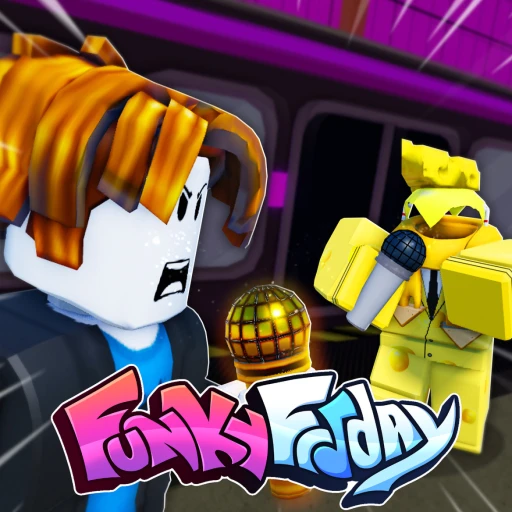
Funky Friday and Tower of Hell sit on opposite ends of the Roblox skill-game spectrum. One tests your rhythm and reaction speed against a cascade of falling notes. The other tests your spatial awareness and parkour precision against a randomly generated tower with zero checkpoints. Together, these two experiences have accumulated over 29 billion visits as of July 2026 — proof that Roblox players have a serious appetite for games that reward pure skill over grinding.
On the surface, comparing a rhythm game to an obby might seem like comparing apples to oranges. But the players who enjoy one often enjoy the other, and the question keeps coming up in communities across Reddit, Discord, and TikTok: which one is actually worth your time? This guide breaks down everything from core gameplay and progression systems to community culture and monetization so you can decide where to invest your next session.
Table of Contents
- Quick Stats Comparison
- Gameplay — What Do You Actually Do?
- Progression — How Quickly Does It Hook You?
- Skill Ceiling and Mastery
- Graphics and Audio
- Player Count and Community
- Game Passes and Monetization
- Social Features and Multiplayer
- Replay Value
- Earning Free Robux While You Play
- Head-to-Head Verdict
- Who Should Play What?
- Frequently Asked Questions
Funky Friday vs Tower of Hell — Quick Stats (2026)
| Category | Funky Friday | Tower of Hell |
|---|---|---|
| Genre | Rhythm / Music | Obby / Parkour |
| Place ID | 6447798030 | 3956818381 |
| Developer | Lyte Interactive | YXCeptional Studios |
| Concurrent Players | 10K–30K peak | 30K–80K peak |
| Total Visits | 2B+ | 27B+ |
| Release Year | 2021 | 2019 |
| Core Loop | Hit notes, earn points, unlock songs | Climb tower, beat timer, earn coins |
| Key Features | 1v1 battles, 200+ songs, cosmetics | Random towers, no checkpoints, gears |
| Skill Type | Rhythm & timing | Parkour & spatial awareness |
| Mobile-Friendly | Yes | Playable, PC-favored |
| Free-to-Play | Yes | Yes |
Gameplay — What Do You Actually Do?
Funky Friday
Funky Friday by Lyte Interactive is a rhythm game built on the foundation of Friday Night Funkin', the indie rhythm game that took the internet by storm. You spawn into a city-themed lobby and walk up to a stage to start a battle. Once a match begins, notes scroll down the screen in four lanes, and your job is to press the corresponding keys at the exact moment each note crosses the hit zone. Accuracy determines your score: a perfectly timed press earns a "SICK!!" rating, while mistimed hits receive "Good," "OK," or "BAD" ratings that reduce your multiplier.
The song library is where Funky Friday separates itself from other rhythm games on Roblox. As of March 2026, the game features over 200 playable tracks, including original Friday Night Funkin' songs, community-made mods, and exclusive Roblox originals. Songs range from beginner-friendly tracks with slow, predictable patterns to expert-level compositions that throw hundreds of notes per minute at you in complex syncopated rhythms. The difficulty curve is smooth enough that new players can have fun immediately, but the ceiling is high enough that top-ranked players are still refining their technique after thousands of hours.
Battles are the heart of the experience. You challenge another player to a 1v1 duel on any unlocked song, and both players hit notes on the same track simultaneously. The player with the higher accuracy percentage at the end wins, earning bonus points toward the in-game shop. There is also a solo mode for players who want to practice without the pressure of competition, and this mode is where most beginners spend their first few hours learning note patterns and building muscle memory before jumping into head-to-head matches.
Points earned from battles and solo play feed into a cosmetic economy. You spend them on animations that play when you hit notes, custom emotes, and character effects that let you stand out on stage. None of these provide gameplay advantages — a player with zero cosmetics has the same note charts and mechanics as someone who has spent weeks unlocking everything. This keeps the competitive playing field completely level.
Tower of Hell
Tower of Hell by YXCeptional Studios is a round-based obby where every tower is randomly generated from a pool of hundreds of unique sections. Each round lasts eight minutes. The goal is simple in concept and brutal in execution: reach the top of the tower before time runs out. There are no checkpoints. If you fall, you start over from the bottom. When someone reaches the top, the timer speeds up for everyone else still climbing, adding a layer of competitive pressure that turns every round into a race.
The obby sections themselves are the game's greatest strength. Each section is a hand-crafted obstacle course featuring spinning platforms, disappearing blocks, moving barriers, narrow beams, and jump sequences that require frame-perfect timing. Because the tower is assembled randomly from these sections, no two rounds play out identically. A section you breezed through in the last round might appear at a different height or connect to a completely different section, forcing you to adapt on the fly rather than memorize a fixed route.
Movement mechanics in Tower of Hell go deeper than standard Roblox obbies. Experienced players use techniques like wallhopping, shift-lock camera manipulation, and precise diagonal jumps to clear sections faster than intended. The gap between a casual player and a skilled Tower of Hell veteran is enormous — veterans can climb towers in under two minutes that take new players the entire eight-minute round to attempt. This skill gap drives the competitive community and makes watching top players genuinely impressive.
Coins earned from completing towers and clearing sections can be spent on gears and mutators. Gears like the Speed Coil and Gravity Coil give you movement advantages during rounds. Mutators affect the entire server, adding effects like fog, inverted gravity, or reduced platform size. The skill tree system lets you upgrade gears with skill points earned from leveling up, creating a long-term progression path that rewards consistent play. For a deeper look at earning strategies, check our Tower of Hell free Robux guide.
Progression — How Quickly Does It Hook You?
Funky Friday hooks you within your first song. The moment notes start scrolling and you land your first "SICK!!" streak, the dopamine loop clicks into place. Your first session typically involves cycling through a handful of easy songs, getting comfortable with the four-key layout, and then challenging another player for the first time. Within 30 minutes, most players have unlocked enough points to buy their first animation from the shop. Within a few hours, you're browsing harder songs and starting to develop preferences for certain chart styles and BPM ranges.
The mid-game progression in Funky Friday is about expanding your song comfort zone. Players naturally gravitate toward songs that match their current skill level, then push into harder territory once they can consistently full-combo their current favorites. The points economy is generous enough that you're always unlocking something new, whether it's a rare animation, a seasonal cosmetic, or access to a newly added song pack. This steady drip of rewards keeps sessions feeling productive even when you're losing battles against better players.
Tower of Hell's early hook is the "one more try" loop that every great obby relies on. You fall off a spinning platform, respawn at the bottom, and immediately want to try again because you can see exactly where you messed up. The first time you reach the top of a tower feels like a genuine accomplishment. Within your first hour, you've probably completed one or two towers and earned enough coins to browse the gear shop. The jump from "can barely make it past the third section" to "consistently reaching the top" happens over days rather than minutes, which gives the game strong retention for players who enjoy measured improvement.
Long-term progression in Tower of Hell is tied to the gear upgrade system and the leveling curve. Higher levels unlock access to more powerful gears and larger mutator pools. The skill tree requires genuine decision-making about which gears to prioritize, and respeccing isn't free, so your choices have weight. Veteran players who have maxed their skill trees and collected every gear still come back because the randomly generated towers provide an endless supply of fresh challenges.
Edge: Funky Friday, for the faster initial hook and the more consistently rewarding session-to-session progression. Tower of Hell's progression is satisfying but front-loads more frustration before the payoff kicks in.
Skill Ceiling and Mastery
The skill ceilings in both games are remarkably high, but they develop along entirely different axes. Understanding what mastery looks like in each game helps you decide which type of challenge appeals to you more.
In Funky Friday, mastery means being able to full-combo expert-level songs while maintaining a near-perfect accuracy percentage. Top players can process note patterns at speeds that look inhuman to casual observers, with their fingers moving across the keyboard in precise, rehearsed motions. The skill progression moves through distinct phases: learning to read note patterns in real time, developing the finger independence to hit complex multi-key combinations, building stamina to maintain accuracy through long songs, and finally developing the sight-reading ability to perform well on charts you've never seen before. Each phase can take weeks or months of regular practice.
Tower of Hell mastery is about movement efficiency and spatial problem-solving under pressure. Expert players read a new tower section in a fraction of a second and identify the fastest path through it. They chain jumps, wall hops, and platform transitions into fluid sequences that look like choreographed speedruns. The randomly generated nature of towers means you can never fully memorize a run — you have to adapt in real time, which requires a deep understanding of how Roblox physics interact with every obstacle type in the game's section pool. Veterans who have played thousands of rounds can identify a section by its first platform and know the optimal route before their character even lands on it.
Both games share a quality that sets them apart from most Roblox experiences: improvement is entirely in your hands. There is no gear check, no level gate, no pay-to-win mechanic standing between you and the top of the leaderboard. A day-one player with natural talent can outperform a year-long veteran in either game if their raw skill is sharper. That meritocratic design is a major part of why both games have such dedicated competitive communities.
Edge: Tower of Hell, slightly, because the randomly generated towers ensure that mechanical skill must always be paired with real-time adaptation. Funky Friday's hardest charts can technically be memorized and practiced until perfected, while Tower of Hell always puts you in a new situation.
Graphics and Audio
Funky Friday leans into a colorful, street-art-inspired visual style that matches its musical theme. The lobby area is a compact city block with stages scattered around for players to claim. Character models display equipped animations and effects clearly, and the note highway is clean and readable even at high scroll speeds. Visual feedback for note accuracy — the colored text flashes for "SICK!!", "Good," and "BAD" — is immediately legible, which matters enormously in a rhythm game where split-second readability determines your performance. The visual design serves the gameplay first and looks good second, which is the right priority for a competitive music game.
Audio is obviously where Funky Friday shines hardest. The 200+ song library spans genres from lo-fi hip-hop to aggressive EDM to chiptune to rap, covering enough musical ground that most players find tracks they genuinely enjoy listening to. Sound quality is good for a Roblox game, and the timing between audio playback and visual note positions is tight enough to support competitive play. Songs from popular FNF mods like Whitty, Tricky, and Garcello bring their original charm to the Roblox platform without losing much in translation.
Tower of Hell takes a minimalist approach to visuals that works in its favor. The tower sections use clean geometry with bright accent colors that make platforms, walls, and obstacles easy to distinguish at a glance. The void surrounding each tower and the open skybox above create a sense of vertical scale that makes tall towers feel appropriately daunting. Section-specific visual effects like glowing kill bricks (red) and bouncing pads (green) use color coding effectively, so experienced players can identify hazard types at speed without needing to read any labels.
Audio in Tower of Hell is understated by design. Background music provides ambient energy without distracting from the concentration needed for precise jumps. Sound effects for jumping, landing, and falling are clear and well-timed, giving useful audio feedback about your character's position and momentum. Mutators that affect the environment, like fog or inverted colors, alter the visual landscape in ways that are disorienting but fair, adding challenge without breaking the core readability that makes the game work.
Edge: Funky Friday, because audio is central to the experience and the song library delivers genuine variety and quality. Tower of Hell's visuals are functional and clean, but Funky Friday's audio-visual package is more polished overall.
Player Count and Community (July 2026)
As of March 2026, Tower of Hell dominates in raw numbers. The game regularly pulls between 30,000 and 80,000 concurrent players during peak hours, spiking higher during seasonal events and updates. With over 27 billion total visits, it ranks as one of the most-played experiences in Roblox history and holds the title of the platform's most popular obby game. Tower of Hell won the "Best Obby" category at the Roblox Innovation Awards 2024, cementing its status as the definitive parkour experience on the platform.
Funky Friday maintains a smaller but intensely dedicated player base. Concurrent numbers typically range from 10,000 to 30,000, with peaks during song updates and community events. The game has crossed 2 billion total visits, which is impressive for a niche genre that doesn't have the broad appeal of shooters or obbies. Funky Friday's audience skews toward players who specifically seek out rhythm game challenges, and many of them come from the broader Friday Night Funkin' community that spans multiple platforms. The Funky Friday free Robux guide covers how to make the most of your time in the game.
Community culture differs substantially between the two games. Tower of Hell's community is built around speedrunning and personal records. Players share their fastest tower completions, post clips of clutch plays, and maintain leaderboards for specific section types. The competitive scene is collaborative in a healthy way — skilled players often post tutorials explaining advanced movement techniques, and the community wiki documents every section with optimal routes. Toxicity exists but tends to be limited to in-server chat during heated rounds.
Funky Friday's community revolves around music, mod culture, and competitive 1v1 rankings. Players request specific songs, share custom note charts they've created, and debate which tracks are the most difficult. The FNF modding community feeds directly into Funky Friday's content pipeline, with popular mods becoming song additions. Content creators on YouTube and TikTok produce combo showcases, accuracy challenges, and "can I beat this song?" videos that consistently pull strong viewership.
Edge: Tower of Hell, by a wide margin in terms of player count and total engagement. Funky Friday's community is passionate but smaller, reflecting the narrower appeal of rhythm games compared to parkour challenges.
Game Passes and Monetization
Both games follow the standard Roblox free-to-play model where the core experience is free and game passes offer optional upgrades. Neither game crosses into pay-to-win territory, which is a meaningful distinction on a platform where some experiences aggressively gate content behind Robux.
Funky Friday's game pass offerings center on convenience and cosmetics. The 2x Points pass doubles the points you earn from songs, cutting the time needed to unlock shop items in half. The Animation Pack bundles give access to exclusive note-hit animations that aren't available through regular point spending. There are also seasonal passes tied to limited-time events that offer exclusive cosmetics for players who participate during specific windows. None of these passes affect note charts, accuracy mechanics, or competitive balance in any way. A free player has exactly the same chance of winning a 1v1 as someone who has bought every pass in the game.
Tower of Hell's monetization is slightly more complex because gears affect gameplay. The Pro Tower pass provides exclusive access to harder tower variants with increased rewards. The VIP pass grants a unique nameplate and bonus coin earnings. Individual gear purchases let players buy items like the Speed Coil (which increases run speed) and Gravity Coil (which alters jump physics) with Robux instead of grinding for coins. While these gears provide real gameplay advantages, they're also earnable through free play, and skilled players without any gears regularly outperform gear-equipped players through raw parkour ability. The mutator system adds another layer, allowing players to spend coins on round-wide effects that keep the experience varied.
The gear system creates a legitimate question about fairness that Funky Friday avoids entirely. A player with a maxed Speed Coil has an objective movement advantage over a player without one. In practice, the advantage matters less than skill — a great parkour player without gears will beat a mediocre player with every gear equipped — but it introduces a variable that pure-skill purists might find frustrating. Tower of Hell manages this tension better than most games by keeping gear upgrades achievable through normal play, but the gap is worth acknowledging.
Edge: Funky Friday, for maintaining a completely level competitive playing field. Cosmetic-only monetization is the gold standard for skill-based games, and Funky Friday nails it. Tower of Hell's gear system is fair but not perfectly clean.
Social Features and Multiplayer
Funky Friday is built around direct competition between two players. The 1v1 battle system is the primary way you interact with others. Walking up to a stage, challenging a stranger, and dueling through a song creates a focused social interaction that rhythm game fans recognize from arcade culture. Wins and losses are immediately visible to the lobby, which creates micro-narratives of dominant players holding a stage against challengers or underdogs pulling off upsets on difficult songs. Private servers let friend groups run tournaments and practice sessions, and the community has developed informal ranking systems based on consistent competitive performance.
Tower of Hell's multiplayer is more parallel than directly competitive. Everyone in the server is climbing the same tower simultaneously, but you can't directly interfere with another player's run. The social element comes from the shared experience of attempting the same obstacle course and the natural drama of watching someone close to the top while you're stuck on the same spinning platform for the fifth time. When someone reaches the top and the timer accelerates, it creates a burst of urgency across the entire server that feels communal in a way few Roblox games replicate. The gear and mutator systems add server-wide social dynamics, especially when someone activates a mutator that affects everyone's round.
Neither game has a formal crew or team system, which sets them apart from games like Da Hood or Jailbreak where team dynamics drive the experience. Both games are fundamentally about individual performance in a shared space. This makes them better suited for players who prefer solo-oriented gameplay with optional social layers rather than games that require coordination with others to succeed.
Edge: Funky Friday, for the direct 1v1 battle system that creates more meaningful interpersonal competition. Tower of Hell's parallel climbing is social in atmosphere but lacks the head-to-head tension that makes Funky Friday's multiplayer compelling.
Replay Value
Funky Friday's replay value rests on two pillars: the expanding song library and the competitive ladder. New songs are added regularly by Lyte Interactive, with major FNF mods getting ported to the game and original compositions filling the gaps between mod releases. Each new song is a fresh challenge to learn, master, and eventually use in competitive battles. The skill progression is gradual enough that players continue improving for months, and there is always a harder song waiting when your current playlist starts feeling comfortable. Seasonal events with exclusive cosmetics create urgency to play during specific time windows, and the competitive community organizes tournaments that give skilled players something to train toward.
Tower of Hell's replay value is arguably even stronger because of the random tower generation. With hundreds of unique sections and new ones added through updates, the number of possible tower configurations is effectively infinite. You will never play the exact same tower twice across thousands of rounds. This mechanical randomness, combined with the deep parkour skill system, means that improvement is always possible and every round presents a new challenge. Seasonal events like the Takeover event in late 2025 introduce temporary game modes that refresh the experience for veterans, and the leveling system provides long-term goals that take hundreds of hours to complete.
Content creators extend the replay value of both games significantly. Funky Friday challenge videos ("Can I full-combo this song blindfolded?") and Tower of Hell speedrun compilations drive players back into the games to attempt what they've watched. Both titles benefit from TikTok's short-form format, where impressive plays translate into viral clips that introduce new players to the games regularly.
Edge: Tower of Hell, for the infinite replayability that random tower generation provides. Funky Friday's song library is large and growing, but it's ultimately a finite playlist that skilled players can exhaust. Tower of Hell's content is mathematically inexhaustible.
Earning Free Robux While You Play
Whether you're saving up for the 2x Points pass in Funky Friday or eyeing the Pro Tower pass in Tower of Hell, having extra Robux on hand makes a difference. Our Funky Friday free Robux guide and Tower of Hell free Robux guide cover game-specific strategies for stretching your Robux further and getting more value from every session.
Earn Free Robux for Funky Friday or Tower of Hell
Want more Robux for game passes and in-game items? Earnaldo lets you earn free Robux by completing simple tasks — no generators, no scams, just real rewards sent to your account.
Head-to-Head Verdict — Funky Friday vs Tower of Hell in 2026
| Category | Winner |
|---|---|
| Faster Initial Hook | Funky Friday |
| Skill Ceiling | Tower of Hell (slight edge) |
| Graphics & Audio | Funky Friday |
| Player Count | Tower of Hell |
| Fair Monetization | Funky Friday |
| Social / Multiplayer | Funky Friday |
| Replay Value | Tower of Hell |
| Mobile Experience | Funky Friday |
The Verdict
Choose Funky Friday if you want a rhythm-based challenge with direct competitive multiplayer, a massive song library, and a completely fair free-to-play model. It rewards musical timing, pattern recognition, and the willingness to practice. Sessions can be as short as a single song or as long as a multi-hour competitive streak, making it flexible for any schedule.
Choose Tower of Hell if you want a parkour challenge with infinite variety, a deep movement system, and the adrenaline rush of climbing a randomly generated tower against the clock with no checkpoints. It rewards spatial awareness, precision, and the ability to adapt to new obstacles in real time. The larger player base and endless tower combinations mean you will never run out of content.
Overall: These games complement each other rather than compete directly. Funky Friday is the better pick for focused, competitive sessions where you want to test yourself against a specific opponent. Tower of Hell is the better pick for open-ended sessions where you want a constantly evolving challenge. Many players in both communities play both games regularly, using Funky Friday for rhythm training and Tower of Hell for parkour practice. If you have the time, playing both is the right answer.
Who Should Play What?
- You love music and rhythm games: Funky Friday, hands down. The 200+ song library and tight rhythm mechanics deliver the best FNF experience on Roblox.
- You love parkour and obbies: Tower of Hell. It's the definitive obby on Roblox for a reason, and the random generation means it never gets stale.
- You want head-to-head competition: Funky Friday, because the 1v1 battle system creates direct, measurable competition on every song.
- You want a chill solo grind: Tower of Hell, because climbing towers at your own pace with background music is genuinely relaxing between intense rounds.
- You play primarily on mobile: Funky Friday, because tap-based rhythm inputs translate well to touchscreens. Tower of Hell's precise jumps are significantly harder without a keyboard.
- You want infinite content: Tower of Hell, because the random tower generation provides mathematically unlimited unique experiences.
- You want to earn Robux: Both work well with Earnaldo to help you earn free Robux for game passes and in-game items in either game.
Frequently Asked Questions
Tower of Hell is significantly more popular in terms of total visits, with over 27 billion compared to Funky Friday's roughly 2 billion. Tower of Hell also tends to pull higher concurrent player counts during peak hours. However, Funky Friday maintains a dedicated rhythm-game audience that keeps servers active around the clock.
Both games have high skill ceilings, but the difficulty is completely different. Funky Friday tests your rhythm timing and pattern recognition on increasingly fast note charts. Tower of Hell tests your spatial awareness, jump timing, and parkour precision under time pressure. Players who struggle with music timing may find Tower of Hell easier, and vice versa.
Both games are playable on mobile through the Roblox app. Funky Friday works reasonably well on touchscreen since the note lanes translate to tap inputs. Tower of Hell is more challenging on mobile because precise parkour jumps and camera control are harder without a mouse and keyboard. Serious Tower of Hell players overwhelmingly prefer PC.
Both games are completely free to play. Funky Friday offers optional game passes like the 2x Points pass and Animation Pack for cosmetic and convenience upgrades. Tower of Hell sells gears and mutators that affect gameplay within rounds. Neither game locks core content behind a paywall.
Funky Friday receives regular song and mod additions from Lyte Interactive, often adding new tracks monthly to keep the playlist fresh. Tower of Hell updates focus on new obby sections, seasonal events like the Takeover event, and quality-of-life improvements. Both games maintain active development teams as of July 2026.
Yes, both games support multiplayer. Funky Friday lets you battle friends directly in 1v1 rhythm duels on the same song. Tower of Hell places all players in the same tower each round, so you race your friends to the top simultaneously. Funky Friday is more directly competitive while Tower of Hell is more of a parallel race.