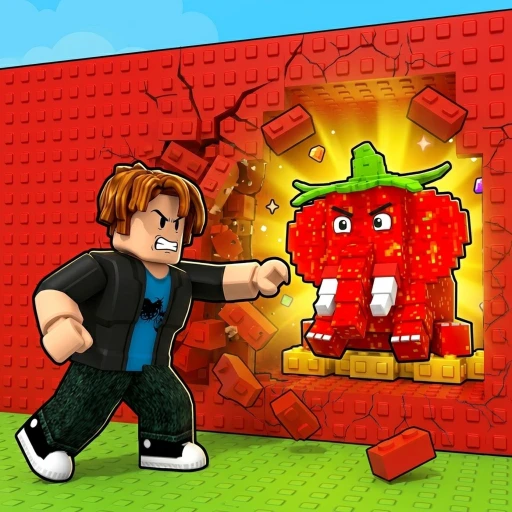
Get STRONG for Brainrots vs Steal a Brainrot (2026) -- Which Roblox Game Is Better?
Brainrot games have taken over Roblox in a way that nobody predicted. What started as a niche meme category inspired by Italian brainrot characters has turned into one of the platform's most dominant genres, with dozens of titles competing for attention. Two games stand out in very different ways: Get STRONG for Brainrots, a strength-training progression simulator where you smash walls and collect brainrots, and Steal a Brainrot, the record-shattering multiplayer phenomenon built around buying, stealing, and defending brainrot characters.
One is a solo-friendly grind that rewards patience and offline earnings. The other is a chaotic PvP arena where your rarest brainrot can vanish the moment you look away. Both feature the same meme-inspired cast of characters, but the experiences could not be more different.
If you have been trying to figure out which one deserves your time -- or whether the smaller, newer option can hold its own against the genre's biggest game -- this comparison breaks it all down. We will cover gameplay, progression, monetization, community, replayability, and more. Let us start with the numbers.
Quick Stats: Get STRONG for Brainrots vs Steal a Brainrot at a Glance
| Category | Get STRONG for Brainrots | Steal a Brainrot |
|---|---|---|
| Developer | Independent Studio | SpyderSammy (BRAZILIAN SPYDER) |
| Roblox Place ID | 84644870163414 | 109983668079237 |
| Concurrent Players | ~6,500 | ~225,000 |
| Total Visits | 14.1M | 64B+ |
| Peak CCU (All-Time) | N/A | 24.1M |
| Genre | Strength Sim / Progression | Collection / PvP Theft |
| Core Loop | Train, smash walls, collect brainrots | Buy, steal, and defend brainrots |
| PvP Element | None | Central mechanic |
| Offline Earnings | Yes | No |
| Platform Support | PC, Mobile, Tablet, Console | PC, Mobile, Tablet, Console |
| Controller Support | Full | Partial |
| Active Codes | No code system yet | Yes, regularly updated |
| Average Session Length | 15-30 minutes | 30-60+ minutes |
| Age Suitability | All ages | 8+ |
The gap in raw popularity is massive. Steal a Brainrot is one of the most-visited games in Roblox history, while Get STRONG for Brainrots is still building its audience. But player count alone does not tell the whole story. Let us dig into what actually makes each game tick.
Gameplay and Core Loop
Get STRONG for Brainrots: Train, Smash, Collect
Get STRONG for Brainrots follows the proven Roblox simulator formula and executes it with a brainrot twist. You start weak. Your character can barely crack the first set of walls blocking your path. The entire gameplay loop revolves around training your strength stat by performing exercises, then using that strength to smash through increasingly durable barriers.
Behind each wall, you find brainrots. These collectible characters are not just trophies -- they serve as your passive income engine. Every brainrot you collect generates cash over time, and that cash lets you upgrade your training power so you get stronger faster. The progression curve is satisfying because every upgrade produces a visible result. Walls that once took dozens of hits start crumbling in a single punch. Areas that were previously locked behind impossibly strong barriers suddenly become accessible.
The brainrot collection itself adds meaningful depth. Brainrots come in multiple variants -- Gold, Diamond, Starfall, Lava, and others -- each with different base earning rates. On top of that, brainrots can spawn with Traits, which function similarly to mutations. A trait boosts the affected brainrot's earning rate and sale value while adding a unique visual effect. Hunting for rare variant and trait combinations gives the collection loop a gacha-adjacent appeal without requiring real money.
One of the most appealing features is offline earnings. When you close the game, your brainrots keep generating cash. This means every session starts with a pile of accumulated currency, making your next round of upgrades feel immediately rewarding. For players who can only hop on for short bursts, this is a major quality-of-life advantage.
Steal a Brainrot: Buy, Steal, Defend
Steal a Brainrot is a completely different animal. The game drops you into a shared server where your primary goals are to acquire the rarest brainrots possible, protect them from other players, and steal valuable brainrots from everyone else. It plays like capture the flag crossed with a trading card game, and the social dynamics make every session unpredictable.
You start by purchasing brainrots from a central conveyor belt using in-game cash. Cheaper brainrots generate modest income, which you reinvest into more expensive and more profitable characters. The economic ladder climbs steeply -- the gap between a common brainrot and an S-tier earner like Strawberry Elephant is enormous. Building your collection to the point where you can afford top-tier purchases takes genuine time and strategy.
Then there is the stealing. You can walk into any player's base and attempt to grab one of their brainrots. The catch is that stealing slows you down, strips you of all items, and immediately alerts the owner. If the owner or any other player attacks you while you are carrying the stolen brainrot, it teleports back to its original base. Successful thefts require planning, timing, and knowledge of tools like the Body Swapper, which teleports you into a favorable escape position while displacing the target.
Base defense is equally important. You can build multi-floor bases and store your most valuable brainrots on the highest levels, making them harder to reach. Traps, locks, and strategic brainrot placement all factor into protecting your collection. The constant tension between offense and defense is what keeps servers lively and sessions long.
Edge: Depends on your preference. Get STRONG for Brainrots delivers a clean, satisfying solo progression loop with zero frustration from other players. Steal a Brainrot offers a deeper, more dynamic experience where the human element -- alliances, betrayals, clutch steals -- creates moments you cannot script. If you want relaxation, pick the strength sim. If you want adrenaline, pick the theft game.
Progression Systems
Get STRONG for Brainrots: Vertical Power Climbing
Progression in Get STRONG for Brainrots is linear and transparent. You train to increase your strength. Higher strength lets you break tougher walls. Tougher walls guard rarer brainrots. Rarer brainrots produce more cash. More cash buys better training upgrades. The feedback loop is tight, and you always know exactly what you are working toward.
The variant and trait system adds a secondary progression layer. Finding a Diamond brainrot is good. Finding a Diamond brainrot with a rare trait that doubles its earning rate is the kind of discovery that keeps collectors engaged. There is always a better version of what you already have, which motivates you to keep smashing through new areas.
The downside is that this type of progression has a ceiling. Once you have maxed your strength and collected the rarest brainrots, the game's primary motivation fades. The developers will need to keep adding new areas, wall tiers, and brainrot variants to maintain long-term interest. For now, though, the grind from zero to endgame is a solid ten to twenty hours of gameplay, which is respectable for a Roblox simulator.
Steal a Brainrot: Economic and Social Climbing
Steal a Brainrot's progression is less about raw numbers and more about your position in the server's economy. Early on, you are buying cheap brainrots and hoping nobody targets your modest collection. As your income grows, you start affording mid-tier characters that generate meaningful cash flow. Eventually, you are sitting on a collection worth millions, eyeing other players' rare brainrots while fortifying your own base against thieves.
The progression curve is steeper and less predictable than a traditional simulator. A single successful steal of a high-value mutated brainrot can accelerate your progress by hours. Conversely, losing your best earner to a well-executed heist can set you back significantly. This volatility is the game's defining characteristic -- it is thrilling when things go your way and genuinely frustrating when they do not.
Secret brainrots add aspirational targets that keep even veteran players engaged. These ultra-rare characters command massive value and are a status symbol within the community. The pursuit of Secrets is essentially Steal a Brainrot's endgame, and it keeps the most dedicated players grinding for weeks.
Edge: Steal a Brainrot. The progression system is riskier and less predictable, but that unpredictability creates higher highs. Get STRONG for Brainrots has clean progression, but Steal a Brainrot's economic depth and social dynamics give it more layers to master.
Social Experience and Multiplayer
Get STRONG for Brainrots: Solo at Heart
Get STRONG for Brainrots is fundamentally a single-player experience that happens to exist on a multiplayer platform. You share a server with other players, but your progression is entirely independent. Nobody can steal your brainrots. Nobody can sabotage your training. You are on your own grind, at your own pace, and that is perfectly fine for a lot of players.
The lack of social mechanics means you will not form the same kinds of in-game relationships that emerge in more interactive titles. There are no alliances to forge, no rivals to outsmart, no negotiations over contested brainrots. What you get instead is a stress-free environment where progress is guaranteed as long as you put in the time. For players who treat Roblox as a relaxation tool after school or work, this is a significant selling point.
Steal a Brainrot: Chaos by Design
Steal a Brainrot is one of the most socially charged games on Roblox. Every server is a miniature society with its own power dynamics. Experienced players with stacked collections become targets. Newer players form temporary alliances to take down a wealthy base. Friendships form and dissolve based on who stole from whom. The chat is constantly active with threats, negotiations, and celebrations.
The stealing mechanic forces interaction in a way that few Roblox games manage. You cannot just mind your own business -- other players are always a factor, whether you are the one doing the stealing or the one getting robbed. This creates organic stories that keep players talking about the game long after they log off. The subreddit, Discord servers, and YouTube content around Steal a Brainrot are massive partly because the game produces genuinely dramatic moments.
The flip side is that this social intensity is not for everyone. Getting your best brainrot stolen by a higher-level player can feel deeply unfair, especially for younger or more casual players. Toxic behavior in chat is an ongoing issue in popular servers. If you want a brainrot game without the drama, this is not the one.
Edge: Steal a Brainrot. If you value social interaction, emergent stories, and the thrill of competing against real people, Steal a Brainrot wins by a wide margin. But that edge comes with a cost -- not every social interaction will be pleasant.
Brainrot Collection and Variety
Get STRONG for Brainrots: Variants and Traits
The brainrot roster in Get STRONG for Brainrots draws from the same Italian brainrot meme pool that has powered the entire genre. Where this game differentiates itself is in the variant system. Each brainrot can appear in multiple forms -- standard, Gold, Diamond, Starfall, Lava, and potentially more as updates roll out. Each variant has a distinct visual style and a different base earning rate, making every wall-smash a potential jackpot.
Traits add another dimension. A brainrot with the right trait can earn significantly more than its base variant would suggest, and the visual flair of a rare trait makes your collection stand out. The combination of variants and traits means that even common brainrots can become valuable if they roll with a top-tier trait, which keeps every area of the game relevant.
Steal a Brainrot: Tiers, Mutations, and Secrets
Steal a Brainrot has a larger and more established brainrot roster, partly because the game has been around longer and receives frequent updates. The tiered system runs from common characters you pick up early to legendary and Secret brainrots that take serious investment to obtain. Community tier lists are updated regularly, with characters like Strawberry Elephant sitting at the undisputed top as an S+ tier earner.
Mutations serve a similar purpose to Get STRONG for Brainrots' traits -- they boost a brainrot's income and alter its appearance. Mutated brainrots are prime targets for theft because they represent concentrated value. Secret brainrots occupy their own category entirely, serving as the game's most coveted collectibles. Recent additions like Grante Angelta, Foxini Lanternini, and Cloverat Clapat have earned strong community placements and keep the meta shifting.
Edge: Steal a Brainrot. The larger roster, established tier system, and regular additions give it more depth for collectors. Get STRONG for Brainrots' variant and trait system is clever, but it needs more time and content updates to compete with the sheer volume Steal a Brainrot offers.
Monetization and Fairness
Get STRONG for Brainrots: Hands-Off Approach
Get STRONG for Brainrots currently takes a light approach to monetization. There is no code system in place yet, and the game does not appear to lean heavily on game passes or premium currency. This could change as the game grows, but right now the experience is about as close to purely free as a Roblox game gets. You will not hit a paywall that forces you to spend Robux to progress at a reasonable pace.
The trade-off is that this hands-off monetization also means fewer free rewards. Without a code system, there are no periodic freebies to boost your progress. You earn everything through gameplay, which is refreshing but can make the early grind feel slower compared to games that hand out starter bonuses.
Steal a Brainrot: Active but Optional
Steal a Brainrot has a more developed monetization structure that reflects its maturity as a product. Game passes and Robux-purchasable items exist, but the core gameplay loop does not require spending. The code system delivers regular free rewards -- cash injections, occasional brainrots, and other bonuses that keep players checking back. You can find the latest working codes in our Steal a Brainrot codes guide.
The monetization is fair in the sense that spending money does not make you immune to theft or grant overpowered advantages. A paying player's brainrot can be stolen just as easily as a free player's. The playing field is not perfectly level -- some purchases provide convenience or cosmetic advantages -- but the core competitive dynamics remain intact for everyone.
Edge: Tie. Get STRONG for Brainrots wins on purity -- there is almost nothing to spend money on. Steal a Brainrot wins on generosity through its code system and regular free content. Neither game feels exploitative or pay-to-win.
Replayability and Longevity
Get STRONG for Brainrots: Steady but Finite
The replay value in Get STRONG for Brainrots comes from the satisfaction of the grind cycle and the hunt for rare variants and traits. Each session has a clear purpose: train up, smash new walls, collect better brainrots, and upgrade. The offline earnings system adds a layer of passive progression that makes returning after a break feel productive rather than punishing.
The concern for long-term players is content depth. A strength simulator lives or dies by its update cadence. New areas, new brainrot variants, new training methods, and potential features like a code system or trading will determine whether the game retains its current audience or sees them drift to competitors. The foundation is solid, but the building on top of it is still under construction.
Steal a Brainrot: Self-Sustaining Chaos
Steal a Brainrot has a built-in replayability engine that most games would envy: other players. Because every server is populated by unpredictable humans making real-time decisions about what to steal, when to defend, and who to target, no two sessions play out the same way. The game generates its own content through player interaction, which means it stays fresh without constant developer intervention.
That said, the developers have been anything but idle. Regular updates add new brainrots, balance changes, and features that keep the meta evolving. The game even hosted a Bruno Mars virtual concert in January 2026, showing that the team is thinking beyond traditional game updates. With over 64 billion visits and counting, Steal a Brainrot has proven that it has staying power that goes beyond a trend cycle.
Edge: Steal a Brainrot. The PvP dynamics create infinite replayability that no amount of content updates can replicate. Get STRONG for Brainrots has satisfying progression, but it will need consistent updates to keep players engaged past the initial climb.
Performance and Accessibility
Get STRONG for Brainrots: Clean and Lightweight
Get STRONG for Brainrots runs smoothly across all platforms. The game's visual style is straightforward -- training areas, destructible walls, and brainrot models do not demand heavy rendering. Mobile and tablet performance is particularly strong, and the full controller support is a welcome addition for console players. Load times are quick, and server stability has been consistent even as the player base grows.
The UI is clean and easy to navigate. Strength stats, cash totals, and brainrot inventories are displayed clearly. New players can understand what to do within thirty seconds of loading in, which is critical for a genre where first impressions determine whether someone stays for five minutes or five hours.
Steal a Brainrot: Feature-Rich but Heavier
Steal a Brainrot carries more visual and mechanical complexity. Player bases, conveyor systems, combat effects, and the sheer number of brainrot models on screen in a busy server all add up. On older mobile devices, frame drops are noticeable during peak activity. PC performance is generally fine, but servers at maximum capacity can feel sluggish.
The game's UI is functional but dense. New players face a steeper learning curve because the stealing, defending, locking, and combat systems all need to be understood before you can play effectively. The community has produced extensive guides -- including the Steal a Brainrot Wiki strategies page -- but the in-game onboarding could be stronger.
Edge: Get STRONG for Brainrots. The simpler design runs better on low-end devices and is far easier for new players to pick up. Steal a Brainrot's complexity is a strength for experienced players but a barrier for newcomers.
Community and Content Creator Ecosystem
Get STRONG for Brainrots: Growing Grassroots
As a newer and smaller title, Get STRONG for Brainrots has a developing community. YouTube content covers codes (or the lack thereof), beginner tips, and optimal training strategies. The community is enthusiastic but compact. You will not find the same depth of wikis, tier lists, and strategy guides that exist for more established games. This is typical for a game at this stage of growth, and the trajectory looks positive given the steady player count.
Steal a Brainrot: Cultural Phenomenon
Steal a Brainrot transcends the typical Roblox game community. It has a Wikipedia page. Bloomberg has covered its impact on the platform. Content creators across YouTube and TikTok produce daily videos covering tier lists, stealing strategies, update breakdowns, and dramatic gameplay moments. The Fandom wiki is comprehensive. Multiple third-party sites track real-time statistics.
This massive content ecosystem means you will never run out of guides, tips, and entertainment related to the game. It also means the community can be overwhelming for newcomers who stumble into heated debates about tier rankings or stealing ethics.
Edge: Steal a Brainrot. The community infrastructure is not even comparable at this point. Get STRONG for Brainrots is building, but Steal a Brainrot has a content ecosystem that rivals the biggest games on the entire platform.
Final Verdict: Which Brainrot Game Should You Play?
These two games serve fundamentally different types of players. Get STRONG for Brainrots is the better choice if you want a relaxing, solo-friendly progression game where your progress is safe and your sessions are self-contained. It is ideal for mobile players, younger audiences, and anyone who prefers grinding at their own pace without worrying about other players disrupting their collection. Steal a Brainrot is the better choice if you want a deep, socially driven experience with real stakes, emergent drama, and one of the largest communities on Roblox. It demands more investment and tolerance for chaos, but it rewards that investment with moments that no single-player game can match. For most players, the honest answer is to try both. Start with Get STRONG for Brainrots if you want something low-pressure, then graduate to Steal a Brainrot when you are ready for the competitive side of the brainrot genre.
Who Should Play What?
Play Get STRONG for Brainrots If You...
Want zero PvP stress. Your brainrots are yours. Nobody can take them. You train, you collect, you progress. The game respects your time and never punishes you for stepping away thanks to offline earnings.
Prefer short, focused sessions. You can make meaningful progress in fifteen minutes. Train your strength, smash some walls, grab a few brainrots, and log off knowing your collection is still earning while you are gone.
Are newer to Roblox or younger. The gameplay is intuitive and the difficulty curve is gentle. There is no frustration from losing items to other players, and the bright, straightforward design makes it welcoming for all ages.
Enjoy the collector's grind. Hunting for rare variants and traits scratches the same itch as opening packs in a card game. If the question "what if the next one is a Diamond with a Starfall trait?" excites you, this game delivers.
Play Steal a Brainrot If You...
Thrive on competition. You want to outsmart real players, pull off daring heists, and defend your collection against people who are actively trying to take it. The PvP element is the entire point, and it makes every session feel alive.
Want a game with serious depth. The stealing mechanics, base defense strategies, tool usage, and economic management give you layers to master over weeks and months. This is not a game you figure out in one afternoon.
Like being part of a massive community. You want tier lists to debate, YouTube videos to binge, Discord servers to join, and a Fandom wiki to reference. Steal a Brainrot has all of this and more.
Do not mind the occasional setback. You will lose brainrots. It will sting. But if you can take those losses as motivation to improve your base defense and stealing techniques, the game becomes significantly more rewarding than a game where progress only goes in one direction.
Earn Free Robux for Game Passes
Want to unlock premium content in either game without spending your own money? Earn free Robux through Earnaldo and spend it however you like.
Summary: Head-to-Head Edge Breakdown
| Category | Winner |
|---|---|
| Gameplay Loop | Tie -- different strengths for different players |
| Progression System | Steal a Brainrot |
| Social Experience | Steal a Brainrot |
| Brainrot Collection Depth | Steal a Brainrot |
| Monetization Fairness | Tie |
| Replayability | Steal a Brainrot |
| Performance / Accessibility | Get STRONG for Brainrots |
| Community Ecosystem | Steal a Brainrot |
| New Player Friendliness | Get STRONG for Brainrots |
| Stress-Free Experience | Get STRONG for Brainrots |
Steal a Brainrot takes more categories, but the categories where Get STRONG for Brainrots wins -- accessibility, new player friendliness, and stress-free gameplay -- matter enormously to a large portion of the Roblox audience. Do not let the scoreboard alone make your decision.
Related Guides
Whichever game you choose, we have you covered with detailed guides:
- Get STRONG for Brainrots Free Robux Guide
- Get STRONG for Brainrots Codes (July 2026)
- Steal a Brainrot Free Robux Guide
- Steal a Brainrot Codes (July 2026)
Frequently Asked Questions
Steal a Brainrot is far more popular by raw numbers. It has surpassed 64 billion visits and once peaked at over 24 million concurrent players, making it one of the most-played Roblox games of all time. Get STRONG for Brainrots is a smaller but rapidly growing title with around 14 million visits and a steady concurrent player count of roughly 6,500.
Yes, both games are fully playable on mobile devices, tablets, PC, and console. Get STRONG for Brainrots also supports full controller compatibility. Steal a Brainrot works well on mobile though the stealing and combat mechanics can be trickier on a touchscreen compared to PC.
Steal a Brainrot regularly releases codes that reward free in-game cash and sometimes exclusive brainrots. Get STRONG for Brainrots does not currently have a code redemption system, though the developers may add one in future updates.
Get STRONG for Brainrots is generally more suitable for younger players. It is a solo-focused progression game with no PvP stealing or competitive pressure. Steal a Brainrot involves stealing from other players and defending your base, which can be frustrating for younger children who may lose valuable brainrots to more experienced players.
Both games feature characters inspired by Italian brainrot memes, but the specific rosters and mechanics differ significantly. Get STRONG for Brainrots has variants like Gold, Diamond, Starfall, and Lava brainrots with trait systems that boost earnings. Steal a Brainrot has its own tiered system with mutations that increase income and unique cosmetic effects.
Neither game directly pays you Robux for playing. However, you can earn free Robux through legitimate reward platforms like Earnaldo and use it on game passes or items in either game. Check our free Robux guides for Get STRONG for Brainrots and Steal a Brainrot for step-by-step instructions.