Grow Beanstalk for Brainrots vs Steal a Brainrot (2026) — Which Roblox Game Is Better?
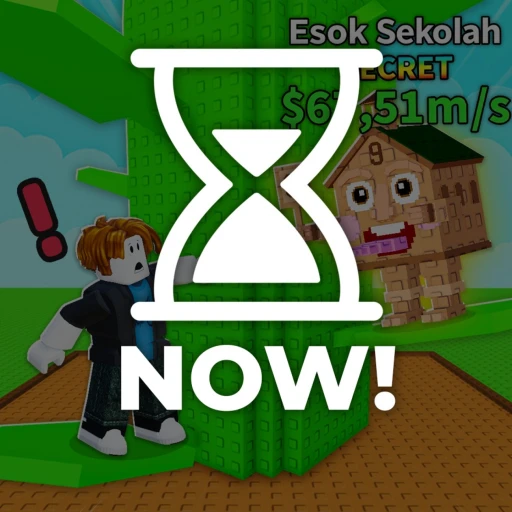
Brainrot games keep multiplying on Roblox, and two of the biggest right now take wildly different approaches to the same obsession. Grow Beanstalk for Brainrots puts you in a beanstalk-growing simulator where you climb into the clouds, grab brainrot characters, place them on your base, and grind through a rebirth loop powered by cash and mutations. Steal a Brainrot throws you into 8-player servers where every brainrot you earn is fair game for other players to swipe right out of your base.
One game rewards patience and solo grinding. The other rewards cunning, speed, and the willingness to ruin someone's day. This comparison puts them side by side across gameplay, progression, monetization, player counts, and long-term staying power so you can decide which one deserves your time in March 2026.
Grow Beanstalk for Brainrots vs Steal a Brainrot — Quick Stats (2026)
| Category | Grow Beanstalk for Brainrots | Steal a Brainrot |
|---|---|---|
| Genre | Beanstalk Simulator / Collector | PvP Stealth / Base Builder |
| Place ID | 71827913900569 | 109983668079237 |
| Developer | Lucky Block Studio | DoBig Studios (SpyderSammy) |
| Concurrent Players | ~38,000 | ~369,000 |
| Peak CCU | ~65,000 | 24M+ |
| Core Loop | Grow beanstalk, collect from clouds, place, earn, rebirth | Build base, steal brainrots, defend, trade |
| Rarity Tiers | Common to Classified + Mutations | Multiple tiers with event exclusives |
| PvP Element | None | Central mechanic (stealing) |
| Lucky Blocks | Yes (19R to 339R) | No |
| Game Passes | Lucky Block purchases | VIP (499R), boosts, various passes |
| Fuse Machine | Yes — combine brainrots | No equivalent |
| Mobile-Friendly | Yes | Yes (dedicated App Store listing) |
Gameplay — What Do You Actually Do?
Grow Beanstalk for Brainrots
You start at ground level with a small beanstalk and a patch of dirt. Your job is to grow that beanstalk taller by earning cash, which lets you reach higher cloud layers where rarer brainrots spawn. Each cloud platform holds brainrot characters of varying rarity — from Common trash-tier memes to Classified ultra-rares that can carry your entire economy.
The gameplay loop works like this: climb your beanstalk, jump between cloud platforms, grab every brainrot you can carry, then drop back down to your base and place them on collection slots. Each placed brainrot generates passive cash over time. That cash feeds back into beanstalk upgrades, capacity increases, and eventually the Rebirth system that resets your progress while giving you permanent multipliers.
Where it gets interesting is the Fuse Machine. You can take two brainrots and combine them into a higher-tier version. This adds a crafting and resource management layer on top of the collection grind. Do you keep two decent brainrots earning cash, or gamble on a fusion that might produce something better? That decision creates tension in an otherwise relaxing game.
Mutations add another dimension. Brainrots can spawn with visual and stat mutations — Golden, Diamond, Rainbow, and rarer variants — that multiply their earning power. Spotting a mutated Classified brainrot on a high cloud platform is the kind of dopamine hit that keeps players climbing back up.
Steal a Brainrot
Steal a Brainrot drops you into an 8-player server with a completely different energy. A conveyor belt runs through the center of the map delivering brainrots you can purchase. You buy them, carry them back to your base, and they start generating income. Standard tycoon mechanics so far.
The twist that makes this game a phenomenon: other players can walk into your base and steal your brainrots. Your entire collection is vulnerable at all times. The game becomes a constant balancing act between offense and defense. Do you invest in walls and traps to protect your base, or do you leave it exposed and spend that time raiding everyone else?
The PvP creates a social layer that no simulator can replicate. You form temporary alliances, betray friends, set elaborate traps, and sometimes just watch the chaos unfold as three players simultaneously raid each other. It is part tycoon, part stealth game, part social experiment. DoBig Studios has leaned into this energy with seasonal events, limited-time brainrots, and even a massive virtual concert that drew millions of concurrent viewers.
Progression — How Quickly Does It Hook You?
Grow Beanstalk for Brainrots delivers immediate gratification. Within your first two minutes, your beanstalk is growing, you have grabbed your first brainrots from the lowest clouds, and passive cash is trickling in. The feedback loop is tight — earn, upgrade, reach higher clouds, find rarer brainrots, earn faster. The rebirth system kicks in after roughly 30-45 minutes of play, and each rebirth cycle feels faster and more rewarding than the last thanks to compounding multipliers.
The Fuse Machine and mutation hunting give mid-game players clear goals beyond raw cash accumulation. Trying to fuse your way up to a Classified-tier brainrot with a Diamond mutation is a multi-session project that keeps you coming back. The progression curve is predictable but satisfying — you always know what to work toward next.
Steal a Brainrot's progression curve is messier in the best possible way. Your first session might end with you losing half your collection to a player who figured out the stealing mechanics before you did. The learning curve is steeper because you need to understand both the tycoon and PvP systems simultaneously. But once it clicks, the progression becomes driven by player skill and social awareness rather than pure grinding.
Session length tells part of the story. Grow Beanstalk tends toward longer, more focused grinding sessions where you zone out and climb repeatedly. Steal a Brainrot sessions are shorter and more explosive — you drop in, steal what you can, defend what you have, and log off before someone retaliates. Both approaches work, but they attract fundamentally different mindsets.
Edge: Grow Beanstalk for Brainrots for immediate hook and solo grinding. Steal a Brainrot for unpredictable, skill-based progression.

Graphics and Audio
Both games operate within the brainrot meme aesthetic — cartoonish, colorful, deliberately silly character models that reference internet culture. Visual fidelity is not the selling point for either game, and it does not need to be. The art style serves the comedy.
Grow Beanstalk for Brainrots has a vertical visual design that stands out. The beanstalk stretching into progressively higher cloud layers creates a natural sense of scale and achievement. When you reach the top tiers and see Classified brainrots glowing with mutations against a cloud backdrop, the visual payoff matches the gameplay payoff. The base area below is clean and organized, making it easy to manage your collection.
Steal a Brainrot goes for visual density. Eight players building bases, raiding each other, and cluttering the map with brainrots creates an environment that feels alive and chaotic. The conveyor belt running through the center gives the map a visual focal point, and the defensive structures add architectural variety that Grow Beanstalk's simpler base system lacks.
Edge: Tie. Grow Beanstalk has a cleaner, more satisfying vertical progression visual. Steal a Brainrot has more environmental variety and social visual chaos.
Player Count and Community (July 2026)
The numbers here tell a clear story. Steal a Brainrot is one of the biggest games on Roblox, period. With roughly 369,000 concurrent players on a typical day and a peak CCU exceeding 24 million, it operates at a scale that most Roblox games will never reach. DoBig Studios has built a cultural moment — the game has been covered by mainstream outlets, spawned a dedicated Fandom wiki, and generated enough revenue to fund active legal battles against copycat developers.
Grow Beanstalk for Brainrots sits at around 38,000 concurrent players. That is a respectable number for any Roblox game, and it places Grow Beanstalk comfortably in the upper tier of active experiences. But it is roughly one-tenth of Steal a Brainrot's current player base. The community is active and growing, with guide content from established Roblox media outlets and a steady stream of players discovering the game through the broader brainrot trend.
Community culture also differs. Steal a Brainrot's player base skews toward social and competitive players who generate clips, memes, and drama. Grow Beanstalk's community is more focused on optimization — sharing rebirth strategies, mutation probabilities, and fusion tier lists. Both communities are engaged, just in different ways.
Edge: Steal a Brainrot by a massive margin on raw scale. Grow Beanstalk for Brainrots holds a solid niche with a dedicated player base.
Game Passes and Monetization
This is where the two games diverge in interesting ways. Grow Beanstalk for Brainrots monetizes primarily through Lucky Blocks — purchasable loot boxes that contain random brainrots. The pricing tiers are OP Lucky Block at 155 Robux, Mythic Lucky Block at 19 Robux, Exotic Lucky Block at 99 Robux, and Secret Lucky Block at 339 Robux. Each tier draws from different drop tables, with higher-priced blocks offering better odds at rarer brainrots.
This is a gacha-style system. You are paying Robux for a random roll, and the outcome might be a Common brainrot you already own or a Classified mutation that transforms your earnings. Players who want the rarest brainrots quickly will feel pressure to buy Lucky Blocks, especially Secret blocks at 339 Robux each. Free players can still earn every rarity through cloud collecting and fusing, but the grind is significantly longer.
Steal a Brainrot sells game passes with defined benefits. The VIP pass costs 499 Robux and provides permanent perks like increased income and exclusive access to features. Additional boost passes accelerate various aspects of gameplay. The monetization is transparent — you know exactly what you are buying, and the core stealing-and-building gameplay works identically for free and paid players. Paid players earn faster, but free players can compete through skill and social manipulation.
Edge: Steal a Brainrot for monetization transparency. Grow Beanstalk's Lucky Blocks offer exciting gambling moments but carry the inherent frustration of RNG-based spending. Steal a Brainrot's defined passes let you budget exactly what you want to spend.
Social Features
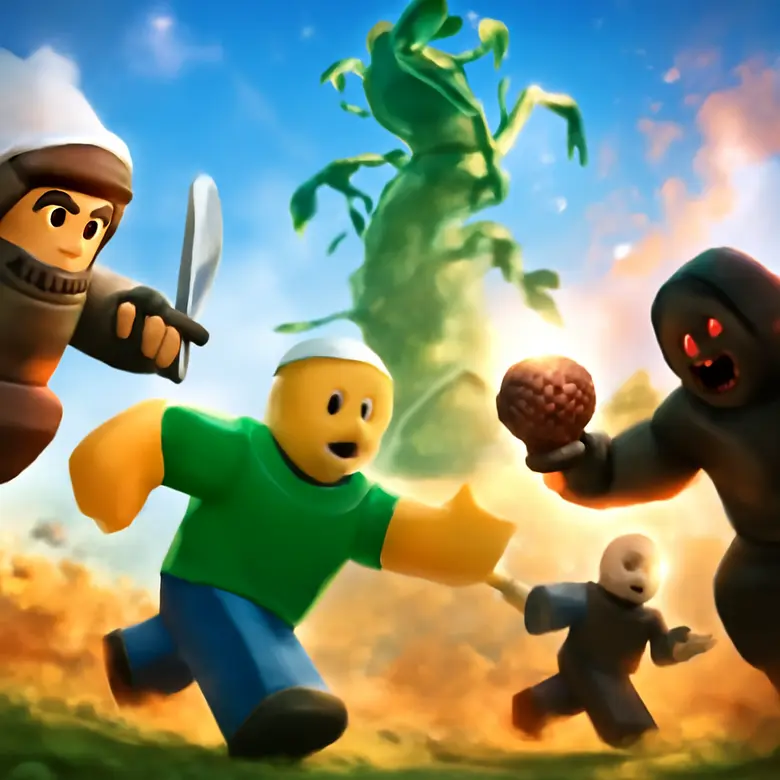
Steal a Brainrot wins this category before the comparison even starts. The entire game is built on player interaction. You cannot play Steal a Brainrot without engaging with other humans — they are stealing your brainrots, you are stealing theirs, and every session generates stories. The 8-player servers hit a sweet spot: enough players for chaos, few enough that individual actions matter. You remember the player who raided you three times in a row. You form grudges, alliances, and rivalries that last beyond a single session.
Grow Beanstalk for Brainrots is a parallel experience. Other players exist in your server, but they are climbing their own beanstalks and managing their own bases. There is no stealing, no competition over cloud brainrots, and no meaningful interaction required. You might notice someone with a rare mutation on their base and feel envious, but that is the extent of the social dynamic. For players who want a peaceful grinding session after a long day, this isolation is the entire appeal. For players seeking connection, it is a limitation.
Edge: Steal a Brainrot for players who want social gameplay. Grow Beanstalk for Brainrots for players who want to be left alone.
Replay Value
Grow Beanstalk for Brainrots delivers replay value through systems. The rebirth loop gives you a reason to start over repeatedly, and each cycle plays slightly differently as your multipliers stack and you reach higher clouds faster. Mutation hunting adds a collection dimension — there is always a rarer variant you have not found yet. The Fuse Machine creates strategic decisions about which brainrots to sacrifice and which to keep. For completionists, filling out every rarity tier across all mutation types is a project that could take weeks.
Steal a Brainrot delivers replay value through people. The PvP stealing mechanic means no two sessions play out the same way. One session you might dominate the server and build an untouchable fortress. The next session you might get raided within 30 seconds of placing your first brainrot. The variance comes from human behavior, not RNG tables, and human behavior is infinitely more unpredictable.
Steal a Brainrot also has nearly a year of content updates behind it — seasonal events, limited-time brainrots, special game modes, and community events that keep veterans engaged. Grow Beanstalk is building its content library quickly, but the depth gap is real as of July 2026.
The question is whether you prefer systems-driven replay (do the loop again, but better) or socially-driven replay (do the loop again, but against different humans). Both are valid. Both work. They scratch different itches.
Earning Free Robux While You Play
Whether you want to buy Lucky Blocks in Grow Beanstalk for Brainrots or grab the VIP pass in Steal a Brainrot, having extra Robux makes both games more enjoyable. Earnaldo lets you complete simple tasks and withdraw real Robux that works in any Roblox game. Check out our Grow Beanstalk for Brainrots free Robux guide or our Steal a Brainrot free Robux guide for game-specific earning strategies. You can also grab the latest codes for both games: Grow Beanstalk codes and Steal a Brainrot codes.
Earn Free Robux for Either Game
Complete simple tasks on Earnaldo and withdraw real Robux — use them for Lucky Blocks, game passes, or anything else on Roblox.
Head-to-Head Verdict — Grow Beanstalk for Brainrots vs Steal a Brainrot in 2026
The Verdict
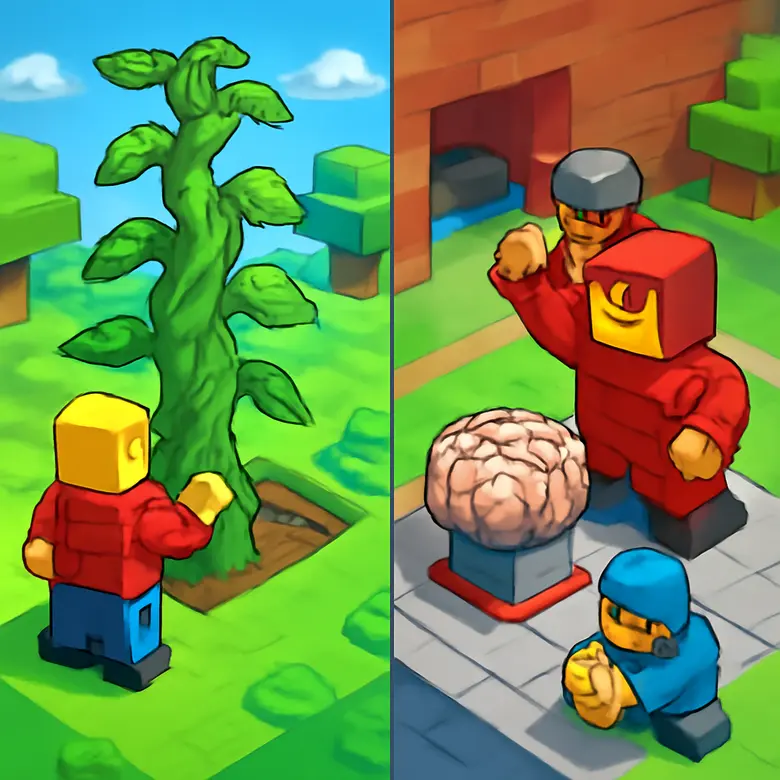
Choose Grow Beanstalk for Brainrots if you want a relaxing, solo-focused collecting game with satisfying vertical progression. The beanstalk climbing, cloud collecting, and Fuse Machine create a zen-like grind loop that rewards patience. The rebirth system keeps each session fresh, and the mutation rarity tiers give collectors a long-term chase. Just be aware that Lucky Blocks push the monetization toward gacha-style spending.
Choose Steal a Brainrot if you thrive on social chaos, PvP competition, and the rush of stealing someone's prized brainrot right out from under them. It has ten times the player base, nearly a year of content updates, and a gameplay loop that generates genuinely unpredictable moments every session. The monetization is more transparent, but the PvP can be frustrating for players who just want to build in peace.
Overall: These games share a theme but almost nothing else. Grow Beanstalk is the brainrot game you play to unwind. Steal a Brainrot is the brainrot game you play to cause problems. Both are free to try, and given how different they are, plenty of players bounce between both depending on their mood. The brainrot genre is big enough for both to thrive.
Who Should Play What?
- You enjoy collecting and completionist goals: Grow Beanstalk for Brainrots, because the rarity tiers, mutations, and Fuse Machine create a deep collection grind.
- You want chaotic PvP and social drama: Steal a Brainrot, because the stealing mechanic generates constant tension and hilarious moments.
- You are a solo player who dislikes PvP: Grow Beanstalk for Brainrots, because there is zero player-vs-player interaction.
- You want the most content and the biggest community: Steal a Brainrot, because nearly a year of updates has built a massive game with seasonal events, concerts, and a thriving social scene.
- You enjoy gambling on rare drops: Grow Beanstalk for Brainrots, because Lucky Blocks offer that gacha rush (if you have the Robux for it).
- You want transparent monetization: Steal a Brainrot, because its game passes tell you exactly what you get before you pay.
- You want to earn Robux for either game: Head to Earnaldo and start earning — works for both.
Frequently Asked Questions
Steal a Brainrot is far more popular by every metric. It averages around 369,000 concurrent players and peaked at over 24 million CCU. Grow Beanstalk for Brainrots averages roughly 38,000 concurrent players. Steal a Brainrot has been live for nearly a year longer and has built one of the largest player bases on Roblox.
Grow Beanstalk for Brainrots is the stronger solo experience. It focuses on beanstalk climbing, cloud collecting, and base building with no PvP interference. Steal a Brainrot is designed around stealing from other players, meaning your progress is constantly at risk from opponents.
Lucky Blocks are purchasable loot boxes that give you random brainrots. They come in four tiers: OP (155 Robux), Mythic (19 Robux), Exotic (99 Robux), and Secret (339 Robux). Each tier has different drop tables with increasing chances at rarer brainrot characters. Free players can still earn all rarities through regular gameplay.
Steal a Brainrot is more F2P-friendly in terms of core gameplay access. Grow Beanstalk for Brainrots sells Lucky Blocks from 19 to 339 Robux that provide shortcuts to rare brainrots. Steal a Brainrot has game passes like VIP for 499 Robux, but the stealing and building mechanics are fully accessible without spending. Both games are playable for free.
Yes. Both games run on iOS and Android through the Roblox app. Steal a Brainrot also has a dedicated App Store listing. Both support PC, Mac, Xbox, and PlayStation as well.
Steal a Brainrot currently offers deeper long-term replay value thanks to PvP dynamics, seasonal events, and nearly a year of content updates. Grow Beanstalk for Brainrots has strong short-session replay through its rebirth system, mutation hunting, and Fuse Machine, but has less total content at this stage.
About This Comparison
This comparison was last updated on March 29, 2026. Player counts and game features change with updates, and both development teams may adjust mechanics in future patches. For more on each game, visit our Grow Beanstalk for Brainrots guide or the Steal a Brainrot guide. Got feedback? Let us know on the Earnaldo Discord.