Hooked vs Blade Ball (2026) -- Which Roblox Game Is Better?
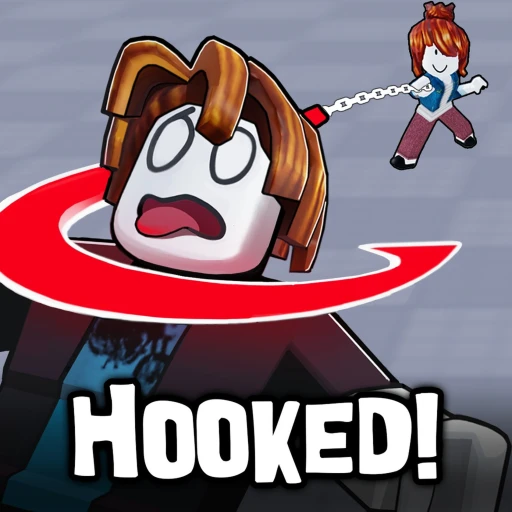
Two arena PvP games built on fundamentally different combat philosophies. Hooked hands you a grappling hook and drops you into hazard-filled arenas where you swing, pull, and launch opponents into lava pits and spike walls. It launched in February 2026 from World Tier 1 Game and has racked up 145.6 million visits (as of August 5, 2026) with a team-based, movement-heavy identity that rewards creative traversal. Blade Ball puts a lethal homing orb in the center of the arena and challenges you to deflect it back at opponents with precise timing. It has 6.3 billion visits, a deep ability system, and one of the most active competitive communities on Roblox.
These games compete for the same audience — players who want fast, skill-based PvP with short round times and high replay value. But the moment-to-moment experience could not be more different. Hooked is about spatial awareness, environmental kills, and team coordination. Blade Ball is about reaction speed, cooldown management, and individual clutch plays. One game makes you feel like Spider-Man with a grudge. The other makes you feel like a gladiator in a dodgeball arena designed by someone who hates you. Here is how they compare across every category that matters in 2026.
Hooked vs Blade Ball -- Quick Stats (2026)
| Category | Hooked | Blade Ball |
|---|---|---|
| Genre | Grappling hook PvP arena | Deflection PvP arena |
| Developer | World Tier 1 Game | Wiggity |
| Place ID | 70390793715007 | 13772394625 |
| Total Visits (as of Aug 5, 2026) | 145.6M+ | 6.3B+ |
| Concurrent Players (as of Aug 5, 2026) | ~2,350 | ~17,150 |
| Approval Rating (as of Aug 5, 2026) | 84% | 94% |
| Created | February 2026 | 2023 |
| Core Loop | Grapple, swing, knock into hazards | Deflect orb, eliminate opponents |
| Team Modes | Yes (primary focus) | Yes (secondary to FFA) |
| Skill/Ability System | 6 hook rarities, 4 skill rarities | Ability gacha with rarity tiers |
| S-Tier Abilities | Bolt Dash, Black Hole, Heal | Telekinesis, Rapture |
| Hazards | Lava, spikes, environmental traps | Accelerating orb |
| Mobile-Friendly | Yes | Yes |
| Free-to-Play | Yes | Yes |
Gameplay -- What Do You Actually Do?
Hooked
Hooked gives you a grappling hook and tells you to survive. The hook is not a gimmick bolted onto standard PvP — it is the entire movement system. You aim, fire, and swing from anchor points scattered across the map to traverse arenas filled with lava pools, spike walls, and crumbling platforms. The hook also functions as a weapon: latch onto an opponent and yank them off a ledge, pull them into a spike trap, or use the momentum to slam them into a wall. Every elimination in Hooked involves the environment in some way, and that creates a style of PvP that feels distinct from anything else on Roblox right now.
The arenas are purpose-built for grappling hook combat. Vertical space matters as much as horizontal positioning. High anchor points let you gain altitude advantage, low platforms near lava force risky close-range engagements, and narrow bridges create chokepoints where a well-timed hook pull means instant death. Map knowledge is a legitimate skill differentiator — veterans know which anchor points chain together for fast traversal, which sight lines expose you to pulls, and which hazards can be weaponized from unexpected angles. The arena design carries a lot of the game's strategic weight.
Team-based modes are the primary competitive format. You coordinate with teammates to control map zones, protect allies who are low on health, and set up combination plays where one player pulls an opponent into a position where a teammate finishes them off. The team dynamics add a layer that solo-focused arena games lack. Communication and positioning matter, and a coordinated squad will consistently beat a group of individually skilled players who refuse to work together. The grappling hook creates a movement skill ceiling that takes genuine practice to approach — smooth, fast traversal through complex arenas separates new players from experienced ones immediately.
Blade Ball
Blade Ball strips competitive PvP down to a single mechanic and builds everything around it. A glowing homing orb targets one player at a time, accelerating toward them until they deflect it with a precisely timed button press. A successful deflect redirects the orb at another player, starting a rally that gets faster with each successful return. Miss the deflect window and you are eliminated. Last player standing wins. The core loop is pure reaction time and nerve — watching the orb barrel toward you, waiting for the exact frame to deflect, and then tracking where it goes next.
The ability system layers strategic depth onto the deflection foundation. Players equip abilities from a pool that includes dashes, teleports, shields, slows, and area-of-effect utilities. Abilities run on cooldowns and must be timed around the orb's behavior. Using a dash to dodge a difficult deflect angle, activating a shield to survive a speed burst you cannot react to, or slowing the orb to give yourself more deflection time — these decisions separate high-level play from casual button mashing. The meta revolves around which abilities are strongest in the current balance patch, and the community produces tier lists that shift with every update.
Blade Ball supports both free-for-all and team modes, though the FFA experience is the core identity. Solo rounds distill the game to its purest form: you against everyone, with nothing but your timing and ability usage to keep you alive. Team modes add a coordination element but feel secondary to the individual skill expression that defines Blade Ball at its best. The game has been around since 2023, and three years of balance patches, ability additions, and meta evolution have produced a competitive ecosystem with real depth.
Skills and Abilities -- Build Diversity
Hooked
Hooked uses a dual-layer progression system with both hook rarities and skill rarities. Hooks come in six rarity tiers, and higher-rarity hooks provide functional differences in grapple speed, range, pull strength, and cooldown recovery. The gap between a common hook and a legendary hook is noticeable — veterans swinging on rare hooks move through arenas with a fluidity that newer players simply cannot match until they upgrade. Skills come in four rarities and provide active abilities on cooldowns.
The current S-tier skills are Bolt Dash, Black Hole, and Heal. Bolt Dash gives you an instant-reposition tool that works as both an escape and an engagement opener — the burst of speed paired with a quick hook follow-up creates combo potential that opponents struggle to react to. Black Hole pulls nearby enemies toward a central point, and when you deploy it near a lava pit or spike wall, the results are devastating. Heal sustains you through extended team fights where attrition damage accumulates. These three skills define the meta, though lower-rarity versions of other skills can still contribute in team compositions that value utility over raw power.
The rarity system is a double-edged design choice. It gives players long-term goals and makes rare drops feel meaningful. But it also means that two equally skilled players can have unequal loadouts, and the player with higher-rarity hooks and skills has a tangible advantage. Hooked is still early in its lifecycle, and how the developers handle rarity balance over the coming months will determine whether the system adds satisfying progression or creates frustrating power gaps.
Blade Ball
Blade Ball's ability system has matured over three years of updates and rebalancing. The pool is large, abilities vary from common to mythic rarity, and the meta shifts meaningfully with each balance patch. Telekinesis lets you freeze the orb mid-flight and redirect it manually — skilled Telekinesis users can target specific opponents with precision that standard deflection cannot match. Rapture creates an area burst that affects multiple players simultaneously, making it a dominant pick in crowded late-round situations. The top-tier abilities provide genuine tactical advantages that lower-tier abilities cannot replicate.
Ability acquisition runs through a gacha-style spin system. You earn spins through gameplay and use them to randomly roll abilities from the pool. Higher-rarity abilities have lower drop rates, creating a grind-for-power dynamic that the competitive community has debated since launch. Game passes that increase spin rates or allow additional equipped ability slots accelerate progression for paying players. The system works well as a long-term engagement driver — chasing a specific mythic ability gives you a reason to keep playing — but the randomization means two players with identical time invested can have wildly different loadouts.
Edge: Blade Ball for overall build diversity and meta depth. Three years of development have produced a larger and more nuanced ability pool. Hooked for environmental interaction — the grappling hook system creates emergent combat scenarios that no ability in Blade Ball can replicate. The grapple-into-hazard kills in Hooked produce moments that feel genuinely creative in a way that Blade Ball's deflection system, by design, does not.
Map Design and Environmental Hazards
This is where Hooked separates itself from nearly every arena PvP game on Roblox. The maps are not backdrops — they are weapons. Lava pools occupy the low ground and punish players who lose grapple battles over contested space. Spike walls line corridors and serve as instant-kill zones for anyone pulled into them. Crumbling platforms force you to keep moving and prevent camping. The arenas are designed with verticality that the grappling hook exploits beautifully: elevated platforms connected by anchor point chains, multi-level structures with hazard zones on every floor, and open skyboxes that let skilled grapple users take fights into three dimensions.
The environmental kill is Hooked's signature moment. Pulling an opponent into lava as they try to cross a narrow bridge. Swinging behind someone and launching them into a spike wall before they can react. Using Black Hole near a cliff edge and watching three opponents get dragged off simultaneously. These moments happen organically and feel earned because they require map knowledge, positioning, and hook accuracy to execute. The environment is the ultimate equalizer — a lower-rarity player who knows the map can outplay a higher-rarity opponent who treats the arenas as flat ground.
Blade Ball's arenas are clean and functional. The circular design serves the deflection mechanic well — clear sight lines, even spacing, and enough room to maneuver without the orb getting stuck on geometry. Map variety comes through aesthetic themes rather than gameplay-altering features. Some arenas include minor elevation changes or obstacles that affect orb pathing, but the environment is not a weapon in the way it is in Hooked. Blade Ball's design philosophy keeps the focus on the orb and abilities rather than map interaction, and that is a valid choice — but it means the arenas themselves rarely produce memorable moments.
Edge: Hooked, and it is not close. The environmental hazard system creates a layer of strategic depth that Blade Ball does not attempt. If you value map-based gameplay and environmental kills, Hooked delivers an experience that no other arena PvP game on Roblox currently matches.
Player Count and Community (August 2026)
Blade Ball is the established titan. 6.3 billion visits accumulated over three years, around 17,000 concurrent players on a typical day with peaks exceeding 200K during major events (as of August 5, 2026), and a community infrastructure that includes tournament Discord servers, tier list databases, content creator partnerships, and an active competitive scene. The game appears regularly in Roblox's top charts and has maintained its player base through consistent updates, seasonal events, and ability additions that keep the meta fresh. For codes and tips, see our Blade Ball free Robux guide.
Hooked has grown into a mid-sized contender. 145.6 million visits since its February 2026 launch (as of August 5, 2026), holding around 2,350 concurrent players, confirms that the game has found product-market fit in the arena PvP space. The community is still maturing — Discord servers are active but smaller than Blade Ball's, content creators are beginning to produce hook trick-shot compilations and skill tier lists, and the competitive scene is in its earliest stages. The player base skews toward players who enjoy movement-heavy games and team-based coordination. For earning strategies while you play, check our Hooked free Robux guide.
The raw numbers favor Blade Ball overwhelmingly. But context matters: Blade Ball has a three-year head start and launched during a period of massive Roblox growth. Hooked is about six months old and competing in a crowded PvP category, yet it has multiplied its visit count many times over since spring 2026. The relevant comparison is not total visits but growth rate, and Hooked's numbers suggest it has the staying power to hold a permanent place in the Roblox arena PvP landscape. Whether it can ever challenge Blade Ball's scale remains an open question.
Progression and Grinding
Hooked's progression system revolves around acquiring higher-rarity hooks and skills. Gameplay rewards include currency for purchasing spins and direct drops from match performance. The six-tier hook rarity system means that upgrading your primary tool is a long-term pursuit — each tier provides measurable improvements in grapple speed, range, and pull force. The four-tier skill rarity system follows a similar structure, with higher rarities offering stronger effects and shorter cooldowns. The grind is real but purposeful: every upgrade makes your character feel noticeably more capable.
The early-game progression curve is well-designed. Common hooks and skills are functional enough to compete, and the arenas reward map knowledge and mechanical skill enough that a smart player with common gear can outperform a reckless player with rare gear. But the mid-to-late game progression narrows, and getting the specific legendary hook or S-tier skill you want requires either significant time investment or favorable RNG. This is standard for Roblox progression systems, but it is worth noting for players who expect purely skill-based competition.
Blade Ball's progression has had three years to mature, and it shows. The ability spin system is deep, with enough abilities in the pool that collecting and experimenting is a meta-game unto itself. Seasonal battle passes provide structured reward tracks, limited-time abilities create urgency and FOMO dynamics, and the ranked system gives competitive players a ladder to climb that reflects genuine skill improvement. The progression system is more refined than Hooked's because it has had far more time to be iterated on — but the core gacha mechanic for ability acquisition remains the most controversial element among competitive players who want pure skill-based matchmaking.
Edge: Blade Ball for progression variety and polish. Hooked for the visceral satisfaction of each individual upgrade — going from a common hook to a rare hook fundamentally changes how you move through arenas, and that transformation feels more impactful than unlocking a new ability in Blade Ball's already-large roster.
Team Play vs Solo Play
This is the sharpest philosophical divide between the two games. Hooked was built team-first. The grappling hook system creates natural opportunities for team coordination that most Roblox PvP games struggle to manufacture. Pulling an opponent into your teammate's attack range, using Heal to sustain a frontline player who is controlling a chokepoint, deploying Black Hole to cluster enemies for your team to finish — these plays require communication and trust, and they feel incredible when they connect. Team fights in Hooked have a flow and rhythm that solo encounters lack, and the developers clearly designed the skill system to encourage cooperative play.
Blade Ball's identity is the solo clutch. The orb targets one player at a time, and the deflection moment is an individual performance under pressure. Team modes exist, but the game's most iconic moments — last-player-standing comebacks, insane multi-deflect rallies, frame-perfect saves at maximum orb speed — are solo achievements. Blade Ball does for reaction time what Hooked does for spatial awareness: it isolates a specific skill and builds an entire competitive framework around testing it. The solo experience is where Blade Ball shines brightest, and the community reflects that with individual highlight reels and 1v1 tournament formats.
Edge: Hooked for team play, definitively. Blade Ball for solo play, definitively. This is the comparison category most likely to determine which game you prefer. If you play Roblox primarily with a friend group, Hooked gives you more opportunities to cooperate meaningfully. If you play to test yourself as an individual competitor, Blade Ball is purpose-built for that.
Monetization and Game Passes
Hooked's monetization is still taking shape given the game's early lifecycle. The current model includes premium currency for accelerated spins, cosmetic purchases for hook skins and character effects, and likely a battle pass structure coming in future updates. The hook and skill rarity system creates a natural monetization pathway: players who want higher-rarity gear faster can spend, while free players grind for the same items over time. The balance between free and paid progression will be a defining factor in the game's long-term reputation.
Blade Ball's monetization is mature and well-understood by the community. The Ability Slots pass (299 Robux) provides a functional advantage by letting you equip more abilities simultaneously. The Spin Booster (199 Robux) increases your odds of rolling rare abilities. The seasonal Battle Pass (249 Robux) offers a mix of cosmetic and functional rewards. The monetization is not predatory — free players can access all content given enough time — but the functional game passes create a spend-to-progress dynamic that competitive purists find objectionable. Three years of community feedback have refined the monetization into something that works for casual and moderate spenders without completely alienating free players.
Neither game is pay-to-win in the traditional sense. Both allow free players to compete effectively. But both incorporate rarity-based progression systems that reward spending with faster access to stronger gear and abilities. If purely cosmetic monetization is your standard, neither game meets it.
Graphics and Performance
Hooked looks good for a game that launched in early 2026. The grappling hook animations are smooth and responsive, the environmental hazards are visually distinct with clear danger indicators, and the arena designs use color and lighting to communicate gameplay information effectively. Lava glows warm orange, spikes are sharp and metallic, and anchor points for grappling are highlighted so you can identify them during fast-paced swings. The team-colored visual language makes it easy to distinguish allies from enemies in crowded fights. Performance is solid on mid-range devices, though complex arenas with many simultaneous grapple animations can cause frame dips on lower-end hardware.
Blade Ball has the visual polish of a game that has been continuously updated for three years. Particle effects on abilities are flashy and satisfying, the orb itself is a masterclass in visual design — always visible, always threatening, with speed indicators that communicate urgency through glow intensity and trail length. Arena aesthetic themes range from neon-lit futuristic to dark fantasy, and seasonal cosmetics add visual prestige. The game runs well across devices and has been optimized through years of performance patches. High-tier skins and ability effects turn competitive matches into visual spectacles that translate well to content creation.
Blade Ball's visual maturity is evident. Hooked's visual design is strong for its age but has room to grow as the developers add polish and variety.
Replay Value -- Will You Still Play Next Month?
Hooked's replay value rests on two pillars: the skill ceiling of grappling hook movement and the variety of environmental interaction. Mastering the hook is a long-term pursuit — the difference between a player who has grappled for ten hours and one who has grappled for a hundred hours is visible in their movement speed, route selection, and combat creativity. The arenas reward exploration and experimentation, and discovering new hook routes or environmental kill setups keeps the game feeling fresh long after you have learned the basics. Team play adds another dimension that solo games cannot offer: the dynamics of coordinated team fights evolve as your squad develops synergy and communication.
The risk for Hooked's replay value is content volume. As a new game, the map pool and skill roster are smaller than what Blade Ball offers. If updates add new arenas, hook types, and skills at a steady pace, the replay value will compound. If updates slow, the smaller content pool will become apparent faster than it would for a game with three years of accumulated content.
Blade Ball's replay value is proven over three years. The ability meta shifts regularly, seasonal content creates return incentives, and the ranked ladder provides structural motivation for competitive players. The skill ceiling on deflection timing is high enough that improvement is always possible, and the community's competitive infrastructure — tournaments, leaderboards, tier lists — gives that improvement external validation. Blade Ball has demonstrated the rare ability to retain players across years rather than months, and that track record speaks louder than any feature comparison.
Earning Free Robux While You Play
Both Hooked and Blade Ball feature natural downtime between rounds — matchmaking queues, team selection screens, and post-round scoreboards provide windows where you can complete quick tasks on Earnaldo to earn free Robux. The round-based structure of both games means you never have to leave mid-match to take advantage of earning opportunities.
For game-specific earning strategies paired with gameplay, see our Hooked free Robux guide and Blade Ball free Robux guide.
Earn Free Robux for Hooked or Blade Ball
Complete simple tasks on Earnaldo and withdraw real Robux -- no downloads, no generators, no scams.
Head-to-Head Verdict -- Hooked vs Blade Ball in 2026
The Verdict
Choose Hooked if you want a PvP game that rewards creative movement and team coordination. The grappling hook system is unlike anything else on Roblox, the environmental hazards transform arenas into weapons, and the team-based focus creates opportunities for coordinated plays that solo-centric games cannot match. With more than 145 million visits since its February 2026 launch (as of August 5, 2026), Hooked has proven that its core concept works. S-tier skills like Bolt Dash, Black Hole, and Heal give you meaningful build choices, and the six-tier hook rarity system provides a clear progression path that makes you visibly better as you invest time. It is the best team-based arena PvP game on Roblox right now.
Choose Blade Ball if you want a proven competitive game with deep ability systems and a massive player base. Over 6.3 billion visits, three years of updates, and a thriving tournament scene make Blade Ball the safe bet for players who want a game with staying power and community infrastructure already in place. The deflection mechanic is elegantly simple at its core but incredibly deep at high levels, and the ability system provides enough build variety to keep the meta interesting month after month. Abilities like Telekinesis and Rapture define a competitive tier list that rewards both knowledge and execution. It is the gold standard for solo-focused arena PvP on Roblox.
The bottom line: Hooked is the better game for movement-lovers, team players, and anyone who values environmental interaction in their PvP. Blade Ball is the better game for solo competitors, reaction-time specialists, and players who want a mature competitive ecosystem. Hooked is the exciting newcomer with a unique identity and massive upside. Blade Ball is the established champion with depth, polish, and a proven track record. Play both, decide what matters more to you, and let your playstyle guide the choice.
Who Should Play What?
- You want team-based PvP with real coordination: Hooked. The grappling hook and skill system are built for team play in a way Blade Ball does not match.
- You want solo competitive PvP with a skill ladder: Blade Ball. The ranked system and individual deflection mechanics are purpose-built for solo climbers.
- You love movement mechanics and parkour-style gameplay: Hooked. The grappling hook creates a movement skill ceiling that rewards hundreds of hours of practice.
- You want a game with proven longevity and a large community: Blade Ball. Three years of updates and 6.3 billion visits provide confidence the game will be here next year.
- You enjoy environmental kills and map-based strategy: Hooked. Lava, spikes, and crumbling platforms are weapons you learn to master.
- You want the deepest ability and build system: Blade Ball. The larger ability pool and mature meta offer more theorycrafting opportunities.
- You play primarily with a friend group: Hooked. Team modes are the core experience, not an afterthought.
Frequently Asked Questions
Blade Ball leads with 6.3 billion total visits compared to Hooked's 145.6 million (as of August 5, 2026). However, Hooked only launched in February 2026 and has grown fast, climbing past 145 million visits in roughly six months. Blade Ball has a three-year head start and is the more established game, holding around 17,000 concurrent players to Hooked's 2,300. The raw numbers still favor Blade Ball by a wide margin.
Hooked's grappling hook combat emphasizes mobility, environmental interaction, and spatial creativity. You swing over hazards, pull opponents into lava, and chain hook movements for fluid traversal. Blade Ball's deflection combat focuses on reaction speed, timing precision, and ability management. Both systems are well-designed for their respective goals. Hooked rewards creative movement; Blade Ball rewards clutch timing.
Hooked has a steeper initial learning curve because grappling hook movement takes real practice to master. However, team modes let new players contribute while learning. Blade Ball is simpler to understand at a surface level — deflect the ball when it targets you — but the ability meta and high-level timing create a significant skill gap. New players get eliminations faster in Blade Ball but feel useful in team fights faster in Hooked.
Yes, both games are fully playable on mobile through the Roblox app on iOS and Android. Hooked's grappling hook aiming can be slightly more challenging on touchscreen compared to controller or keyboard, but the controls are well-optimized. Blade Ball's deflection timing works well with responsive tap controls. Neither game requires a PC to compete at a reasonable level.
The current S-tier skills are Bolt Dash, Black Hole, and Heal. Bolt Dash provides instant repositioning for offense and defense. Black Hole pulls nearby enemies toward a point, enabling devastating environmental kills near lava or spikes. Heal sustains you through extended team fights. Skills come in four rarities, with higher rarities offering stronger effects and shorter cooldowns.
Hooked is the stronger friend group game because of its dedicated team modes. Coordinating grapple combos, protecting teammates, and developing strategies around environmental hazards create genuine cooperative gameplay. Blade Ball is primarily free-for-all where everyone is an opponent, though team modes exist as secondary options. If you want to fight alongside your friends, Hooked is the clear pick.