Natural Disaster Survival vs Tower of Hell (2026) — Which Roblox Game Is Better?
Last checked: August 17, 2026
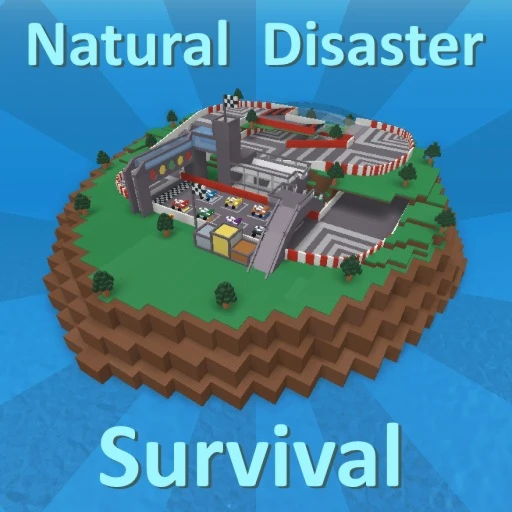
Short answer: Natural Disaster Survival is the better pick if you want a laid-back, chaotic survival experience where you react to random catastrophes with friends. Tower of Hell is the better pick if you want a mechanically demanding solo challenge that rewards precision platforming and speed. Both games have stood the test of time on Roblox, but they scratch completely different itches.
Natural Disaster Survival and Tower of Hell sit on opposite ends of the Roblox difficulty spectrum. One drops you onto a crumbling island and asks you to stay alive while earthquakes, tsunamis, and volcanic eruptions tear the map apart. The other stacks a randomly generated tower in front of you and says "climb it with zero checkpoints before time runs out." Both are massively popular. Both are free. And both have been keeping players coming back for years.
This guide breaks down every meaningful difference between these two games so you can figure out which one deserves your time — or whether both belong in your rotation.
Quick Stats Comparison
| Category | Natural Disaster Survival | Tower of Hell |
|---|---|---|
| Genre | Survival simulation | Competitive obby / platformer |
| Developer | Stickmasterluke | YXCeptional Studios |
| Roblox Place ID | 189707 | 1962086868 |
| All-Time Visits (Aug 17, 2026) | 4.40 billion | 28.45 billion |
| Concurrent Players (Aug 17, 2026) | ~6,340 live; 9,208 7-day median | ~51,800 live; 34,970 7-day median |
| Player Rating | 90.8% | 73.6% |
| Core Mechanic | Survive random disasters | Precision platforming, no checkpoints |
| Match Length | ~2-4 minutes per round | ~8 minutes per round |
| Difficulty | Low-moderate | High-extreme |
| Team Play | Cooperative lobbies | Solo (competitive lobbies) |
| Game Passes | Minimal | Double jump, cosmetics, Pro Towers |
| Pay-to-Win? | No | No |
| Mobile Friendly | Excellent | Good for casual, PC for speedruns |
| Edge | Accessibility, casual fun, social chaos | Skill ceiling, solo replayability, fast rounds |
Gameplay Overview
Natural Disaster Survival
Natural Disaster Survival (NDS) is one of the oldest continuously active games on Roblox. Created by Stickmasterluke and first published in 2008, the concept is straightforward: a group of players spawns on a map, a random disaster strikes, and everyone scrambles to survive. Disasters range from earthquakes that fracture the terrain, to tsunamis that flood entire islands, to volcanic eruptions that rain fire from the sky, to tornadoes that rip structures apart and fling players into the void.
Each round plays out in roughly two to four minutes. You get a brief moment to survey the map and position yourself before the disaster type is announced. From there, it is pure reactive gameplay — finding high ground during floods, sheltering inside structures during meteor showers, climbing to rooftops when the earthquake starts breaking the foundation beneath you. The game rotates through a pool of maps and disaster types, so the specific combination changes every round.
With 4.4 billion all-time visits and a 90.8% approval rating, NDS has aged remarkably well. The formula works because it is instantly understandable, genuinely funny when things go wrong, and satisfying when you manage to be one of the last players standing on a tiny sliver of intact terrain while everything else has been reduced to rubble.
Tower of Hell
Tower of Hell, developed by YXCeptional Studios, is a competitive obby that strips away every safety net the genre typically provides. At the start of each round, the game procedurally generates a tower by stacking randomly selected sections on top of each other, creating a unique climbing challenge every time. Players have eight minutes to reach the top. There are no checkpoints — fall from near the summit and you restart from the ground floor.
The appeal is deceptively simple: climb faster than everyone else. But beneath that simplicity sits serious mechanical depth. Each of the 30+ tower section designs has optimal routes, skip paths, and precision jumps that separate beginners from veterans. Learning the sections is half the battle. Executing them consistently under the pressure of a ticking clock, other players bumping into you, and the knowledge that one missed jump erases all your progress — that is where the real skill expression lives.
Tower of Hell has amassed over 28.45 billion visits as of August 17, 2026, making it one of the most-visited games in Roblox history. Its approval rating is a lot rougher than NDS's, though — 73.6%, from 4.30 million upvotes against 1.55 million downvotes. That is the signature of a genuinely hard game: plenty of players bounce off it and say so. The no-checkpoint philosophy has become its defining feature, creating a punishing but deeply rewarding gameplay loop that hooks competitive players round after round.
Gameplay and Core Mechanics
The fundamental difference between these two games comes down to what you are doing moment to moment and how much direct control you have over the outcome.
Natural Disaster Survival is built on environmental awareness and reactive positioning. When a tsunami warning appears, you need to get to high ground. When a meteor shower starts, you need to find overhead cover. When an earthquake hits, you need to get away from tall structures that might collapse. The skill is in reading the situation quickly and making smart positioning decisions. There is no combat, no building, and no complex movement mechanics. You run, you jump over debris, and you find the safest spot you can.
Luck plays a meaningful role in NDS. Sometimes your spawn puts you right next to the perfect shelter. Other times the earthquake cracks the ground directly beneath your feet before you can react. The disaster type, map layout, and your starting position all create a random cocktail that makes each round feel different — but also means your survival is not always entirely in your hands. That randomness is part of the charm for casual players and part of the frustration for competitive ones.
Tower of Hell is built on platforming precision and muscle memory. The entire gameplay loop is movement: jumping, timing, spatial awareness, and route optimization. There is no randomness in execution — if you fall, it is because you missed a jump, not because the game decided to throw a curveball. The tower sections are randomly selected, but once you see which sections are in the tower, the challenge is 100% mechanical. Your success depends entirely on your skill.
Tower of Hell also features mutators that change the rules each round. Some rounds disable walking on certain colored platforms. Others add low gravity, faster movement speed, or inverted controls. These modifiers keep even experienced players from running on autopilot and force adaptation every round. Edge: Tower of Hell for mechanical depth. Edge: Natural Disaster Survival for accessibility and pickup-and-play simplicity.

Difficulty and Challenge
This is where the two games diverge most dramatically.
Natural Disaster Survival has a low barrier to entry. If you can move your character and jump, you can play NDS. The game does not demand frame-perfect inputs, memorized routes, or hundreds of hours of practice. Most players can survive their first round by doing something basic like climbing to the highest point on the map. The difficulty comes from learning which strategies work for each disaster type and which maps have the best survival spots — knowledge that accumulates naturally through play.
The hardest moments in NDS happen when multiple factors stack against you: a tornado spawns right on top of you, the ground beneath your safe spot collapses during an earthquake, or a tsunami catches you in a flat area with no high ground nearby. These moments are intense but brief, and even total failure just means waiting a minute or two for the next round.
Tower of Hell has one of the steepest difficulty curves on the entire Roblox platform. New players routinely spend entire rounds unable to clear the first two or three sections. The no-checkpoint design means a single mistake at any point — including one jump from the top — sends you all the way back to the ground. The game does not ease you in. It throws you at the tower and lets you figure it out through repetition and failure.
The difficulty curve in Tower of Hell is long and steep. Your first tower completion might take days of practice. Getting consistent completions might take weeks. Competing with top players for speed takes months or longer. Pro Towers add even harder section variants for players who have mastered the standard ones. The ceiling is so high that the gap between a casual player and a top-tier speedrunner is measured in minutes of completion time. Edge: Tower of Hell for players who want a genuine challenge. Edge: Natural Disaster Survival for players who want fun without frustration.
Progression Systems
Natural Disaster Survival keeps its progression minimal by design. There is no leveling system, no battle pass, and no complex unlock tree. The game tracks your survival stats, and surviving rounds is its own reward. Stickmasterluke deliberately kept the game lean — the focus is entirely on the round-to-round experience rather than external progression hooks. This design philosophy has kept NDS feeling timeless but also means there is less pulling you forward between sessions compared to games with deeper progression.
The lack of progression systems is both a strength and a weakness. On the plus side, every player is on equal footing regardless of playtime. A day-one player has the same tools and abilities as someone with thousands of hours. On the downside, players who are motivated by unlocking things and tracking progress will find NDS thin on that front.
Tower of Hell offers a more structured progression path. Coins earned from completing towers and reaching milestones purchase cosmetic items, trail effects, and gear skins from the in-game shop. Pro Towers award a 2.5x coin multiplier, incentivizing players to push into harder content. The double jump ability, available as a Robux purchase, opens up new movement options and skip routes that change how you approach sections.
Seasonal events and limited-time challenges introduce exclusive cosmetic rewards, and promo codes periodically drop free items. The overall monetization is light — you can enjoy Tower of Hell fully without spending — but the cosmetic progression gives you visible goals to work toward between skill milestones. Edge: Tower of Hell for structured progression. Edge: Natural Disaster Survival for no-pressure, everyone-on-equal-footing design.
Player Count and Popularity
By raw numbers, Tower of Hell dominates. Its 28.45 billion all-time visits dwarf NDS's 4.40 billion, and it consistently maintains higher concurrent player counts — a 7-day median of about 34,970 against NDS's 9,208, measured on August 17, 2026. Tower of Hell regularly appears in the top games on Roblox's front page, and its YouTube and TikTok presence is substantial — speedrun clips, challenge videos, and compilation content generate millions of views.
However, NDS's numbers tell a different story when you consider context. The game launched in 2008, making it one of the oldest active games on the platform. Accumulating 4.4 billion visits over that timespan with minimal marketing, no influencer campaigns, and almost no monetization is remarkable. NDS's 90.8% approval rating is also notably high — and notably higher than Tower of Hell's 73.6% — reflecting a player base that genuinely enjoys what the game offers rather than one driven by hype cycles.
Tower of Hell benefits from the competitive obby genre's massive popularity surge in recent years, plus its inherent virality — watching someone fall from the top of a tower after eight minutes of climbing is inherently shareable content. NDS benefits from being a timeless classic that parents, older players, and new Roblox users alike discover and enjoy. Edge: Tower of Hell for sheer scale. Edge: Natural Disaster Survival for enduring community loyalty and approval rating.
Game Passes and Monetization
Natural Disaster Survival takes an almost hands-off approach to monetization. The game does not push game passes or premium purchases aggressively. There are no pay-to-win elements, no battle passes, and no seasonal purchase cycles. What you see is what you get — a free survival game that stays free in practice as well as in theory. For players who are tired of every Roblox game funneling them toward Robux purchases, NDS is refreshingly clean.
Tower of Hell monetizes more, but stays on the fair side of the line. The biggest gameplay-relevant purchase is double jump, which costs Robux and gives you an extra jump in midair. This opens up skip routes and recovery options that are impossible without it, which some players view as a competitive advantage. Cosmetic items, trail effects, and other visual customizations round out the shop. Pro Tower access and coin multipliers provide progression incentives for spending players.
Neither game is pay-to-win. NDS has essentially nothing to buy. Tower of Hell's purchases are either cosmetic or convenience — the double jump is useful, but plenty of top players prove that mechanical skill alone is enough to dominate. Edge: Natural Disaster Survival for truly free gameplay. Edge: Tower of Hell for optional cosmetic customization.
Social Features and Community
Natural Disaster Survival is inherently social in a way that Tower of Hell is not. When a tsunami floods the map and six players are clinging to the roof of the same building, there is a shared experience happening — everyone is in the same disaster together, watching the water rise, hoping the structure holds. The chaos creates natural comedy. Players get launched by tornadoes, crushed by falling debris, and swept away by floods in ways that are genuinely funny to witness and experience. NDS is one of those games that gets better with friends on voice chat, laughing at each other's misfortunes.
The NDS community is wholesome and nostalgia-driven. Many current players first discovered the game years ago and return periodically because it remains exactly as they remember it. The game's simplicity makes it a common recommendation for new Roblox players, keeping a steady stream of fresh faces in lobbies.
Tower of Hell's social dynamic is competitive rather than cooperative. You share a lobby with other players, but you are racing against them, not working with them. The social expression comes from competition — reaching the top before someone else, pulling off a clutch recovery that the whole lobby watches, or falling from the final section while everyone else has already finished. The community gravitates toward speedrunning, sharing optimal routes on YouTube, and comparing personal best times.
Tower of Hell's content creator ecosystem is larger and more active than NDS's. Speedrun compilations, challenge runs (completing towers blindfolded, one-handed, or without double jump), and reaction videos drive consistent viewership. The competitive nature gives content creators a natural narrative: will they make it or won't they? Edge: Natural Disaster Survival for cooperative, shared social moments. Edge: Tower of Hell for competitive community and content creation.
Replay Value
Natural Disaster Survival's replay value comes from the randomness of each round. The combination of map, disaster type, and player positioning means no two rounds are identical. The game is endlessly replayable in short bursts — you can jump in for ten minutes, survive a handful of disasters, and log off satisfied. The low-commitment round structure makes it a perfect "I have fifteen minutes before dinner" game.
The flip side is that NDS's gameplay loop is shallow compared to more complex games. Once you have learned the survival strategies for each disaster type (get high for floods, get under cover for meteors, stay away from structures for earthquakes), the game does not have much more to teach you. Long-term replay value depends on whether the moment-to-moment chaos continues to entertain you, which varies by player.
Tower of Hell's replay value is driven by two forces: procedural generation and the pursuit of mastery. Every tower is different, so you never climb the same course twice. But the deeper hook is the gap between your current skill level and where you could be. Watching a top player clear a tower in 90 seconds that took you the full eight minutes creates an immediate, tangible goal. You can feel yourself improving session by session — faster completions, fewer falls, more consistent execution.
The skill-driven replay loop gives Tower of Hell a longer shelf life for competitive players. The challenge is internal — you are competing against the tower and your own previous best — and that kind of motivation does not expire with a content update. Mutators add variety on top of the procedural generation, keeping even veterans from settling into autopilot. Edge: Tower of Hell for long-term competitive replayability. Edge: Natural Disaster Survival for casual, low-pressure replayability.
Who Should Play What?
Pick Natural Disaster Survival if...
You want a relaxing, chaotic, funny experience that you can enjoy with zero practice. NDS is perfect for playing with friends, introducing new players to Roblox, or unwinding after a long day. If you prefer games where the entertainment comes from shared experiences and unpredictable moments rather than mechanical mastery, NDS is your game. It is also the better choice for younger players or anyone who gets frustrated by punishing difficulty.
Pick Tower of Hell if...
You want a genuine skill challenge that rewards practice and persistence. Tower of Hell is built for players who enjoy the feeling of getting measurably better at something difficult. If you like speedrunning, competitive obbies, or games with high skill ceilings, Tower of Hell will keep you engaged for hundreds of hours. It is also the better choice if you prefer solo experiences and want something you can grind during short sessions.
Play both if...
You want variety in your Roblox library. Natural Disaster Survival is the game you play when you want to relax, laugh, and enjoy some low-stakes chaos with friends. Tower of Hell is the game you load when you want to test yourself and push your skills. They complement each other perfectly because they target completely different moods. Use NDS to decompress after a frustrating Tower of Hell session, and use Tower of Hell to scratch the competitive itch when NDS starts feeling too easy.
Verdict: Natural Disaster Survival vs Tower of Hell in 2026
Natural Disaster Survival and Tower of Hell represent two fundamentally different philosophies about what makes a Roblox game worth playing. NDS says: the fun is in the chaos, the shared experience, and the unpredictability. Tower of Hell says: the fun is in the challenge, the mastery, and the personal achievement.
Natural Disaster Survival has the advantage of pure accessibility. Anyone can play it, anyone can enjoy it, and it has maintained a 90.8% approval rating over nearly two decades because the core loop works. Stickmasterluke created something timeless — a game that requires no tutorials, no progression grind, and no prior Roblox experience to appreciate. Its 4.4 billion visits prove that a simple idea executed well has staying power that outlasts trends.
Tower of Hell has the advantage of depth, competition, and long-term player engagement. YXCeptional Studios built a game with one of the highest skill ceilings on the platform, and the procedural generation ensures that ceiling never gets boring to chase. Its 28.4 billion visits reflect both the game's quality and the competitive obby genre's explosive growth. If you want a game that will still be challenging you months from now, Tower of Hell delivers.
The honest recommendation: try both. One round of Natural Disaster Survival will tell you whether the chaotic survival format clicks. One round of Tower of Hell will reveal whether the no-checkpoint parkour challenge appeals to you. They are different enough that enjoying one does not mean you will not enjoy the other — and together, they cover a wide range of what makes Roblox gaming worth your time.
Want Free Robux for Tower of Hell Upgrades?
Earn Robux on Earnaldo by completing simple tasks — then spend it on Tower of Hell's double jump, cosmetics, or anything else in the Roblox catalog. Earnaldo lets you earn at your own pace with no strings attached.
Frequently Asked Questions (2026)
Is Natural Disaster Survival or Tower of Hell more popular in 2026?
Tower of Hell leads by a wide margin with 28.45 billion all-time visits compared to Natural Disaster Survival's 4.40 billion, and it pulls roughly 35,000 concurrent players to NDS's 9,200 (7-day medians, August 17, 2026). However, NDS has been on the platform since 2008 and maintains a loyal player base with a 90.8% approval rating — well above Tower of Hell's 73.6%. Both games remain actively played in 2026.
Which game is harder — Natural Disaster Survival or Tower of Hell?
Tower of Hell is significantly harder. Its no-checkpoint parkour demands precise jumping, route memorization, and consistent execution under time pressure. Natural Disaster Survival is more about awareness and positioning — finding safe spots during disasters — which most players can pick up within a few rounds. Tower of Hell has one of the steepest skill ceilings of any Roblox obby.
Can you play Natural Disaster Survival and Tower of Hell on mobile?
Yes, both games work on mobile through the Roblox app. Natural Disaster Survival plays very well on mobile since it mainly requires basic movement and positioning. Tower of Hell is playable on mobile but precision jumps are noticeably harder on touchscreens compared to keyboard-and-mouse or controller.
Are Natural Disaster Survival and Tower of Hell free to play?
Both games are completely free to play. Natural Disaster Survival has minimal monetization with no game passes that affect gameplay. Tower of Hell offers optional Robux purchases like double jump and cosmetics, but none are required to enjoy the full experience. Neither game is pay-to-win.
Which game has better replay value — NDS or Tower of Hell?
Tower of Hell has stronger long-term replay value for competitive players because the skill ceiling is so high and towers are procedurally generated every round. Natural Disaster Survival offers solid casual replay value through its rotating disaster types and map variety, but the gameplay loop is simpler and can feel repetitive faster for experienced players.
Can you play Natural Disaster Survival and Tower of Hell with friends?
Yes, both games support multiplayer lobbies and you can join servers with friends. Natural Disaster Survival is more fun with friends because you can cooperate to find safe spots and laugh at chaotic moments together. Tower of Hell is primarily a solo climbing experience even in shared lobbies, but competing against friends for the fastest time adds a social layer.