Parkour Champions vs Tower of Hell (2026) -- Which Roblox Game Is Better?
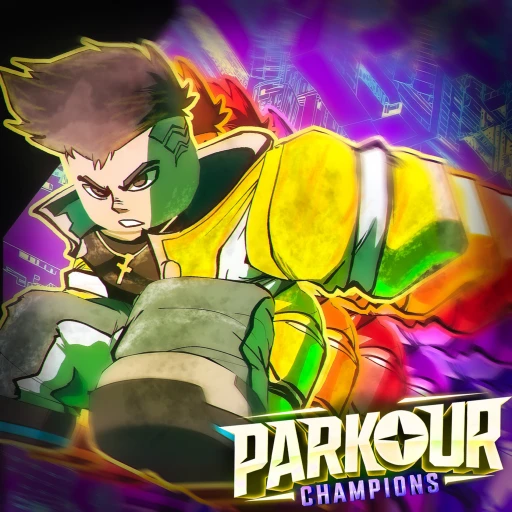
Short answer: Parkour Champions is the better pick if you want a high-energy anime racing experience with champion unlocks, vibrant abilities, and direct head-to-head competition every round. Tower of Hell is the better pick if you want a solitary, brutally honest test of precision platforming where a single slip from any height sends you back to square one. Both games are free, both pull massive player counts, and both reward practice — but they deliver completely different kinds of satisfaction.
At first glance, both games share a common thread: you are moving fast, navigating obstacles, and trying to beat everyone else to the goal. Look closer and the comparison dissolves into two games that have almost nothing in common beneath the surface. Parkour Champions, developed by Studio 8K, is an anime-powered racing game where each character comes loaded with abilities, visual flair, and a personality pulled straight from the genre's biggest tropes. Tower of Hell, developed by YXCeptional Studios, is a stripped-back precision obby that has been punishing Roblox players with zero checkpoints since the concept felt radical.
This guide covers every category that matters — gameplay depth, progression, graphics and audio, live player counts, game passes, social features, and long-term replay value — so you can make an informed choice about where to invest your time in 2026.
Quick Stats Comparison
| Category | Parkour Champions | Tower of Hell |
|---|---|---|
| Genre | Anime parkour racer | Competitive obby / Precision platformer |
| Developer | Studio 8K | YXCeptional Studios |
| Roblox Place ID | 14528787574 | 1962086868 |
| All-Time Visits | 18.4 million+ | 27.4 billion+ |
| Approval Rating | 94.1% | Very high (long-established) |
| Core Mechanic | Race to the finish using champion abilities | No-checkpoint tower climbing |
| Perspective | Third-person | Third-person |
| Difficulty | Moderate — skill-based racing | High to extreme — zero checkpoints |
| Checkpoints | Racing format — no hard reset on fall | Zero checkpoints, always |
| Champion / Character System | Yes — anime champions with unique abilities | No — cosmetics only |
| Progression System | Champion unlocks, spin gacha, XP | Coins, cosmetics, Pro Tower tiers |
| Themed Events | Yes — seasonal and anime crossover events | Yes — mutators and seasonal cosmetics |
| Mobile Friendly | Good for casual play | Playable; PC preferred for competitive |
| Pay-to-Win? | No | No |
Gameplay Overview
Parkour Champions
Parkour Champions, by Studio 8K, is a third-person anime racing game built around a roster of champions — each modeled after familiar anime archetypes — who compete across a series of parkour courses designed to test speed, route knowledge, and ability timing. When you load into a race, you pick your champion, the server fills, and then everyone launches off the starting line together. Your job is to reach the finish line first by running clean routes, deploying your character's abilities at the right moments, and making fewer mistakes than the field.
What separates Parkour Champions from a generic obby racer is the champion system. Characters like Zaruto, Stretch Man, and 100% Hero each carry a distinct moveset pulled from their anime DNA. Zaruto brings explosive burst movement and shadow-clone style positioning tools. Stretch Man stretches across gaps that other characters would need to platform around. 100% Hero builds power charges that release in massive speed bursts. Choosing the right champion for a course — and then knowing how to deploy their kit — is the game's primary skill layer on top of raw parkour execution.
The game sits at 18.4 million all-time visits with a 94.1% approval rating as of 2026, figures that reflect how effectively Studio 8K has combined the appeal of anime character fantasy with the addictive loop of competitive racing. New champions arrive with updates alongside fresh courses and seasonal events that give the player base regular reasons to return. The rating in particular is notable: maintaining above 90% on a competitive game where losing is a constant reality speaks to the quality of the moment-to-moment feel.
Tower of Hell
Tower of Hell, by YXCeptional Studios, needs no premise and offers no story. Each round, the game generates a fresh tower by stacking randomly selected obstacle sections into a climbing challenge unique to that session. Players have eight minutes to reach the summit. The design philosophy that made Tower of Hell famous sits at the center of every second of play: there are no checkpoints, ever. Fall from the second section or the second-to-last section and you return to the ground floor and start over.
That single design decision creates a psychological pressure that no checkpoint-based obby can replicate. The higher you climb, the more you have to lose. A routine jump that you have made a hundred times becomes a different proposition when you are ninety percent of the way up a tower with ninety seconds left on the clock. Tower of Hell is not just testing your platforming skill — it is testing your ability to maintain that skill under mounting pressure. Players who can stay composed and execute clean movement late in a stressful round are the ones who complete towers consistently.
With 27.4 billion all-time visits, Tower of Hell is one of the most-played games in Roblox history. That number is not a fluke. The game's combination of infinite procedural content, a punishing-but-fair difficulty model, and a competitive community that actively records and shares runs has made it a platform institution. Mutators that alter physics, platform behavior, or player movement add additional variables to an already complex round-to-round challenge.
Gameplay Depth and Core Mechanics
Both games reward practice and punish carelessness, but they build their skill systems on completely different foundations.
Parkour Champions layers champion ability management on top of racing fundamentals. The first skill to develop is movement: learning the courses, finding optimal routes, and building the muscle memory to execute clean runs without losing momentum on corners, gaps, or inclines. The second skill layer is ability timing — knowing when to pop Zaruto's burst to close a gap, when to hold Stretch Man's extension for a section where it saves three seconds, when to bank 100% Hero's charge for a section that rewards max speed. The third layer is opponent awareness: reading where the field is, knowing when to take risks, and adapting your route in real time when the race positions change.
The multi-champion roster creates genuine strategic variety. Different courses favor different character kits, which means the meta is not static. A champion that dominates a short tight-corridor course may be mediocre on a wide open vertical climbing section. Players who invest in learning multiple champions and understanding the course-champion matchup have a measurable edge over single-champion specialists.
Tower of Hell is built entirely on precision movement and composure under pressure. There are no abilities, no power-ups, no items. Every player uses the same movement toolkit. The skill gap comes from how well you know the tower's section library, how cleanly you execute the optimal path through each section, and whether you can maintain that execution when the stakes are highest. Recognizing sections you have seen before, instantly recalling their best routes, and chaining those routes together fluidly — that is the entire game compressed into eight minutes.
Round mutators layer additional difficulty onto this foundation. Low gravity changes your jump timing and arc. Speed mutators demand faster reactions and tighter execution. Platform color restrictions eliminate sections of the optimal path and force improvisational routing. These modifiers mean that even experienced players who have internalized hundreds of sections must stay adaptable rather than falling back on rote repetition. Edge: Parkour Champions for strategic variety through champion selection. Edge: Tower of Hell for pure mechanical depth and the psychological pressure system built around zero checkpoints.
Progression System
Parkour Champions has one of the more developed progression systems among Roblox racing games. The core loop runs through the champion roster: you start with access to a limited set of characters and unlock additional champions through the spin system, which uses in-game currency earned from races alongside optional Robux purchases for Super Champ Spin bundles. Each new champion you unlock broadens your strategic options and opens up new race approaches across the course library.
The XP and ranking system tracks your overall progress as a racer, giving you a visible measure of improvement that goes beyond win-loss record. Seasonal events introduce limited-time cosmetics, champion skins, and course modifiers that create short-term goals outside the permanent champion unlock progression. The active code system — including codes like UPD1 from launch updates — provides free currency injections that help new players keep pace with the unlock curve without needing to spend Robux.
Tower of Hell takes a leaner approach to progression that fits its minimalist philosophy. Coins earned from completing towers purchase cosmetic items, trail effects, and character animations from the in-game shop. Pro Tower access, available as a game pass, unlocks harder section variants and a higher coin multiplier that accelerates cosmetic progression for players who want to invest in the experience. There is no champion system, no ability unlocks, and no mechanical progression — the game does not need it, because the skill-mastery arc itself functions as the progression system.
Watching your personal tower completion rate improve, your average completion time drop, and your ability to handle harder mutator combinations grow session by session is Tower of Hell's version of leveling up. That internal progression is less visible than a champion unlock screen, but for competitive players it is more meaningful. Edge: Parkour Champions for structured unlockable progression. Edge: Tower of Hell for skill-based progression that compounds indefinitely.
Graphics and Audio
Parkour Champions leans into anime visual language with full commitment. Course environments blend the kind of stylized color palettes and exaggerated geometry associated with shonen anime action sequences — vibrant, high-contrast, and designed to look fast even when you are stationary. Champion character models carry the visual signatures of their source inspirations: flowing hair physics, distinctive color schemes, and ability effects that light up the screen with the energy characteristic of the genre.
The audio design matches the visual energy. Background music during races draws from the fast-paced electronic and rock-influenced tracks that anime sports and action titles favor, maintaining a pace that pushes you to move faster. Ability sound effects are punchy and distinct — you hear the difference between champions, which reinforces their identity and gives audio feedback to ability timing. Studio 8K has clearly invested in the full aesthetic package rather than treating visuals and audio as secondary concerns.
Tower of Hell operates at the opposite end of the visual spectrum. The art direction is clean, geometric, and deliberately minimalist. Sections use high-contrast color blocking that makes platform edges and gaps immediately readable. There is no decorative visual noise competing for your attention, which is a practical design choice as much as an aesthetic one — when a single pixel of misjudged positioning ends your run, clear visual information is more valuable than dramatic scenery. The game does not need to look spectacular because what it makes you feel when you fall from near the top is spectacular enough.
Tower of Hell's audio is understated to match. Ambient music keeps the atmosphere present without dominating. The sounds that matter — the whoosh of movement, the impact of landing, the alarm as the clock approaches zero — are cleanly mixed and immediately communicative. Edge: Parkour Champions for visual spectacle and anime-inspired production value. Edge: Tower of Hell for functional visual clarity that serves the gameplay.
Player Count and Community
The gap between these two games in raw visit numbers is enormous, but that gap tells only part of the story.
Tower of Hell's 27.4 billion all-time visits put it among the most visited games on the entire platform. This reflects years of consistent concurrent player counts, a content creator ecosystem that generates tens of millions of views per month, and a reputation that extends well beyond Roblox's core audience. Speedrun compilations, "can I beat Tower of Hell?" challenge videos, and competitive montages have made the game a regular fixture across YouTube and TikTok. The competitive scene has its own records, its own recognized top players, and its own culture of improvement that functions independently of what the developers ship in any given update.
Parkour Champions is newer and smaller, but its 18.4 million visits with a 94.1% approval rating indicates a healthy and genuinely satisfied player base. The approval rating matters more than the raw visit count for understanding the game's trajectory: it suggests that players who try the game are mostly staying and enjoying it. The anime theme gives the game a natural content creator angle — character showcase videos, champion tier list debates, and race highlight compilations all translate well to short-form content. The community is growing, the update cadence from Studio 8K has been consistent, and the competitive scene is still young enough that a dedicated new player can establish themselves among the top racers.
The community cultures differ in predictable ways. Tower of Hell players organize around completion rates, personal records, and section knowledge. Parkour Champions players organize around champion preferences, course meta debates, and the kind of rivalry that direct head-to-head racing naturally produces. Both are welcoming to new players in their own ways. Edge: Tower of Hell for sheer scale and established competitive ecosystem. Edge: Parkour Champions for an emerging community with an enthusiastic, positive culture reflected in its approval rating.
Game Passes and Monetization
Parkour Champions monetizes through cosmetic game passes and the champion spin system. Super Champ Spin bundles allow players to accelerate the champion unlock process using Robux, while cosmetic passes grant champion skins, visual effects, and trail customizations. The core gameplay — every race mode, every course, every base champion kit — is entirely free. Paying players can unlock the roster faster and look more distinctive on the course, but they do not gain movement advantages, ability power boosts, or win-rate improvements over free players. The monetization respects the competitive integrity of the race format.
The active code system adds a genuine free-to-play friendly layer. Redeeming codes like UPD1 and other update codes grants spin currency that contributes meaningfully to the unlock progression without requiring a Robux purchase. New players who stay current with code drops can maintain reasonable unlock pace through normal play. For more details on getting the most out of your Robux in Parkour Champions, see the Parkour Champions Free Robux Guide.
Tower of Hell offers a broader cosmetic marketplace alongside its one gameplay-adjacent purchase. The double jump ability, available for Robux, grants a mid-air jump that opens recovery options and skip routes unavailable to players without it. This is the closest either game comes to a mechanical purchase — double jump genuinely changes what is possible for the player who has it. That said, the top Tower of Hell runners consistently prove that raw skill outperforms purchased mechanics, and the game's essential challenge remains intact for free players. Cosmetics, trail effects, and Pro Tower access round out the shop.
Pro Tower grants access to harder section variants and a higher coin payout multiplier. For dedicated players, it pays for itself in accelerated cosmetic progression while providing a steeper skill challenge. For casual players, it is unnecessary. The full Tower of Hell experience — every randomly generated tower, every mutator combination, the entire competitive challenge — is available without spending a single Robux. For strategies on making your Robux go further in Tower of Hell, check out the Tower of Hell Free Robux Guide. Edge: Parkour Champions for strictly cosmetic monetization and the code system. Edge: Tower of Hell for cosmetic variety and the Pro Tower upgrade option.
Social Features
Parkour Champions is inherently social because its racing format puts players in direct, simultaneous competition. Every race is a shared experience: you and the field launch at the same moment, navigate the same course, and compete for positions that update in real time. You can see exactly where your friends are, watch them miss a jump you cleared cleanly, and feel the specific satisfaction of passing someone on the final approach. That constant proximity to other players during a race creates natural social moments — the close finish, the comeback from last place, the dominant wire-to-wire win.
Competing against friends with different champion mains adds another dimension. The champion selection screen becomes a meta debate: who has the edge on this course, whose ability kit counters whose route strategy, and whether the player skill advantage is enough to overcome a champion matchup disadvantage. These conversations happen before, during, and after every race, giving the social interaction a layer of strategic content that makes it genuinely engaging rather than just smack talk.
Tower of Hell places players together in the same server but asks them to climb independently. You can watch other players — see how they handle sections, observe their routes, pick up techniques you had not considered — but you cannot help them, be helped by them, or directly compete in a moment-to-moment sense. The social experience is one of shared suffering and occasional celebration: someone finally completes their first tower and the server reacts, or someone falls from the penultimate section and a collective groan echoes through the lobby.
The competitive social energy in Tower of Hell is real but indirect. Knowing that other players in your server are having the same struggle makes the difficulty feel less isolating. Watching a significantly better player clear a section effortlessly that cost you three full runs gives you a concrete target to aim for. It is a social experience built around aspiration and empathy rather than direct competition. Edge: Parkour Champions for direct head-to-head competition and real-time social rivalry. Edge: Tower of Hell for the shared-suffering community dynamic that builds genuine camaraderie.
Replay Value
Parkour Champions sustains long-term play through two parallel loops. The first is competitive improvement: each race teaches you something about champion ability timing, course routing, or opponent tendencies, and the desire to convert that knowledge into wins keeps the session-to-session motivation high. The second is champion progression: building toward the next unlock, saving spin currency, or grinding toward a specific cosmetic item gives you concrete goals alongside the intrinsic competitive motivation.
Seasonal events from Studio 8K inject fresh content periodically — new courses, limited cosmetics, champion event skins, and modified race conditions that temporarily shift the meta. These events give players who have already unlocked the full roster a reason to keep logging in outside their normal race schedule. The competitive mode structure means that even after hundreds of hours, no individual race feels pointless — your position in every race still matters in a way that reflects your skill and preparation.
Tower of Hell is built for infinite replay by design. The procedural tower generation means you never climb the exact same sequence twice, so the game cannot exhaust its core content through repetition. The no-checkpoint system ensures that familiarity with sections does not translate into automatic completion — you still have to execute cleanly on sections you know well, under pressure, in whatever configuration the current tower presents them. The skill ceiling is genuinely difficult to reach, and the journey toward it provides continuous measurable progress that motivates return sessions.
Mutators refresh the difficulty landscape round by round. A section you handle easily under standard conditions becomes a novel challenge under low-gravity or speed-boost mutators. Pro Tower sections add a harder variant library for players who have mastered the standard pool. Between procedural generation, mutators, and the ever-shifting competitive comparison against better players, Tower of Hell's replay loop does not have a ceiling that most players will realistically encounter. Edge: Tower of Hell for genuinely infinite replayability. Edge: Parkour Champions for structured progression goals alongside competitive replay motivation.
Want Free Robux for Champion Spins or Tower Passes?
Earn Robux on Earnaldo by completing simple tasks — no downloads, no surveys you cannot finish. Use what you earn for Parkour Champions champion unlocks, Tower of Hell cosmetics, or anything else in the Roblox catalog. Your pace, your choice.
Who Should Play What?
Pick Parkour Champions if...
You want a racing game with character. Parkour Champions is the right choice if you enjoy direct head-to-head competition, anime aesthetics, and the satisfaction of mastering both movement fundamentals and champion-specific ability timing. The champion roster gives you a collection to build toward and a meta to engage with. Seasonal events and a consistent update cadence mean the game always has something new to offer on top of the competitive racing core. If you liked anime team battle games or fast-paced competitive Roblox racers, Parkour Champions belongs on your list.
Pick Tower of Hell if...
You want the purest possible test of platforming skill and mental composure. Tower of Hell is built for players who find satisfaction in doing hard things repeatedly until they do them perfectly. The zero-checkpoint philosophy means every completed tower is a genuine achievement — nothing was handed to you, no checkpoint saved your progress, and your success is entirely the product of your skill in that specific eight-minute window. If you are drawn to games with high skill ceilings, meaningful personal records, and a competitive community that celebrates mastery, Tower of Hell will hold you for months.
Play both if...
You want different flavors of fast movement and skilled play in your rotation. Parkour Champions is what you load when you want to feel powerful, race alongside other players, and enjoy the visual spectacle of anime-style competition. Tower of Hell is what you load when you want to test yourself in silence and earn something genuinely difficult. They occupy different emotional spaces — one is about racing and the energy of direct competition, the other is about perseverance and precision. Alternating between them keeps both feeling fresh and prevents either from becoming routine.
Verdict: Parkour Champions vs Tower of Hell in 2026
Parkour Champions and Tower of Hell share a genre label but represent two distinct philosophies about what makes a movement-based game rewarding. Understanding that divide is the key to choosing between them — or to knowing why you should play both.
Parkour Champions wins on energy, character, and competitive structure. Studio 8K built a racing game that gives players something to attach to: a champion with a personality, a kit that rewards mastery, and a visual identity that makes every race feel like a scene from an anime action sequence. The 94.1% approval rating at 18.4 million visits is evidence that the game's moment-to-moment feel lands well for the vast majority of players who try it. The structured champion progression, active code system, and seasonal event calendar give players a well-organized framework of goals to pursue alongside the competitive racing core. For players who want their parkour served with character and direct rivalry, Parkour Champions is the stronger experience.
Tower of Hell wins on scale, depth, and the irreplaceable tension of zero checkpoints. YXCeptional Studios built a game whose defining design decision — no checkpoints, ever — turned out to be the foundation of one of the most enduring competitive experiences on the platform. Twenty-seven billion all-time visits is not attributable to luck or marketing. It reflects years of players returning because the game's challenge is honest, its skill ceiling is high, and the feeling of completing a tough tower after several failed runs is one of the genuinely satisfying moments Roblox has to offer. For players who want their parkour stripped to its mechanical essence and stacked against the harshest possible stakes, Tower of Hell remains the benchmark.
The recommendation that serves most players: try one session of each with an open mind. A few races in Parkour Champions will tell you whether the champion system and competitive racing format excites you. One full round of Tower of Hell — including at least one fall from high up — will tell you whether the zero-checkpoint tension is motivating or exhausting for your particular taste. Both are free. Both are excellent within their respective visions. And there is no reason you cannot keep both in your Roblox library for the occasions each one fits best.
Frequently Asked Questions (2026)
Tower of Hell is significantly more popular by raw numbers, sitting at 27.4 billion all-time visits compared to Parkour Champions' 18.4 million. Tower of Hell has been on the platform for years and set the standard for competitive Roblox obbies. Parkour Champions is a newer anime-themed racer with a fast-growing fanbase and a 94.1% approval rating, which is exceptional for any Roblox game. They serve different audiences, so popularity alone should not drive your choice.
Tower of Hell is harder overall. Its zero-checkpoint system means a single misstep sends you back to the ground floor of a tower that can take the full eight-minute round to climb. Parkour Champions is competitive but structured around races where you can recover from mistakes and still win through speed and route knowledge. Parkour Champions has a lower barrier to entry and rewards fast learners quickly, while Tower of Hell's skill ceiling takes weeks or months of dedicated practice to approach.
Both games are available on mobile through the Roblox app. Parkour Champions works well on mobile for casual races, though the anime ability inputs and tight movement windows favor keyboard-and-mouse for competitive play. Tower of Hell is playable on mobile but notoriously difficult — the precision platforming required for competitive runs is much harder on a touchscreen. Both games are best experienced on PC or with a controller for their respective competitive modes.
Parkour Champions uses a racing format rather than a checkpoint or survival system. In most modes, you race to the finish line across anime-themed parkour courses — falling behind costs time but does not reset you to the start. Tower of Hell has zero checkpoints by design: any fall returns you to the ground floor. This fundamental difference makes Parkour Champions far more forgiving during a run, while Tower of Hell's no-checkpoint philosophy is the source of its legendary tension.
Parkour Champions is better for direct competition with friends. The race format puts all players on the same course simultaneously, so you are constantly aware of where your friends are, who is ahead, and who just missed a jump. You can directly challenge each other every round. Tower of Hell places everyone in the same lobby climbing the same tower, but it is a solo survival effort rather than a direct race. Both are fun with friends, but Parkour Champions creates more moment-to-moment rivalry and shared competitive energy.
Both games are completely free to play on Roblox. Parkour Champions offers Robux game passes for cosmetics and Super Champ Spin bundles to unlock anime champions faster, but all races, game modes, and core features are free. Tower of Hell sells double jump, cosmetics, trail effects, and Pro Tower access, but none are required to complete towers or compete effectively. Neither game is pay-to-win.