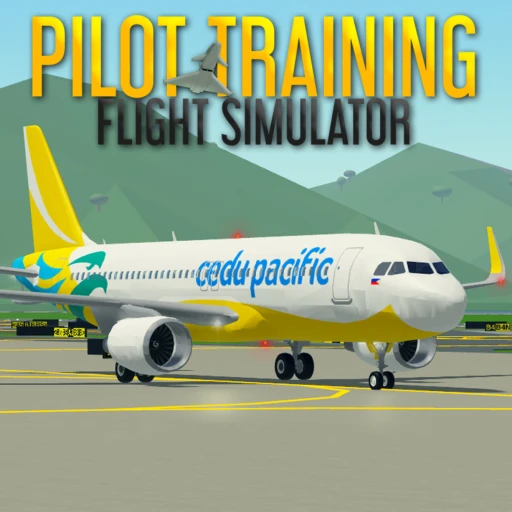
Pilot Training Flight Simulator: The Complete Hub for Guides & More
Pilot Training Flight Simulator is one of the most ambitious simulation games on Roblox. It gives you access to a fleet of aircraft, realistic-ish flight physics, and an open world to explore from thousands of feet in the air. Whether you are brand new to flying or you have been landing butter-smooth touchdowns for years, this hub page rounds up everything we have written about the game.
💸 Playing Pilot Training Flight Simulator? Get paid for it
Codes come and go — earning is forever. Earnaldo pays you real Robux for playing Roblox games and finishing simple tasks. Free to join, no human verification, cash out from your very first point.
Earn Robux instead →Pilot Training Flight Simulator Articles
We have put together detailed articles covering the most important aspects of the game. Click into either guide below to get the full breakdown.
Pilot Training Flight Simulator Tier List (2026) — Best Planes Ranked
All 14 top aircraft ranked S through C by speed, handling, and value — from the SR-71 Blackbird and F-22 Raptor to free spawns like the Concorde and 747.
GuidePilot Training Flight Simulator Free Robux Guide
Earn free Robux while flying. Covers badge farming, flight milestones, and the most efficient ways to stack currency through gameplay.
ComparisonPilot Training Flight Simulator vs Cabin Crew Simulator
Two aviation games with different approaches. We compare flight mechanics, aircraft variety, realism, and which one delivers the better experience.
What Is Pilot Training Flight Simulator?
Pilot Training Flight Simulator, often shortened to PTFS by the community, is a flight simulation game developed by Orange12345. It launched years ago and has grown into one of the most respected simulation titles on Roblox, pulling in hundreds of millions of visits and maintaining a dedicated player base that takes aviation seriously.
The game drops you into an airport with access to a range of aircraft, from small single-engine propeller planes to large commercial jets and military aircraft. You taxi to the runway, take off, navigate to your destination, and land. That might sound simple on paper, but the flight model has enough depth to make each of those steps genuinely challenging until you learn the controls and physics.
What sets PTFS apart from most Roblox games is the atmosphere. There is no combat, no competitive pressure, and no timers rushing you. It is a genuine simulation experience where the satisfaction comes from executing a clean takeoff, navigating through weather, and greasing a landing at a distant airport. If you have ever been curious about aviation, this game is an outstanding entry point.
Aircraft and Fleet Overview
PTFS features a roster of aircraft that spans multiple categories, and each one handles differently enough to keep things interesting as you progress.
General aviation planes are where most players start. These small, nimble aircraft are forgiving to fly and perfect for learning the basics of throttle management, pitch control, and runway alignment. They do not go fast and they do not look flashy, but mastering them builds the foundation for everything that comes later.
Commercial airliners are the crown jewels for many players. Flying a large passenger jet requires careful planning, longer takeoff rolls, wider turns, and precise approach speeds. Nailing a smooth landing in a heavy aircraft feels incredibly satisfying, especially when you factor in crosswind conditions that demand constant correction.
Military and special aircraft push the performance envelope. Fighter jets accelerate fast, climb aggressively, and handle with a responsiveness that general aviation planes cannot match. They are fun to fly but unforgiving of mistakes -- one wrong input at high speed and you are in an unrecoverable spin.
Helicopters round out the fleet and offer a completely different flight experience. Rotary wing aircraft require constant input on multiple axes simultaneously, which makes them the hardest vehicle type to master in the game. If you can hover a helicopter smoothly in PTFS, you have genuinely developed a skill.
Airports and Navigation
The game world features multiple airports scattered across the map, each with different runway lengths, elevations, and approach challenges. Some airports sit on flat terrain with long runways that make landing straightforward. Others are nestled in mountainous areas with short strips that demand precision flying.
Navigation in PTFS uses a combination of visual references and in-game instruments. Learning to read your altimeter, airspeed indicator, and heading display is essential for flying between airports without getting lost. The game does not hold your hand with giant map markers or GPS arrows -- you need to orient yourself and navigate like a real pilot would.
This navigational challenge is a big part of what makes the game so rewarding. Planning a flight from one airport to another, executing the route cleanly, and touching down at your destination creates a sense of accomplishment that few Roblox games can match.
Why Play Pilot Training Flight Simulator?
Genuine simulation depth. PTFS is not an arcade flying game with simplified controls and auto-landing features. The flight physics model respects real aerodynamic principles like stall speed, angle of attack, and weight balance. You will actually learn concepts that translate to real aviation understanding, which is remarkable for a Roblox game.
A chill experience. There is something deeply relaxing about climbing to cruising altitude, leveling off, and watching the terrain scroll by below you. PTFS provides a meditative experience that contrasts sharply with the high-energy chaos of most popular Roblox games. It is the perfect game for unwinding after a long day.
Skill progression feels real. Your first landing will probably be a controlled crash. Your hundredth landing will be a smooth touchdown that barely registers on the vertical speed indicator. That progression arc happens naturally through practice, and each improvement milestone feels earned rather than handed to you through a leveling system.
Active roleplay community. PTFS has a strong community of players who organize air traffic control sessions, airline roleplay events, and formation flying groups. If you enjoy the social side of simulation gaming, there is an entire ecosystem of organized play waiting for you beyond solo flights.
Flight Tips for New Pilots
Getting started in PTFS can feel overwhelming if you have never played a flight simulator before. Here are the fundamentals that will get you airborne and landing safely in your first session.
Understand throttle and pitch. Throttle controls your engine power, which determines speed. Pitch controls your nose angle, which determines whether you climb, descend, or fly level. The most common beginner mistake is pulling the nose up too aggressively on takeoff, which leads to a stall. Gentle inputs are your best friend.
Use the runway centerline. During takeoff and landing, keep your aircraft aligned with the center stripe on the runway. This sounds obvious, but wind effects and rudder sensitivity can push you off-center quickly. Correcting early with small inputs is far easier than making large corrections at the last second.
Plan your approach early. Start preparing for landing several minutes before you reach your destination airport. Reduce speed gradually, begin descending at a controlled rate, and line up with the runway from a distance. Rushing the approach is the number one cause of botched landings.
Practice touch-and-goes. A touch-and-go is when you land, immediately apply full throttle, and take off again without stopping. This drill gives you repeated landing practice in a short time frame, which accelerates your skill development faster than flying full routes between airports.
Weather and Advanced Flight
PTFS includes weather conditions that add complexity to every flight. Wind affects your ground speed and can push you off course during approach. Crosswinds during landing require a technique called crabbing, where you angle the nose into the wind to maintain runway alignment, then straighten out just before touchdown.
Visibility conditions change as well. Flying in clear skies with full visibility is straightforward navigation. Reduced visibility forces you to rely more heavily on instruments and makes approaches significantly more challenging. Advanced players specifically seek out poor weather conditions because the additional difficulty makes successful flights more rewarding.
Turbulence adds another layer, bouncing your aircraft unpredictably and requiring constant corrections to maintain stable flight. It is not dangerous in the game the way it can be for real aircraft, but it does test your ability to maintain smooth control inputs under pressure.
Earn Robux to Upgrade Your Fleet
Unlock premium aircraft and gamepasses in PTFS. Earn free Robux through Earnaldo and expand your hangar without spending real money.
Explore More PTFS Content
This hub page is your launchpad for everything Pilot Training Flight Simulator. Check out the free Robux guide for strategies on earning currency through gameplay, or read the comparison article to see how PTFS measures up against Cabin Crew Simulator. We update our content as the game evolves, so bookmark this page and return whenever you need the latest information on aircraft, updates, or strategies.