Pilot Training Flight Simulator vs Cabin Crew Simulator (2026) — Which Roblox Game Is Better?
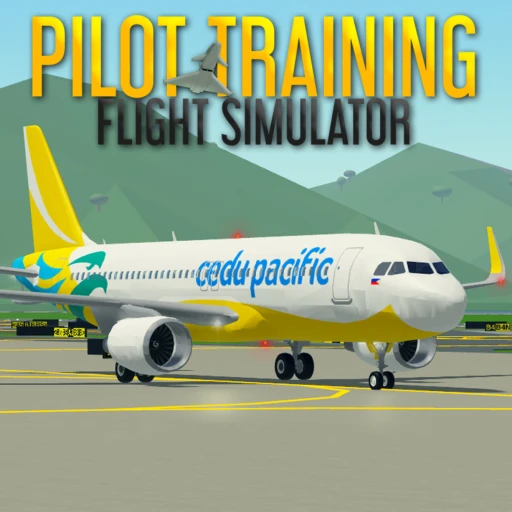
Two of Roblox's most-visited aviation games take completely different approaches to the same setting. Pilot Training Flight Simulator (PTFS) puts you in the cockpit with 50+ aircraft and a realistic flight model. Cabin Crew Simulator (CCS) puts you in the aisle managing boarding, safety demonstrations, meal service, and passenger interactions. One is for pilots, the other is for everyone else on the plane. This comparison breaks down which game delivers more for your time in 2026.
We cover gameplay, aircraft and content depth, realism, roleplay quality, progression, graphics, player counts, game passes, social features, and replay value. For dedicated guides on each game, see our PTFS free Robux guide and CCS free Robux guide.
In This Comparison
Quick Stats at a Glance
| Category | Pilot Training Flight Simulator | Cabin Crew Simulator |
|---|---|---|
| Developer | Orange12345 | Raise a Floppa Studios |
| Place ID | 20321167 | 5171347293 |
| Total Visits | ~717 million | 1.5 billion+ |
| Primary Genre | Flight simulation | Airline roleplay |
| Core Loop | Fly aircraft, complete routes | Board passengers, serve, manage cabin |
| Aircraft Count | 50+ flyable aircraft | Several cabin types (crew perspective) |
| Solo Playable | Yes | Yes (NPC fill) |
| Best for | Aviation enthusiasts, pilots | Roleplay fans, social players |
| Free to Play | Yes (some aircraft locked) | Yes (some uniforms/roles locked) |
| Skill Ceiling | High | Moderate |
Gameplay
The fundamental difference between these two games is perspective. PTFS puts you at the controls of an aircraft and asks you to manage throttle, flaps, gear, heading, and altitude yourself. Taking off cleanly, maintaining cruise, and landing smoothly requires genuine skill and practice. The controls have a real learning curve -- you can't just jump in a wide-body airliner and expect a smooth first landing. That investment pays off once you get the hang of it, but it takes time.
CCS approaches aviation from a completely different angle. You're cabin crew, not the captain. Your job is to welcome passengers at the gate, run the safety demonstration, manage your assigned cabin section during flight, respond to passenger requests, handle turbulence protocols, and conduct the post-landing walk-through. The tasks are guided, the pacing is controlled by the flight, and the focus is on doing your job well rather than mastering a flight model.
Neither approach is objectively better -- they're targeting different players. PTFS rewards persistence and technical interest. CCS rewards organization, teamwork, and attention to roleplay detail. If you want to feel like you're flying the plane, PTFS is the only choice. If you want to feel like you're living the airline experience from the cabin side, CCS does that in a way PTFS simply doesn't attempt.
Edge: Draw TIED -- both games execute their chosen gameplay loop well. Your preference determines the winner here.
Aircraft and Content
PTFS has one of the deepest aircraft rosters of any Roblox game, with over 50 flyable aircraft covering commercial airliners, turboprops, military jets, helicopters, and seaplanes. Each aircraft has its own flight characteristics, cockpit layout, and speed envelope. Flying a Cessna 172 feels meaningfully different from a fighter jet, which feels different from a wide-body airliner on approach. The variation in the fleet is a genuine strength.
Content in PTFS extends to the airports. The game features multiple detailed airports with runways, taxiways, control towers, and terminal buildings. There are various route structures, weather systems, and time-of-day lighting that change each session. The world is purpose-built for aviation, which means every piece of the environment supports the flying experience.
CCS focuses its content on the inside of the aircraft. The cabin interiors are detailed, with multiple aircraft types offering different layouts -- regional jets with tight aisles versus wide-body cabins with more space to work. The game's content centers on the variety of routes, crew roles, uniform options, and passenger scenarios rather than the number of aircraft types. It's a narrower scope, but it's fully realized within that scope.
Edge: PTFS PTFS WINS -- the sheer breadth of flyable aircraft and airport environments gives PTFS a clear content advantage for aviation enthusiasts.
Realism
PTFS prioritizes realism in its flight model above almost everything else. The aircraft behave according to simplified but recognizable aerodynamic principles. Stalls happen if you pull back too hard at low speed. Crosswind landings require correction. Each aircraft type has different handling characteristics that real pilots would recognize, even in simplified form. The cockpit instruments are functional and legible, and learning to use them properly is part of the experience.
CCS takes a different kind of realism seriously: procedural realism. The game replicates the actual sequence of tasks a cabin crew member performs on a real flight. Pre-boarding checks, announcements, safety card distribution, the safety demonstration, meal and drinks service, turbulence responses, and post-flight procedures are all represented in the correct order. Someone who's worked as a flight attendant would find the flow familiar, even if the aesthetic is Roblox.
PTFS is more technically realistic in terms of aircraft behavior. CCS is more realistic in terms of airline procedures and crew workflows. Which kind of realism matters to you comes down to whether you care more about how the plane flies or how an airline actually operates from the inside.
Edge: PTFS PTFS WINS -- for raw technical realism of the flying experience, PTFS has no equal on Roblox.
Roleplay
CCS is fundamentally a roleplay game. The entire structure is built around playing a role -- you're a flight attendant, a purser, a gate agent, or sometimes a passenger, and you're expected to stay in character and perform the duties of that role. The game's server structure supports crew hierarchies, with senior crew having different responsibilities than junior crew. There's a social dimension to every flight because the experience depends on your crew performing their parts.
PTFS has roleplay elements but they emerge organically rather than being structured into the game. Players can take on ATC roles and direct other aircraft, or they can operate as commercial pilots on scheduled routes while other players act as passengers. These player-created scenarios can be deeply engaging, but they require a group of players who are organized and committed to the bit. There's no structured framework pushing everyone toward a shared roleplay experience.
For players who want structured, guided roleplay with clear roles and responsibilities, CCS is the better-designed game. For players who want to create their own aviation scenarios with flexible rules, PTFS gives more freedom.
Edge: CCS CCS WINS -- the structured crew role system in CCS produces more consistent roleplay quality across random servers.
Progression
PTFS uses a rank and hours-based progression system. Flying accumulates flight hours, and enough hours unlock new aircraft, airports, and privileges. Military aircraft typically require significant flight hours before they become available. The progression is slow and deliberate, rewarding players who put in consistent time. There's a sense of working your way up from a student pilot to an experienced aviator.
CCS progresses through crew rank. Starting as a junior flight attendant, you work your way up through completing successful flights, receiving positive passenger ratings, and meeting performance benchmarks. Higher ranks unlock new uniform options, route access, and crew leadership positions. The progression is tied directly to how well you perform your duties, so skill and consistency matter.
Both systems are meaningful and tied to the core gameplay. PTFS rewards time investment. CCS rewards consistent performance. Neither is grind-heavy to the point of frustration, though unlocking the best aircraft in PTFS requires a genuine commitment.
Graphics
PTFS looks best from the cockpit and from outside the aircraft in flight. The external aircraft models are detailed, and the sky environments -- especially at dawn, dusk, and night -- are genuinely impressive for a Roblox game. The ground environments are functional but less polished than the aircraft themselves. Airport buildings and terrain are good enough to support the experience without being a visual showcase.
CCS prioritizes interior detail and that investment shows. The cabin environments are richly detailed, with proper overhead compartments, seat rows, galley equipment, and passenger character models that animate correctly for their states. The game's visual design supports the immersive cabin crew experience in a way that makes the setting feel credible.
Overall, CCS has more consistent visual polish across its environments. PTFS has higher peaks when you're in the air, but the ground-level experience doesn't match what CCS achieves in its cabin interiors.
Edge: CCS CCS WINS -- cabin interior detail and consistent environmental polish give CCS the visual edge across the full play session.
Player Count
Cabin Crew Simulator's 1.5 billion+ total visits against PTFS's ~717 million visits reflects the broader audience appeal of the roleplay format. CCS attracts players who might not specifically be aviation fans but enjoy the structured team roleplay. That larger audience means finding a full crew on most servers is realistic, which is important for getting the best experience out of the game.
PTFS has a dedicated and consistent player base that's been active for years. The community is aviation-focused, which means the players who do show up tend to take the simulation seriously. Finding ATC players, other pilots, and passengers who understand their roles is more common in PTFS than you might expect from a game that requires more commitment to learn.
For raw concurrency and the ability to jump into a populated server quickly at any time of day, CCS has the advantage. PTFS servers are active but slightly more variable depending on the time zone and time of day.
Game Passes
PTFS game passes are primarily aircraft packs. These unlock specific aircraft types that aren't accessible through standard progression, including certain military jets, premium airliners, and specialty vehicles. If you have a particular aircraft in mind, the relevant pass is a targeted purchase. There are also VIP passes with cosmetic benefits and spawn privileges, but the aircraft packs carry the real gameplay value.
CCS game passes focus on cosmetics and role access. Premium uniforms for different airlines, additional crew role options, and VIP lounge access for passengers are typical offerings. The game is fully functional without any passes -- your crew performance and flight quality aren't gated behind purchases. The passes are quality-of-life and aesthetic enhancements rather than gameplay unlocks.
Both games handle monetization fairly for free players. PTFS has a slightly higher paywall if you want the full aircraft roster immediately, but free players can unlock most aircraft through progression. CCS keeps its core gameplay completely accessible with passes being purely optional additions.
Get Robux for PTFS or CCS Game Passes
Both games have optional passes worth considering. Earnaldo lets you earn free Robux by completing simple tasks -- no surveys, no downloads, just real rewards you can use for either game.
Social Features
Social play is where the two games diverge most clearly. CCS is structured around multi-player crew coordination. Every flight is a team exercise. The purser manages the senior crew, junior attendants handle their sections, and everyone needs to hit their marks for the flight to run smoothly. Players who enjoy working as part of a team toward a shared goal will find CCS more socially satisfying than almost any other Roblox game in the genre.
PTFS social play emerges from player initiative. Setting up a full airline experience with ATC, pilots, and passengers requires players to organize themselves, often through Discord communities rather than in-game tools. When it comes together, it's a remarkable experience. But it requires more effort to organize than CCS, which handles the social structure automatically through its role assignment system.
For casual social play with strangers in a random server, CCS is the stronger pick. For organized events with a dedicated aviation community, PTFS sessions can be incredible but require more setup.
Replay Value
PTFS has exceptional replay value for players who are genuinely interested in aviation. There are always new aircraft to master, new routes to fly, new weather conditions to deal with, and a progression system that gives you something to work toward. The skill ceiling is high enough that you can spend hundreds of hours improving without feeling like you've exhausted the game's depth.
CCS replay value comes from the social variety of each flight. No two crews are exactly alike, and the different role combinations -- purser, section lead, junior attendant -- offer different perspectives on the same flight. Unlocking new routes and uniform options provides progression hooks. The experience is more consistent across sessions, which is either a strength or a limitation depending on what you're looking for.
Both games support long-term play. PTFS has a higher skill ceiling that keeps dedicated players engaged for longer. CCS has a more consistent session-to-session experience that works well for players who want predictable, low-stress social play.
Who Should Play What?
Play Pilot Training Flight Simulator if:
- You want to actually fly aircraft and master realistic controls
- You're interested in aviation, aircraft types, or pilot training concepts
- You prefer self-directed play without a structured role assignment
- You enjoy a high skill ceiling with gradual mastery over time
- You want access to military jets, seaplanes, and the full range of aircraft types
Play Cabin Crew Simulator if:
- You want a structured team roleplay experience with clear roles
- You're more interested in the airline experience than piloting mechanics
- You enjoy cooperative play where success depends on crew coordination
- You want a game that's accessible and enjoyable immediately without a long learning curve
- You play with friends and want a shared experience everyone can participate in equally
Verdict
Which Game Wins?
Both games are among the best aviation experiences on Roblox, but they serve different purposes entirely. The right pick depends entirely on what you're looking for from an aviation game.
Choose PTFS for...
Realistic flying with 50+ aircraft, a high skill ceiling, and the genuine satisfaction of a clean landing after mastering the controls. It's the game for players who want to be the pilot.
Choose CCS for...
The full airline roleplay experience from the cabin crew's perspective. Boarding, service, safety demos, and coordinating with your crew. It's the game for players who want the airline experience without the cockpit.
For a well-rounded aviation experience, consider pairing PTFS with our Vehicle Simulator guide for additional vehicle-based content on Roblox. And if you want to unlock aircraft packs or crew cosmetics without spending real money, check how Earnaldo can help you earn free Robux.
Frequently Asked Questions
Cabin Crew Simulator is more approachable for beginners. The core tasks have a gentle learning curve with clear on-screen prompts. PTFS requires learning real flight controls, reading instruments, and understanding take-off and landing procedures, which takes several sessions to feel comfortable with.
PTFS has over 50 flyable aircraft spanning commercial airliners, military jets, propeller planes, helicopters, and seaplanes. Some aircraft are locked behind game passes or require progression to unlock. The roster is one of the largest of any aviation game on Roblox and is updated regularly.
CCS uses fictional airports and route names inspired by real-world geography, but it doesn't replicate specific real-world airline routes. The focus is on performing crew duties during the flight rather than following a precise flight plan. The procedural accuracy of the crew tasks is what gives the game its realism.
Yes, CCS is fully playable solo. The game assigns you an NPC pilot and auto-fills other crew positions when real players aren't available. The full experience is more enjoyable with a real crew, but solo play is a good way to learn the role mechanics before joining a full server.
CCS has more polished cabin interiors and consistent environmental detail. PTFS has strong external aircraft modeling and impressive sky environments, especially at dawn and dusk. For overall visual polish across the full play session, CCS edges ahead, but PTFS cockpits are more detailed from the pilot's seat.
The aircraft pack passes in PTFS are the most valuable purchases because they unlock specific aircraft that aren't available to free players, including certain military jets and premium airliners. The VIP pass has cosmetic benefits but doesn't unlock additional aircraft. If there's a specific aircraft you want to fly, the relevant pack is worth it.
About This Comparison
This comparison was last updated on May 4, 2026. Game features, player counts, and game passes may change with future updates. For the latest on each game, see our PTFS guide and CCS guide.