Plane Crash Simulator vs Drag Drive Simulator (2026) — Which Roblox Game Is Better?
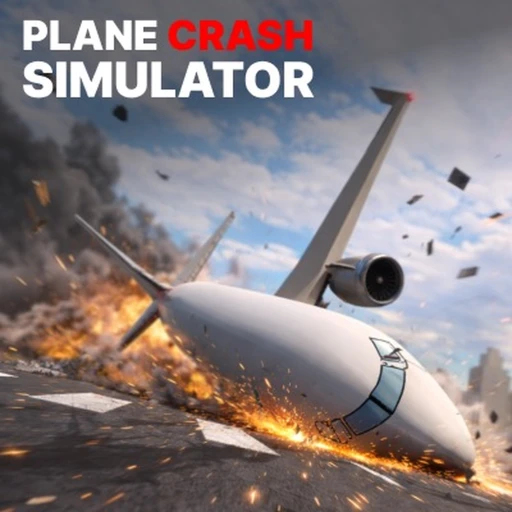
Roblox's vehicle simulation category spans everything from realistic driving experiences to outright destruction derbies in the sky. Plane Crash Simulator by REgelly150 takes the flight sim concept and flips it on its head — the goal is not to land safely but to crash as spectacularly as possible, earning Crash Points for your destructive creativity. With 2.4K concurrent players and 38 million visits, it has built a loyal following among players who find joy in controlled chaos. Drag Drive Simulator takes the ground-based approach, putting you behind the wheel of customizable vehicles for drag racing, street driving, and speed-focused challenges.
One game puts you in the cockpit with every intention of not surviving the flight. The other puts you on the asphalt with every intention of crossing the finish line first. They share the "simulator" label and the vehicle theme, but the actual experience of playing each one targets completely different player instincts — destruction versus precision, comedy versus competition, sky versus street.
This comparison covers every major angle — gameplay loops, progression mechanics, graphics and physics, player communities, monetization, social features, replay value, and earning potential with Earnaldo — so you can figure out which vehicle sim belongs in your rotation.
Plane Crash Simulator vs Drag Drive Simulator — Quick Stats (2026)
| Category | Plane Crash Simulator | Drag Drive Simulator |
|---|---|---|
| Genre | Flight / crash simulation | Vehicle driving / racing |
| Place ID | 98306159851135 | Known |
| Developer | REgelly150 | Varies |
| Concurrent Players | ~2.4K | Varies |
| Total Visits | 38M | Growing |
| Core Loop | Fly planes, crash spectacularly, earn Crash Points | Race vehicles, upgrade cars, compete in drag races |
| Currency | Crash Points | In-game cash / coins |
| Game Passes | None (fully free-to-play) | Multiple passes available |
| Mobile-Friendly | Yes | Yes |
| Free-to-Play | Yes (100%) | Yes (with optional passes) |
The stats highlight a key distinction: Plane Crash Simulator is entirely free to play with no game passes whatsoever, making it one of the few Roblox simulators that generates zero monetization pressure. Everything in the game is earned through gameplay. Drag Drive Simulator follows the more common Roblox model with optional game passes that enhance the experience. Both are accessible to all players, but Plane Crash Simulator's commitment to being completely free is noteworthy in a platform where paid advantages are the norm.
Gameplay — What Do You Actually Do?
Plane Crash Simulator
The premise is beautifully simple: pick a plane, take off, and crash it into things. But the execution has more depth than the elevator pitch suggests. REgelly150 built a physics system where crash severity, impact angle, speed at collision, and the type of structures you hit all factor into your Crash Points payout. A gentle nosedive into empty terrain earns a handful of points. A full-speed barrel roll into a cluster of buildings at maximum velocity earns significantly more. The game rewards creative destruction — finding new ways to crash, discovering destructible elements in each map, and pushing the physics engine to its limits.
The aircraft selection spans multiple categories. You start with basic single-engine planes that are forgiving to fly and easy to aim. As you accumulate Crash Points, you unlock larger aircraft — commercial jets, military planes, cargo transports, and specialty vehicles that each handle differently in the air. Heavier planes generate more destructive force on impact. Faster planes hit harder but are harder to control. Maneuverable planes let you thread through gaps and hit precise targets. The variety keeps the core loop fresh because each new plane changes how you approach the crash.
Maps provide the targets for your aerial destruction. Urban environments with buildings, bridges, and infrastructure offer dense target-rich areas. Rural maps with scattered structures require more precision to maximize points. Special event maps introduce unique destructible elements and bonus objectives. The map design directly shapes the crash experience — tight city grids demand different flight patterns than open landscapes with isolated targets.
There is no combat, no competition against other players in real time, and no pressure to perform. The game is a sandbox of destruction where the only metric that matters is how many Crash Points you can extract from each flight. This makes it remarkably relaxing despite the violent premise — there is something meditative about flying a plane in lazy circles while scouting your next target, then executing a dramatic dive and watching the physics play out.
Drag Drive Simulator
Drag Drive Simulator puts competition at the center of the experience. You start with a basic vehicle and hit the drag strip — a straight-line race where acceleration, top speed, and shift timing determine the winner. The controls are straightforward: launch, shift gears at the right RPM, and beat the clock or your opponent. The skill expression comes from shift timing — hitting each gear change at the perfect RPM window maximizes acceleration, and the difference between a perfect run and a sloppy one can be measured in significant time gaps.
Vehicle progression follows a standard upgrade path. You earn currency through races and spend it on engine upgrades, transmission improvements, weight reduction, tire improvements, and cosmetic modifications. Each upgrade visibly affects your vehicle's performance stats, and the satisfaction of watching your quarter-mile time drop with each purchase is the core hook. The vehicle roster includes sedans, sports cars, muscle cars, supercars, and exotic vehicles that each occupy different performance tiers.
Beyond the drag strip, the game offers open-world driving areas where you can test your vehicles, cruise with other players, and explore the map at your own pace. Street racing challenges provide additional currency earning opportunities outside the structured drag format. Competitive leaderboards track fastest times across different vehicle classes, creating performance benchmarks that motivate optimization and repeat runs.
The driving physics prioritize accessibility over simulation accuracy. Vehicles feel responsive and satisfying to drive without requiring advanced racing game knowledge. Crashes during races slow you down but do not cause lasting damage — the game penalizes mistakes through lost time rather than vehicle destruction. This keeps the experience flowing and reduces frustration during competitive runs.
Edge: Plane Crash Simulator. Both games execute their respective concepts well, but Plane Crash Simulator offers a more distinctive experience. Drag racing games exist across every gaming platform; a game that rewards you for crashing planes as creatively as possible is genuinely unique. The physics-driven Crash Points system adds a layer of creative expression that straightforward racing cannot match. If you are looking for something you cannot find anywhere else on Roblox, Plane Crash Simulator delivers originality.
Progression — How Quickly Does It Hook You?
Plane Crash Simulator
Your first crash happens within sixty seconds of loading in. You pick a plane, you fly, you crash, you earn Crash Points. The feedback loop starts immediately with no tutorial barrier, no setup phase, and no waiting. Early planes are intentionally easy to fly, which means your first few crashes feel successful even if they are not particularly strategic. The Crash Points from those initial crashes accumulate quickly enough to tease your first plane unlock within the first session.
Mid-game progression revolves around unlocking the aircraft that genuinely change the experience. Moving from a small prop plane to a commercial jet is a noticeable shift — the mass, speed, and impact physics all change dramatically, and the Crash Points potential jumps with them. Each new unlock provides a reason to revisit maps you have already explored because larger or faster planes interact with the same environments differently. A building that barely dented your small plane crumbles when a cargo transport hits it at full speed.
Late-game is about mastery and experimentation. Players who have unlocked the full aircraft roster shift their focus from earning points to maximizing them — finding the optimal crash angles, discovering hidden destructible elements in maps, and pushing for personal best scores on each aircraft-map combination. The game's lack of a formal endgame is both its strength (there is always room to improve) and its limitation (there is no definitive goal to chase beyond self-imposed challenges).
Drag Drive Simulator
The first race hooks you with the satisfaction of launch physics — the screen shake, the engine roar, and the speedometer climbing. Your starter car is slow enough that the first upgrade feels transformative, and the upgrade system is priced so that early purchases come quickly. Within the first twenty minutes, you have likely completed several races, purchased your first upgrade, and seen a measurable improvement in your times. The progression curve is tuned for constant positive feedback in the early hours.
Mid-game introduces meaningful choices about upgrade allocation. Do you invest in straight-line speed for drag performance or balanced upgrades for open-world driving? The currency costs increase, and strategic spending becomes important. Vehicle class transitions — moving from your starter to a mid-tier sports car — feel like leveling up in an RPG. The performance jump is visible in every race, and the competitive leaderboards suddenly show your times approaching the lower ranks.
Late-game Drag Drive Simulator is about perfecting shift timing and optimizing vehicle builds within specific classes. The difference between a good time and a great time comes down to milliseconds of gear-shift precision and the right combination of upgrades for each track condition. Competitive players study optimal upgrade paths and practice shift timing until it becomes muscle memory. For less competitive players, the vehicle collection and cosmetic customization provide a collector's endgame.
Edge: Plane Crash Simulator for accessibility. You are having the full experience from minute one — there is no tutorial, no ramp-up, and no barrier to the core fun. Drag Drive Simulator has a more structured progression with clearer milestones, which some players prefer, but Plane Crash Simulator's instant sandbox access means you are never waiting to enjoy the game.
Graphics and Physics
Plane Crash Simulator
The visual presentation serves the destruction. Aircraft models are recognizable and well-proportioned, environments are detailed enough to make crashes feel impactful, and the destruction physics — debris scattering, structures collapsing, particle effects from explosions — create satisfying visual payoffs for successful crashes. REgelly150 prioritized the crash spectacle over environmental fidelity, which is the right call for a game where you spend most of your time looking at things break apart.
The physics engine is the star. Impact calculations feel weighty — large planes hitting at high speed produce dramatically different results than small planes at low speed. Structures break apart in ways that feel physical rather than scripted, with debris trajectories that follow believable paths. The flying physics are arcadey rather than realistic, which keeps the game accessible — you do not need to understand aerodynamics to get airborne and find your target. Sound design amplifies the crashes with impact sounds that scale with severity, engine audio that shifts with speed, and environmental audio that gives weight to the world around you.
Drag Drive Simulator
Vehicle models are the visual centerpiece. Cars look proportional and stylish, with enough detail to satisfy car enthusiasts without overwhelming lower-end devices. Customization options — paint colors, decals, wheel swaps, body kits — provide visual variety that makes your vehicle feel personal. The drag strip environments are clean and functional, with clear lane markings, spectator areas, and finish line indicators. Open-world areas offer more visual diversity with cityscapes, highways, and rural roads.
Driving physics hit a sweet spot between arcade and simulation. Cars feel responsive to input without being twitchy, gear shifts produce visible speed changes, and different vehicle classes handle distinctly enough to feel varied. The drag racing physics specifically reward consistent input timing, with gear shift points that produce satisfying engine audio feedback when you nail them. Performance is generally stable across devices, with the game's smaller environmental scope keeping resource demands manageable.
Edge: Plane Crash Simulator for physics innovation and destruction feedback. The crash physics create genuinely surprising moments that no two impacts replicate exactly, which gives the game emergent visual spectacle that a more controlled racing environment cannot produce. Drag Drive Simulator has cleaner vehicle models and a more polished racing presentation, but Plane Crash Simulator's destruction engine is a more memorable technical achievement for the Roblox platform.
Player Count and Community (July 2026)
Plane Crash Simulator maintains 2.4K concurrent players with 38 million total visits. The community is small, enthusiastic, and focused on sharing crash clips, discovering destructible elements in maps, and competing informally for highest single-crash point totals. Content creators who cover the game tend to produce highlight-reel style videos showcasing spectacular crashes, which gives the game steady discovery through YouTube and TikTok algorithms that favor visually dramatic content. REgelly150 maintains a direct relationship with the community through update announcements and feedback collection.
Drag Drive Simulator draws from Roblox's substantial racing and driving community. The genre has broad appeal across age groups and play styles, which gives driving sims a larger potential audience than niche titles like plane crash games. Community activity centers on race times, vehicle builds, and competitive performance optimization. Content coverage tends to focus on update previews, vehicle showcases, and race tutorials.
Edge: Drag Drive Simulator for broader genre appeal and community size. Driving and racing games have a larger built-in audience on Roblox than flight destruction games. Plane Crash Simulator's community is more passionate per capita, with a higher ratio of content creation to player count, but the raw numbers favor the driving genre.
Game Passes and Monetization
Plane Crash Simulator
There are no game passes. Zero. Every plane, every map, every feature is available through gameplay alone. Crash Points are the only currency, and they are earned exclusively through crashing. This makes Plane Crash Simulator one of the most consumer-friendly games on Roblox — there is no tier of player that has access to content you do not, and progression is purely a function of how much you play and how well you crash. REgelly150 has maintained this stance throughout the game's life, and the community values it as a core part of the game's identity.
Drag Drive Simulator
Drag Drive Simulator offers game passes covering various boosts and exclusive content. Typical passes include currency multipliers that increase earnings from races, exclusive vehicles that cannot be obtained through normal gameplay, speed boosts, and customization packs. The pricing follows standard Roblox conventions with passes at various price points to accommodate different spending levels. Free-to-play progression is viable — all core features and race modes are accessible — but paid players have access to exclusive vehicles and faster earning rates that create a visible advantage.
Edge: Plane Crash Simulator. This is not a close call. A game with absolutely zero monetization pressure will always win this category against a game with paid advantages. Plane Crash Simulator proves that a Roblox game can sustain a player base without game passes, and the result is a purer gameplay experience where every player is on equal footing from their first session.
Social Features and Multiplayer
Plane Crash Simulator
Multiplayer in Plane Crash Simulator is largely parallel — you share the server with other players, and you can see their planes flying and crashing around you, but there is no direct interaction mechanic. The social element comes from shared spectacle: watching another player execute a perfectly timed crash, or multiple players coordinating simultaneous crashes at the same target. Informal challenges emerge naturally — "bet you cannot crash into that building from this angle" — and the community creates its own social structures around shared destruction. There are no formal leaderboards within the game, though the community tracks records externally.
Drag Drive Simulator
Social features are more structured. Head-to-head drag races provide direct competition between players. Open-world cruising lets you drive alongside others, show off your customized vehicles, and participate in informal meetups. Leaderboards display fastest times across different vehicle classes, creating competitive motivation. Car meets and community events bring players together around shared enthusiasm for vehicles. The social infrastructure is more developed because racing is inherently competitive — you need someone to race against for the experience to reach its full potential.
Edge: Drag Drive Simulator. Racing games benefit from direct competition in a way that sandbox destruction games do not. The head-to-head racing, leaderboards, and car meet culture create genuine social engagement that Plane Crash Simulator's parallel play model cannot replicate. If playing with and against other people matters to your gaming experience, Drag Drive Simulator provides that framework.
Replay Value — Will You Still Play Next Month?
Plane Crash Simulator's replay value stems from emergent physics and creative expression. No two crashes are identical because the physics system introduces enough variability that even the same plane-to-building collision produces different debris patterns, different point totals, and different visual outcomes. Players who enjoy experimentation can spend dozens of hours finding new crash approaches, testing different aircraft against different targets, and pushing for personal best scores. The downside is that the game is self-motivated — without formal challenges, progression milestones, or competitive systems, you need to generate your own goals. Players who thrive on sandbox creativity will stay for months. Players who need external structure may drift within weeks.
Drag Drive Simulator's replay value comes from competitive progression and vehicle collection. There is always a faster time to chase, a better vehicle to unlock, and a leaderboard position to climb. Updates introduce new vehicles, new tracks, and new competitive modes that refresh the experience. The vehicle customization system provides a collecting endgame for players who enjoy building a garage of personalized cars. The risk is mechanical repetition — drag racing is fundamentally the same action repeated, and the skill ceiling for shift timing plateaus once you have mastered the mechanics.
Edge: Drag Drive Simulator for structured replay motivation. The competitive framework, vehicle collection, and update pipeline provide clearer reasons to return. Plane Crash Simulator offers a more unique moment-to-moment experience, but it relies on intrinsic motivation rather than extrinsic goals — which works for some players and not for others.
Earning Potential — Free Robux While You Play
If you are using Earnaldo to earn free Robux alongside your gaming sessions, both vehicle sims create earning opportunities. Plane Crash Simulator has natural gaps between flights — choosing your next aircraft, selecting a map, watching replays of particularly good crashes, and planning your approach. These downtime moments are perfect for switching to Earnaldo and completing quick offers, surveys, or tasks without missing any gameplay. Since the game has no continuous progress system that requires constant attention, stepping away for a few minutes costs you nothing.
Drag Drive Simulator creates earning windows between races, during upgrade menu browsing, and while waiting for matchmaking or open-world events. The race-to-reward-to-upgrade cycle has natural pauses where your attention is not needed, and those pauses align well with Earnaldo task completion. Players who focus on open-world cruising rather than competitive racing have even more flexibility since cruising does not require sustained focus.
For game-specific earning strategies, check out our Plane Crash Simulator free Robux guide and Drag Drive Simulator free Robux guide. Grab the latest working codes: Plane Crash Simulator codes | Drag Drive Simulator codes.
Earn Free Robux for Plane Crash Simulator or Drag Drive Simulator
Complete simple tasks on Earnaldo and withdraw real Robux — no downloads, no generators, no scams.
Head-to-Head Verdict — Plane Crash Simulator vs Drag Drive Simulator in 2026
The Verdict
Choose Plane Crash Simulator if you want a unique, completely free sandbox experience that rewards creativity and destruction over competition. REgelly150 built something genuinely original — a game where failure is the goal, crashes are the art form, and every flight is a canvas for creative destruction. The zero-monetization model means every player starts and plays on equal footing, the physics engine creates emergent moments that keep repeat sessions surprising, and the 2.4K-strong community shares a genuine enthusiasm for spectacular crashes. With 38 million visits and no signs of slowing, it has proven that players want something different from the standard simulator formula.
Choose Drag Drive Simulator if you want structured competition, vehicle customization, and a social racing community. The drag racing mechanics provide clear skill expression through gear-shift timing, the upgrade path gives you tangible progression milestones to chase, and the competitive leaderboards create motivation that sandbox games cannot replicate. The vehicle collection and customization systems add long-term goals beyond racing performance, and the broader driving community ensures you always have someone to race against. Game passes provide optional acceleration for players willing to spend.
Overall winner: Plane Crash Simulator — for originality and value. In a platform full of driving simulators, Plane Crash Simulator stands alone in its concept and execution. The completely free model, the physics-driven gameplay, and the creative freedom it offers players make it the more memorable and distinctive experience. Drag Drive Simulator is a solid racing game, but it competes against dozens of similar titles on Roblox. Plane Crash Simulator competes against nothing. When choosing between a good version of a common genre and the only version of an uncommon one, the unique experience wins.
Who Should Play What?
- You enjoy sandbox destruction and physics: Plane Crash Simulator. The entire game is built around creative crash physics with no rules and no wrong answers.
- You enjoy competitive racing: Drag Drive Simulator. Head-to-head drag racing with skill-based gear-shifting provides genuine competition.
- You refuse to spend Robux on game passes: Plane Crash Simulator. Zero passes, zero monetization, 100% free access to all content.
- You love vehicle customization: Drag Drive Simulator. Paint, decals, wheels, body kits, and performance upgrades let you build a personalized garage.
- You want a stress-free experience: Plane Crash Simulator. There is no way to fail when crashing is the objective. Every flight is a success by definition.
- You want leaderboards and competition: Drag Drive Simulator. Time-based leaderboards across vehicle classes give you performance benchmarks to chase.
- You want to earn Robux while playing: Both pair well with Earnaldo, with natural gaps between flights and races for completing earning tasks.
Frequently Asked Questions
Plane Crash Simulator has 2.4K concurrent players and 38 million total visits, representing a dedicated niche audience. Drag Drive Simulator benefits from the broader appeal of the racing and driving genre on Roblox, which tends to attract larger player bases. Both have active communities, but the driving simulator genre has a bigger overall footprint on the platform.
Both games create natural earning windows. Plane Crash Simulator has gaps between flights for setup and planning, while Drag Drive Simulator has breaks between races and during upgrade menus. Since both are session-based, either one pairs naturally with Earnaldo multitasking. Neither game requires constant active attention, making both good choices for earning while playing.
Yes. Plane Crash Simulator has zero game passes and zero monetization. All planes, maps, and features are unlocked through Crash Points earned by playing. It is one of the few Roblox simulators where every player has access to the same content regardless of spending. This has been a core part of the game's identity since launch.
Yes. Both games release codes for free in-game rewards. Check our updated lists: Plane Crash Simulator codes (July 2026) and Drag Drive Simulator codes (July 2026). Codes expire quickly, so redeem them as soon as you find them.
Crash Points are Plane Crash Simulator's only currency. You earn them by crashing planes — bigger, faster, more destructive crashes generate more points. Factors include impact speed, angle of collision, size of the aircraft, and the amount of environmental destruction caused. Crash Points are used to unlock new planes, access new maps, and acquire upgrades. The system rewards creative and spectacular crashes over repetitive ones.
Plane Crash Simulator is the more casual-friendly option. There is no competition, no skill floor, and no way to fail — crashing is literally the point. You fly a plane, you crash it, you earn points. Every session is rewarding regardless of your skill level. Drag Drive Simulator is also accessible but involves competitive elements and gear-shift timing that reward practice. For a zero-pressure, pick-up-and-play experience, Plane Crash Simulator is the easier choice.