Plane Crazy vs Build a Boat (2026) — Which Is Better?
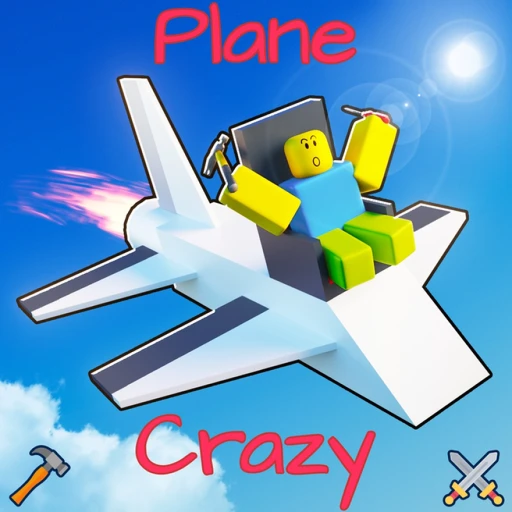
Two games, one mission: give players a pile of parts and see what they make. Plane Crazy and Build a Boat for Treasure are Roblox's longest-running building sandbox titles, but they go about the formula in very different ways. One rewards engineering intuition and wants you to build things that actually fly. The other wraps creative construction inside a co-op obstacle course that 3.7 billion people have shown up to play. If you're trying to figure out which one deserves your time — or whether you even have to choose — this comparison breaks both games down section by section.
Plane Crazy (PlaceId 166986752) is madattak's physics-first sandbox, built around a realistic simulation engine where aerodynamics, torque, and structural integrity all behave like they should. Build a Boat for Treasure (PlaceId 537413528) comes from Chillz Studios, and its 3.7 billion total visits make it one of the most-played games in Roblox history. Both are free to play, both support co-op, and both have kept communities engaged for years. The differences are in what they ask you to do and what they reward you for doing it.
Table of Contents
Plane Crazy vs Build a Boat for Treasure — Quick Stats (2026)
| Category | Plane Crazy | Build a Boat for Treasure |
|---|---|---|
| Genre | Sandbox / Building | Building / Adventure |
| Developer | madattak | Chillz Studios |
| Place ID | 166986752 | 537413528 |
| Total Visits | 453M+ | 3.7B+ |
| Concurrent Players | ~2K–4K | ~10K–15K |
| Core Loop | Build vehicles, test physics, battle in PvP | Build boats, sail obstacles, collect treasure |
| Key Mechanic | Realistic aerodynamics & engineering | Material tier upgrades & co-op sailing |
| PvP Mode | Yes (combat mode) | No |
| Co-op Building | Yes | Yes (gold pooling) |
| Mobile-Friendly | Partial (PC recommended) | Yes (better on PC) |
| Average Session | 30–60 min | 20–45 min |
| Free-to-Play | Yes | Yes |
Gameplay — What Do You Actually Do?
Plane Crazy
Plane Crazy drops you into a build pad with a parts library and no instructions. That's intentional. The game doesn't hold your hand because the people who love it want the freedom to figure things out on their own terms. You build vehicles — planes, helicopters, cars, boats, rockets, walkers, spaceships, whatever the engine will support — then test them in a shared world and refine them based on what goes wrong.
The part library is extensive. Wings of different profiles, engines at various power levels, landing gear, propellers, hinges, pistons, thrusters, gyroscopes, weapons, and enough structural components to build almost anything you can picture. Parts connect via attachment points, and the physics system evaluates your creation based on real-world principles: center of mass, center of lift, thrust line, control surface effectiveness. A plane that's too nose-heavy will pitch down no matter how much up-elevator you apply. A helicopter with unbalanced rotor torque will spin out. Getting those fundamentals right is the challenge — and the satisfaction when it clicks is genuinely hard to find anywhere else on Roblox.
PvP combat is a distinct mode that adds a competitive layer. Players bring their builds into arena matches and fight using mounted weapons — cannons, missile launchers, machine guns. A dogfight between two community-built aircraft is one of the more unique things Roblox has to offer. There's also a thriving culture around showcases: players build replicas of real aircraft, fictional vehicles from games and films, and original designs that push the engine's limits.
Build a Boat for Treasure
Build a Boat for Treasure's premise is simpler to explain: build something that floats, launch it down a river filled with obstacles, and reach the treasure chest at the end. The blocks you use are organized into a tier system that runs from cheap wood up through gold, with each material offering better durability and buoyancy at a higher cost. You earn gold by completing runs and opening chests, then spend it on better materials for your next build.
The river is divided into themed sections — each with its own hazard type, from falling boulders to cannon fire to rotating blades — and surviving all of them without your boat falling apart requires smart construction. A flat wooden raft will get through the early sections but won't survive the late ones. By the time you're working with metal and higher-tier materials, you're thinking about hull integrity, weight distribution, and which sections need reinforcement. It's not as deep as Plane Crazy's engineering, but it's more than it looks like from the outside.
Co-op building is where BABFT really shines socially. Friends join the same server, pool their gold, and build a single massive vessel together. The chaos of six players trying to attach blocks simultaneously while arguing about design choices is legitimately funny. When that ship launches and actually makes it through the course, the payoff lands in a way that's hard to manufacture in a single-player context.
The shop system sells cosmetic items and special blocks with unique physics properties. Seasonal events update the obstacle course with themed sections and limited-time block types that keep long-term players coming back after they've otherwise seen everything.
Edge: Plane Crazy for pure sandbox depth and creative ceiling. Build a Boat for Treasure for social play and structured fun with a clear goal. The distinction matters — pick based on what kind of building experience you actually want.
Physics Engine and Build Depth
This is the biggest mechanical difference between these two games, and it's worth spending real time on it.
Plane Crazy's physics engine is genuinely impressive for a Roblox game. Aerodynamic lift is calculated based on wing profile, angle of attack, and airspeed. Drag depends on surface area and shape. Thrust is directional and generates torque based on its offset from the center of mass. All of this runs in real-time, which means a bad design doesn't just perform poorly — it fails in a way that tells you exactly what's wrong and why. If your plane rolls to the left, your wings aren't balanced. If it pitches up at high speed, your center of lift is too far forward. The game teaches you physics by making you experience the consequences of ignoring them.
That depth is a double-edged sword. New players often spend their first several sessions making things that don't work, and without a tutorial or progression system to guide them, the learning curve can feel discouraging. The community wiki and Discord help, but there's no in-game explanation of why your helicopter keeps flipping. You figure it out by building, failing, and reading about what went wrong.
Build a Boat for Treasure uses a simplified physics model — buoyancy, weight, and collision detection — that's tuned for accessibility rather than accuracy. A block floats or it doesn't. Heavier materials sit lower in the water. Structural weak points break under impact. That's the full model. It's intuitive from minute one, which is part of why BABFT has 3.7 billion visits. But players who want to understand why something is working — not just that it's working — will hit a ceiling quickly.
The gap between these two physics systems is the most important factor in deciding which game is right for you. If you want to understand what you're building, Plane Crazy is the more rewarding experience. If you want your creation to survive the trip and reach the treasure, BABFT's approachable model gets you there without the engineering homework.
Edge: Plane Crazy. The physics simulation is more realistic, more educational, and more rewarding when you've put in the time to understand it.
Progression and Pacing
Plane Crazy doesn't have a traditional progression system. There's no level to reach, no unlock tree to climb, no currency to grind. You start with access to the full parts library and you stay that way. Progress is entirely skill-based — the quality of your builds improves as your understanding of the physics deepens. That's freeing for experienced builders and frustrating for players who need external motivation to keep going.
The lack of structured progression is a deliberate choice. madattak built Plane Crazy as a pure sandbox where the goal is whatever you set for yourself. Some players spend weeks refining a single aircraft until it performs exactly right. Others cycle through dozens of vehicle types, treating each one as a new engineering puzzle. Speed running vehicle designs through an obstacle course — not included in the base game but set up by community servers — adds an informal competitive layer. PvP combat gives the most goal-oriented players a ranked context for their builds.
Build a Boat for Treasure takes the opposite approach: every run moves you forward. Gold from completed runs and opened treasure chests feeds directly into better blocks, which makes your next boat better, which helps you collect more gold. The material tier system — wood, stone, iron, gold, and higher — creates a clear ladder to climb. You always know what you're working toward, and the distance between where you are and where you want to be is always visible.
Early-game BABFT has one of the best feedback loops on Roblox. Build. Launch. Watch it get destroyed. Identify what went wrong. Rebuild. That cycle happens in under ten minutes per iteration, and each loop teaches you something about the obstacle course layout or your own design choices. The improvement feels earned because it is.
Mid-game opens up when you start experimenting beyond conventional boats. Players have built working aircraft, submarine designs that go under hazards, and wheeled vehicles that drive through sections where floating is inefficient. The community discovered these approaches through experimentation, and finding your own creative solution to a known problem is its own kind of reward.
Late-game BABFT turns into a flex space. Once you've seen every obstacle and unlocked top-tier materials, the game becomes about perfecting designs, helping newer players, and collecting limited-edition blocks from seasonal events. New content additions keep the late-game fresh, but the pace of content drops is slower than some players want.
Edge: Build a Boat for Treasure for structured, goal-driven play. Plane Crazy for players who don't need a system telling them what to aim at.
Player Count and Community (July 2026)
Build a Boat for Treasure's numbers are in a different category. 3.7 billion total visits place it among the most-played Roblox games ever made. Current concurrent players run between 10,000 and 15,000 at typical hours, which is a consistent floor that holds without viral spikes. The community has been active since 2017, and that longevity shows in the depth of its culture — there are players with thousands of hours who treat it as a craft.
The BABFT community is one of Roblox's most collaborative. Veterans share gold donations with newer players on a regular basis. Build showcases fill the game's Discord and social media. YouTube tutorials walk through every major building technique and material strategy. If you're starting from zero, there's no shortage of people willing to help and a library of guides already covering everything you might want to know. Check out the Build a Boat for Treasure hub for a full breakdown of what's available.
Plane Crazy is smaller but deeply committed. 453 million visits and 2,000 to 4,000 concurrent players put it well behind BABFT in raw numbers, but the per-player engagement is high. The community skews toward older players and engineering enthusiasts who treat the game seriously. Discord servers run organized PvP tournaments, build competitions with real judging criteria, and collaborative showcases where teams assemble large-scale creations over multiple sessions.
The Plane Crazy community maintains an extensive wiki with guides on aerodynamics, structural design, weapon systems, and common build failures — a resource base that rivals some games with ten times the player count. If you want to go deep on the engineering side, the knowledge is there. You just have to find it, since the game itself doesn't surface it for you.
Game Passes and Monetization
Monetization in both games follows the Roblox standard: game passes that speed up progression or add convenience, with nothing locked behind a paywall that blocks the core experience.
Plane Crazy's game pass specifics aren't publicly documented in detail, but the general structure includes passes for cosmetic effects, exclusive part skins, and potential access to private servers or additional content. Crucially, the full physics engine, the complete parts library, and all combat modes are accessible without spending anything. No Robux required to build the best aircraft on the server — skill is the determining factor, not purchases.
Build a Boat for Treasure has a well-documented pass structure. The VIP pass provides bonus gold earnings, a name tag, and access to a VIP building area. The x2 Gold pass permanently doubles gold from completed runs — a meaningful quality-of-life upgrade for players grinding toward top-tier materials. A Pro Builder pass unlocks advanced building tools and exclusive block types. None of these are required to reach the game's highest content tier, but the x2 Gold pass noticeably cuts the time needed to afford gold and mythical-tier blocks.
BABFT's shop also sells individual block packs and limited seasonal cosmetics outside the pass system. This creates more spending options without making any single purchase feel mandatory, which is good design for player trust.
For strategies on getting free Robux to spend in either game, the Plane Crazy free Robux guide and Build a Boat for Treasure free Robux guide have everything you need. And check both Plane Crazy codes and BABFT codes for working freebies before you spend anything.
Edge: Plane Crazy for a cleaner free-to-play experience where purchases are purely cosmetic. BABFT's x2 Gold pass is genuinely useful in a way that makes skipping it feel like a grind disadvantage.
Replay Value — Will You Still Be Playing Next Month?
Plane Crazy has effectively unlimited replay value for the right player type. Because there's no ceiling on build complexity and the physics engine rewards genuine understanding, there's always a harder problem to solve. Players who've been on the game for five or six years are still discovering new design techniques and challenging themselves with increasingly ambitious projects. The competitive PvP scene adds a skill ladder that never runs out of rungs. You don't hit a wall where you've "beaten" Plane Crazy — the game is the ongoing process of building better things.
The caveat is that this limitless ceiling only matters if you genuinely enjoy the process. Plane Crazy is not a game you play for external rewards. There are no chests to open, no daily quests to tick off, no progression screen showing you how far you've come. If you need that kind of structure to stay motivated, the game will feel aimless quickly. The players who stick around for years are the ones who are intrinsically hooked by the engineering puzzle itself.
Build a Boat for Treasure's replay value comes from a combination of structured grind, social replay, and regular content updates. The material tier ladder keeps you playing for weeks before you've unlocked everything. Seasonal obstacle sections and limited blocks create urgency around specific time windows. Co-op runs with friends never get entirely old because the chaos is different every time. When Chillz Studios drops a major update — new obstacles, new block types, a new tier — the whole game feels fresh again for a few weeks.
The limit hits when you've cleared every obstacle, maxed your materials, and seen every seasonal variant. At that point, replay value depends almost entirely on whether you still find the building creative process enjoyable and whether you have a regular group to play with. Solo BABFT at the late-game stage is a different experience from the energetic early and mid-game grind.
Check the Build a Boat for Treasure tier list 2026 if you're trying to figure out which materials are worth grinding toward first — it'll save you a lot of gold going in the wrong direction.
Mobile Experience
Neither game was designed with mobile as the primary platform, and both show it — but to very different degrees.
Build a Boat for Treasure works on mobile. Block placement uses a grid-based system that's manageable on a touchscreen, and the sailing sections are passive enough that imprecise touch input doesn't hurt you. It's not the ideal platform, but a tablet player can have a genuinely good session. Phone players deal with a smaller build grid view and slightly fiddlier block positioning, but they're not locked out of any content. If mobile is your main device, BABFT is a reasonable choice.
Plane Crazy on mobile is a different story. The building interface requires precise placement of parts that attach at specific angles and connection points. Fine-tuning physics properties — adjusting engine thrust, control surface sensitivity, gyroscope strength — involves small sliders and input fields that don't translate well to touch. Testing a vehicle requires camera control that's cumbersome on a small screen. You can technically play, but you'll spend more time fighting the UI than building. Plane Crazy is, without qualification, a PC game.
Edge: Build a Boat for Treasure. Both games prefer PC, but BABFT is actually playable on mobile in a way that Plane Crazy isn't.
Earning Potential — Free Robux While You Play
Both games create natural downtime during play that pairs well with Earnaldo's free Robux earning system. Complete quick tasks on Earnaldo during those pauses and withdraw Robux directly to your account — no generators, no scams.
Plane Crazy's testing cycles are ideal for this. You launch a vehicle, watch it for 30 to 90 seconds to see how it behaves, then return to the build pad to make adjustments. That observational window is predictable and repeatable across a long session. Players doing intensive build-test-refine loops generate a lot of short windows throughout a session.
Build a Boat for Treasure's sailing runs last two to five minutes per attempt, during which your boat is largely running on autopilot through the obstacle course. Once your boat's launched, you're mostly watching and making minor steering adjustments. Those runs create a consistent window every cycle for a quick task check. Servers with longer rebuild discussions between runs add even more usable time.
Both games work well. Pick the one where you play longer sessions, since total session time determines how many earning windows you accumulate across an afternoon.
Head-to-Head Verdict — Plane Crazy vs Build a Boat for Treasure
The Verdict
Choose Plane Crazy if you care about engineering depth above everything else. The physics simulation is the most realistic and rewarding building experience on Roblox. When you understand how it works and your vehicle finally behaves the way you intended, that satisfaction is hard to match. It's also the better game for competitive play — the PvP combat mode gives builders a real arena to test their designs against each other. If you're the kind of player who wants to know why something works, not just that it works, Plane Crazy is built for you.
Choose Build a Boat for Treasure if you want a game that's immediately fun, built for groups, and structured enough to keep you moving forward. It has eight years of content, a massive and welcoming community, and a co-op experience that Plane Crazy doesn't come close to matching. The obstacle course survival loop is more consistently exciting than open-world sandbox sessions, and the material tier system gives you clear goals from your first session through your hundredth.
Overall winner: Build a Boat for Treasure — but only just. The numbers reflect a genuine quality gap in accessibility and social design. 3.7 billion visits isn't an accident. BABFT is more immediately fun for more people, handles co-op better, works on more devices, and keeps players engaged with a progression system that Plane Crazy deliberately avoids. Plane Crazy is the better game for engineering enthusiasts specifically. For everyone else, Build a Boat for Treasure is the stronger all-around experience.
Who Should Play What?
- You love engineering and physics: Plane Crazy. Nothing on Roblox gives you a more realistic simulation or a higher ceiling for technical builds.
- You want immediate fun without a learning curve: Build a Boat for Treasure. You can have a working boat in your first five minutes.
- You play with a regular group of friends: Build a Boat for Treasure. The co-op gold-pooling and shared boat riding is one of Roblox's best group activities.
- You want PvP with builds you've made yourself: Plane Crazy. The combat mode puts your aircraft against other players' in actual dog-fights.
- You play on mobile: Build a Boat for Treasure. Plane Crazy's building interface isn't viable on touch screens.
- You want structured progression: Build a Boat for Treasure. The material tier system always gives you a clear next goal.
- You want a pure open sandbox with no imposed objectives: Plane Crazy. There's no goal except the one you set yourself.
- You want to earn Robux while playing: Both pair well with Earnaldo. BABFT's sailing runs and Plane Crazy's test cycles both create natural earning windows throughout a session.
Earn Free Robux for Either Game
Earnaldo lets you complete simple tasks and withdraw real Robux — works with any Roblox game, no generators or surveys that go nowhere.
Related Articles
Plane Crazy Free Robux Guide
Tips for earning free Robux while playing Plane Crazy, including the best earning windows during test flights.
GuideBuild a Boat Free Robux Guide
How to earn free Robux alongside your BABFT sessions. Gold strategies and task-completion timing tips combined.
CodesPlane Crazy Codes (July 2026)
All active Plane Crazy codes for free in-game rewards. Checked and updated whenever new codes drop.
CodesBABFT Codes (July 2026)
Every working Build a Boat for Treasure code for free gold, blocks, and seasonal rewards. Updated regularly.
HubBuild a Boat for Treasure — Full Hub
Everything you need to know about BABFT: guides, codes, tier lists, and update history in one place.
Tier ListBABFT Tier List 2026
Which materials are actually worth grinding for in Build a Boat for Treasure? Full tier rankings explained.
Frequently Asked Questions
Build a Boat for Treasure is considerably more popular by every measurable metric. It has 3.7 billion total visits versus Plane Crazy's 453 million, and it runs around 10,000–15,000 concurrent players compared to Plane Crazy's 2,000–4,000. That said, Plane Crazy's smaller player base is extremely dedicated — the average session length and community engagement are both high relative to its size.
Plane Crazy has the more sophisticated physics simulation by a clear margin. It models aerodynamic lift, drag, thrust vectors, weight distribution, and torque with enough fidelity that real-world engineering principles apply to your builds. Build a Boat for Treasure uses a simplified buoyancy and collision model that's intentionally approachable — accurate enough to make build decisions meaningful, but not a true physics simulation. If physics fidelity matters to you, Plane Crazy is the obvious pick.
Both games have strong co-op elements, but in different ways. Build a Boat for Treasure lets friends pool their gold and blocks to build massive ships together, then ride them through obstacle courses as a crew — the chaos and payoff of a successful group run is one of Roblox's best shared experiences. Plane Crazy supports co-op building on shared vehicles and has an active PvP combat mode where friends can dog-fight in aircraft they've built themselves. For co-op sailing, BABFT is the better pick. For competitive PvP between player-made vehicles, Plane Crazy wins.
Both games release codes periodically for free in-game rewards. Check the updated lists on Earnaldo: Plane Crazy codes and Build a Boat for Treasure codes. Both pages are updated as soon as new codes are confirmed working.
Plane Crazy technically runs on mobile, but the experience is significantly limited compared to PC. Placing parts precisely, adjusting joints, and fine-tuning physics properties all need a level of control that touch screens don't provide comfortably. Build a Boat for Treasure is also better on PC, but its simpler block grid makes mobile building much more manageable. If mobile is your main device, Build a Boat for Treasure is the better choice of the two.
Build a Boat for Treasure is significantly more approachable for new players. You can put some wooden blocks together, hit launch, and have a functional boat within five minutes. Plane Crazy has a steeper learning curve — understanding how thrust, drag, lift, and weight interact takes real time, and your first several builds will almost certainly not fly as intended. The BABFT community is also more welcoming to beginners, with players regularly sharing block donations and build tips unprompted.