The Floor Is Lava vs Natural Disaster Survival (2026) -- Which Roblox Game Is Better?
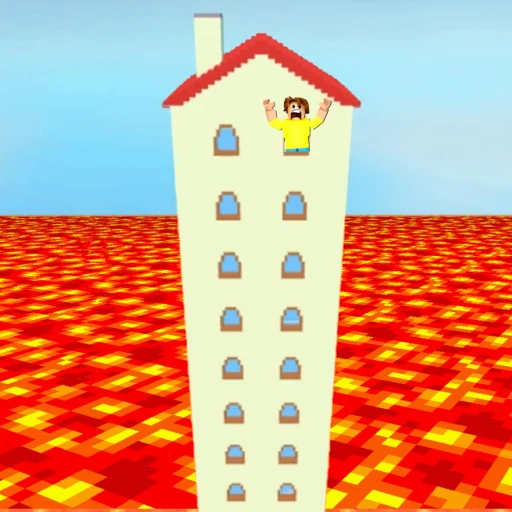
Two of the longest-running survival games on Roblox share a common premise -- the ground beneath you is trying to kill you -- but they execute that idea in completely different ways. The Floor Is Lava turns every round into a frantic parkour race as molten lava rises from below, forcing players to climb, jump, and scramble to the highest point they can reach. Natural Disaster Survival takes a broader approach, throwing earthquakes, tornadoes, tsunamis, volcanic eruptions, and ten other disaster types at you across dozens of destructible maps.
The Floor Is Lava, developed by TheLegendOfPyro, launched in 2017 and has accumulated over 2 billion visits -- a testament to how well a simple concept can hold attention when the execution is right. Natural Disaster Survival, created by Stickmasterluke, goes back even further to 2008, making it one of the oldest continuously played games on the entire Roblox platform. With over 2.5 billion visits, it has outlasted thousands of competitors through sheer staying power and a gameplay loop that refuses to get old.
This comparison breaks down everything that matters -- gameplay mechanics, progression systems, visuals, monetization, social features, and long-term replay value -- so you can decide which survival classic deserves your time in 2026. If you want to earn free Robux for game passes in either title, check out our The Floor Is Lava free Robux guide or our Natural Disaster Survival free Robux guide.
The Floor Is Lava vs Natural Disaster Survival -- Quick Stats (2026)
| Category | The Floor Is Lava | Natural Disaster Survival |
|---|---|---|
| Genre | Lava survival / parkour obby | Round-based disaster survival |
| Place ID | 815405518 | 189707 |
| Developer | TheLegendOfPyro | Stickmasterluke |
| Total Visits | 2B+ | 2.5B+ |
| Peak CCU | ~150K+ | ~200K+ |
| Release | 2017 | 2008 |
| Setting | Varied maps with rising lava | Island maps with random disasters |
| Core Loop | Climb to survive rising lava | Survive randomly generated disasters |
| Disaster Types | Lava only | 13 different disasters |
| Maps | 15+ maps | 23 maps |
| Mobile-Friendly | Yes | Yes |
| Free-to-Play | Yes | Yes |
Gameplay -- What Do You Actually Do?
The Floor Is Lava
The concept is as straightforward as the name suggests: lava rises, and you need to get above it. Every round teleports all players to one of over 15 maps -- cities, castles, factories, islands, ships -- and gives them a brief countdown before the floor turns molten orange. From that moment, survival depends entirely on your ability to jump, climb, and parkour your way to the highest accessible point on the map while the lava climbs steadily toward you.
What makes The Floor Is Lava more than a basic obby is the competitive pressure. You are not running the same course every time. Each map has multiple routes to safety, and the optimal path changes depending on which gear you are carrying. Speed boosts let you reach distant platforms that slower players cannot. Jump-enhancing gear opens up shortcuts through windows and over rooftops. Protective items buy you extra seconds when you inevitably touch lava, turning a fatal mistake into a recoverable one.
The round structure keeps sessions snappy. Each round lasts roughly 60 to 90 seconds from the moment lava starts rising until only the survivors at the top remain. There is a 15-second preparation window where players can position themselves strategically before the lava appears, followed by roughly 40 seconds of rising lava that forces constant upward movement. Between rounds, you are back in the lobby within seconds, ready for the next map. This rapid cycling means you can play 20 or 30 rounds in a single session without the experience dragging.
Recent updates from TheLegendOfPyro have added new map rotations, a Lucky Block reward system for consistent play, and a shark mechanic that introduces an additional threat beyond the lava itself. The development pace keeps the map pool from going stale, though the core loop remains unchanged: get up or get burned.
Natural Disaster Survival
Natural Disaster Survival takes the opposite approach to variety. Instead of one threat executed across many maps, it offers 13 distinct disaster types across 23 different maps -- and each combination plays differently. A tornado on the Party Palace map creates a completely different survival challenge than an earthquake at Heights School or a tsunami hitting Coastal Quickstop.
The disaster roster includes earthquakes, tornadoes, floods, tsunamis, volcanic eruptions, meteor strikes, acid rain, sandstorms, blizzards, avalanches, thunderstorms, wildfires, and multi-disaster rounds that combine two threats simultaneously. Each disaster has its own physics and behavior. Tornadoes pull loose objects and players into a swirling vortex. Tsunamis send a massive wall of water crashing across the island, destroying structures and sweeping players into the ocean. Earthquakes shake the map apart, collapsing buildings and opening gaps in the ground. Volcanic eruptions rain fireballs from above while spreading lava across the surface.
The maps are fully destructible, which is where the real depth emerges. Buildings break apart under disaster forces, meaning your safe spot at the start of a round might be rubble by the end. A brick building that shields you from a meteor strike will collapse during an earthquake. The wooden house that offers no protection from fire becomes the perfect elevated shelter during a flood. Learning which structures survive which disasters -- and positioning yourself accordingly within the first seconds of each round -- is where skilled players separate themselves from newcomers.
Rounds run slightly longer than The Floor Is Lava, typically lasting 2 to 3 minutes including the pre-disaster warning period. The pacing is more methodical. You spawn on a randomly selected map, receive a brief warning about the incoming disaster, and then have to react. Some disasters arrive immediately -- avalanches give you almost no preparation time -- while others build gradually, giving you time to find shelter or reach high ground.
Edge: Natural Disaster Survival for variety and strategic depth. The Floor Is Lava delivers a tighter, more focused experience, but Natural Disaster Survival's 13 disaster types combined with 23 destructible maps create an enormous number of unique survival scenarios. The combination of threat identification, map knowledge, and adaptive positioning gives NDS a higher skill ceiling and more diverse round-to-round gameplay.
Progression -- How Does Each Game Keep You Playing?
The Floor Is Lava
The Floor Is Lava ties progression directly to points earned through survival. Lasting longer in rounds earns more points, and those points unlock gear from the in-game shop. Gear is not cosmetic -- each item provides a functional advantage. Speed trails make you faster. Jump-boosting pets let you reach platforms that are otherwise out of range. Protective gear gives you brief immunity when touching lava, turning fatal errors into survivable mistakes.
The pet system adds a collectible layer to the progression. Pets are earned through gameplay, codes, and Lucky Blocks -- a reward mechanic that grants a free Lucky Block for every 15 minutes of active play. Opening Lucky Blocks can yield common gear or rare pets, adding a gacha-style excitement loop on top of the core survival gameplay. The rarity tiers mean that veteran players carry visibly different loadouts than newcomers, creating aspirational goals for newer players who see what top survivors are equipped with.
Codes released by TheLegendOfPyro provide free trails, gears, and pets. These codes rotate regularly, giving players a reason to check back and stay connected with the community. The combination of point-based unlocks, Lucky Block randomization, redeemable codes, and a growing gear catalog means there is always something new to chase.
Natural Disaster Survival
Natural Disaster Survival takes a minimalist approach to progression that reflects its 2008 origins. There are no experience bars, no leveling systems, no skill trees. Your progression is measured entirely through the survival knowledge you accumulate across hundreds of rounds. Knowing that you should climb the radio tower during a flood, stay indoors during a meteor strike, or avoid the coastline during a tsunami -- that understanding is the progression system.
The game does offer tools through game passes that carry between rounds, but these are purchased once and owned permanently. A Green Balloon lets you float above ground-level threats. A compass helps orient you on unfamiliar maps. These tools provide advantages without creating power gaps large enough to undermine the core survival experience.
The survival counter tracks how many rounds you have survived, serving as a basic achievement metric. Long-term players take pride in their survival counts, but there are no unlock milestones tied to these numbers. This approach is refreshingly straightforward -- you play because the gameplay itself is engaging, not because a progress bar needs filling. However, players who need tangible unlocks and visible growth systems will find Natural Disaster Survival's between-round loop quite bare compared to modern Roblox standards.
Edge: The Floor Is Lava. The gear unlocks, pet collection system, Lucky Blocks, and redeemable codes give players substantially more concrete objectives to pursue between rounds. Natural Disaster Survival's mastery-based progression is honest and clean, but The Floor Is Lava offers the kind of carrot-on-a-stick motivation that keeps broader audiences engaged over weeks and months.
Graphics and Audio
The Floor Is Lava
The Floor Is Lava uses bright, saturated colors across its map roster. Lava glows with a convincing orange-red intensity that communicates danger clearly, even on lower-end devices. Maps are designed with readability in mind -- platforms you can reach are visually distinct from decorative geometry, and the rising lava line is always obvious. The visual language is clean: hot orange below means death, solid surfaces above mean survival.
Character trails and pet effects add visual flair without cluttering the screen. When a lobby of 20 players scatters across a map with trails streaming behind them and pets hovering alongside, the visual energy matches the frantic tone of the gameplay. The art direction leans playful and colorful, which keeps the experience lighthearted despite the competitive tension.
Audio is functional rather than atmospheric. The lava sizzle, jump sounds, and round-start alerts serve their gameplay purpose without creating any particular ambiance. The soundtrack keeps energy levels high without being memorable on its own.
Natural Disaster Survival
Natural Disaster Survival shows its age in raw asset quality. Textures are simpler, models are blockier, and the overall visual polish sits below what newer Roblox games deliver. The maps use a classic Roblox aesthetic that longtime players find nostalgic and newer players might find plain.
Where NDS earns visual respect is in its disaster effects. Tornadoes whip debris across the screen in convincing spirals. Tsunamis arrive as imposing walls of blue that reshape the entire map. Meteor strikes leave craters in the terrain. Earthquakes cause visible structural damage as buildings shake apart in real time. The destruction physics -- watching a three-story building crumble floor by floor during an earthquake while you scramble to jump clear -- deliver spectacle that compensates for the simpler base assets.
Audio plays a larger role in NDS than in The Floor Is Lava. The wind howling during a tornado, the rumbling bass of an earthquake, the sharp crack of thunder during a storm -- these sounds provide critical gameplay information while also building genuine tension. Hearing a disaster before seeing it creates anticipation that flat visual cues alone cannot match.
Edge: Draw. The Floor Is Lava looks more polished at a surface level with its brighter maps and cleaner geometry. Natural Disaster Survival counters with superior destruction effects and more impactful audio design. Neither game pushes Roblox's graphical boundaries, but both achieve visual styles that serve their gameplay well.
Player Counts and Community
The Floor Is Lava
With over 2 billion visits accumulated since 2017, The Floor Is Lava has cemented itself as one of the top survival experiences on Roblox. The game consistently attracts thousands of concurrent players during peak hours and sees significant spikes when new map packs or seasonal events drop. TheLegendOfPyro maintains an active update schedule that keeps the community engaged, with new content arriving multiple times per year.
The community skews toward a younger audience drawn in by the accessible gameplay and the viral appeal of the "floor is lava" concept that transcends Roblox. YouTube and TikTok content creators regularly feature the game, driving periodic surges in player activity. The competitive element -- outlasting other players on the same map -- generates natural content moments that perform well on social platforms.
Natural Disaster Survival
Natural Disaster Survival's 2.5 billion visits across nearly two decades make it one of the most-visited games in Roblox history. The player base spans multiple generations of Roblox users, from veterans who first played it in 2008 to new players discovering it for the first time in 2026. That longevity creates a community with unusual depth -- survival strategies and map-specific tips have been refined over 18 years of collective play.
The game's player count remains remarkably stable. Unlike games that spike and crash with updates, NDS maintains a steady baseline of thousands of concurrent players because the core gameplay never stops working. There is no meta shift to alienate existing players and no skill reset that frustrates veterans. The community is self-sustaining in a way that few Roblox games achieve.
Edge: Natural Disaster Survival by a narrow margin for total historical reach and community longevity. The Floor Is Lava has stronger current momentum with more frequent updates, but NDS's 18-year track record of consistent player retention is extraordinary by any standard.
Game Passes and Monetization
The Floor Is Lava
The Floor Is Lava offers several game passes and purchasable items through its in-game shop:
- VIP Game Pass -- Provides exclusive VIP perks including speed boosts, special gear access, and VIP-only cosmetic items. Grants a permanent advantage that helps with surviving more rounds consistently.
- MVP Game Pass -- A premium tier above VIP with additional exclusive gear, enhanced speed boosts, and limited-edition items not available through regular gameplay.
- 2x Points -- Doubles point earnings per round, accelerating gear unlocks and progression.
- In-game Gear -- Individual speed trails, jump boosts, and protective items available for Robux in the shop.
The monetization model leans toward pay-for-advantage. VIP and MVP pass holders move faster and survive longer thanks to better gear, creating a noticeable gap between free and paying players. This is standard for the genre on Roblox, but players who prefer a level playing field should be aware that game pass holders have tangible survival advantages.
Natural Disaster Survival
Natural Disaster Survival keeps its monetization simple with a small selection of permanent game passes:
- Green Balloon -- 80 Robux. Spawns a green balloon every round that lets you float upward, providing a significant advantage during floods, tsunamis, and lava scenarios. One of the most impactful game passes in any Roblox survival game relative to its price.
- Apple -- 80 Robux. Spawns a red apple each round that can be consumed for a health boost. Useful for surviving partial damage from disasters that do not kill instantly.
- Compass -- 60 Robux. Provides a compass tool each round for orientation on larger maps. Helpful for newer players learning map layouts.
- Weather Machine -- 85 Robux per use. A consumable product that lets you select the next disaster type. Useful for practicing survival strategies against specific threats.
NDS's pricing is notably affordable. All permanent passes cost under 100 Robux, making the full collection accessible for under 250 Robux total. The Green Balloon in particular offers outsized value -- floating above floods and ground-level disasters for just 80 Robux is one of the better deals on the platform. The game does not sell power in the way that creates large gaps between free and paying players.
Edge: Natural Disaster Survival. The pricing is more transparent, more affordable, and more player-friendly. Every pass is a one-time purchase with a clear function, and the total cost to own everything is under 250 Robux. The Floor Is Lava's pass system offers more content but at higher price points with a stronger pay-for-advantage dynamic. If you need Robux for either game, Earnaldo lets you earn free Robux through simple tasks.
Social Features
The Floor Is Lava
The Floor Is Lava supports multiplayer servers where you compete against other players in real time. The social dynamic is primarily competitive -- you are racing the same group of players to the top of each map, and seeing others fall into the lava while you survive creates natural rivalry. Private servers are available for players who want to run rounds with friends only, removing the randomness of public matchmaking.
The lobby between rounds serves as a social space where players can show off their gear, trails, and pets. Rare cosmetics function as social currency, giving dedicated players visible status markers. The chat system is active during rounds, though the fast pace of gameplay limits how much communication happens during actual survival sequences.
Natural Disaster Survival
Natural Disaster Survival places players in a shared survival scenario where cooperation emerges organically. There are no formal team mechanics, but experienced players naturally help newer ones by leading them toward safe positions during disasters. The slower pace between disaster onset and full destruction gives players time to communicate through chat -- warning others about incoming threats or pointing out safe locations.
The game's social dynamics create memorable moments through shared catastrophe. Watching a building collapse with six players inside, seeing someone get swept off a rooftop by a tornado, or surviving a meteor strike in the exact same hiding spot as a stranger -- these experiences create bonds that pure competition does not replicate. The lack of formal social systems means the community self-organizes around gameplay rather than menus.
Edge: The Floor Is Lava for structured social features like private servers and cosmetic status markers. Natural Disaster Survival wins on emergent social gameplay where shared survival experiences create organic connections. The right pick depends on whether you prefer competitive social dynamics or cooperative ones.
Replay Value -- Which Game Lasts Longer?
The Floor Is Lava
The Floor Is Lava sustains replay value through two parallel tracks: the progression system and the map rotation. The gear unlock path gives you concrete reasons to keep playing -- each new pet, trail, or piece of equipment changes how you approach survival. The Lucky Block system adds a daily engagement hook, rewarding 15-minute play sessions with randomized rewards that might include rare items.
Map variety prevents repetition from setting in too quickly. With over 15 maps in rotation and new ones added through updates, the parkour routes stay fresh longer than a single-map game could manage. The competitive element adds replay value that pure PvE games lack -- beating a map is satisfying, but outlasting 19 other human players on that same map hits differently every time.
The risk is that once you have unlocked most gear and mastered most maps, the core loop does not evolve. Rising lava is rising lava regardless of how many times you have survived it. The game depends on regular content updates from TheLegendOfPyro to keep the experience from plateauing.
Natural Disaster Survival
Natural Disaster Survival has been holding player attention for 18 years, which is the strongest possible statement about replay value. The combination of 13 disaster types and 23 maps creates close to 300 unique disaster-map combinations, each requiring different survival strategies. You can play hundreds of rounds before seeing the same scenario twice.
The destruction physics ensure that even repeated disaster-map combinations play differently. A tornado on the same map might tear through buildings in a different pattern each time based on physics calculations. An earthquake might leave different structures standing depending on where the tremors hit hardest. This procedural element within each disaster type means that memorizing one outcome does not guarantee surviving the next.
The absence of progression systems works both for and against replay value. There is no point at which you feel "done" with NDS because there is nothing to finish. You cannot max out your character or complete a collection. Every round stands on its own merits. Conversely, there are no milestone rewards pulling you back for "just one more round" the way gear unlocks do in The Floor Is Lava.
Edge: Natural Disaster Survival. Eighteen years of continuous play speaks for itself. The sheer number of disaster-map combinations combined with destructible physics creates a replay ceiling that The Floor Is Lava's 15+ maps cannot match. The Floor Is Lava offers stronger short-term engagement through its unlock systems, but NDS has proven that its core loop survives across literal generations of players.
Earn Free Robux for Game Passes
Want the Green Balloon in NDS or a VIP pass in The Floor Is Lava? Earn free Robux on Earnaldo and unlock game passes without spending real money.
Final Verdict
The Verdict: Natural Disaster Survival Wins on Depth -- The Floor Is Lava Wins on Pace
Natural Disaster Survival earns the overall edge for its unmatched variety, destructible environments, affordable monetization, and an 18-year track record that proves its gameplay loop is genuinely timeless. Thirteen disaster types across 23 maps create a survival sandbox that keeps delivering unique scenarios long after most games would have gone stale. The Floor Is Lava is the better pick for players who want faster rounds, stronger progression hooks, and a more modern feature set with pets, trails, and active code support. Both games are free, both run well on mobile, and both represent survival gameplay at its most accessible on Roblox.
Who Should Play What?
Pick The Floor Is Lava if you:
- Prefer fast-paced rounds that last under two minutes
- Enjoy parkour and platforming mechanics
- Want a visible progression system with gear, pets, and collectibles
- Like competitive survival where outlasting other players is the goal
- Appreciate regular updates with new maps and seasonal events
- Want to redeem codes for free in-game rewards
Pick Natural Disaster Survival if you:
- Want variety in how you survive -- 13 disaster types instead of one
- Enjoy learning map-specific strategies across dozens of environments
- Prefer affordable, transparent game pass pricing under 100 Robux each
- Like emergent cooperative gameplay with other survivors
- Appreciate destructible environments that change each round
- Value a gameplay loop proven to stay engaging over years of play
Play both if you: want to experience two different survival philosophies back to back. Start with The Floor Is Lava for quick competitive bursts, then switch to Natural Disaster Survival for longer sessions with more strategic depth. They complement each other well as part of a survival game rotation.
Frequently Asked Questions
Is The Floor Is Lava or Natural Disaster Survival more popular on Roblox in 2026?
Both games have enormous player bases. The Floor Is Lava has surpassed 2 billion visits while Natural Disaster Survival has exceeded 2.5 billion. Natural Disaster Survival edges ahead in total visits due to its longer history on the platform, having launched in 2008 compared to The Floor Is Lava's 2017 release. Both games regularly pull thousands of concurrent players during peak hours in 2026.
Which game is better for younger players, The Floor Is Lava or Natural Disaster Survival?
Both games are excellent for younger players. The Floor Is Lava has simple parkour mechanics and bright colorful maps that appeal to all ages. Natural Disaster Survival is equally accessible with its straightforward survival concept. Neither game contains violence or mature themes. The Floor Is Lava may be slightly easier for very young players since jumping onto higher ground is more intuitive than understanding disaster-specific survival strategies.
Can you play The Floor Is Lava and Natural Disaster Survival on mobile?
Yes, both games are fully playable on mobile through the Roblox app on iOS and Android. The Floor Is Lava works well on mobile since movement and jumping are its primary controls. Natural Disaster Survival also translates smoothly to touchscreens because the controls are simple -- movement and jumping are all you need. Both games perform reliably on most mobile devices without significant frame drops.
Are there active codes for The Floor Is Lava and Natural Disaster Survival in 2026?
The Floor Is Lava regularly releases codes that grant free trails, pets, and gear. Natural Disaster Survival has historically not featured a code redemption system, relying instead on its game pass model for premium items. Check our The Floor Is Lava guide and Natural Disaster Survival guide for the latest earning opportunities for both games.
Which game is better for earning free Robux while playing?
Both games pair well with Earnaldo for earning free Robux. The Floor Is Lava rounds last about 1-2 minutes each, giving you very frequent breaks between rounds to complete earning tasks. Natural Disaster Survival rounds run slightly longer at 2-3 minutes. The Floor Is Lava's faster cycle makes it marginally better for multitasking between gameplay and Robux-earning activities on Earnaldo.
Do The Floor Is Lava and Natural Disaster Survival get regular updates in 2026?
The Floor Is Lava receives frequent updates from TheLegendOfPyro, including new maps, gear, pets, and seasonal events. Natural Disaster Survival updates are less frequent since the game has been stable for years, though Stickmasterluke has released occasional updates including a notable 2026 update. The Floor Is Lava currently has the more active development cycle of the two.