Tower Defense Simulator vs Anime Defenders (2026) — Which Roblox Game Is Better?
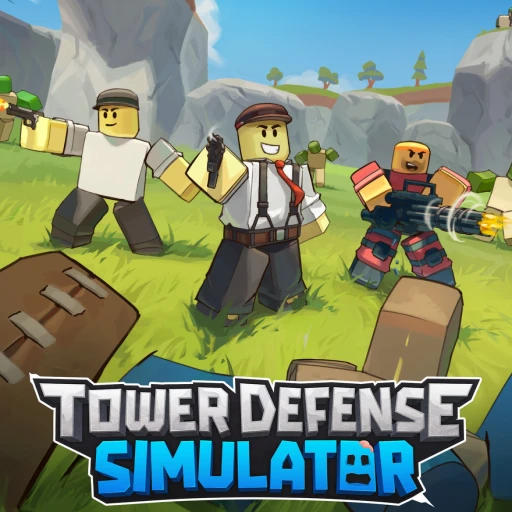
Roblox has no shortage of tower defense games, but two titles dominate the genre in fundamentally different ways. Tower Defense Simulator (TDS) by Paradoxum Games is the long-standing classic that helped define co-op tower defense on the platform, now sitting at over 4.3 billion visits. Anime Defenders by Kaizen Studios has climbed past 3.4 billion visits by blending gacha summoning mechanics with tower defense gameplay. Combined, these two games account for over 7.7 billion Roblox visits. Anime Defenders regularly pulls around 40,000 to 60,000 concurrent players (down from a peak of over 200,000 in 2025), while TDS maintains a dedicated base of around 10,000.
Choosing between them isn't straightforward. TDS rewards tactical precision, economy management, and coordinated team play. Anime Defenders hooks players with collectible anime-style units, rotating banner summons, and gacha-style progression. Whether you're a returning Roblox veteran or picking your first TD game in 2026, this breakdown covers every angle you need.
Tower Defense Simulator vs Anime Defenders — Quick Stats (2026)
| Category | Tower Defense Simulator | Anime Defenders |
|---|---|---|
| Genre | Classic Co-op Tower Defense | Anime Gacha Tower Defense |
| Place ID | 3260590327 | 16399058498 |
| Developer | Paradoxum Games | Kaizen Studios |
| Concurrent Players | 8,000 - 12,000 | 40,000 - 60,000 |
| Total Visits | 4.3B+ | 3.4B+ |
| Core Loop | Place towers, manage economy, survive waves | Summon units, build teams, clear stages |
| Key Features | 50+ towers, Hardcore mode, co-op, seasonal events | Gacha banners, anime units, trading, raids |
| Trading System | No | Yes (unit trading) |
| Mobile-Friendly | Yes (some limitations) | Yes |
| Free-to-Play | Yes | Yes |
Gameplay — What Do You Actually Do?
Tower Defense Simulator
Tower Defense Simulator follows the traditional tower defense formula that PC and console players will recognize immediately. Enemies spawn at a set entry point and follow a fixed path toward your base. You place towers along the route to damage, slow, and eliminate waves of enemies before they reach the end. Each map has its own layout, chokepoints, and elevation advantages that reward players who study the terrain.
TDS currently offers over 50 towers, each with distinct roles. The Scout is your cheap early-game damage dealer. The Minigunner provides sustained DPS against bosses with its rapid-fire attack. The Commander buffs nearby towers with attack speed increases, and the Accelerator melts late-game waves with devastating fire rate. You bring a loadout of 5 towers into each match, which forces meaningful decisions before the game even starts.
The real depth comes from tower synergies and placement optimization. Stacking a Commander next to a cluster of Minigunners creates overlapping buff zones that multiply your effective DPS. On maps like Badlands II, understanding which tiles give line-of-sight to the longest path segments separates clean wins from wipes at wave 35. Farm towers add another strategic layer by generating passive income at the cost of map space and early-game defense.
Anime Defenders
Anime Defenders takes the tower defense skeleton and wraps it in an anime gacha system. Instead of unlocking towers through gameplay progression, you summon units from banners using in-game gems. Each unit is an anime-inspired character with a rarity tier ranging from Common to Mythic, and the strongest units have low pull rates that keep players summoning banner after banner.
Matches play out across a variety of stages, each with enemy waves that scale in difficulty. You place your summoned units on the map, and they attack automatically based on their range and targeting priority. Unlike TDS, where individual tower placement matters on a tile-by-tile level, Anime Defenders leans more toward team composition. Having the right mix of single-target DPS, AOE damage, and support units determines whether you clear a stage, not necessarily where you put every character.
The gacha system is the beating heart of the experience. Limited banners rotate regularly, featuring exclusive Mythic and Legendary units that define the meta. A single multi-summon costs 500 gems, and the pity system guarantees a high-rarity pull after a set number of attempts. Trading allows you to swap duplicate units with other players, creating an active economy around rare characters. If you've played games like All Star Tower Defense or Anime Adventures, this loop will feel familiar, though Anime Defenders refines the formula with better animations, more frequent content drops, and tighter synergy mechanics between units.
Edge: Tower Defense Simulator wins on raw strategic depth and moment-to-moment decision-making. Anime Defenders wins on accessibility, collection satisfaction, and the addictive pull of its gacha system.
Progression — How Quickly Does It Hook You?
TDS has a slower early-game grind that rewards patience. New players start with a handful of basic towers and earn coins by completing maps. Unlocking mid-tier towers like the Ranger or Turret takes several hours of active play, and reaching the endgame with fully upgraded towers like the Accelerator or event-exclusive units requires weeks of consistent grinding. The payoff is that every tower you unlock feels earned through skill and dedication. Your loadout becomes a genuine reflection of your personal strategy and time investment. For tips on accelerating this process, our Tower Defense Simulator free Robux guide covers the most efficient paths.
Anime Defenders hooks faster. Within your first 30 minutes, you'll complete the tutorial stages, earn enough gems for your first multi-summon, and have a small roster of units to experiment with. The rush of pulling a rare unit early can keep new players engaged through the initial hours effortlessly. But the mid-game can feel grindy if RNG isn't kind. Getting stuck without the right units for harder stages means either grinding gems for more summons or trading for what you need. Check our Anime Defenders codes page for free gems that help with this.
Both games have daily login rewards and event-based progression that keeps players coming back. TDS uses seasonal events like the annual Halloween event to release limited towers that won't return, creating urgency. Anime Defenders runs limited banners on a tighter rotation, typically every two to three weeks, so there's always something new to chase. Anime Defenders gets you invested faster, but TDS has the longer-lasting satisfaction curve once you commit to mastering its systems.
Graphics and Audio
Neither game pushes Roblox's engine to its absolute limits, but they take notably different art directions. TDS uses a clean, semi-realistic Roblox style with military-themed visual design. Towers have detailed models with visible upgrades at each tier, and enemy designs range from standard zombies to elaborate boss models like the Fallen King and Void Reaver. The maps are well-crafted environments with crumbling walls, lava flows, and dynamic lighting that make each arena feel distinct from the last.
Anime Defenders goes full anime aesthetic. Units have stylized character models with flashy attack animations, particle effects, and ultimate abilities that fill the screen with color. The visual spectacle during late-game waves, when multiple Mythic units fire off abilities simultaneously, is genuinely impressive for a Roblox title. Enemy designs lean into anime tropes with giant mechs, demon lords, and kaiju-scale bosses that dwarf your team.
On the audio side, TDS keeps things functional. Tower sound effects are satisfying, and boss waves get distinct audio cues that build tension. Anime Defenders has more dramatic music tracks that shift based on stage difficulty, along with voice lines for certain premium units. Anime Defenders puts more effort into audio presentation overall.
Edge: Anime Defenders. The anime art style and flashy ability effects make it more visually engaging, especially during boss fights and late-game waves where the screen fills with particle effects.
Player Count and Community (July 2026)
As of May 2026, Tower Defense Simulator has surpassed 4.3 billion total visits on Roblox with roughly 3 million monthly active users. It maintains around 8,000 to 12,000 concurrent players during typical hours, with spikes during seasonal events and major updates. The game's community is one of the most established in Roblox tower defense, with active Discord servers, YouTube strategy channels, and a wiki maintained by dedicated players since 2019. For a broader look at TDS content, visit our Tower Defense Simulator hub page.
Anime Defenders has surged past the 3.4 billion visit mark despite launching well after TDS. Its concurrent player count sits around 40,000 to 60,000, still well above TDS on any given day, though down from a peak of over 200,000 driven by events like its adidas collaboration. The game benefits from the broader anime gaming community on Roblox, which actively migrates between titles like Anime Adventures, All Star Tower Defense, and Anime Defenders based on which game has the freshest content. Our Anime Defenders hub page covers the latest on the game's community and updates.
Community toxicity is relatively low in both games compared to PvP titles on Roblox. TDS has occasional friction around players who join co-op matches without viable loadouts. Anime Defenders has the typical gacha community tensions around pull rates and trade scam attempts. Both developer teams are responsive to feedback.
Edge: Anime Defenders has a significantly larger active player base right now, with concurrent numbers that dwarf TDS by roughly 20 to 1. TDS has the deeper, more established community with years of accumulated guides, strategies, and content creator coverage.
Game Passes and Monetization
Tower Defense Simulator's monetization centers around game passes and tower skins. The Deluxe Crate costs 399 Robux and gives you a random tower skin. The Premium Loadout Slot at 199 Robux expands your loadout from 5 to 6 towers, which is a meaningful strategic advantage in harder content. The 2x Coins game pass runs 399 Robux and doubles your coin earnings permanently, cutting the tower unlock grind roughly in half. None of these are required to beat any content in the game, but the 2x Coins pass saves dozens of hours.
Anime Defenders monetizes primarily through gem purchases for gacha summons. A 10-pull costs 500 gems, and you can buy gem packs ranging from 100 gems for 79 Robux to 5,000 gems for 2,999 Robux. The Premium Pass at 799 Robux doubles your gem income from all sources and unlocks an exclusive summon banner with slightly better rates. There's also a VIP Server pass at 299 Robux per month and an Auto-Farm pass at 499 Robux that lets units automatically replay cleared stages while you're away.
Both games are generous enough that free-to-play players can access all core content. The critical difference is spending ceiling. TDS has a fixed investment where buying the 2x Coins pass and Premium Loadout Slot covers you permanently for under 600 Robux total. Anime Defenders' gacha model means players chasing specific Mythic units can burn through thousands of Robux on gem packs. The pity system helps, but recurring spending is inherently less predictable.
Edge: Tower Defense Simulator. Its one-time game passes are more player-friendly and transparent than Anime Defenders' recurring gacha spending model. You know exactly what you're getting with each Robux spent in TDS.
Social Features
Co-op multiplayer is central to both games, but the implementation differs. TDS supports up to 4 players per match, and coordination is critical for harder content. Each player brings their own loadout, and combining complementary towers is how you tackle Hardcore and Nightmare difficulty. One player runs economy with Farms, another handles early waves, a third saves for the Commander buff, and the fourth brings late-game DPS.
Anime Defenders supports co-op for raids and special event stages, also accommodating up to 4 players. The coordination requirements are lower since unit placement is less precise, but co-op raids feature bosses with phased mechanics that require team awareness. The standout social feature is Anime Defenders' trading system. Being able to trade units with other players creates a persistent social economy that TDS lacks entirely. Players negotiate trades in Discord servers and in-game lobbies, and the value of specific units fluctuates based on the current meta and upcoming banner announcements.
Edge: Anime Defenders, thanks to its trading system creating a persistent social economy that extends well beyond individual matches and adds a metagame layer to the experience.
Replay Value
TDS has been running since 2019, and its replay value comes from the sheer volume of content accumulated over that time. There are over 20 maps across multiple difficulty tiers, seasonal events that rotate annually with exclusive tower rewards, and a Hardcore mode that pushes even veteran players to the absolute limit. The loadout system ensures variety between runs, and chasing completion on every map at every difficulty gives completionists months of goals to work toward.
Anime Defenders generates replay value through its gacha cycle. New banners every few weeks introduce units that shift optimal team compositions, so your best roster today might need adjustments after the next update. Trading keeps players engaged between content drops, and event stages with leaderboard rankings add competitive pressure during limited windows.
The key difference is the type of replay value each game offers. TDS is about mastering a deep, stable system where the satisfaction comes from getting measurably better at a consistent challenge over months. Anime Defenders is about constant novelty, with meta shifts, new units, and the recurring excitement of banner summons providing regular engagement spikes. Neither approach is objectively superior, but they appeal to different player motivations.
Earning Free Robux While You Play
Both games offer optional game passes and in-game purchases that add up over time. If you're looking to offset those costs, Earnaldo lets you earn free Robux by completing simple tasks and withdraw them directly to your Roblox account. Tower defense games have natural downtime between waves, making it easy to complete tasks on a second device.
Earn Free Robux for Tower Defense Simulator or Anime Defenders
Want more Robux for game passes, gem packs, and tower skins? Earnaldo lets you earn free Robux by completing simple tasks -- no generators, no scams, just real rewards.
Head-to-Head Verdict — Tower Defense Simulator vs Anime Defenders in 2026
The Verdict
Choose Tower Defense Simulator if you want a pure tower defense experience with deep strategy, precise placement mechanics, and a fair F2P model that rewards skill over spending. TDS is the better game for players who enjoy mastering systems, coordinating with teammates, and earning every advantage through gameplay.
Choose Anime Defenders if you enjoy anime aesthetics, gacha collection, frequent content updates, and a built-in trading economy. It's more accessible for new players, hooks faster, and offers a stronger social metagame through its unit trading system.
Overall: These games serve different appetites within the same genre. TDS is the strategic purist's pick with unmatched tactical depth and the fairest progression in Roblox tower defense. Anime Defenders is the collector's pick with stronger visual flair, more frequent content drops, and a social economy that extends beyond tower defense itself. Many Roblox players actively switch between them depending on which game has a live event running.
Who Should Play What?
- You love strategic tower placement: Tower Defense Simulator, because precise positioning and loadout planning are the core of every match.
- You want to collect and trade characters: Anime Defenders, because its gacha summoning and unit trading system give you hundreds of units to chase and exchange.
- You are a solo player: Anime Defenders, because its auto-battle features and lower coordination requirements make solo play viable through most content.
- You prefer co-op teamwork: Tower Defense Simulator, because coordinating loadouts and tower placement with a squad is where TDS truly shines.
- You play mainly on mobile: Anime Defenders, because its UI and tap-to-place system translate better to touchscreen controls than TDS's precise placement mechanics.
- You create content: Anime Defenders, because banner summon reveals, trade showcases, and new unit reactions generate high viewer engagement.
- You want to earn Robux: Both work with Earnaldo.
Frequently Asked Questions
Tower Defense Simulator leads in total visits with over 4.3 billion compared to Anime Defenders at 3.4 billion. However, Anime Defenders leads in concurrent player counts as of July 2026, averaging 40,000 to 60,000 players (down from a 2025 peak of 200,000+) compared to TDS's 8,000 to 12,000.
Anime Defenders is generally more beginner-friendly thanks to its gacha-based unit system and auto-battle features that lower the skill floor. Tower Defense Simulator requires more map knowledge and precise tower placement from the start, making it harder for new players but more rewarding once you learn the mechanics.
Yes, both games are completely free to play on Roblox. Each game offers optional game passes and in-game purchases for cosmetics, boosts, and convenience items, but all core content is accessible without spending Robux. TDS is notably more F2P-friendly since all towers are earnable through gameplay with no gacha mechanics.
Tower Defense Simulator does not have a built-in trading system for towers or skins. Anime Defenders features unit trading, allowing players to exchange duplicate characters and rare pulls with other players. This gives Anime Defenders a significantly stronger player-driven economy and social metagame.
Anime Defenders receives updates more frequently as of July 2026, with new banners, units, and events rolling out roughly every two to three weeks. Tower Defense Simulator updates are less frequent but tend to be larger in scope, introducing new maps, towers, and seasonal events in more substantial patches.
Both games are playable on mobile, but Anime Defenders has the edge for mobile players. Its tap-to-place unit system and simpler UI translate better to touchscreens. Tower Defense Simulator's precise placement mechanics and smaller tower hitboxes can be frustrating on a phone, especially during fast-paced later waves where quick placement matters.
The main difference is their core progression systems. Tower Defense Simulator uses an unlock-and-upgrade tower system where you earn specific towers through gameplay and level them up over time. Anime Defenders uses a gacha summoning system inspired by anime games, where you pull random units from banners and build teams around the characters you obtain. TDS rewards strategic mastery, while Anime Defenders rewards collection and team composition.
Yes, both games support co-op multiplayer with up to 4 players. Tower Defense Simulator's co-op is deeply integrated into the core design, with team coordination around tower placement being essential for harder content. Anime Defenders supports co-op raids and events where players combine their unit rosters to tackle challenging bosses together.