Treasure Quest vs Dungeon Quest (2026) -- Which Roblox Game Is Better?
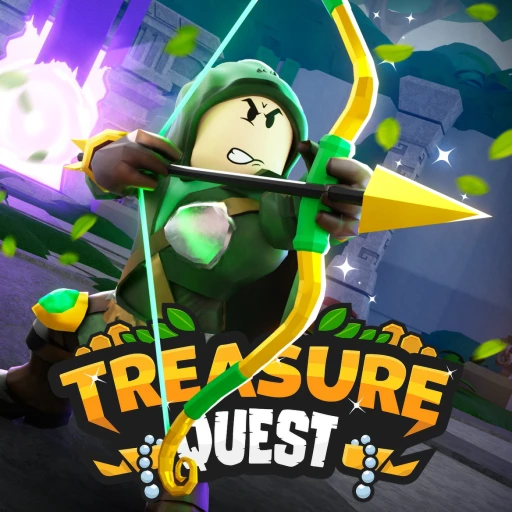
Roblox has no shortage of dungeon-crawling RPGs, but two games have consistently stood above the rest for years. Treasure Quest by Nosniy Games puts you in the boots of a Warrior, Wizard, or Archer as you slash through dungeons, defeat bosses, and hunt for rare weapons with unique abilities. Dungeon Quest by vCaffy takes a more tactical approach with four distinct classes, 17 dungeon environments, and a loot system that scales from common gear to legendary equipment capable of dominating Nightmare difficulty runs. Both games are free, both reward dedicated players with satisfying progression loops, and both have carved out loyal communities that have kept them alive well into 2026.
Treasure Quest has crossed 572 million visits since its launch and built a reputation for fast-paced dungeon runs, accessible mechanics, and a weapon ability system that keeps loot drops exciting regardless of your level. Dungeon Quest has reached over 2.3 billion visits by offering deeper class specialization, longer dungeon experiences, and a difficulty tier system that challenges even the most geared players. The two games share a genre but deliver meaningfully different experiences.
We played both games extensively and compared them across every category that matters: gameplay mechanics, class systems, progression, graphics, player counts, game passes with Robux prices, social features, and long-term replay value. Whether you are choosing your next grind or figuring out where to spend your Robux (or earn free Robux through Earnaldo), this comparison covers everything you need to make that call.
Treasure Quest vs Dungeon Quest -- Quick Stats (2026)
| Category | Treasure Quest | Dungeon Quest |
|---|---|---|
| Genre | Dungeon Crawler RPG | Dungeon Crawler RPG |
| Place ID | 2960777560 | 2414851778 |
| Developer | Nosniy Games | vCaffy |
| Total Visits | 572M+ | 2.3B+ |
| Classes | Warrior, Wizard, Archer | Warrior, Mage, Tank, Healer |
| Dungeons | 12+ | 17 |
| Core Loop | Clear dungeons, loot weapons, upgrade | Clear dungeons, gear up, push difficulty tiers |
| Difficulty Tiers | Normal, Hard | Normal, Hard, Insane, Nightmare, Hardcore |
| Key Modes | Dungeon runs, boss fights | Dungeon runs, Wave Defense, Boss Raids |
| Mobile-Friendly | Yes | Yes |
| Free-to-Play | Yes | Yes |
Gameplay -- Speed Runs vs Tactical Crawls
Treasure Quest
Treasure Quest drops you into a dungeon with a clear objective: fight through waves of enemies, reach the boss, defeat it, and collect your loot. The game strips away complexity in favor of pace. Dungeons are short enough to run in a few minutes, which means you cycle through the loot loop rapidly. That speed is a strength. Every run feels productive because you are always a few minutes away from your next weapon drop, and each weapon comes with randomized abilities that can dramatically change how your class plays.
The three-class system keeps things focused. Warriors get up close with swords and melee weapons, dealing heavy damage at short range. Wizards fight from a distance with staffs and magical projectiles, offering area-of-effect attacks that clear rooms efficiently. Archers sit between the two, using bows for ranged damage with the flexibility to reposition quickly. Each class feels distinct, and the weapon ability system adds a layer of build variety within each class. A Warrior with a lifesteal ability plays differently from one with an area slam, even if both are swinging swords.
The dungeon environments span over a dozen unique themes, from volcanic caverns to frozen fortresses to enchanted forests. Boss fights are the highlight of each run, with bosses featuring telegraphed attack patterns that reward players who learn the timing. The game also supports controller play on Xbox and PlayStation, and the mobile controls are clean enough that touchscreen players are not at a severe disadvantage.
Dungeon Quest
Dungeon Quest takes a more structured approach to the dungeon crawling formula. Each of its 17 dungeons is a progression step, and you need to meet level requirements before entering the next one. Dungeons are longer than Treasure Quest's, featuring multiple hallways of enemies before culminating in a boss encounter with a treasure chest reward. The pacing is slower and more methodical, but the payoff is a stronger sense of accomplishment when you clear a dungeon you have been working toward.
The four-class system adds a layer of team strategy that Treasure Quest does not have. Warriors deal physical damage through abilities that scale with their weapon's physical power stat. Mages cast ranged spells that scale with spell power, functioning as the primary magic damage dealers. Tanks use taunting abilities and shield mechanics to absorb damage and protect their teammates. Healers provide healing, damage buffs, and speed boosts that keep the group alive through harder content. In lower-tier dungeons, any class can carry a run. In Nightmare and Hardcore difficulty, team composition becomes critical, and having a balanced group with a Tank and Healer dramatically increases your chances of clearing.
Wave Defense adds a second game mode where you face endless waves of enemies from a selected dungeon. This mode is ideal for farming gold and experience because runs scale in difficulty the longer you survive. Boss Raids provide another endgame activity, pitting groups against powerful bosses for exclusive rewards. The combination of standard dungeon runs, Wave Defense, and Boss Raids gives Dungeon Quest more variety in how you spend your time at any given play session.
Edge: Dungeon Quest for class depth, mode variety, and dungeon count. Treasure Quest for fast-paced runs and immediate loot gratification.
Progression -- Weapon Hunts vs Gear Tiers
Progression in Treasure Quest revolves around weapons. Every dungeon run has a chance to drop weapons that are stronger than what you currently have, and higher-level dungeons drop gear with higher base stats and rarer abilities. Leveling up unlocks access to new dungeons, which in turn provide access to stronger weapon pools. The system is streamlined: play dungeons, get better weapons, unlock harder dungeons, repeat. Backpack space matters because you need room to hold the weapons you find, and the game sells backpack expansion passes for players who want to hoard their collection.
The weapon ability system is what separates Treasure Quest's progression from a simple power number chase. Each weapon can roll with different abilities depending on its class type, and some abilities are rare enough that finding the right combination on a high-stat weapon becomes a long-term goal. Upgrading weapons costs gold earned from dungeon runs, and the upgrade system allows you to push a weapon beyond its base stats. This creates a satisfying loop where finding a weapon is just the first step; maximizing it through upgrades is the real investment.
Dungeon Quest structures progression around a full gear loadout. You equip weapons, armor pieces, and spells, all of which contribute to your overall power level. Each piece of gear drops with stats that align with one of the four classes, so a Warrior wants physical power gear while a Mage wants spell power gear. The skill point system adds another progression axis. Every level earned grants a skill point that you allocate into class-specific stats, letting you specialize your character further. Resetting skill points costs gold unless you own the Free Skill Resets game pass.
Dungeon Quest's difficulty tier system is its strongest progression hook. Every dungeon can be played on Normal, Hard, Insane, Nightmare, and Hardcore. Higher difficulties drop gear with significantly better stats, but the enemies hit harder and have more health. Pushing from Normal to Nightmare on a dungeon you struggled with at first is one of the most rewarding progression arcs in any Roblox RPG. Hardcore mode adds permadeath to the run, creating genuine tension and making every successful clear feel earned.
Edge: Dungeon Quest for difficulty tiers, full gear loadouts, and skill point customization. Treasure Quest for the streamlined weapon-focused loop and ability hunting.
Graphics and Audio
Treasure Quest delivers bright, colorful dungeon environments that lean into a fantasy adventure aesthetic. Each dungeon theme is visually distinct, with lighting effects that shift between fiery reds in volcanic zones, cool blues in ice caverns, and lush greens in forest dungeons. Weapon effects are visible during combat, with ability animations providing clear feedback when you trigger a special attack. The game runs smoothly on most devices, including mobile, because the visual style prioritizes performance over complexity. Boss designs stand out, with each boss featuring unique models and attack animations that make encounters memorable.
Dungeon Quest uses a slightly darker, more atmospheric visual approach. The dungeon environments feel grittier, with stone corridors, dimly lit passageways, and environmental hazards that create a sense of danger before you even encounter the first enemy. The 17 dungeon themes range from desert temples and pirate ships to underwater ruins and volcanic cores, each with distinct color palettes and architectural styles. Spell effects for Mages and Healers are particularly well done, with particle effects that make support classes feel impactful even when they are not dealing damage directly.
Audio design in both games serves its purpose without standing out dramatically. Treasure Quest uses upbeat dungeon music and satisfying combat sound effects that match its faster pace. Dungeon Quest leans into more atmospheric soundscapes with ambient dungeon sounds and weightier combat audio. Neither game pushes the boundaries of Roblox audio design, but both provide audio that supports the gameplay without becoming repetitive during long grinding sessions.
Edge: Draw. Treasure Quest wins on color and visual clarity. Dungeon Quest wins on atmosphere and environmental variety across its larger dungeon roster.
Player Counts and Community (July 2026)
Neither Treasure Quest nor Dungeon Quest sits at the top of the Roblox charts in 2026, but both have established communities that keep the games active and playable. Dungeon Quest has the larger footprint with over 2.3 billion total visits and typically maintains several hundred concurrent players during active hours. The game's longevity is supported by its depth, its difficulty tiers that keep endgame players engaged, and its management under the Voldex umbrella, which has continued to support the title after acquiring it from vCaffy.
Treasure Quest has accumulated over 572 million visits and maintains a smaller but dedicated player base. The community is active on Discord and in-game, and the shorter dungeon run times mean that even with fewer concurrent players, finding a populated server for group content is rarely a problem. Nosniy Games continues to maintain the game and engage with the community through codes, events, and periodic updates.
The content creator ecosystem around both games is modest compared to behemoths like Blox Fruits. Dungeon Quest has a more established wiki with detailed guides on every dungeon, class build, and gear piece. Treasure Quest's wiki covers weapons, abilities, and dungeon strategies. Both communities maintain active Discord servers where players share tips, find groups, and discuss updates.
The difference in community size between these two games is less dramatic than comparisons involving top-10 Roblox titles. Both games feel lived-in and active, just on different scales. If finding populated servers matters to you, Dungeon Quest has a slight advantage due to its larger player pool.
Edge: Dungeon Quest for overall community size and wiki documentation. Treasure Quest for the tight-knit community feel where regulars recognize each other.
Game Passes and Monetization
Treasure Quest Game Passes
- Extra Item Drop -- 999 Robux: Grants a chance for additional item drops from bosses and dungeon chests. The most impactful pass for players who want to maximize their loot per run.
- Dual Wield -- 899 Robux: Lets you equip two weapons simultaneously, dramatically increasing your damage output and creating new build possibilities across all three classes.
- x2 Quest Rewards -- 499 Robux: Doubles rewards earned from quest completions. Stacks well with active play sessions where you chain multiple quests back to back.
- +250 Backpack Space -- 799 Robux: Adds 250 slots to your inventory. Essential for serious collectors who want to hold weapons for comparison, trading, or future upgrades.
- Extra Quest -- 399 Robux: Allows you to hold an additional active quest, letting you complete multiple objectives in a single dungeon run.
- x2 Gold -- 349 Robux: Doubles all gold earned from dungeon runs and quests. Accelerates weapon upgrades and general progression.
- x2 XP -- 349 Robux: Doubles experience earned from all sources. Cuts the leveling grind and unlocks higher-tier dungeons faster.
- x2 Luck -- 349 Robux: Doubles your luck stat, increasing the chance to find rare and legendary weapons from boss drops.
- VIP -- 349 Robux: Grants +50% Gold, XP, and Luck, a 10% chance for extra item drops, VIP name tag and chat tag, and access to exclusive VIP abilities.
- Customize -- 349 Robux: Unlocks character customization options for visual personalization.
- True Ninja -- 599 Robux: Grants access to the Ninja class style with unique visual effects and abilities.
- Extra Life -- 174 Robux: Provides an additional life per dungeon run, giving you a second chance when a boss fight goes wrong.
Dungeon Quest Game Passes
- Extra Item -- 1,200 Robux: Increases the number of items earned from any loot drop by one. Applies to dungeons, Wave Defense, and Boss Raids. With Hardcore mode enabled, you can receive up to three drops per clear. The most expensive and most impactful pass in the game.
- 2x Gold -- 540 Robux: Doubles all gold earned from dungeon clears and Wave Defense. Speeds up gear upgrades and skill point resets.
- VIP -- 480 Robux: Provides VIP perks including bonus gold, a VIP badge, and other quality-of-life benefits.
- Plasma Weapon Enchant -- 450 Robux: Adds a plasma visual effect to your weapon. The most premium cosmetic enchant available.
- Lightning Weapon Enchant -- 350 Robux: Adds a lightning visual effect to your equipped weapon.
- Flames Weapon Enchant -- 350 Robux: Adds a fire visual effect to your weapon for a classic look.
- Embers Weapon Enchant -- 250 Robux: Adds a subtle ember glow effect to your weapon. The most affordable cosmetic pass.
- Dungeon Quest Plus -- $4.99/month: A subscription that provides various perks including bonus rewards and quality-of-life features. All perks are removed when the subscription ends.
Treasure Quest offers more game passes overall, with prices ranging from 174 to 999 Robux. The passes lean heavily toward gameplay advantages like double XP, double gold, double luck, and extra loot drops. Dungeon Quest has fewer passes but its flagship Extra Item pass at 1,200 Robux is a significant investment. Dungeon Quest also offers cosmetic weapon enchants at lower price points, giving players visual upgrades without affecting gameplay balance. Neither game locks core content behind purchases. Both are fully playable and completable without spending Robux.
Social Features and Community Interaction
Treasure Quest keeps its social features straightforward. You can join dungeon runs with friends or matchmake with random players. The shorter run times mean that group play feels casual and drop-in friendly. You do not need to commit to a long session to contribute meaningfully to a group run. The trading system allows players to exchange weapons, which creates a secondary metagame around finding rare ability rolls on popular weapon types. The Nosniy Games group on Roblox grants members a free sword, a chat tag, and access to a prize wheel, incentivizing community participation beyond the game itself.
Dungeon Quest's social layer is deeper because the game demands it. The four-class system creates natural interdependence -- a group with a Tank to absorb damage, a Healer to keep everyone alive, and DPS classes to burn through enemies clears harder content far more efficiently than four damage dealers. This design encourages players to communicate, coordinate, and build consistent groups. The community Discord server functions as a matchmaking hub where players post their class, level, and gear score to find compatible teammates for Nightmare and Hardcore runs.
Wave Defense and Boss Raids in Dungeon Quest are inherently social modes. Wave Defense becomes a cooperative survival challenge where communication about enemy positioning and resource management matters. Boss Raids bring groups together against powerful encounters that reward coordinated play. These modes give Dungeon Quest a cooperative identity that Treasure Quest's faster, more independent dungeon runs do not replicate.
Edge: Dungeon Quest for meaningful team play and class-based cooperation. Treasure Quest for casual drop-in group play and accessible trading.
Replay Value -- What Keeps You Coming Back in 2026
Treasure Quest's replay value comes from the weapon hunt. The combination of class-specific weapons, randomized abilities, and the upgrade system means that finding the perfect weapon is a long-term goal that can sustain hundreds of hours of play. Running the same dungeon on a different class feels genuinely different because Warriors, Wizards, and Archers interact with encounters in distinct ways. The shorter run times make Treasure Quest ideal for quick sessions -- you can run three or four dungeons in fifteen minutes and walk away with meaningful progress.
The game also benefits from its accessibility. Because the mechanics are straightforward and the dungeon runs are brief, Treasure Quest is easy to pick up after a break. You do not need to relearn complex systems or catch up on weeks of missed content. The Robux-free progression path is clear and fair, making it a game you can return to without feeling pressured to spend money.
Dungeon Quest offers more structured replay value through its difficulty tier system. Clearing all 17 dungeons on Normal is just the beginning. Pushing each dungeon through Hard, Insane, Nightmare, and Hardcore creates a progression ladder that keeps endgame players invested for months. Each difficulty tier drops stronger gear, which in turn makes the next tier more achievable. The four-class system multiplies this further -- completing the game as a Warrior is a completely different experience from completing it as a Mage or Healer.
Wave Defense adds an infinitely scalable challenge that tests your gear and skill against increasingly difficult waves. Boss Raids provide periodic group content that brings the community together. The Dungeon Quest Plus subscription adds ongoing value for dedicated players, though it is entirely optional.
Edge: Dungeon Quest for structured endgame content, difficulty tiers, and class replayability. Treasure Quest for quick-session accessibility and the endless weapon ability hunt.
Earn Free Robux for Treasure Quest or Dungeon Quest
Complete simple tasks on Earnaldo and withdraw real Robux -- no downloads, no generators, no scams. Use it on game passes, gear, or anything you want.
Head-to-Head Verdict -- Treasure Quest vs Dungeon Quest in 2026
The Verdict
Choose Treasure Quest if you want a fast, accessible dungeon crawler that respects your time. Runs are short, loot drops are frequent, and the three-class system with randomized weapon abilities keeps every dungeon clear interesting. Treasure Quest is the game you boot up when you have fifteen minutes and want to make them count. The 572 million visits it has accumulated prove that speed and simplicity have lasting appeal. Check out our Treasure Quest free Robux guide to fund your game passes without spending your own money.
Choose Dungeon Quest if you want depth, team play, and a long-term progression challenge. With four classes, 17 dungeons, five difficulty tiers, Wave Defense, Boss Raids, and a gear system that rewards hundreds of hours of optimization, Dungeon Quest is the more complete dungeon crawling package on Roblox. Its 2.3 billion visits reflect a game that has kept players engaged across years of content. Visit our Dungeon Quest free Robux guide for tips on earning Robux for the Extra Item pass.
Overall winner: Dungeon Quest takes this comparison based on class depth, dungeon count, difficulty scaling, mode variety, and total player engagement. It is the more feature-rich game with more reasons to keep playing at every stage of progression. But Treasure Quest is not a lesser game -- it is a more focused game that prioritizes speed and accessibility over complexity. If you want quick dungeon runs with satisfying loot, Treasure Quest delivers that better than anything else on Roblox. If you want a full-featured dungeon RPG with team-based endgame content, Dungeon Quest is the answer.
Who Should Play What?
- You have limited play time: Treasure Quest. Its short dungeon runs fit into any schedule, and you make meaningful progress even in ten-minute sessions.
- You want serious team-based PvE: Dungeon Quest. The Tank, Healer, Warrior, Mage dynamic creates real cooperative gameplay that rewards coordination and communication.
- You enjoy hunting for perfect weapon rolls: Treasure Quest. The randomized ability system on weapons makes every boss drop a potential upgrade or build-changer.
- You want a long-term difficulty challenge: Dungeon Quest. Pushing dungeons from Normal to Hardcore is a months-long journey that keeps endgame players engaged.
- You prefer a simpler class system: Treasure Quest. Three classes, each with clear strengths and playstyles, with no complex skill point allocation required.
- You want the most content for your time: Dungeon Quest. Seventeen dungeons, Wave Defense, Boss Raids, and five difficulty tiers provide the most structured content of the two.
- You want to try both without spending money: Both games are free to play. Earn Robux through Earnaldo and spend it on game passes for whichever game wins you over. You can also check our Blox Fruits free Robux guide if you want to explore other RPG options on the platform.
Frequently Asked Questions
Dungeon Quest is significantly more popular, with over 2.3 billion total visits compared to Treasure Quest's 572 million. Dungeon Quest also tends to maintain higher concurrent player counts. However, Treasure Quest offers a faster-paced dungeon crawling experience with a different class system that many players prefer. Popularity does not always equal quality, and the best choice depends on which gameplay loop appeals to you.
Both games center their progression around loot drops, but they handle it differently. Treasure Quest uses a weapon-based system where each weapon comes with randomized abilities tied to your class (Warrior, Wizard, or Archer). Dungeon Quest features a full gear system with weapons, armor, and spells that scale with dungeon difficulty. Dungeon Quest offers more gear variety overall, while Treasure Quest makes each individual weapon drop feel more impactful due to its ability system.
Yes. Platforms like Earnaldo let you complete simple tasks such as surveys, app trials, and offers, then withdraw real Robux that you can spend on game passes in either game. Both Treasure Quest and Dungeon Quest have natural downtime between dungeon runs that works well for earning on the side. Visit earnaldo.com to get started.
Treasure Quest is generally more solo-friendly because its dungeons are shorter and the three-class system lets you handle most content alone with the right gear. Dungeon Quest leans more heavily into team play with its four-class system that includes dedicated Tank and Healer roles, especially at higher difficulty tiers like Nightmare and Insane. Solo play is possible in Dungeon Quest but becomes significantly harder in later dungeons.
Both games have slowed their update cadence compared to their peak years, but Dungeon Quest under Voldex management has continued to receive periodic content updates. Treasure Quest by Nosniy Games also receives updates, though on a less predictable schedule. Check each game's community Discord or social channels for the latest update news.
If you are new to the genre, Treasure Quest is the easier entry point. Its three-class system is straightforward, dungeons are shorter, and the loot loop is immediately satisfying. Dungeon Quest has more depth with four classes and 17 dungeons, but the learning curve is steeper, especially when it comes to understanding skill point allocation, class roles, and dungeon difficulty tiers. Both games are free to play, so trying both costs nothing.