Anime Card Clash vs Anime Vanguards (2026) — Which Roblox Game Is Better?
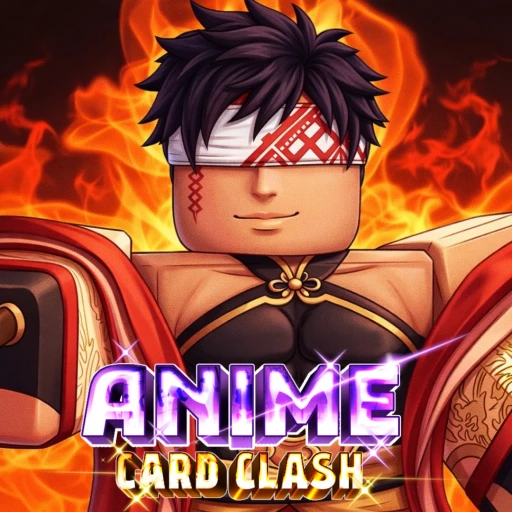
Two anime-powered Roblox games have been dominating player attention in 2026, but they take wildly different approaches to the genre. Anime Card Clash puts you in the seat of a card collector and battler — you roll for powerful anime-inspired cards, build competitive decks, and climb ranked PvP ladders. Anime Vanguards drops you into a tower defense arena where you summon anime heroes, place them strategically along enemy paths, and survive increasingly punishing waves.
One is about collecting and battling. The other is about strategy and survival. Both feature anime aesthetics, gacha-style acquisition systems, and massive player bases. But the experience you get from each is fundamentally different — and that makes this comparison more interesting than the usual "same genre, different execution" breakdown. This guide dissects every angle so you can figure out which game aligns with how you actually want to spend your time on Roblox.
Anime Card Clash vs Anime Vanguards — Quick Stats (2026)
| Category | Anime Card Clash | Anime Vanguards |
|---|---|---|
| Genre | Card collecting / battling | Anime tower defense |
| Place ID | 110829983956014 | 16146832113 |
| Developer | RNG Lab | Kitawari |
| Total Visits | 381M+ | 1B+ |
| Core Loop | Roll cards, build decks, battle PvP | Summon units, place, upgrade, defend |
| Collection Size | 150+ cards | 50+ characters |
| PvP Mode | Ranked PvP | Leaderboard-based (PvE) |
| PvE Mode | Infinite Tower | Infinite Mode |
| Latest Major Update | Anniversary Update 6.5 | Ongoing seasonal updates |
| Co-op | Limited | Yes (multiplayer maps) |
| Trading | Yes | Yes |
| Mobile-Friendly | Yes | Yes |
| Free-to-Play | Yes | Yes |
Core Gameplay — Two Different Philosophies
Anime Card Clash
Anime Card Clash is built around the thrill of the roll. You spend in-game currency to roll for anime-inspired cards, each with unique stats, abilities, and rarity tiers. The rolling system is the central mechanic — every session starts with the anticipation of what you might pull. Cards range from common fodder to ultra-rare powerhouses that can single-handedly shift the outcome of a battle. With over 150 cards in the current pool following Anniversary Update 6.5, the collection depth is substantial.
Once you have cards, the game shifts into deck building. You construct a battle-ready lineup from your collection, balancing offensive power, defensive utility, and special abilities. The strategic layer is in team composition — which cards synergize, which counter popular meta picks, and how you sequence your plays during matches. It borrows from the tradition of collectible card games while wrapping it in Roblox's accessible format.
The competitive side comes through ranked PvP, where you face other players in real-time card battles. Climbing the ranked ladder requires both a strong collection and tactical skill. You need to read your opponent's plays, manage your resources across turns, and adapt your strategy based on the cards they reveal. The ranked system uses an ELO-style rating that matches you against players of similar skill, keeping matches competitive regardless of where you sit on the ladder.
For solo-focused players, the Infinite Tower provides an escalating PvE challenge. Each floor gets harder, and pushing deeper rewards you with premium currency, rare cards, and exclusive cosmetics. The tower resets periodically, giving you a reason to keep improving your deck and pushing further each cycle.
Anime Vanguards
Anime Vanguards is a tower defense game at its core — and it executes that formula with polish. You summon anime-inspired characters from gacha banners, then deploy them on maps where waves of enemies march along set paths. Your job is to place units at strategic positions, upgrade them between waves, and prevent enemies from reaching the endpoint. The satisfaction comes from watching a well-placed team dismantle wave after wave of increasingly tough enemies.
Unit abilities add complexity beyond simple placement. Many characters have active skills that trigger on timers or under specific conditions — area-of-effect bursts, enemy debuffs, ally buffs, and crowd control effects. Learning when abilities trigger and how they interact with other units on the field is where the strategic depth lives. A mediocre team with excellent placement and ability synergy can outperform a team of raw stat-stick legendary units placed carelessly.
The gem farming loop in Anime Vanguards is one of its strengths. Daily quests, event stages, and Infinite Mode all provide steady gem income. The summoning system includes pity mechanics — after a set number of pulls without a featured character, you are guaranteed to receive one. This removes the worst RNG frustration and lets you plan your summon spending around specific units you want. With 50+ characters and regular additions, the roster keeps expanding at a pace that gives returning players something new each time they come back.
Co-op multiplayer is a major draw. Teaming up with friends or random players lets you combine unit rosters, which opens compositions impossible to achieve solo. Maps scale in difficulty for multiplayer, and coordination — deciding who covers which lane, who deploys support versus damage — adds a social layer that makes the game more engaging than soloing every map.
Progression Systems — How You Get Stronger
Progression is where these two games diverge most sharply, and it directly affects how your daily sessions feel.
In Anime Card Clash, progression is tied to your card collection. Rolling new cards, upgrading existing ones through fusion and enhancement systems, and unlocking new card packs as you advance through the Infinite Tower or ranked PvP tiers — these are the primary levers. The rolling system means progression has a significant RNG component. Some sessions you pull a game-changing card that vaults your deck forward. Other sessions you get a stack of duplicates. The Anniversary Update 6.5 added new progression paths including card evolution mechanics that let you transform certain cards into stronger versions, which provides more deterministic progress alongside the roll-based system.
Anime Vanguards ties progression to unit acquisition, unit upgrading, and account-level milestones. Summoning new characters is the headline activity, but evolving existing units into stronger forms provides steady, measurable progress. Each unit has a clear upgrade path — you know exactly what materials and duplicates you need to reach the next evolution tier. This deterministic element makes progress feel less volatile than a pure gacha system. Account progression unlocks new maps, difficulty tiers, and game modes, giving you a structured path through the content.
Edge: Anime Vanguards for predictable, structured progression thanks to its pity system and clear evolution paths. Anime Card Clash for the dopamine highs of lucky rolls and the depth of its 150+ card collection.
PvP and Competition — Direct Combat vs Leaderboard Chasing
This section represents the largest philosophical gap between the two games.
Anime Card Clash is built for PvP. The ranked system is the endgame for competitive players, and it is well-designed. Matchmaking places you against opponents of comparable strength, seasons reset periodically with rewards based on your peak rank, and the meta shifts regularly as new cards are released and balance patches adjust power levels. The real-time battling requires you to make decisions under pressure — choosing which cards to play, when to use abilities, and how to respond to your opponent's moves. Spectating high-level matches reveals a depth of strategy that is not immediately obvious to new players.
Anime Vanguards approaches competition differently. There is no direct PvP mode — you do not battle other players in real time. Instead, competition happens through leaderboards and Infinite Mode rankings. Players compete to push the highest wave in Infinite Mode, clear maps with the fewest units deployed, or complete challenge runs with specific restrictions. It is an indirect competition model: you are comparing results, not exchanging blows. For players who prefer to optimize and improve at their own pace without the pressure of real-time opponents, this model is appealing.
Edge: Anime Card Clash by a wide margin if you want direct PvP. Anime Vanguards if you prefer PvE competition where you set records rather than fight opponents.
Content Volume and Replayability
Both games offer substantial content, but the type of content differs.
Anime Card Clash has 150+ cards to collect, ranked PvP with seasonal resets, the Infinite Tower with periodic resets, daily quests, and event-limited cards that drive urgency. The Anniversary Update 6.5 added a wave of new content including fresh cards, balance adjustments, and new Infinite Tower floors. The card battling format is inherently replayable — no two PvP matches play out identically because you are facing human opponents with different decks and strategies. The collection aspect adds long-term goals that can take months to complete.
Anime Vanguards has a growing roster of 50+ characters, multiple maps across difficulty tiers, Infinite Mode, co-op multiplayer, seasonal events, and regular content updates. Tower defense maps are replayable as you acquire new units and discover better strategies. Co-op adds replay value because every session with different teammates plays differently. The gem farming loop and evolution system provide daily engagement hooks that keep you logging in.
The visit counts tell part of the story: Anime Vanguards' 1 billion+ visits demonstrate sustained long-term engagement. Anime Card Clash's 381 million+ visits, while lower, represent rapid growth for a newer entry in the anime game space on Roblox. Both games retain players effectively — they give you reasons to come back daily and longer-term goals to work toward over weeks and months.
Edge: Anime Card Clash for PvP replayability and collection depth with 150+ cards. Anime Vanguards for co-op variety and the sheer volume of PvE content.
Community and Player Base (July 2026)
Anime Vanguards has the larger community by raw numbers, backed by over 2 billion visits and the pedigree of being developed by Kitawari — a studio with a proven track record on Roblox. Discord servers are large and active, with channels dedicated to tier lists, team building, trading, and event coordination. YouTube and TikTok content ranges from beginner guides to Infinite Mode record attempts. The community has a collaborative feel, partly because co-op gameplay encourages players to help each other.
Anime Card Clash's community of 381 million+ visits is smaller but intensely engaged. RNG Lab has cultivated a passionate player base that treats card collection and ranked PvP with genuine seriousness. Trading Discord servers track card values meticulously, and the ranked ladder has its own micro-celebrity players whose deck builds get shared and copied. Content creators focus heavily on card reveal videos — the rolling format produces natural entertainment as reactions to rare pulls drive views. The competitive PvP scene adds a dimension that Anime Vanguards does not have.
Both communities are welcoming to new players, with wiki resources, guide channels, and veteran players willing to help newcomers. The overlap between the two player bases is smaller than you might expect — card game enthusiasts and tower defense fans tend to have different preferences, so each game attracts a somewhat distinct audience.
Trading Economy
Trading is a significant meta-game in both titles, and it extends the engagement loop well beyond the core gameplay.
Anime Card Clash has a thriving card trading economy. Rare and meta-defining cards command high trade value, and the market shifts whenever new cards release or balance changes alter the competitive landscape. Community-maintained value lists rank every card and update in real time based on supply, demand, and competitive viability. Collecting a full set of a particular anime series' cards has become a prestige goal, with traders specializing in completing collections. The 150+ card pool means the trading economy has real depth and liquidity.
Anime Vanguards features unit trading with a similar community-driven value framework. Because the character roster is smaller at 50+, individual high-rarity units hold more concentrated value. Trading in Anime Vanguards feels more straightforward — fewer items means prices are easier to track and negotiations are simpler. Both games enforce their terms of service against real-money trading, keeping the economies in-game only.
Edge: Anime Card Clash for trading depth and market complexity. Anime Vanguards for simplicity and accessibility in its trading scene.
Monetization and Free-to-Play Experience
Both games are free to play and generate revenue through premium currency purchases and game passes. The question is how fair the free experience feels and whether spending money creates an insurmountable gap.
Anime Card Clash sells currency packs that let you roll for cards more frequently. The rolling system is the core monetization lever — more rolls mean more chances at rare cards. RNG Lab provides free currency through daily quests, Infinite Tower rewards, and event participation. A dedicated free player can build a competitive deck over time, but the process is slower than for someone who supplements with purchased rolls. The Anniversary Update 6.5 introduced login reward tracks and achievement milestones that improved free player income noticeably.
Anime Vanguards follows a similar model with gem purchases powering additional summons. The key differentiator is the pity system — because you are guaranteed a featured unit after a set number of pulls, your gems deliver predictable value whether earned or purchased. Free gem income from daily quests, Infinite Mode, and events is steady enough to keep free players progressing. Purchased gems accelerate progress but do not unlock anything exclusive. The result is a monetization model that feels less punishing for free players compared to pure RNG systems.
Edge: Anime Vanguards. The pity system makes both free and paid gems deliver more reliable value. Anime Card Clash is fair for free players but the pure RNG rolling can feel frustrating during dry streaks.
Earning Free Robux While You Play
Both Anime Card Clash and Anime Vanguards pair well with Earnaldo for earning free Robux alongside your gameplay sessions.
Anime Card Clash has natural downtime between ranked PvP matches, during card management sessions, and while waiting for Infinite Tower cooldowns. These gaps are perfect for completing Earnaldo tasks without affecting your gameplay performance. The card-based format does not require constant split-second reactions, so you can alternate attention between the game and earning tasks.
Anime Vanguards offers downtime between waves, during lobby setup, and while auto-farming familiar maps. Tower defense gameplay is inherently strategic rather than reflex-based, making it one of the better genres for multitasking with Earnaldo. Co-op sessions where teammates handle different lanes give you breathing room for task completion.
For dedicated strategies, check out our Anime Card Clash free Robux guide and Anime Vanguards free Robux guide.
Earn Free Robux for Anime Card Clash or Anime Vanguards
Complete simple tasks on Earnaldo and withdraw real Robux — no downloads, no generators, no scams.
Performance and Stability
Both games run well across devices, but there are differences worth noting for players on lower-end hardware.
Anime Card Clash is relatively lightweight. Card-based gameplay does not require complex 3D rendering or particle effects during most interactions. The visual presentation is clean — card art is the star, and the battle interface prioritizes readability over flashy effects. Mobile performance is solid, with quick load times and minimal frame drops. The game's design philosophy favors accessibility, and it shows in the technical execution.
Anime Vanguards demands more from your device. Tower defense games with dozens of units on screen, enemy waves, and ability effects create more rendering load. On mid-range and high-end devices, the game runs smoothly. On older phones or low-spec tablets, you may notice frame drops during late-wave chaos when the screen fills with effects. Kitawari has optimized aggressively — the game runs better than many comparable TD titles on Roblox — but the genre itself is inherently more demanding than card-based gameplay.
Edge: Anime Card Clash for raw performance and accessibility on low-end devices. Anime Vanguards performs well but requires more hardware headroom.
Head-to-Head Verdict — Anime Card Clash vs Anime Vanguards in 2026
The Verdict
Choose Anime Card Clash if you want direct PvP competition, a deep card collection to build, and the adrenaline of ranked ladder climbing. Anime Card Clash delivers an experience that no tower defense game can replicate — the tension of facing a human opponent with your carefully built deck, the thrill of pulling a rare card that reshapes your strategy, and the satisfaction of climbing ranks through skill and knowledge. With 150+ cards, ranked PvP, and the Infinite Tower, RNG Lab has built a game with serious staying power.
Choose Anime Vanguards if you prefer strategic PvE gameplay, cooperative multiplayer, and a more forgiving progression system. Anime Vanguards is the better choice for players who enjoy optimizing unit placements, collaborating with friends, and steadily building stronger teams without the pressure of direct competition. The pity system respects your time and gems, co-op gives the game a social dimension, and the tower defense format rewards patience and planning over reaction speed.
Overall: These games serve fundamentally different player fantasies. Anime Card Clash is for the competitor and the collector — someone who wants to test their deck against real opponents and chase the high of rare rolls. Anime Vanguards is for the strategist and the cooperator — someone who wants to solve tower defense puzzles with a team of anime heroes. The fact that they are different genres means playing both is not redundant. If anime aesthetics on Roblox appeal to you, both games earn a spot in your rotation for different reasons.
Who Should Play What?
- You want PvP battles: Anime Card Clash. Its ranked system is the only direct PvP option between these two games.
- You want co-op with friends: Anime Vanguards. Multiplayer tower defense with combined unit rosters is a strong social experience.
- You are a collector: Anime Card Clash. 150+ cards with active trading gives collectors more to chase and manage.
- You hate bad RNG streaks: Anime Vanguards. The pity system ensures you eventually get what you are pulling for.
- You prefer strategy over reflexes: Both work, but Anime Vanguards leans harder into positional strategy and unit synergy optimization.
- You play on a low-end device: Anime Card Clash. Card-based gameplay is lighter on hardware than tower defense with dozens of on-screen units.
- You want to earn Robux while playing: Both pair well with Earnaldo. Card games and tower defense both have natural downtime for completing tasks.
Frequently Asked Questions
Anime Vanguards leads in total visits with over 1 billion compared to Anime Card Clash's 381 million. However, Anime Card Clash has been on a strong growth trajectory, particularly following Anniversary Update 6.5. Both games maintain healthy concurrent player counts and active communities. Popularity alone does not determine which game is better for you — it depends on whether you prefer card battling or tower defense.
Yes. Both games are fully playable on mobile through the Roblox app on iOS and Android. Anime Card Clash's card selection and battle mechanics translate well to touchscreens. Anime Vanguards' unit placement and upgrading works intuitively with tap controls. Anime Card Clash is slightly better optimized for low-end mobile devices due to its less graphically demanding format.
Anime Card Clash is the clear winner for PvP. It features a full ranked PvP system where you battle other players directly using your card decks, with ELO-based matchmaking and seasonal rewards. Anime Vanguards is primarily a PvE tower defense game — its competitive element comes from Infinite Mode leaderboards and challenge run rankings rather than direct player-versus-player combat.
Both games are fully playable without spending Robux. Anime Vanguards is generally considered slightly more generous due to its pity system, which guarantees featured units after a set number of summons. Anime Card Clash provides steady free currency through daily quests and Infinite Tower rewards, but its pure RNG rolling system means results are less predictable. Neither game locks content behind paywalls.
Yes, both games support player-to-player trading. Anime Card Clash has a deeper trading economy with 150+ cards and community-maintained value lists that update based on meta shifts. Anime Vanguards has a simpler but active trading scene for its 50+ character roster. Both communities use Discord servers with dedicated trading channels.
Both games maintain active update schedules. Anime Card Clash by RNG Lab recently shipped Anniversary Update 6.5 with new cards, balance changes, and Infinite Tower content. Anime Vanguards by Kitawari releases regular updates with new characters, maps, and seasonal events. Both developers are responsive to community feedback, and the competitive Roblox anime game landscape keeps content flowing at a healthy pace.